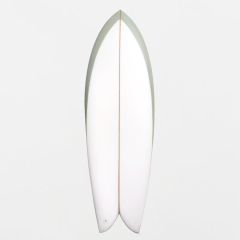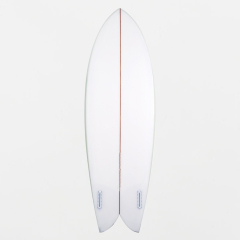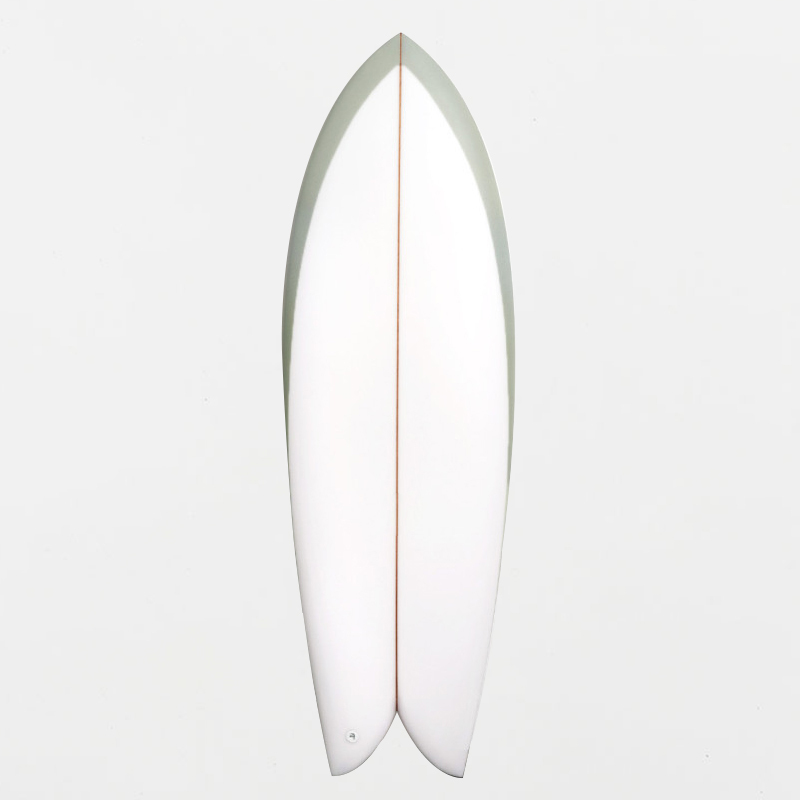
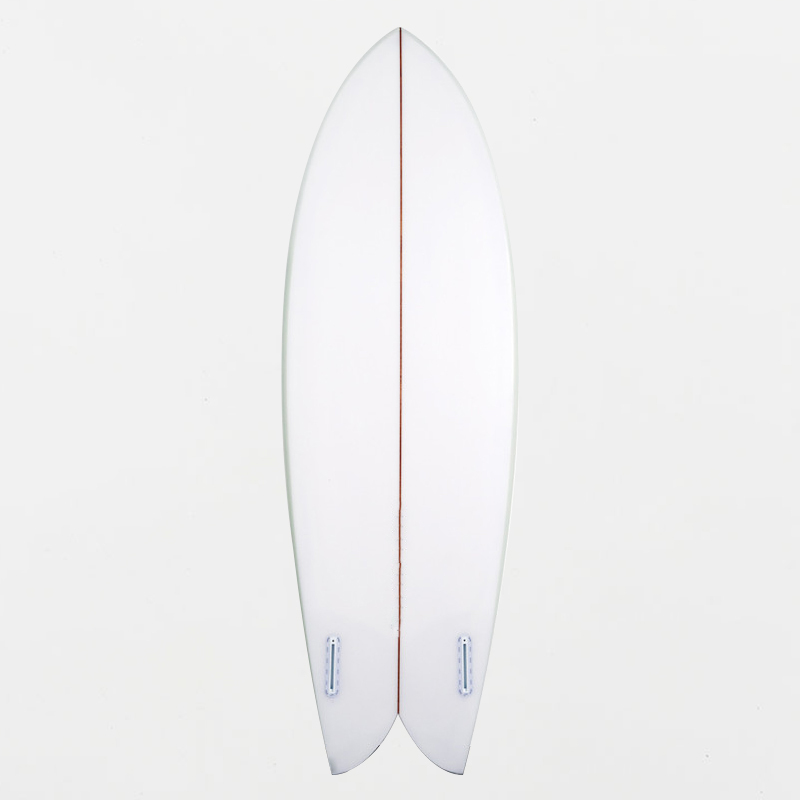
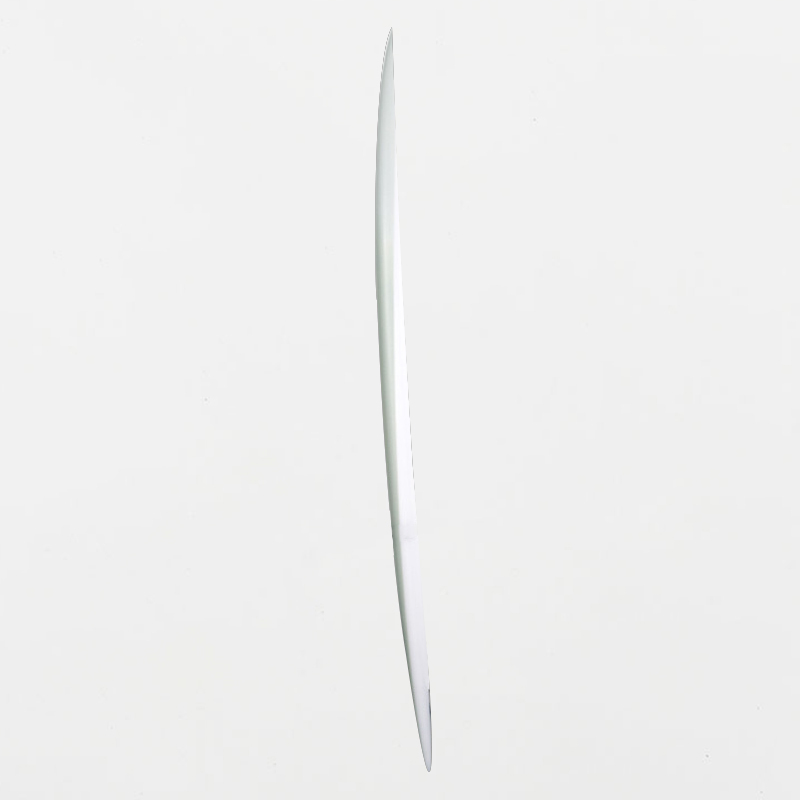
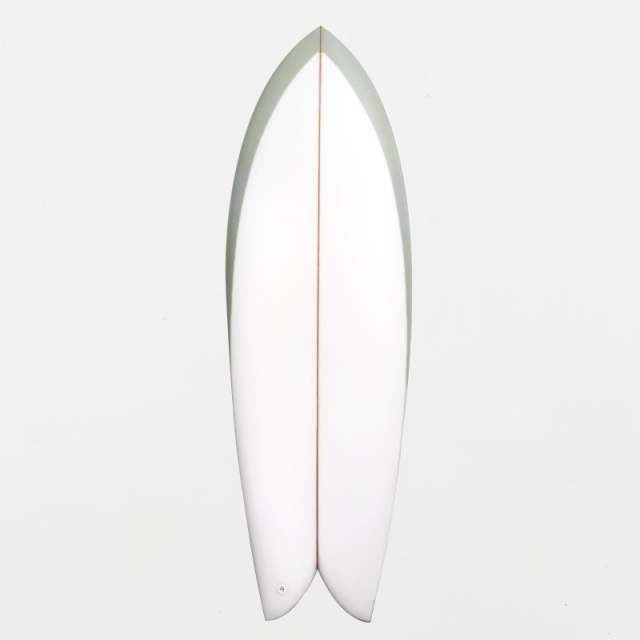
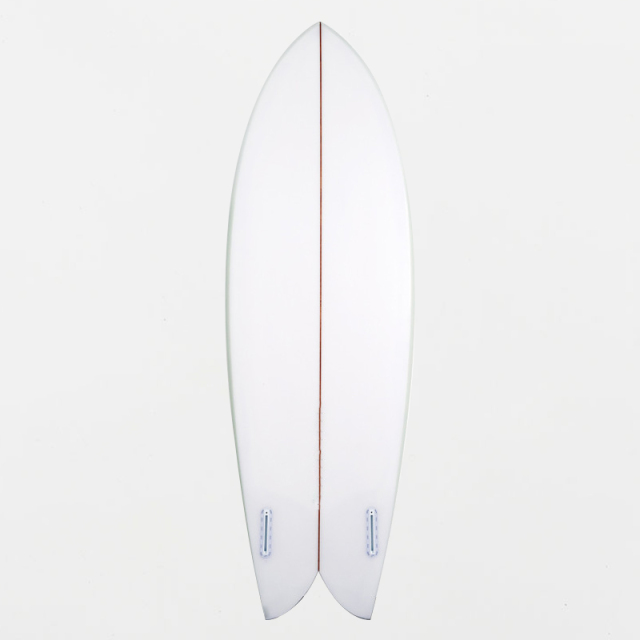
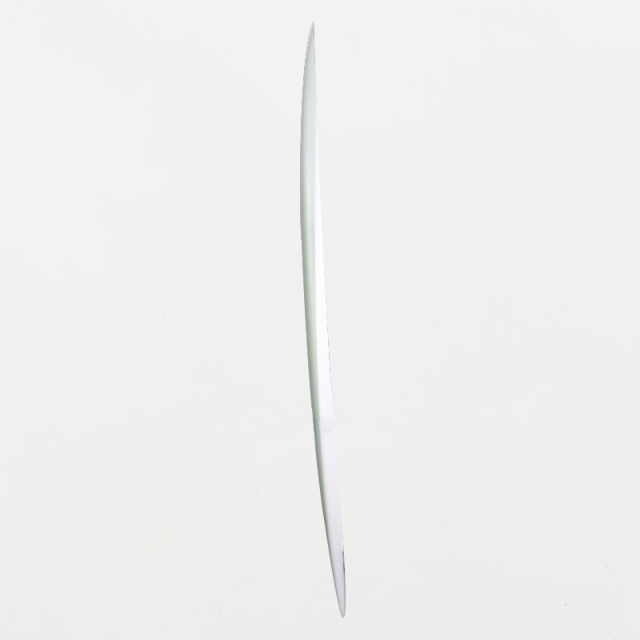
This epoxy twin fin surfboard measures 5ft10, is shaped around an EPS foam core, laminated with fibreglass and epoxy resin, and finished in gloss white with two FCS-compatible fin boxes. The twin-fin layout is what you notice first on the water: instead of loading up over a centre fin, the board accelerates sideways out of a turn, so direction changes come quickly and with less effort than a thruster of the same length. Shops place it in the performance corner rather than the learner rack, because it asks for a rider who already knows how to generate speed. The shape is also built for private-label work, so brands on a twin fin surfboard wholesale programme can have it under their own graphics. - Intermediate riders moving off a learner board. The 5ft10 epoxy surfboard is the natural next step once a surfer paddles out, catches waves unaided and stands through a turn; the twin fin keeps the board forgiving while asking for a more active style. - Advanced surfers adding a small-wave twin. Riders who already own a shortboard take this shape out on days when a thruster feels starved of speed and every section needs pumping. - Coaches and team riders who need a consistent shape. Because the outline, rocker and fin boxes are fixed, the board a rider trains on is the board that arrives on a reorder. - Shops building a performance corner. A clean white epoxy surfboard with a swallow tail changes the silhouette of a wall that is otherwise full of coloured longboards and soft-tops. - Riders who want one board for everyday surf. It is not a quiver piece for a single trip; the length and volume cover ordinary days, and the fin boxes let the feel be adjusted when the surf changes. - Not a first board. A complete beginner will find the twin fin loose underfoot; send that customer to a soft-top or long shape instead. For coastal rental operations and distribution outlets, working with an epoxy surfboard manufacturer on this shape means lightweight, robust construction that helps lower maintenance frequency and replacement costs. Because the FCS fin system allows different fin configurations, rental businesses can serve a wider range of wave environments and intermediate riders while keeping fleet inventory easier to manage.
Under the gloss the build is straightforward: a shaped EPS foam core, glassed with fibreglass cloth and saturated with epoxy resin. Two fin boxes are set into the tail and a single stringer runs down the centre of the deck, so the flex stays consistent from nose to tail. The laminate is what gives the board its resilience — epoxy resin cures hard and holds the core's shape through the knocks a board collects in a van, on a rack or in the shore break.
Less mass in the core also changes how the board behaves: the rail sits higher, it picks up speed earlier and it settles back to level quickly after a turn. Every board is laminated and finished in our own workshop, so the layup on a repeat order matches the first run — as an epoxy surfboard manufacturer we work from our own shapes and our own production records rather than a trading desk.
On the water the epoxy twin fin surfboard generates speed differently from a thruster. With no centre fin dragging, it runs free down the line and carries momentum across flat sections; when the wave stands up, both fins load at once and the board comes around without losing forward speed. It suits riders whose timing is already there and who want more speed out of ordinary waves.
Weight matters over a long session. A lightweight epoxy surfboard is easier to paddle back out and quicker to reset between waves, and because the fin boxes hold the same angle every time a set is fitted, the tuning that worked in the first session still feels right in the fifth. Less board to push around in the turns also means less fatigue in the arms and shoulders by the end of a session.
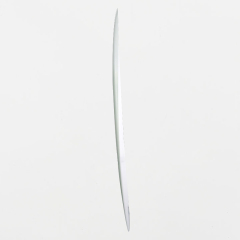
- Twin fin boxes set to FCS geometry. Both boxes are milled to take FCS-compatible fins, so a set can be swapped between sessions without touching the laminate around the tail. - Swallow tail. The split tail keeps two points of contact on the wave face, letting the board pivot on the back foot while the tips release cleanly out of a turn. - Single stringer down the centre. The stringer line runs nose to tail on the deck and holds the rocker steady, so the board flexes the same way from one wave to the next. - Rocker through the profile. A continuous curve from nose to tail lets the twin fin surfboard fit into steeper sections without pushing water ahead of the nose. - Tapered outline and foil. Width is carried under the chest and pulled down through the tail, which keeps the board stable under the paddler but free behind the back foot. - Leash plug on the centre line. Positioned at the tail so the leash sits clear of the rail during turns instead of dragging through them. - Load spread across two boxes. Drive travels through two fin boxes rather than three, so the tail loads evenly instead of concentrating stress at a single point.
| Board type | Twin-fin shortboard |
| Model | B70148 |
| Length | 5ft10 |
| Core | EPS foam |
| Lamination | Fibreglass cloth with epoxy resin |
| Fin system | FCS-compatible twin fin boxes |
| Fins fitted | Two |
| Tail | Swallow tail |
| Stringer | Single central stringer line |
| Deck finish | Gloss white |
| Leash fitting | Leash plug at tail |
| Rider level | Intermediate to advanced |
| Customisation | Colours, graphics and branding available on request |
Most buyers put this board on the water as a set rather than a bare board. A regular or non-slip leash in the 6 ft range is the usual match for the length; a tail pad adds grip behind the back foot and protects the deck where heel and knee land; a stretch cover or basic bag keeps it out of the sun between sessions; and a storage or display rack tidies a shop wall or a school store room. Fins are the part worth talking through: choose templates that suit a twin fin surfboard and confirm the tab configuration matches the FCS-compatible boxes before a fin bundle is ordered. We make the accessories as well as the boards, which is the practical advantage — leash, fins, pad, cover and rack can arrive on the same order and to the same standard.
The deck finish is a polished epoxy gloss coat laid over the laminate, not paint, so it is non-porous and wipes down with fresh water. What it does not do is hide anything: wax smear, sunscreen, heel scuffs and the shallow foot dents that form under the back foot all read clearly against white. Those marks sit in the gloss rather than in the laminate, and a short routine after each surf keeps the deck close to new.
Rinse and dry after every session
Fresh water rinses off salt and sand before they set into the finish, and a soft towel or chamois takes off the surface water before the board goes into a bag. Salt left on a gloss deck dulls the polish over time, and grit trapped under a cover scuffs the rails on the drive home.
Wax and cleaning
Keep the wax thin and re-comb it rather than adding a fresh layer every session; thick wax traps sand. Strip old wax with a dedicated wax remover or a citrus-based cleaner and a plastic scraper. Acetone, thinners and abrasive pads cut through the gloss and leave dull patches that never polish out evenly.
Heat and storage
Prolonged sun is what changes the finish on a white epoxy surfboard: the gloss can drift toward cream, and the wax softens and picks up sand. Store the board flat or in a rack, out of direct sun, and use a cover for anything left on a beach or in a vehicle for hours. A closed van on a hot day is the worst place for it.
Catch damage early
White is genuinely useful here. Hairline cracks around the fin boxes, rail chips and star fractures show up sooner than on a dark or patterned board. Touch in chips with epoxy resin so water cannot reach the EPS core, and deal with any soft spot or water weeping from a ding before the next session rather than after it.
What is normal
Faint wax ghosting, shallow foot dents under the back foot and fine scratches from sand are ordinary wear on a 5ft10 epoxy surfboard and do not change how it rides. Water soaking into the core, or a fin box that moves under hand pressure, is not ordinary and should be looked at. For shops and schools, printing this routine on the swing tag and keeping a cover, a wax comb and a small resin repair kit beside the board answers the upkeep question before a customer has to ask it.
CIMI is a factory-based supplier with 16 years in surf and watersports hardgoods, manufacturing at our own facility rather than sourcing through traders. Chain stores, supermarkets and surf-brand stores buy from us because one supplier covers a full accessory assortment, so a season's order and its reorders can be planned together. We take on OEM and private-label work, adapting designs, colourways and branding to your programme, and we schedule production against your agreed range plan. Send us your buy list and target dates, and we will confirm what we can make and when.