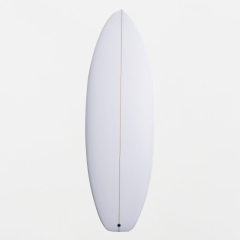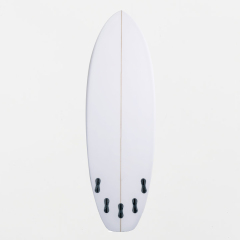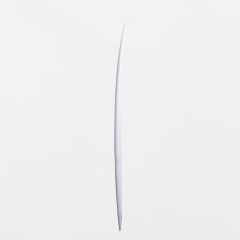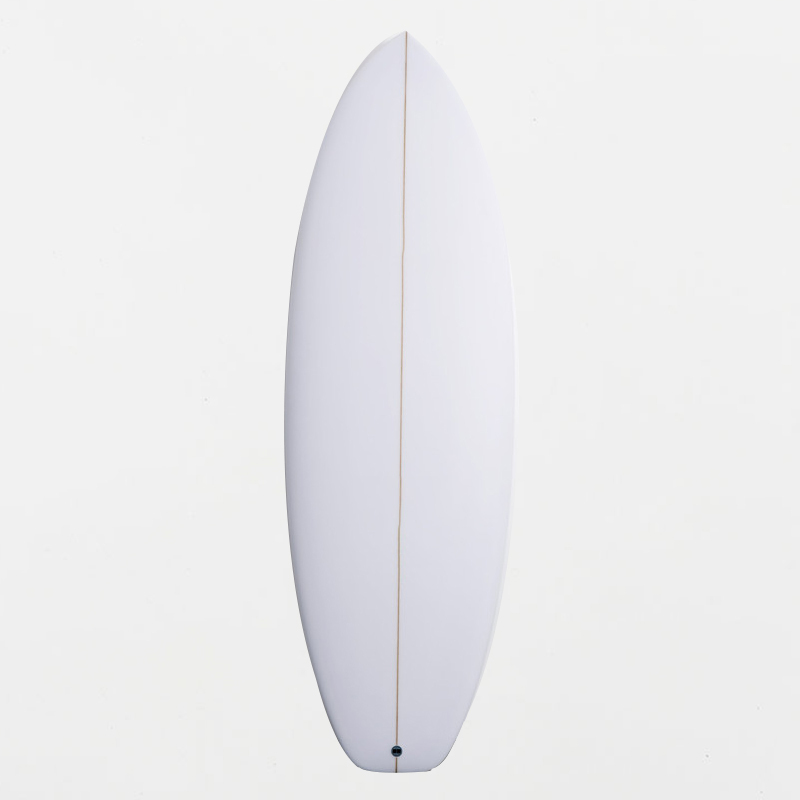
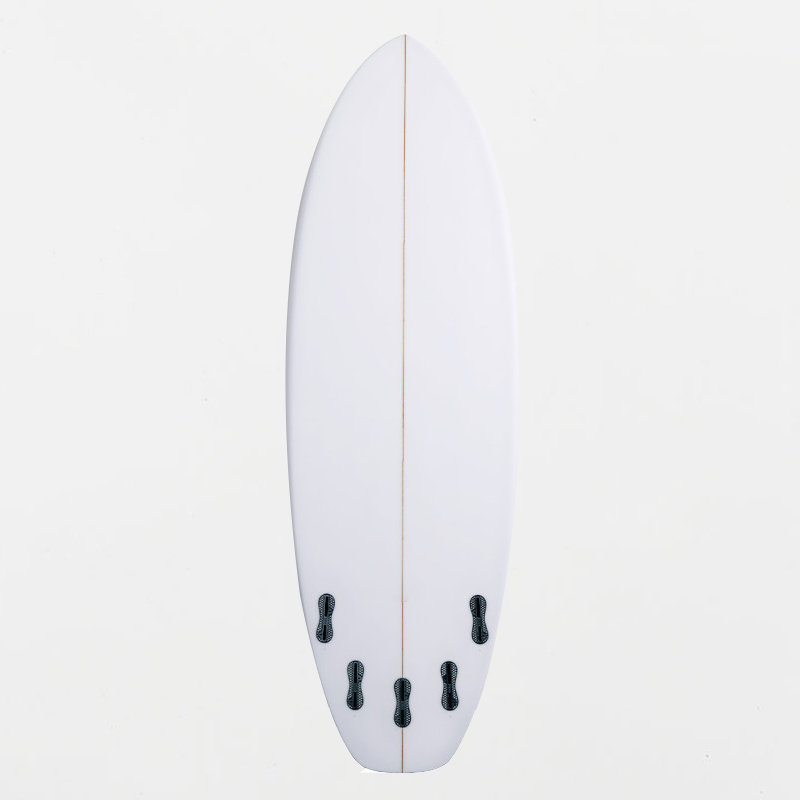
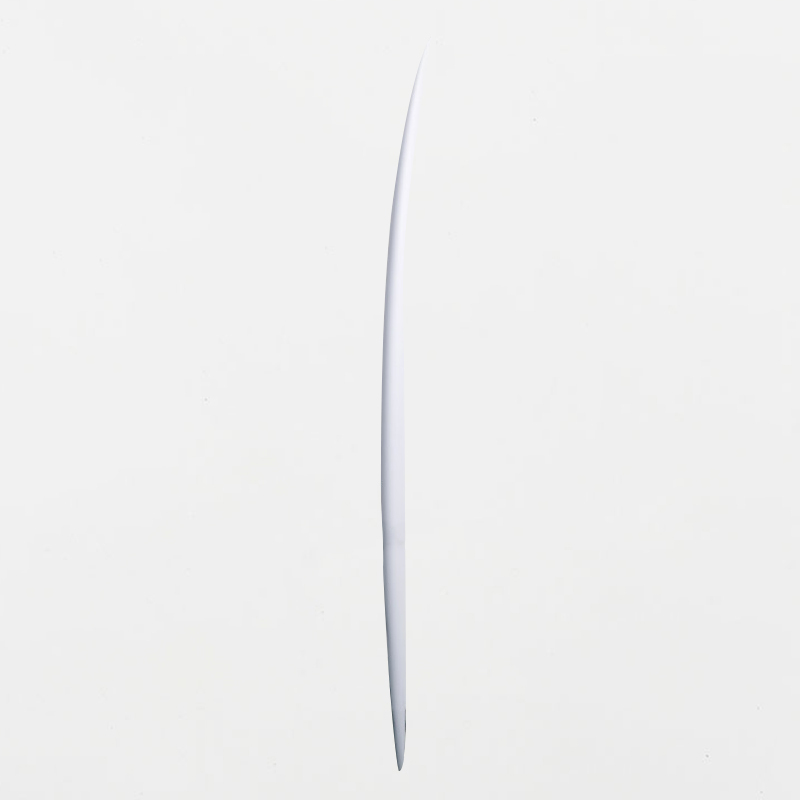
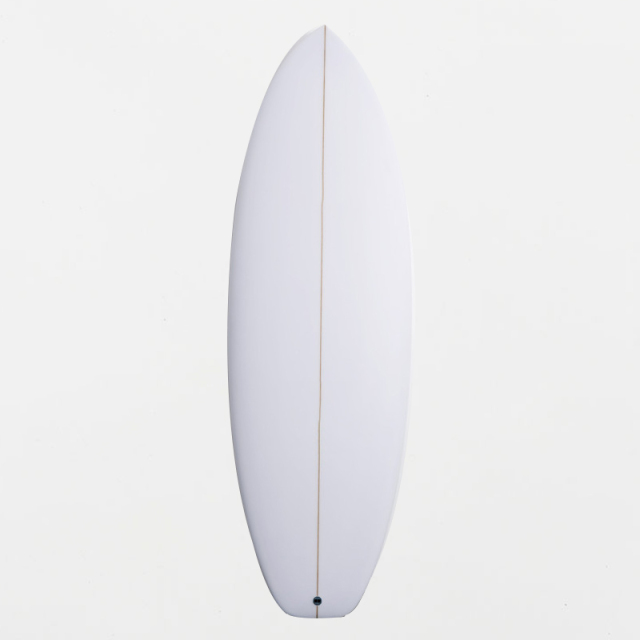
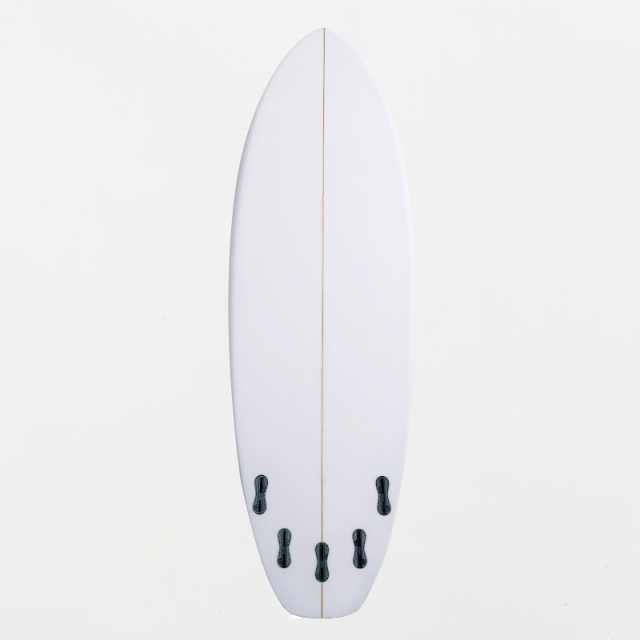
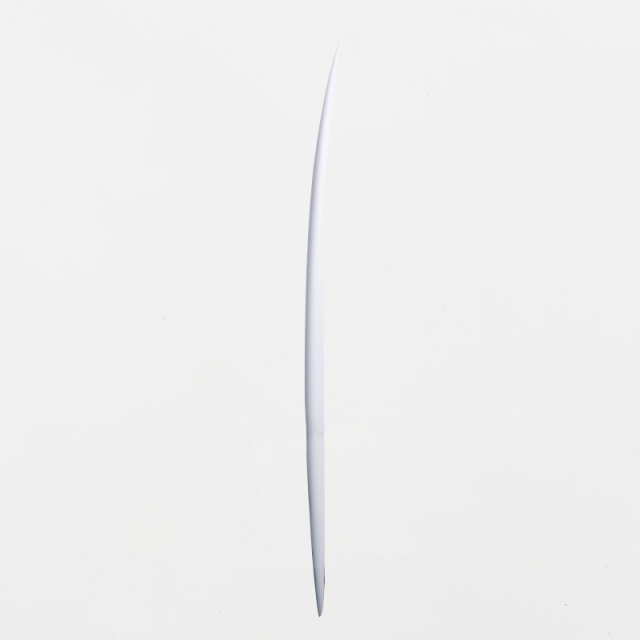
This is a 6ft0 white epoxy surfboard built for intermediate and advanced riders — the point where a surfer stops needing volume just to catch a wave and starts wanting a board that answers quickly. An EPS foam core is laminated in fibreglass and sealed with epoxy resin, which gives the board its light feel underfoot and its stiffness through a turn. The outline is a shortboard one: a pointed nose, a rounded tail, and a fairly thin foil from rail to rail. A single centre stringer runs the length of the deck and the tail carries a leash plug, so the board is ready to be leashed, waxed and ridden. At 6ft0 it holds two things in balance: enough length and volume to paddle comfortably, and a short enough rail line that the board turns when the rider does. Where it earns its place is in mixed company. A surf school can keep a few for improvers moving off soft-tops. A rental desk can stock them for guests who ask for a proper shortboard. A competitive rider can use one as the everyday board in a training block. If you are building a range or a fleet, this epoxy surfboard is the length that bridges learner boards and full performance shapes. In structured surf training facilities, the board serves as a high-performance tool for skill acquisition and agility across various wave conditions. Its lightweight EPS core and durable epoxy resin construction are built for consistent performance through progressive learning stages, with ease of maintenance that supports regular training use.
The core is EPS foam — closed-cell, light, and dimensionally stable under the laminate. It is wrapped in fibreglass cloth and sealed with epoxy resin, which cures harder than polyester resin and bonds into the core rather than sitting on top of it.
The laminate is kept balanced rather than heavy. Reinforcement sits where the board takes load — under the stance and along the rails — so the board holds its shape through a turn without carrying extra weight through the middle.
The finish is white across deck, rails and bottom, laid down evenly and sanded flat so there are no ripples to catch the light. A white epoxy surfboard is unforgiving of sloppy sanding, which makes it a fair test of how a board was built.
Up close, the details are the ones a buyer checks on a shop floor: a centre stringer running the length of the deck, a leash plug seated flush in the tail, and fin boxes set level with the bottom. None of them are decorative. Each is a place where a badly made board shows itself within a season.
The design decision behind this eps epoxy surfboard is simple to state and harder to execute: keep the weight of an EPS core and the stiffness of a glassed laminate without letting either dominate. Reinforcement is laid where the load goes, the core is shaped to a fixed rocker, and the fin boxes are set to a template so a fin sits at the same angle in every board that leaves the line. Modular hardware does the rest — the FCS2 interface lets the fin setup change without the board changing.
Repeatability is the point. If you buy four boards now and four more next season, they should ride the same, and outline, laminate and fin-box placement are held to one template across runs. Keeping a volume shape to a single specification is the part of the job an epoxy surfboard manufacturer cannot get wrong: the twentieth board has to feel like the first.
Before a board is packed it is checked where it matters — core integrity after shaping, box alignment against the bottom, finish and rail sanding, and the leash plug. They are quick checks, but they decide whether a board leaves the line feeling like the model it is meant to be.
For a buyer scaling up, that consistency is the whole value. Adding four more boards in six months, or moving a school's fleet from twelve to twenty, only works if the new boards feel like the old ones. A fixed template is what makes that possible. The design pairs a lightweight EPS core with fiberglass reinforcement to achieve structural integrity without compromising agility. The FCS2 fin system enables quick fin interchangeability to suit variable wave conditions.
The board is fitted with FCS2 fin boxes, and that detail matters more in a commercial setting than it does to a single rider. FCS2 fins seat into the box and lock without a screw or a tool, so a staff member can pull a set out, drop another in and hand the board back — no fin key to lose, no grub screw to strip, no queue forming at the rental desk.
For a school, one board can then serve different groups through the day. A larger, more upright template steadies the board for a heavier or less experienced rider; a smaller, raked template releases faster for an advanced surfer. The board's character does not change — you are tuning it to the person and the wave in front of you.
Fins are not fixed to the board, and fin sets are ordered separately, so build the setup into your order rather than assuming a set is included. If you are putting together a custom epoxy surfboard programme with your own branding or a particular fin template, raise it early: the fin configuration, colourway and graphics are the details that decide how long an order takes to prepare.
Keep a small spares box at each site — one spare set in the template you use most, plus a spare leash. A missing fin should cost a staff member two minutes, not a lost session.
A rental fleet asks more of a board than any single owner will. This 6ft epoxy surfboard is likely to be issued, ridden, returned, rinsed and issued again several times in a day, by riders whose idea of care ranges from careful to none at all. What survives that routine is a board with a hard shell, a sealed core and hardware that can be checked in seconds.
That is why fleet buyers often settle on one epoxy surfboard manufacturer for the whole wall. Mixed suppliers mean mixed wear patterns, mixed fin systems, and a spares drawer full of parts that fit one board and not the next.
Set the fleet up deliberately: a check-in routine that covers rails, deck, fin boxes and leash plug; a rule that a missing fin is replaced before the board goes out again; and a rack layout that keeps the 6ft0s together so staff can see at a glance what is available. FCS2 boxes make that fin rule realistic to enforce.
Guests notice condition. A fleet that comes back clean, leashed and finned reads as a well-run operation, and a white board makes that easy to demonstrate.
1. Check the board before the group arrives: run a hand along both rails, look over the deck for new pressure marks, and confirm the leash plug is sound. 2. Fit the fin set to the group: a larger, more upright template for less experienced riders, a smaller, raked template for the advanced ones. 3. Match the board to the rider: this length suits anyone past the soft-top stage, and the eps epoxy surfboard build keeps the feel light and predictable under a learner's feet. 4. Brief the rider on how it will behave — short rail line, quick response, and a tail that releases when they commit to a turn. 5. After the session, rinse the board, check the fin boxes and leash plug again, dry it and rack it. 6. Note anything that needs attention on the fleet sheet, so the next instructor inherits a sound board rather than a surprise.
A 6ft0 is rarely bought on its own. On a shop wall it sits between the soft-tops and the mid-lengths; in a school's rack it sits behind the learner boards and in front of the performance shapes. That place in the line is what makes it a useful item in a wholesale epoxy surfboard order: it is the model that lets a customer move up without changing shop. Buy the length in proportion. A typical range runs a 7ft6 or 9ft board for easy paddling and lessons, a 6ft0 like this one for riders with some time in the water, and shorter performance shapes above that. Two or three lengths that share a finish and a fin interface keep the wall coherent and keep your staff's advice simple. Repeat orders are where a range either holds together or drifts. Schools that add two or three boards a season use the same route, which is why the template behind this model does not change between runs. If you are extending the line under your own brand, add the new boards against the same reference and check them next to your existing stock when the first carton lands. Consistency is easier to confirm in the hand than on a specification sheet.
Built for sustained daily use in high-traffic settings such as surf schools and rental operations, the board maintains durability and user satisfaction. Its adaptability across multiple wave conditions supports rider performance and skill development in competitive events.
| Specification | Detail |
|---|---|
| Model | B70151 |
| Board type | Epoxy shortboard |
| Length | 6ft0 |
| Core | EPS foam |
| Reinforcement | Fibreglass laminate |
| Resin | Epoxy |
| Stringer | Single centre stringer running the deck |
| Finish | White deck, rails and bottom |
| Fin system | FCS2 boxes with tool-free fitting |
| Fins supplied | No — fins, leash and traction are specified separately |
| Leash attachment | Leash plug set into the tail |
| Rider level | Intermediate to advanced |
| Typical conditions | Varied, everyday wave conditions |
| Typical use | Surf schools, rental fleets, competitive training and dealer inventory |
CIMI is a factory-based supplier with 16 years in surf and watersports hardgoods, manufacturing at our own facility rather than sourcing through traders. Chain stores, supermarkets and surf-brand stores buy from us because one supplier covers a full accessory assortment, so a season's order and its reorders can be planned together. We take on OEM and private-label work, adapting designs, colourways and branding to your programme, and we schedule production against your agreed range plan. Send us your buy list and target dates, and we will confirm what we can make and when.