
Seven foot six is the length we build for the step after learning. The EXPOY 7ft6 Futures paddles with the ease of a bigger board and turns with a response a learner board cannot give, which puts it in the hands of surfers who can already stand, trim and pick a line but are not ready to work a shortboard for a whole session.
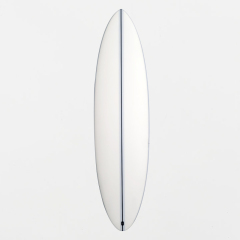
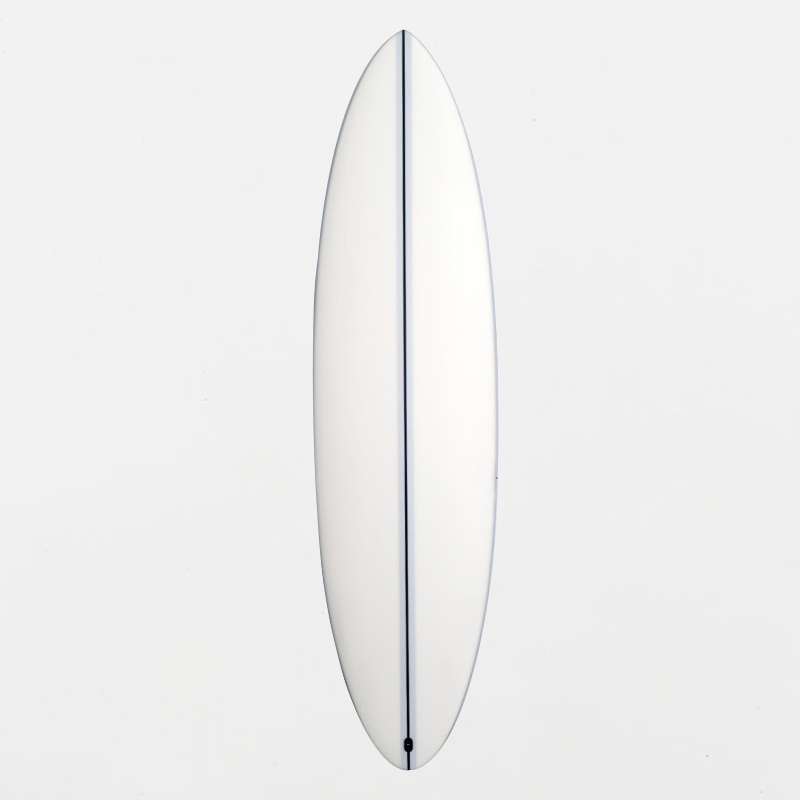
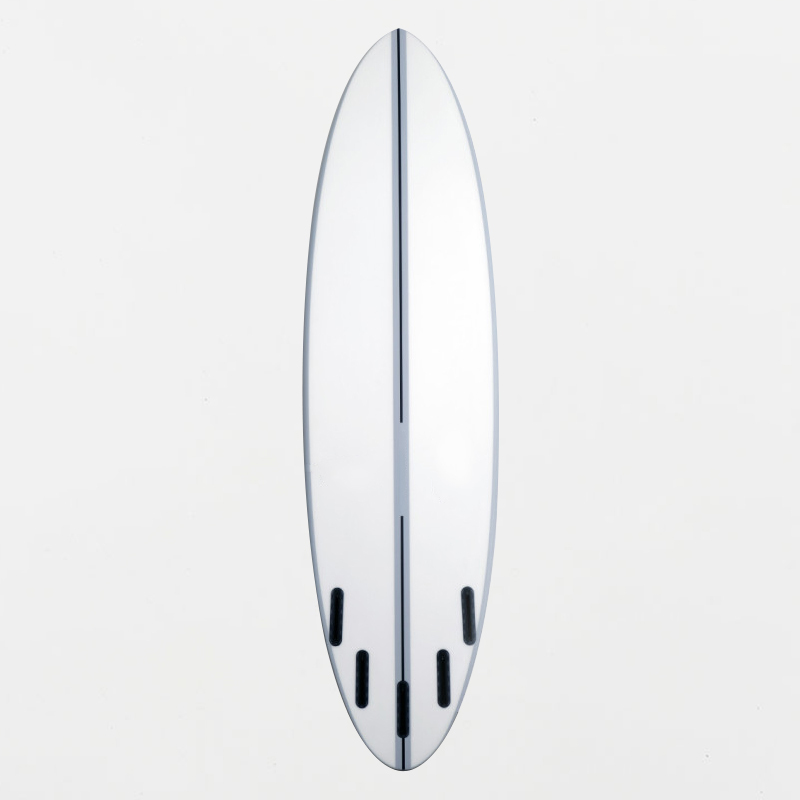
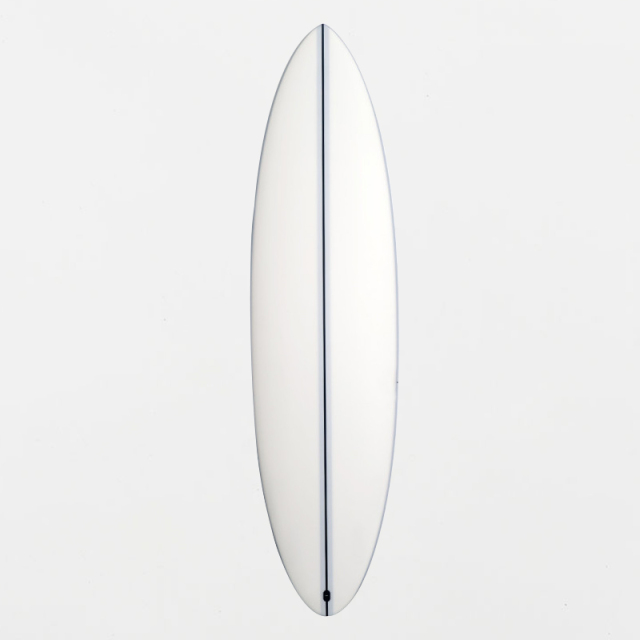
It is a 7ft6 epoxy surfboard in the practical sense: an EPS core under a fibreglass and epoxy laminate, light enough to carry under one arm and stiff enough to hold its shape when a rider drives through a bottom turn. A dark stringer runs down the centre of the deck and the gloss finish keeps the outline readable at distance, so a white epoxy surfboard is easy to pick out from the beach — useful when you are watching a whole class at once.
In a range it sits above the soft-tops and the longboards and below the shortboards. A customer who has spent a season on an 8ft or 9ft board can move onto it without losing wave count, and an experienced rider can keep one for the days when a shortboard is hard work. It takes a Futures fin set, a leash at the tail and a tail pad if the rider wants one, so a board can leave your shop ready to ride.
We shape and laminate it in our own factory rather than buying finished boards in, and supply it to shops, schools, distributors and brands who want a custom epoxy surfboard under their own colours.
- Improvers off a learner board — the first hard board most riders should step onto. Enough length to keep the wave count up while they learn to turn, and enough response that they are not simply standing still. - Intermediates who want one board for most days — it handles small to medium surf without becoming a handful when the swell picks up. - Surfers coming down from a long epoxy surfboard — you keep the early entry and the glide but lose the swing weight, so turns come around faster and the paddle back out takes less out of you. - Advanced riders on bigger days — a 7ft6 that holds in head-high surf is easier to work than a shortboard when the wave is fast and the paddle out is long. - Coaches and school managers — the board for the group that has outgrown soft-tops but is not ready for a performance shape. - Who should look elsewhere — complete beginners belong on a soft-top, and a rider chasing a pure high-performance shortboard should be on a 6ft0, not this length.
- A school's progression class — the board a student moves onto once they can pop up consistently; a 7ft6 board is forgiving enough to keep them catching waves while they learn to turn. - A rental fleet's next-step rack — returning customers who have outgrown the learner boards ask for something they can actually turn, and this is the length to hand them. - A dealer wall's mid-length slot — a board that sits between the longboards and the shortboards and gives a browsing customer a natural middle option. - A distributor filling a size gap — accounts that jump from 7ft0 to 8ft0 complete the ladder with this length instead of sending the buyer to another supplier. - An advanced rider's bigger-day board — a travel quiver with one shortboard and one 7ft6 covers small days and serious surf without carrying a longboard. - Coaching and video work — a stable platform for drills, with the fin setup adjusted to the skill being taught that morning.
The core is EPS foam: closed-cell, uniform and lighter than the polyurethane blanks behind traditional boards. Fibreglass cloth is laid over the shaped core and wet out with epoxy resin, so the finished shell is foam, glass and resin bonded into one skin rather than a foam block with a coating on top. That is what gives an EPS epoxy surfboard its stiffness at low weight, and why the board carries speed out of a turn instead of flexing away from the rider's foot.
Epoxy is doing more than holding the glass down. Against a polyester layup, the epoxy matrix raises the strength-to-weight ratio and adds impact resistance, so knocks are absorbed by the laminate rather than left as soft spots. The gloss finish sits over that laminate and does two jobs: it keeps the outline crisp on the water, and it shows damage early — on a white epoxy surfboard a hairline crack is visible long before it becomes a soft area under the back foot.
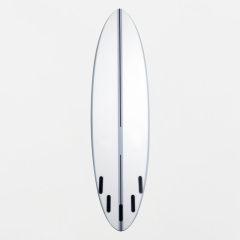
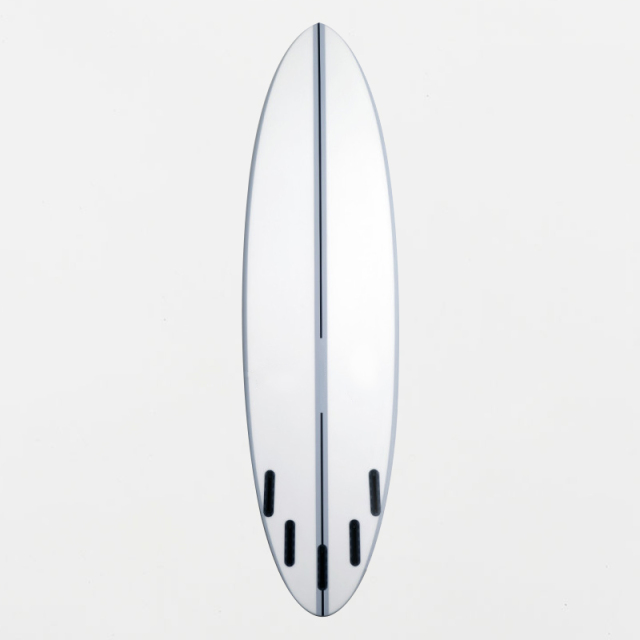
The hardware is laminated in rather than bolted on afterwards. The Futures fin boxes are set into the bottom and glassed over with the rest of the shell, the leash plug is moulded into the tail, and the stringer line runs visible down the centre of the deck. We build this board on our own line instead of buying finished boards from a third party, which is the control an epoxy surfboard manufacturer has over the layup and the finish. It is a practical option for surf schools and rental facilities because it can cover training, competition and recreational sessions across different rider skill levels, and it fits neatly into a mixed rental fleet. The light construction of the 7ft6 epoxy surfboard reduces paddling effort, helping riders conserve energy and stay in control through longer sessions, while the epoxy build is made to handle repeated impact and keep its performance over time.
Paddling is where a 7ft6 makes its case first. The foam is spread along the length rather than packed into the tail, so the board sits level under the chest, pushes over whitewater instead of digging into it, and picks up a wave earlier than a shortboard will. Across a two-hour session that difference is felt in the shoulders as much as in the wave count.
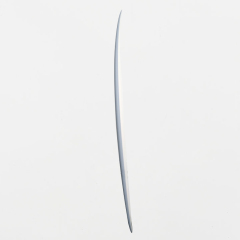
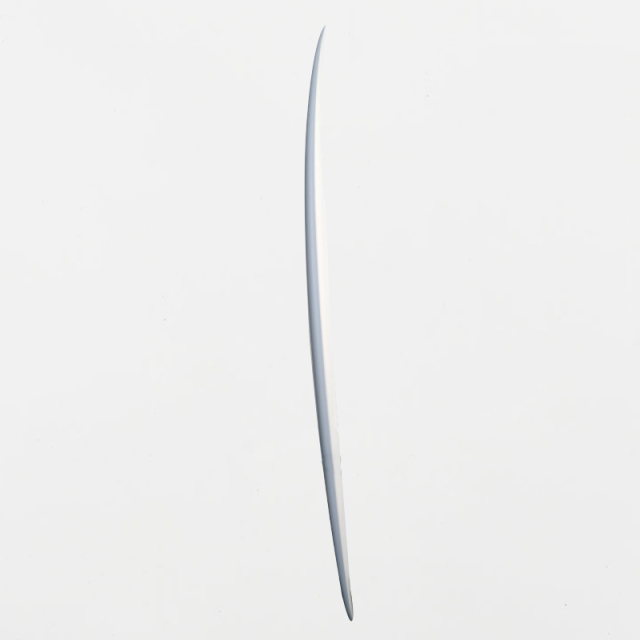
Once planing, the board trims without much input. The rocker runs smooth from nose to tail, with enough lift in the nose to keep the tip clear on a steeper drop and enough curve through the tail to turn off the back foot rather than skid. Intermediate riders find they can hold a line through a section instead of being carried by it, and stronger riders can push the tail through a roundhouse and get the board back underneath them.
Fin choice changes the character more than most riders expect. An EPS epoxy surfboard of this length responds clearly to a larger, more upright set for tracking and drive on a point break, and to a looser, smaller set for small waves and quick direction changes. Because the boxes are Futures, that change happens at the van or the rental desk in a couple of minutes. In bigger or faster surf, the same epoxy surfboard with fins stepped up in size gives the hold this length needs to be ridden with commitment.
Expect the board to feel most at home in medium surf with some push. It still works on smaller days, particularly with a fuller fin set, and it has the length to take on a bigger wave than a shortboard rider would normally commit to. It also suits competitive surfers and high-level equipment programs, with fin tuning that can be matched to specific wave patterns for more consistent results in competition.
A lesson day puts a board through a routine a rental board never sees: issued, ridden, rinsed, stacked and issued again, often several times before the afternoon. This is the 7ft6 epoxy surfboard we point schools to for the group that has moved past soft-tops — students who can stand and are learning to generate speed, hold a line and turn off the back foot. The fin boxes do most of the work in a school. A larger, more upright set gives a nervous student stability and tracking; a smaller set frees the tail for a student working on turns. Because the change takes a couple of minutes, one rack can serve two or three class levels in the same week with a different setup for each session and no second model in the store room — one of the practical reasons a school buys from an epoxy surfboard manufacturer rather than mixing models from several sources. At the rental desk the board is easy to brief: one length, one construction, one fin system. Staff check boards in against a short list — rail, deck, tail, leash plug, boxes — and a gloss white laminate makes small cracks and pressure marks visible before they turn into a repair. Between seasons, rotate the fleet so wear is spread across the rack rather than concentrated on the same few boards, and keep everything covered in storage. A board that spends the off-season stacked in the sun will not come back with the finish it went away with.
| Model | B70151 |
|---|---|
| Board type | Mid-length epoxy surfboard |
| Length | 7ft6 |
| Construction | EPS foam core, fibreglass and epoxy resin |
| Fin system | Futures fin boxes |
| Outline | Pointed nose, rounded tail |
| Deck details | Central stringer, leash plug at the tail |
| Finish | White, gloss laminate |
| Rider level | Intermediate to advanced |
| Typical conditions | Medium to large waves |
Teams and distributors buy for a different reason from a walk-in customer: they buy the same board again. A rider who has dialled a 7ft6 for a particular break does not want the replacement to feel like a different board, and a distributor does not want a high-volume length arriving with a changed outline. That is why the layup, the outline and the hardware stay fixed on this model while the fin choice does the tuning.
In a competitive setup the board works as the step-up for bigger, faster conditions and as a training platform that lets a rider work on rail-to-rail turns without the wave count collapsing. A coach can set up two boards from the same stock with different fin sets and give a rider a direct comparison inside one session.
For a distributor the model fills the middle of the range, between learner boards and performance shortboards, so an account can be opened with one shipment that covers a shop floor instead of a single customer type.
We also take on custom work. If you need a custom epoxy surfboard under your own label — a colourway, your branding on the deck, or a variation on the outline — tell us what you have in mind and we will confirm what can be built and what it changes. Custom runs are planned alongside your stock order so the branded boards and the plain ones are made to the same schedule.
CIMI is a factory-based supplier with 16 years in surf and watersports hardgoods, manufacturing at our own facility rather than sourcing through traders. Chain stores, supermarkets and surf-brand stores buy from us because one supplier covers a full accessory assortment, so a season's order and its reorders can be planned together. We take on OEM and private-label work, adapting designs, colourways and branding to your programme, and we schedule production against your agreed range plan. Send us your buy list and target dates, and we will confirm what we can make and when.