Product Overview
A performance shape with a forgiving platform. Enough volume under the chest to paddle into a set wave, a rail that holds when the wave stands up, and a tail that keeps driving through a turn rather than washing out. It is at home from medium surf up to the bigger, choppier days that send most of the rack home early.
Who rides it is deliberately wide. Improvers stepping up from a learner board can handle it, and experienced surfers still find the speed and control they want when it is overhead. The setup is what makes that possible: fins and deck grip change without touching the glass, so the same hull can be tuned loose for a light rider or given more drive for a heavier one.
We build this model as an OEM surfboard factory rather than a reseller. The board, the fins, the traction pad and the leash come off the same production line, so a shop or a school can specify a complete board on one order and repeat that specification on the next.
- A shorter range that still fills the wall. One hull with three mounting points and a swappable pad covers more rider types than three near-identical models, so the range is easier to buy, stock and explain. - Board and parts from one line. As a performance surfboard manufacturer we make the fins, pads and leashes that go with the board, so a set ships matched rather than assembled from three suppliers. - Specification locked before the run. Fin family, pad type and leash length are agreed on the order, so every unit in the batch arrives set up the same way. - A versatile wave surfboard for a whole season. The setup changes and the hull does not, which lets one model carry a shop from small summer surf into bigger autumn swells. - A modular surfboard design that survives wear. Pads, fins and leashes are replaced; the board stays in service, which is what protects the money tied up in a fleet. - Easy to sell from the spec. Staff can explain the difference between two setups in a sentence, which is more than most customers get from a colour name. For training sessions and events, the board handles medium to large waves, and interchangeable fins and traction features let staff adapt setups between sessions. It is made to support dependable use in commercial surfing programs, with quality checks consistent with rental and school operations. In wet conditions, the ergonomic traction pads hold grip and help stabilize stance, while fin dynamics and leash safety features sharpen responsiveness and rider control. The board is built to take varied ocean stresses while keeping the precision that lets riders customize accessories quickly across skill levels.
Construction & Materials
| Core | EPS foam |
| Laminate | Fibreglass cloth with epoxy resin |
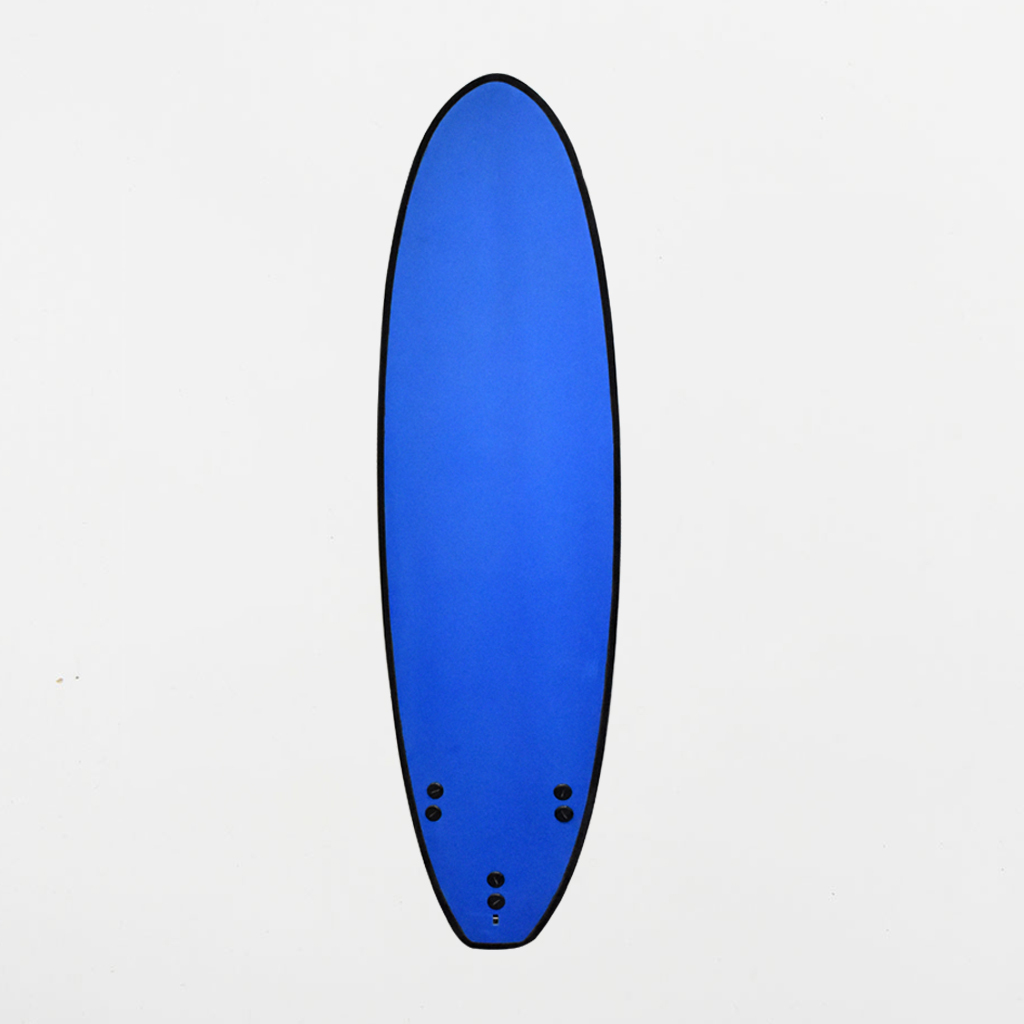
| Outline | Rounded nose, tapered tail |
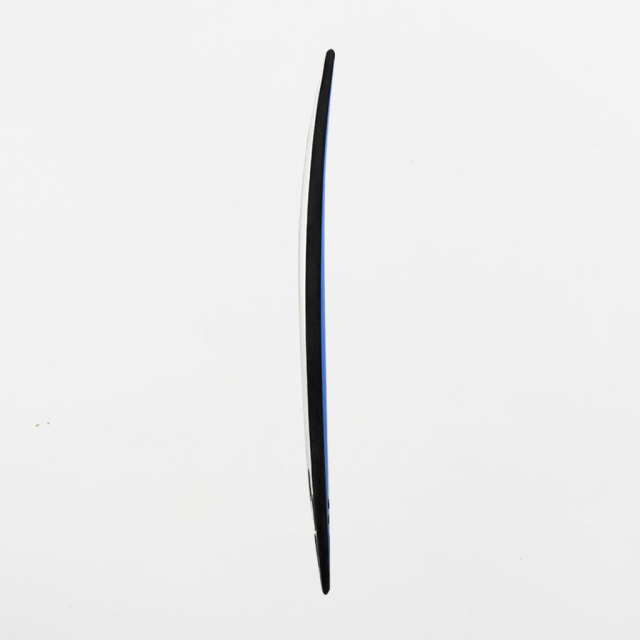
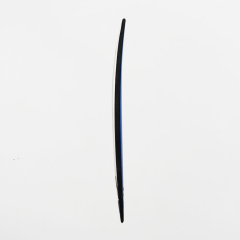
| Deck | Blue with a black rail line |
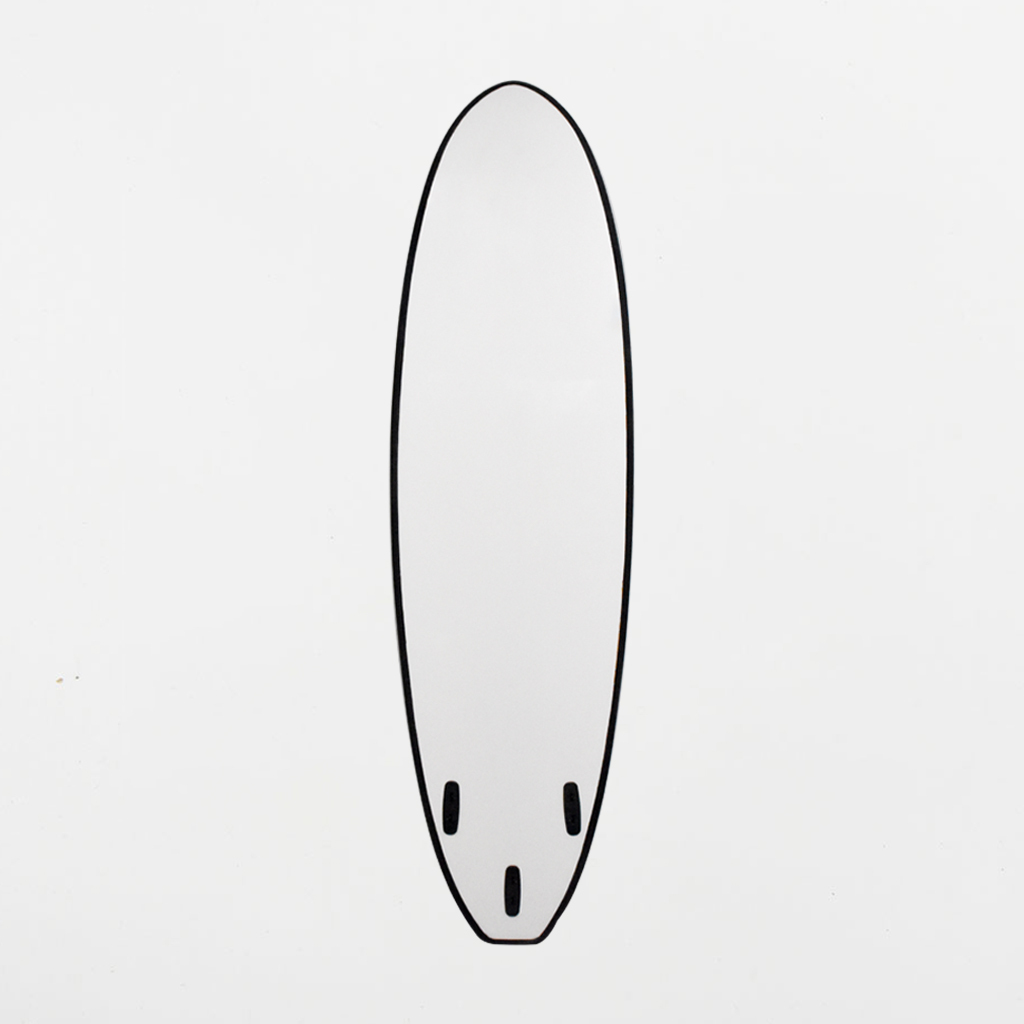
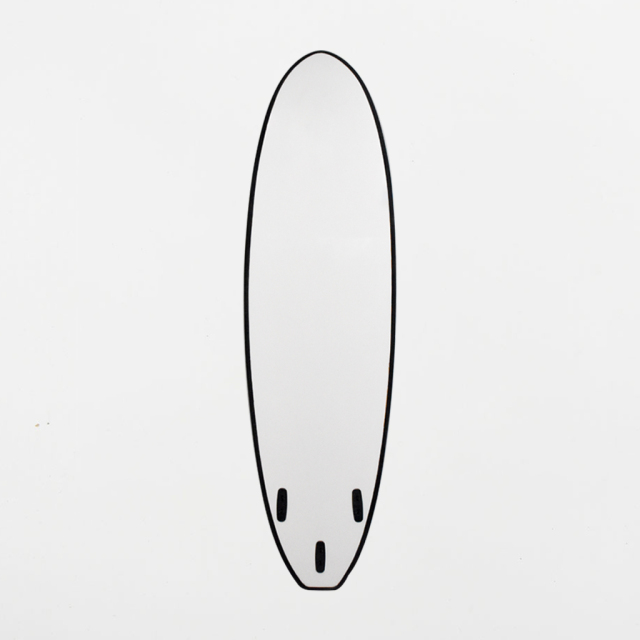
| Bottom | White |
| Fin boxes | One centre box plus two side boxes at the tail |
| Leash anchor | Plug set into the laminate |
| Deck grip | Tail pad footprint laid independently of the glass |
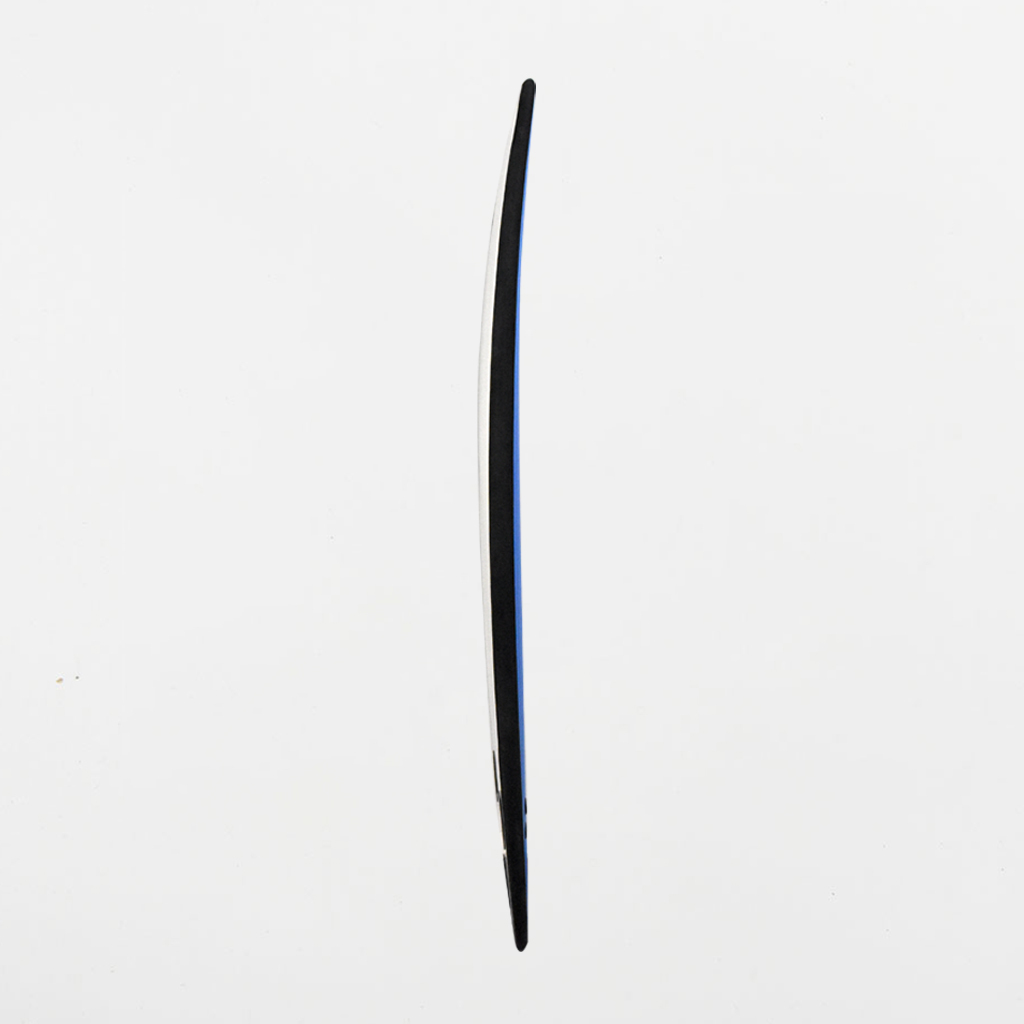
| Rail | Black edge with a blue stripe |
Modular Structure & Setup
- Setup matched to the day. Fin area can be moved between a single centre fin and a multi-fin layout without any glassing work, so one hull handles a mellow afternoon and a building swell.
- Single tab and double tab fins both seat. A shop already holding a Honeycomb fin family can fit what it has, and the same boxes take the stiffer templates teams use on bigger days.
- Moulded, not cut from sheet. Resin transfer moulding keeps each fin the same foil as the one before it, so a replacement matches the set it joins.
- Grip is a wear item, the board is not. Traction pads sit on their own footprint on the tail. That is the modular surfboard design doing its job: a worn pad is swapped and the board goes back on the rack.
- The leash anchors through the laminate. The plug is set into the build, so the cord loads against the board rather than a small patch of glass.
- Weight placed for turning. Mass is held where it keeps the nose light, so the board comes around from the tail without dragging.
- A stable modular surfboard at low speed. Volume planes early, which is why the shape stays predictable when the wave is slow and mushy.
- A versatile wave surfboard when it stands up. The same hull keeps its composure overhead, so one model covers more of the season.
- Detail that a performance surfboard for advanced surfers has to get right. Box alignment, pad placement and rail finish are checked as part of the build, because a team rider notices a tail that sits a degree off.
Ride Performance & Usability
Drive through the tail is what separates a good session from a frustrating one. The boxes sit where the template loads up, so the board accelerates out of a bottom turn and carries speed through a cutback instead of stalling. On medium to large days that shows up as sections made that would otherwise have closed out. The deck stays grippy when it is wet. Tail pads are shaped with a raised kick and a defined arch so the back foot stays where it was put, and the smooth sealed finish sheds water and sand rather than holding them, so the board does not feel gritty underfoot after a paddle out. The same input produces the same response, session after session, and that consistency matters more than any single headline figure when you ride the same model all season.
Competition & Team Environments
A team riding the same model every week needs the boards to behave the same way every week. This one is built to that brief: identical boxes, identical pad footprint and identical leash anchor from unit to unit, so a rider who breaks a board at a contest switches to the spare without re-learning the setup.
Venue-to-venue adjustment happens at the tail. A longer-period reef break will usually be ridden with more fin area held in the water, while a punchy beach break rewards a looser tail. Because the boxes take Honeycomb, Timber and G10 Glass templates, a coach or technician can change the character of the board without changing the hull underneath.
Spare fin sets, a couple of pads and the right leash length in the travel bag cover most of what a contest week throws at you. For a performance surfboard manufacturer supplying teams, that repeatability is the whole point: variation between heats should come from the surfer, not the equipment.
Surf Schools & Rental Fleets
- Volume that gets beginners standing. The platform is stable at low speed, so first sessions are spent learning instead of balancing.
- A waxless pad setup. Less mess in the van, no re-waxing between lessons, and a grip surface that still works under a wet wetsuit foot.
- Leashes sized to the board, not the shelf. Hypalon cords come in four lengths up to 9 ft 8 mm, so the longboard and the shorter boards in the fleet each get a cord that matches them.
- A finish that is easy to track. The blue deck reads clearly against white water when staff are counting boards back in at the end of a lesson.
- One model, several fleet roles. As a stable modular surfboard design, the model can go out to a cautious beginner on one setting and to a stronger intermediate on another, which keeps the rack simple.
- Replacements that match what you already own. Ordering through a single custom surfboard supplier means the next board arrives with the same boxes, pad footprint and leash plug as the last one.
- Something for the instructors. Staff surfing between lessons get a performance surfboard for advanced surfers rather than another soft learner board.
- Resin transfer molding gives the board a strong structure with weight distributed precisely for wave handling, and it accepts leashes, protective covers and rack systems to keep maintenance simple.
Matching Fins, Leashes & Pads
| Leashes | Hypalon cuff in 6 ft 6 mm, 7 ft 7 mm, 8 ft 7 mm and 9 ft 8 mm |
| Fin sets | Honeycomb single tab and Honeycomb double tab |
| Fin materials | Timber and G10 Glass, seated in the same boxes |
| Deck grip | Tail pads, centre pads and waxless pads |
| Transport | Basic bag, regular bag and stretch cover |
| Storage | Storage racks and display racks |
| Travel | Travel rax and tie-down sets |
Ordering & Delivery
- Send the range plan: lengths, colours, fin family, pad type and leash length.
- Confirm the accessory set on the same order — fins, pads, leashes, covers and racks — so nothing arrives short of a complete board.
- Agree quantity and timing. Typical production lead times run from 2 to 4 weeks depending on order complexity and quantity, and minimum order quantities vary by product, so ask your sales contact for the figure that applies to your mix.
- Approve colour and branding. As an OEM surfboard factory we produce against approved artwork and colour references, with a check step before the full run.
- Agree packing and freight with your contact: carton protection, palletisation and shipping terms confirmed in writing before production closes.
- Repeat against the original specification, so a performance surfboard for professionals ordered this season can be replaced like for like next season.
Scale & Supply Capability
CIMI is a factory-based supplier with 16 years in surf and watersports hardgoods, manufacturing at our own facility rather than sourcing through traders. Chain stores, supermarkets and surf-brand stores buy from us because one supplier covers a full accessory assortment, so a season's order and its reorders can be planned together. We take on OEM and private-label work, adapting designs, colourways and branding to your programme, and we schedule production against your agreed range plan. Send us your buy list and target dates, and we will confirm what we can make and when.
FAQ
What makes this a stable modular surfboard rather than a standard performance shape?
Volume is carried where it planes early and the rail stays predictable, so the board sits still under a rider who is not yet generating speed. The modular side is the hardware: fin area moves between the boxes and the tail pad can be replaced, so the setup changes without a new hull underneath you.
Can we have our own colours and branding on the board?
Yes. Colourways and graphics are agreed on the order and produced against your artwork and colour references, with an approval step before the full run. Working as a custom surfboard supplier means the deck graphics, model name and packing can all carry your label rather than ours.
How do you keep quality consistent from one production run to the next?
We have been building surfboards for over 16 years and check at each stage rather than only at the end: laminate, box alignment, pad placement and finish. Each board is measured against the same performance and durability criteria before it is packed, which is how a performance surfboard manufacturer keeps a repeat order identical to the first. If you need a specific check written into the order, say so when you send it.
Which riders is this board built for?
Strong intermediates and up. It is a performance surfboard for advanced surfers first, with enough volume to keep an improving rider moving on smaller days, and it holds together when an experienced surfer pushes it overhead. A complete beginner is better served by a soft-top learner board.
What materials go into the board and the accessories that come with it?
The hull is an EPS foam core laminated with fibreglass cloth and epoxy resin. Fins are resin transfer moulded Honeycomb in single tab and double tab, and the leashes use a Hypalon cuff. Every board leaving our OEM surfboard factory is built to the same material specification, which is what makes an accessory order predictable.
Can we change the fins or the traction pad after the board arrives?
Yes. Fins unbolt from the boxes and pads sit on their own footprint, so both can be swapped without touching the glass. Because it is a versatile wave surfboard, the same hull can be set up looser for small surf or with more fin area for bigger days, and a shop can offer customers a choice without holding a second model.