Product Overview
A long board travels further than the paddler when a fall happens, and a short cord turns that distance into a hard snap on the tail. This model is built for exactly that situation: a 12ft SUP leash with a 9 mm cord, sized for the larger stand-up paddleboards at the top of a touring, race or rental range. It is the longest and heaviest leash in our SUP line, and the one shop staff reach for when a customer walks in with a 12 ft board and a worn-out strap. What separates it from the ankle leashes either side of it is the cuff. A padded knee cuff closes below the knee so the pull lands on the calf and shin rather than the ankle joint. On long open-water sessions, in cold water, or for a paddler carrying an old ankle injury, that is the reason they ask for a SUP knee leash by name. The cuff is also easier to reach and adjust while standing on the board, which matters more than it sounds when you are re-tying a leash in chop. CIMI is a SUP leash manufacturer with the whole ladder under one roof, from 8 ft ankle models through 10 ft and 12 ft ankle leashes to this knee-cuff version in 9 mm cord. Leashes are built alongside fins, traction pads, covers and racks, so a shop can assemble an accessory wall without stitching together three suppliers. Dealers and distributors build a wholesale SUP leash range on that spread, covering short recreational boards, mid-length all-rounders and long open-water boards from a single range plan. For a buyer, this code does a specific job. It anchors the top of the leash selection, it gives the shop an answer for the paddler who has just moved up to a touring board, and it sits naturally next to the 10 ft knee leash and the 12 ft ankle model so the range reads as a ladder rather than a list of codes.
Cord & Hardware
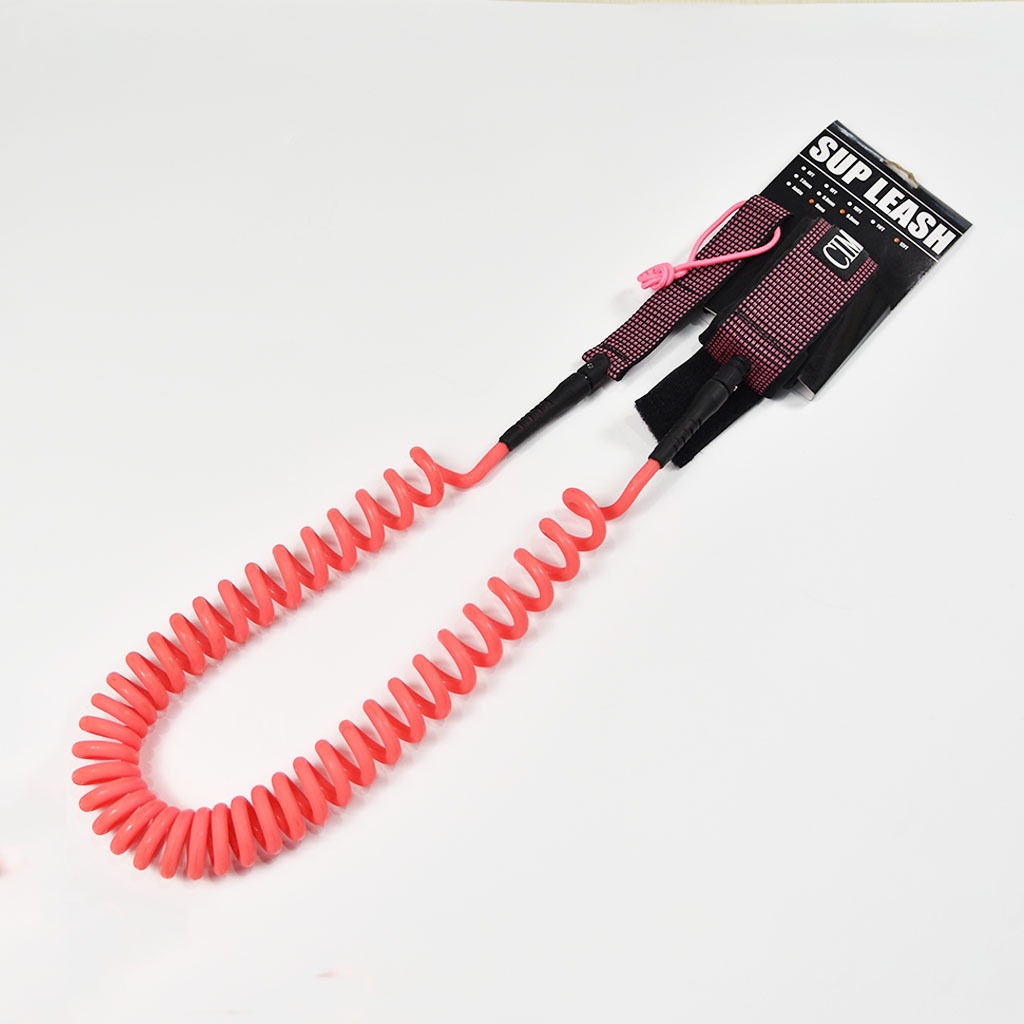
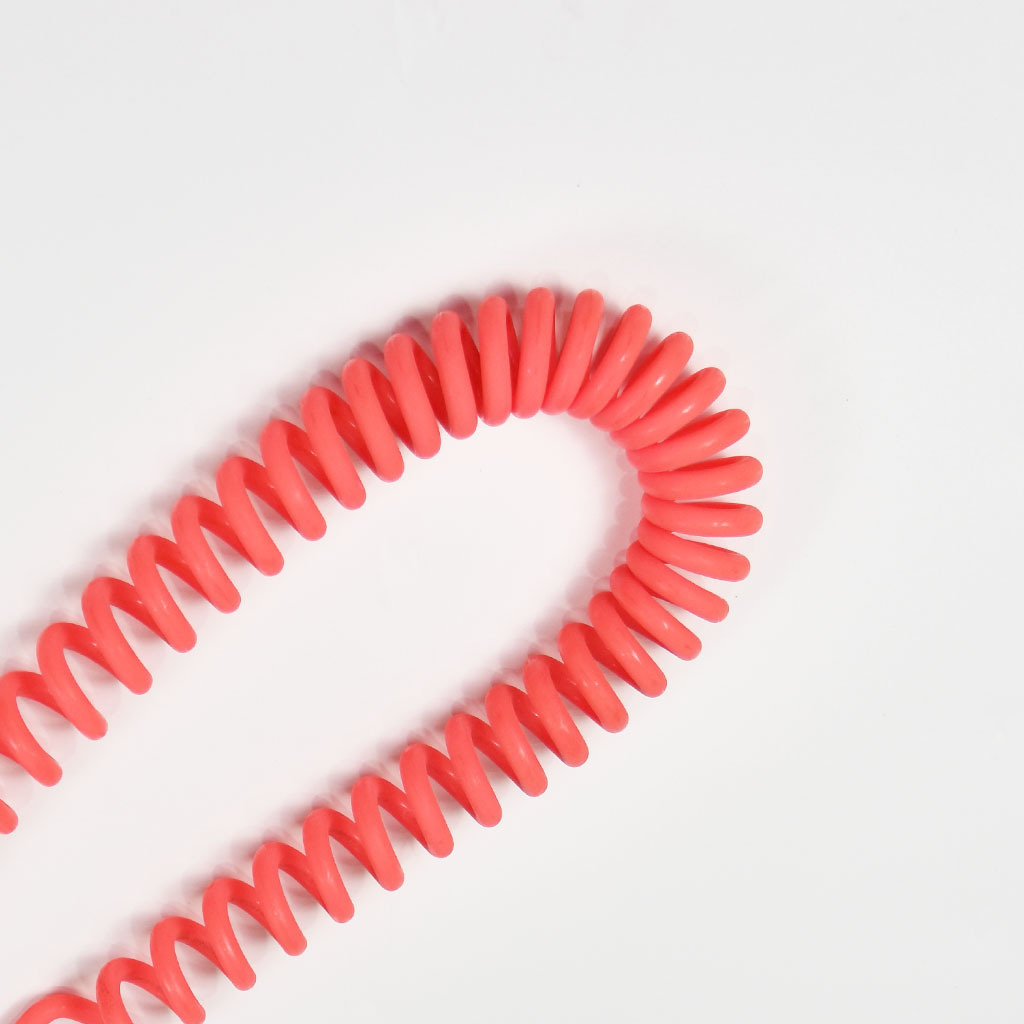
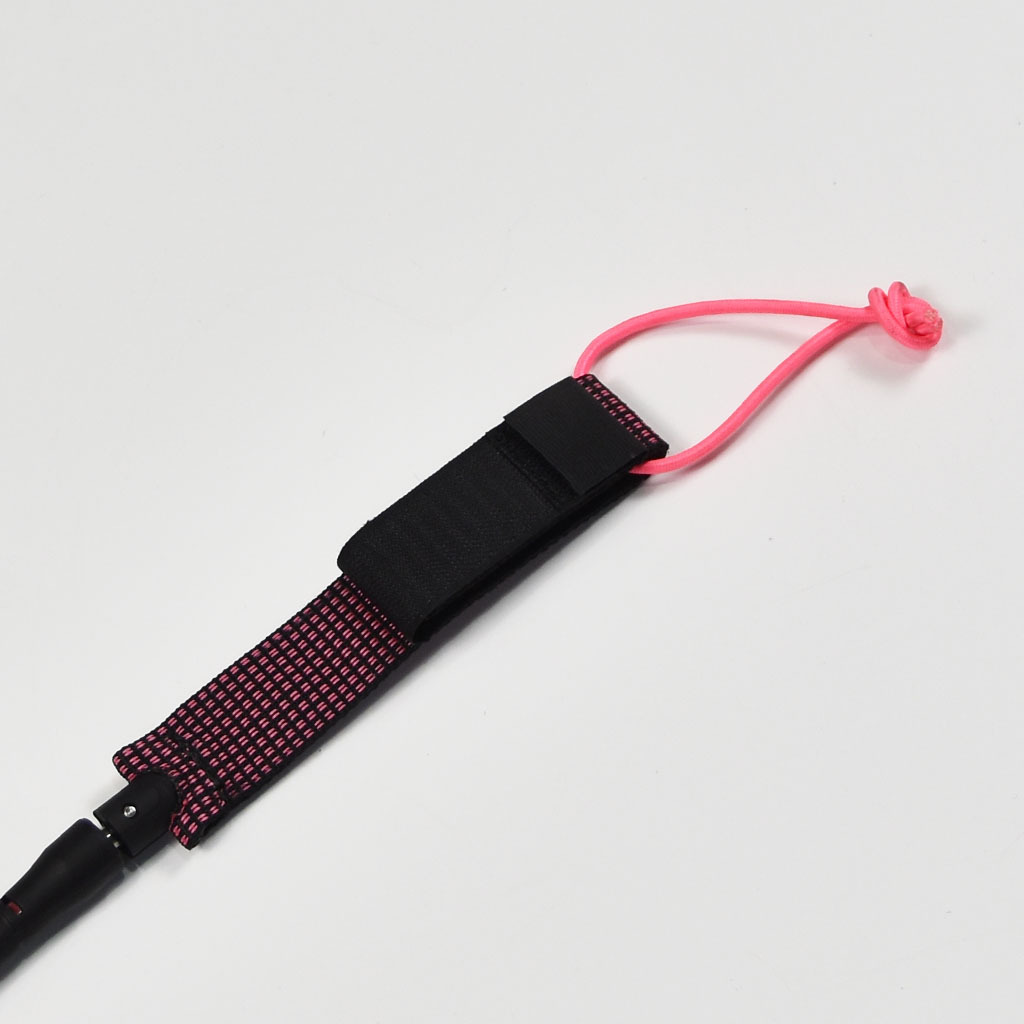
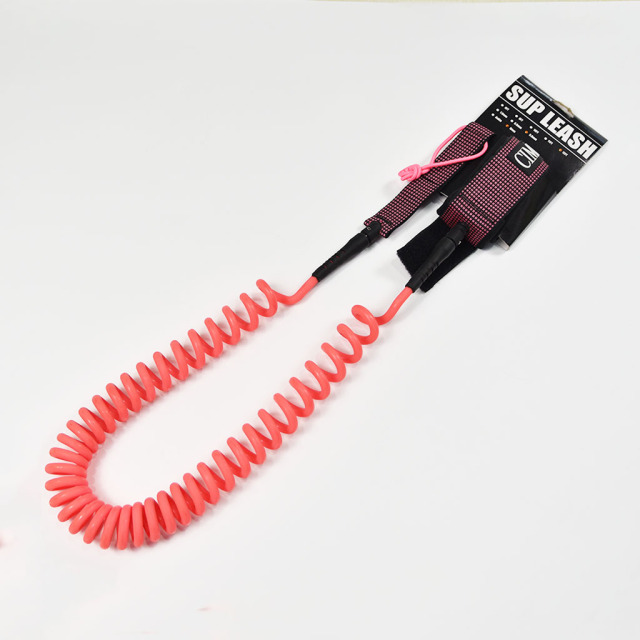
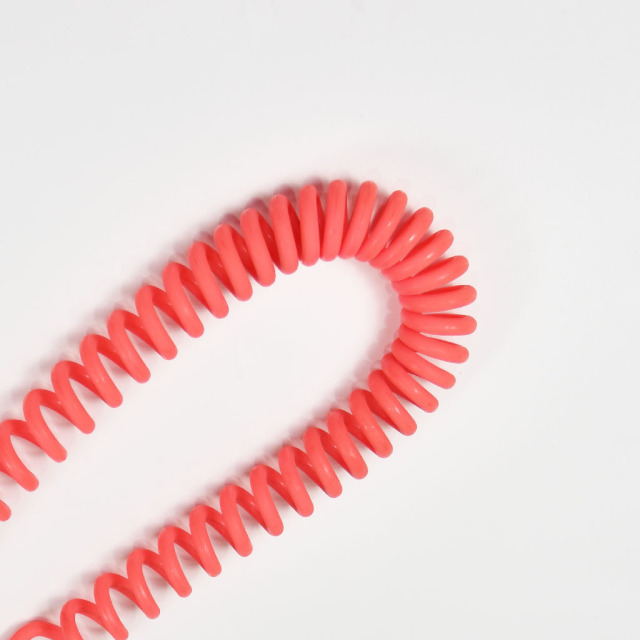
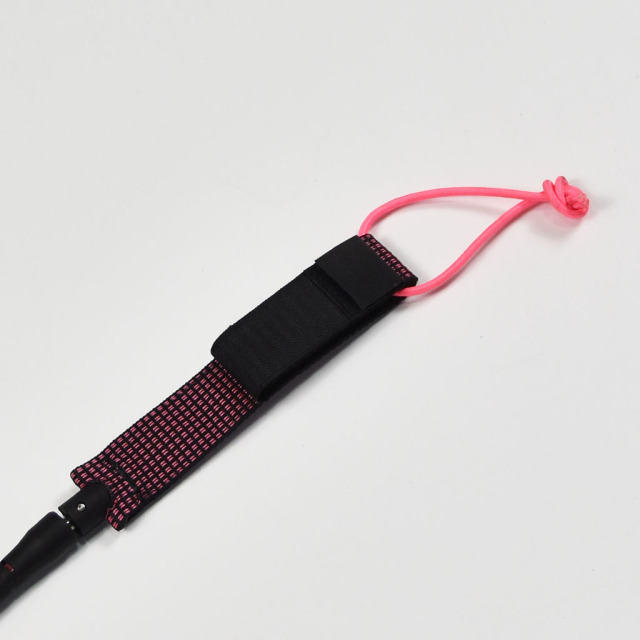
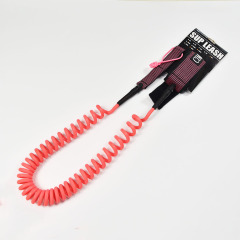
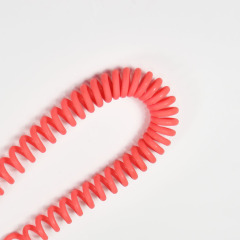
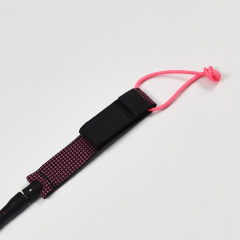
Nine millimetres is the heaviest cord in the line, and on a long leash the extra material earns its place. A 12 ft cord has more length to stretch than an 8 ft one, so the thicker section keeps the recoil predictable when a paddler comes off in open water. On a 9 mm sup leash it also stands up to the daily grinding of a board being dragged across a deck, a beach or a roof rack. The cord is TPU, chosen as much for how it behaves out of the water as in it. It holds its memory after repeated stretching, resists salt water and UV, and keeps a round section instead of flattening into a weak point — provided it is stored loosely rather than crushed into a bag. This is the detail a custom SUP leash supplier has to get right, because a cord trained into a kink is where wear shows first. At the board end, a rail saver spreads the load. Webbing runs between the cord and the plug across a wider footprint, which is what stops a loaded cord from sawing into the rail. On a long SUP the tail takes most of the recoil, so this is the part that decides whether a board comes back from a session with a scar. Stainless steel swivels at the connections keep the cord from twisting up as the board spins. Twist is what turns a leash into a spring, and in salt water the fitting has to be marine-grade stainless rather than plated hardware that stiffens after a season. The finished leash reads clearly on a crowded accessory wall: coral cord, black padded cuff, pink webbing detail.
Knee Cuff & Fit
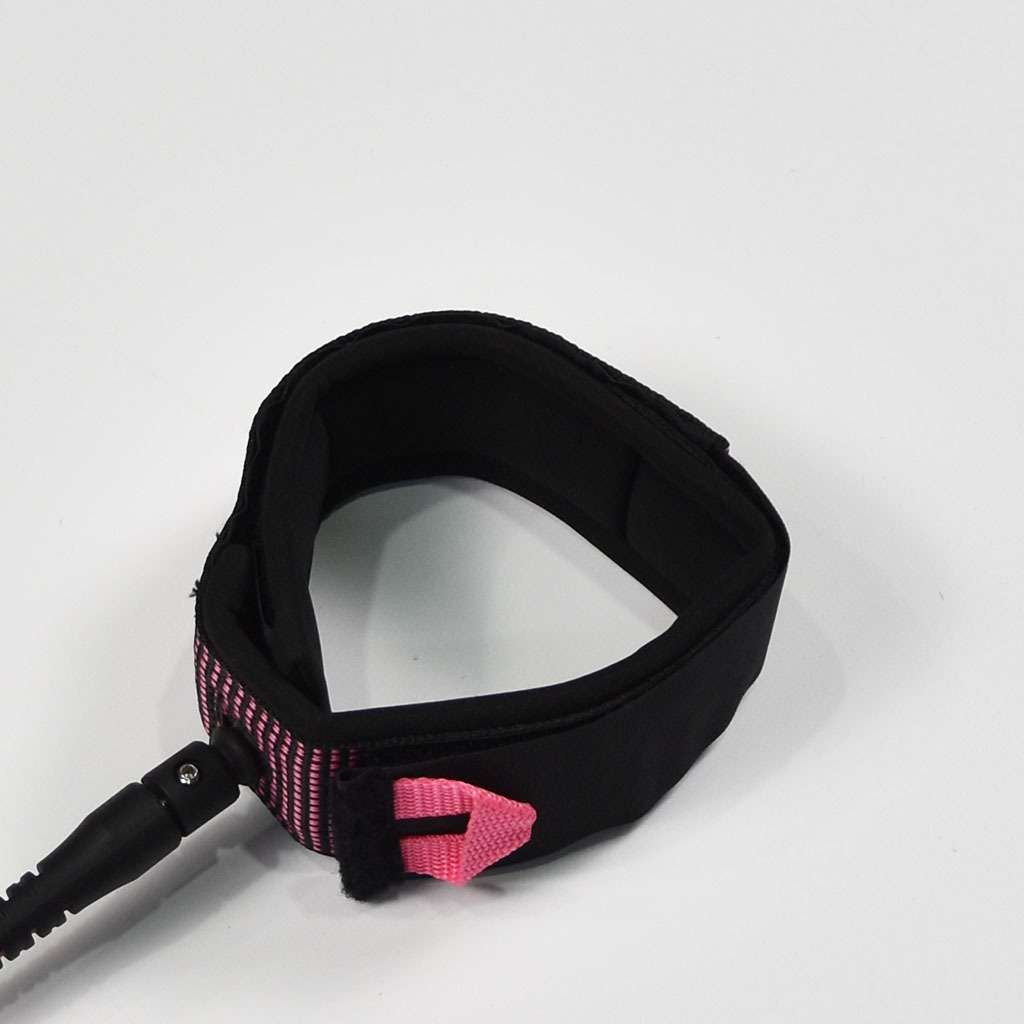
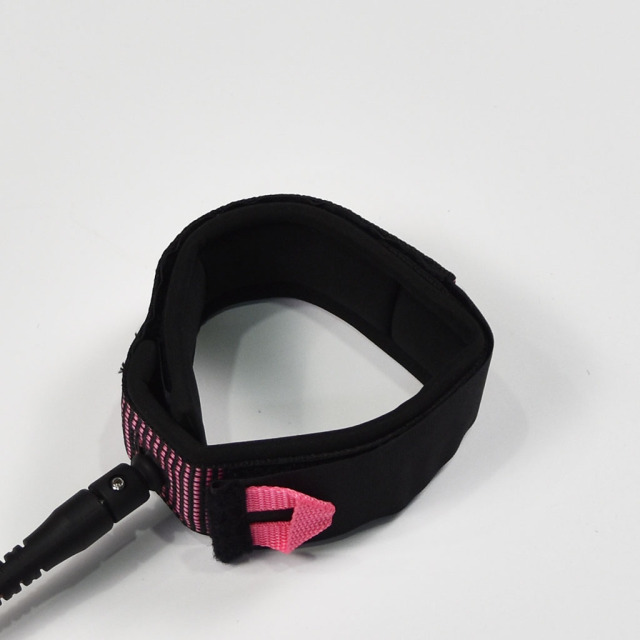
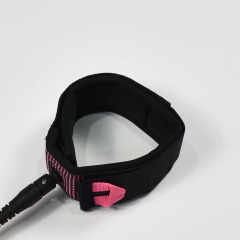
- Knee placement, not ankle. The cuff closes below the knee so the leash pulls against the calf and shin instead of the ankle joint. That is a bigger, stronger anchor, and it keeps the strap off the bony part of the joint that chafes first on a long session.
- Adjustable wrap closure. Woven webbing sets the fit over a bare leg, a thin summer suit or a thicker winter wetsuit. One cuff covers the leg sizes a shop normally stocks, so there is no small/medium/large ladder to manage on the wall.
- Padding where it matters. The cuff is padded so the webbing does not bite when the leash loads up, and the strap sits flat against the leg rather than rolling into an edge.
- Easy to find in the water. A knee cuff sits in front of the paddler rather than under the heel of a suit, so it can be checked and adjusted without sitting down on the board. That visibility is why the knee leash for SUP touring and downwind paddling gets requested by name.
- Chafe over distance. Twelve feet of cord spends more time in contact with a leg, a deck and a rail than a short surf leash does, and the padding is there for the hours rather than for the first five minutes.
- When an ankle cuff is still the better call. On a short all-round board, or for a paddler who wants the lowest possible profile, an 8 ft or 10 ft ankle leash remains the natural pick. This 9 mm SUP leash is the heavy-duty end of the wholesale SUP leash line, so it suits the paddler who has already decided they want length and thickness.
Applications
- Open-water touring. Exposed coastline and long crossings on a full-length board: this is the setting the 12ft SUP leash was sized for, and the setting where paddlers most often ask for a knee cuff rather than an ankle strap.
- Downwind and race paddling. Long boards, fast water and a lot of time standing still on the deck between runs. The knee cuff stays in front of the paddler, so it can be checked without sitting down or unclipping anything.
- Rental and school fleets. Big boards pass through several hands a day, and a knee leash for SUP can be re-fitted and re-checked quickly by staff between sessions — usually the deciding factor for a fleet buyer.
- Flatwater and inland lakes. A 12 ft cord is more length than a lake strictly needs, but plenty of paddlers buy one leash for everything they own rather than matching length to water.
- Dealer bundles. Shops pairing a leash with a 12 ft board use this as the default, and it is one of the easier wholesale SUP leash lines to open with because a single length covers the biggest boards on the floor.
- Replacing a worn strap. The most common reason a leash leaves the wall is a cuff that has stiffened or a swivel that has seized; this model replaces an old 12 ft leash without the buyer having to rethink the rest of their setup.
Specifications
| Property | Detail |
|---|
| Product type | SUP knee leash |
| Model | L00329 |
| Overall length | 12 ft |
| Cord diameter | 9 mm |
| Cord material | TPU |
| Leash style | Straight cord |
| Cuff type | Padded wrap-around knee cuff |
| Cuff closure | Webbing strap |
| Cuff placement | Below the knee |
| Swivel | Stainless steel |
| Rail saver | Fitted at the board end |
| Typical board | Longer stand-up paddleboards |
| Typical use | Open water and touring |
| Own-brand options | Logo and packaging discussed for private-label orders |
Care & Storage
- Rinse after every saltwater session. Fresh water through the cuff, the webbing and the swivel is the single thing that keeps a leash working for seasons instead of months.
- Dry it uncoiled. Hang it straight or lay it out of direct sun; a cord that dries in a heap keeps the shape of the heap.
- Check the webbing at both ends. Look for fraying where the webbing turns through the rail saver and where it meets the cuff, and check the stitching while the leash is still dry.
- Work the swivel by hand. If it stiffens or grinds, rinse, dry and try again before the next session — a seized swivel is what turns a cord into a twisted spring.
- Store it long. A SUP leash 12ft in length has more cord to coil than a surf leash, so hang it straight or wind it in a wide loop between sessions.
- Retire it at the first real fault. A flat spot, a deep nick in the cord or a swivel that will not free up means the leash has done its work; leashes are not worth repairing.
Matching Accessories
| Category | Range we supply |
| Leashes | Regular, hypalon, non-slip, coil, SUP knee and SUP ankle models, from 4 ft coil leashes up to 12 ft SUP leashes |
| Fins | Honeycomb, timber, G10 glass and nylon fins, plus fin accessories |
| Traction | Tail pads, centre pads, skimboard pads and waxless grip |
| Covers | Basic bags, regular bags, stretch covers and bodyboard bags |
| Racks | Travel rax and tie-downs, storage racks, display racks and bike racks |
| Paddles | SUP paddles for the board packages a leash is sold with |
Ordering & Delivery
- Match the code to the board. Tell us the board length and the deck fitting you are replacing. If the strap is coming off a 12 ft board, the SUP leash 12ft 9 mm knee is usually the direct answer; on a shorter board the 10 ft knee model will sit better.
- Ask about sample availability. Check the cord, the swivel grade and the rail saver width against a board in your own range before the first order is placed. As the SUP leash manufacturer we can confirm exactly what goes into the fitting.
- Send your branding brief. Cord colour, cuff trim, header card artwork and carton marks are the usual places a private-label brand takes over; we work as a custom SUP leash supplier on those details and confirm what is possible for the quantity you have in mind.
- Agree packing and delivery. Carton quantities, packing method, shipping terms and the delivery schedule are settled per order and per destination, so confirm them with your sales contact rather than working from a default.
- Plan the second order. Tell your contact how the first drop sold. Cord colour, header card and carton quantities can all be adjusted for the reorder.
Scale & Supply Capability
CIMI is a factory-based supplier with 16 years in surf and watersports hardgoods, manufacturing at our own facility rather than sourcing through traders. Chain stores, supermarkets and surf-brand stores buy from us because one supplier covers a full accessory assortment, so a season's order and its reorders can be planned together. We take on OEM and private-label work, adapting designs, colourways and branding to your programme, and we schedule production against your agreed range plan. Send us your buy list and target dates, and we will confirm what we can make and when.
FAQ
What kind of board is the 12ft SUP leash built for?
Longer boards — touring, race and open-water shapes where the tail sits a long way behind the paddler. If a shorter leash looks stretched when you stand in the middle of the deck, the board is a candidate for this length. On a compact all-round or surf SUP the extra cord becomes slack to manage, and an 8 ft or 10 ft model is the better fit.
Is a longer leash harder to manage on the water?
It needs a little more housekeeping on deck, which is one reason the SUP knee leash uses a cuff the paddler can reach without sitting down. Coil the spare length when you are paddling flat water and let it run out in swell. At 9 mm the cord is heavy enough that it does not tangle the way a thin long leash can.
Will the knee leash for SUP cuff fit over a wetsuit?
Yes. The wrap-around cuff and webbing closure adjust over a bare leg, a thin summer suit or a thicker winter wetsuit, so one size covers the leg diameters a shop normally stocks. Set it snug below the knee: loose enough to slide a finger underneath, tight enough that it does not rotate when the leash loads.
Can the 12 ft leash be used on a longboard or a smaller SUP?
It can, but it is more leash than either needs. Twelve feet of 9 mm cord adds bulk that a 9 ft board does not ask for. This 9 mm SUP leash is built around a stand-up deck and a much longer rail; for a longboard, a 9 ft or 10 ft surf leash in a lighter cord is the better match.
How does this compare with the 12ft 8 mm ankle leash?
Same length, different attachment and cord. The 8 mm ankle version suits a paddler who prefers a low-profile strap and does not need the extra cord thickness; the SUP leash 12ft 9 mm knee version is for the paddler who wants the pull spread across the calf and the heaviest cord we make. Stocking both lets a shop offer one length two ways instead of pushing a single attachment style on everyone.
Can the leash be supplied under our own brand?
Yes. CIMI supplies multi-store chains and private-label brands as a custom SUP leash supplier, and the usual starting points are cord colour, cuff trim, header card artwork and carton marks. Send the brief with your target quantity and our team will confirm what is possible for this code.