Product Overview
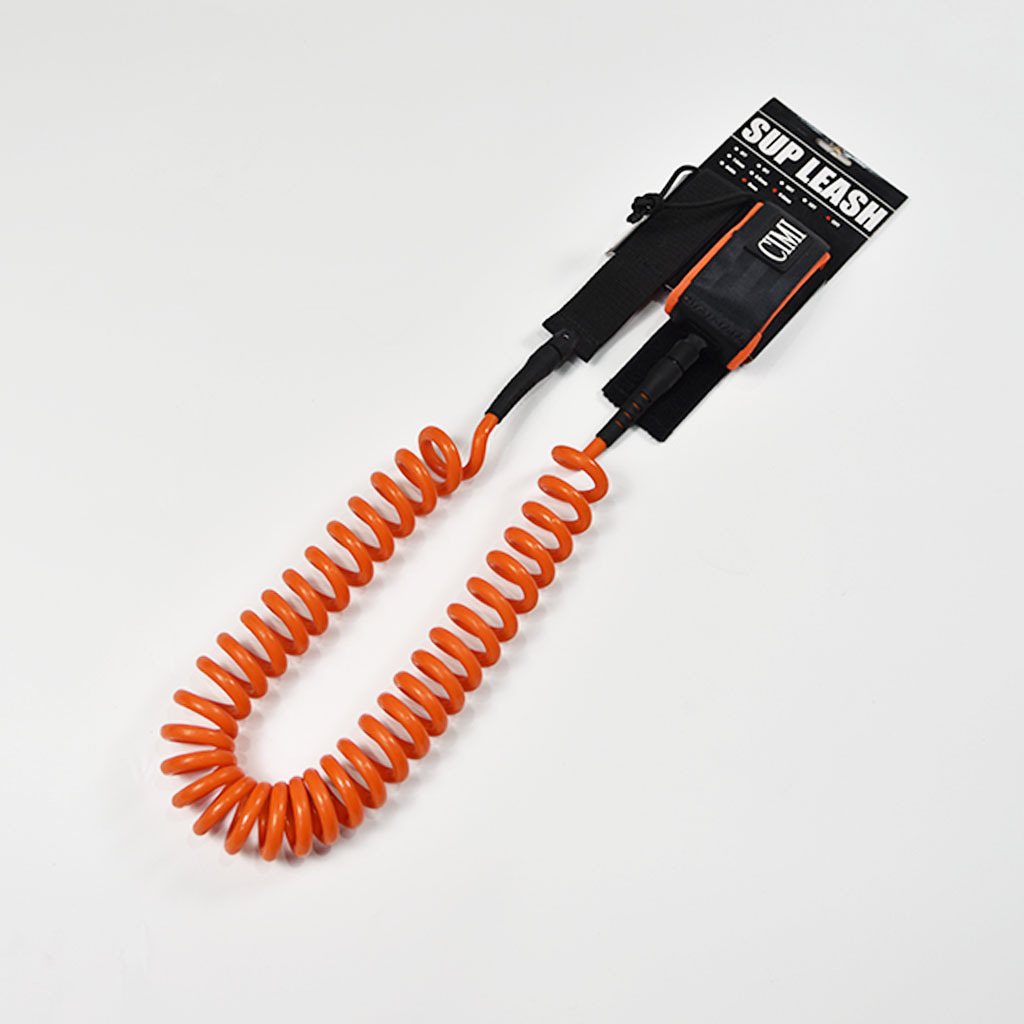
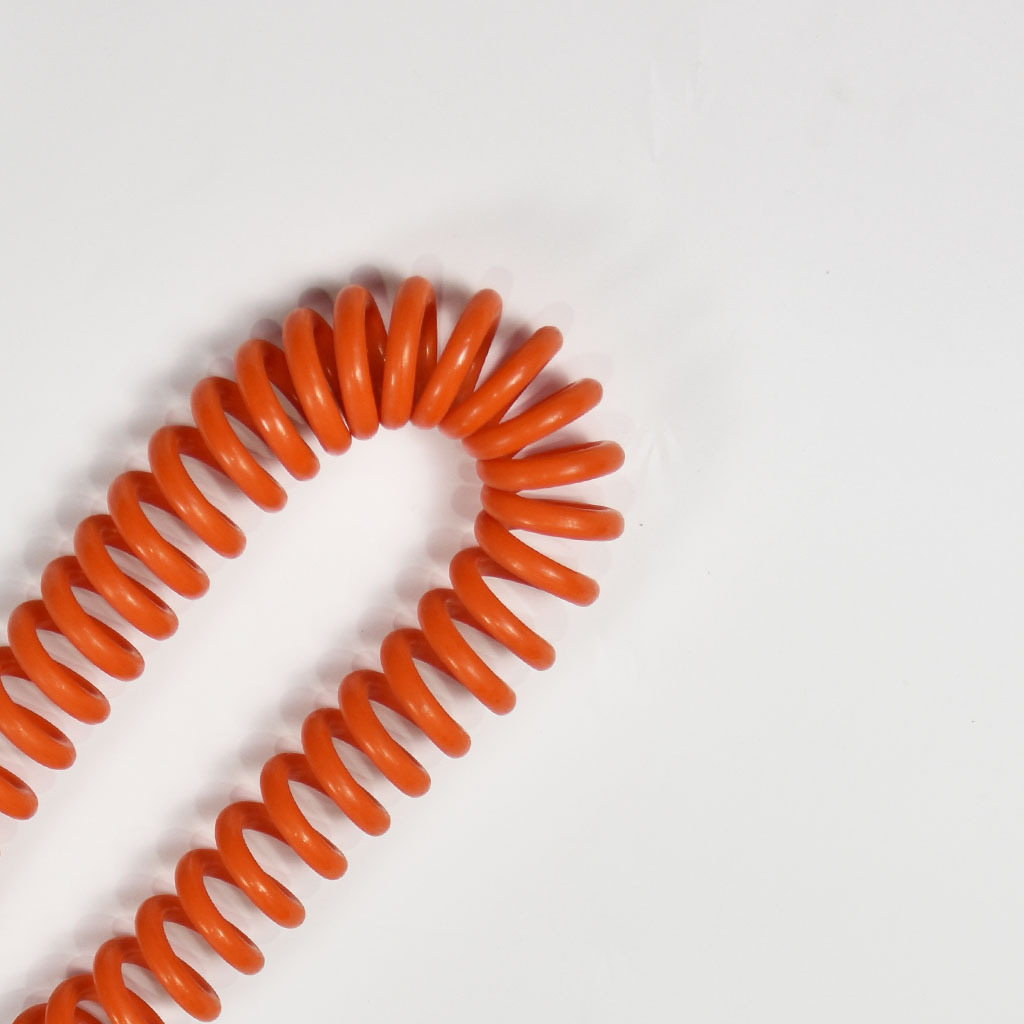
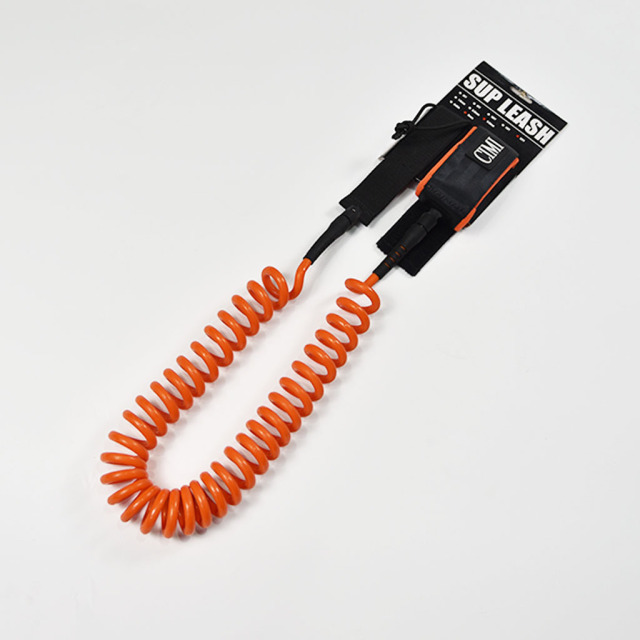
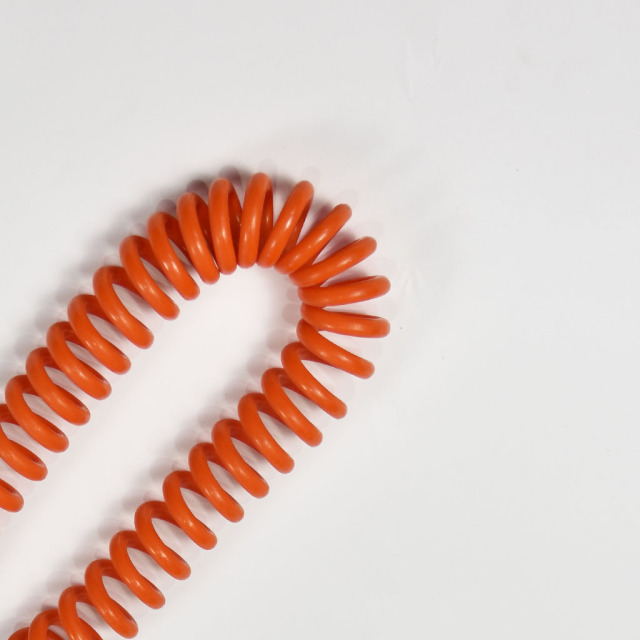
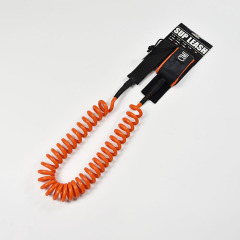
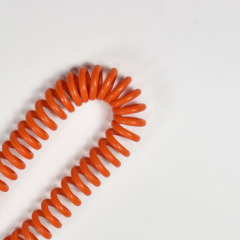
This is the long, heavy end of our SUP leash line: 12 ft of reach on a 9 mm cord, with the cuff worn below the knee instead of around the ankle. It exists for one situation — a large board in open water. When a 12 ft board goes over in chop, it can be pushed a long way from the paddler before the line comes up tight, and a short leash turns that into a sharp jolt. Twelve feet gives the board room to drift; the 9 mm cord means the line that finally comes under strain is a thick one. The cord is finished in bright orange, which makes it easy to find on the water and easy to spot on an accessory wall.
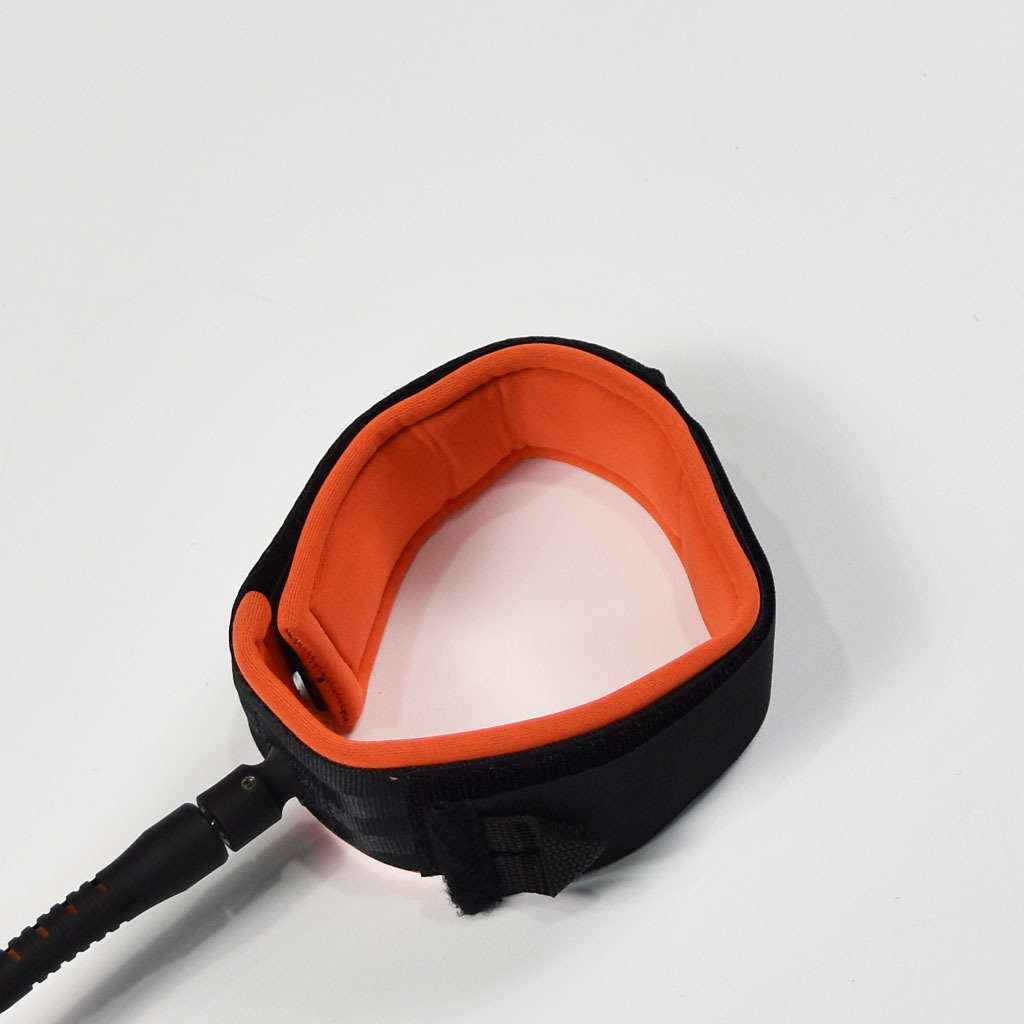
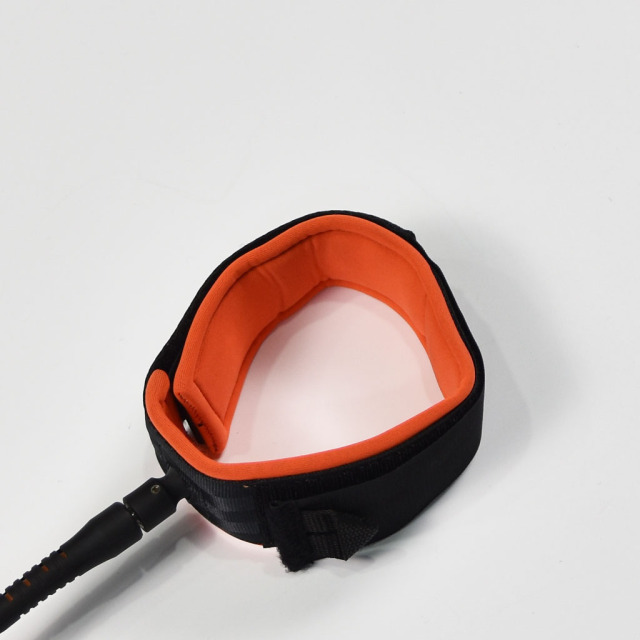
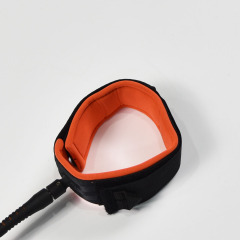
The cuff is the other half of the design. Sitting on the upper calf, it keeps the attachment point clear when you step on and off the board, kneel through a turn or paddle with a wide stance, and it takes the constant rubbing away from the ankle bone. The cuff is padded and closes with a wide hook-and-loop strap, so pressure spreads across the calf rather than concentrating on one strip.
We run this model as part of a wholesale SUP leash programme — same length, same cord, same cuff, order after order — so it can sit in a range plan next to the shorter SUP and surf leashes rather than being a one-off buy.
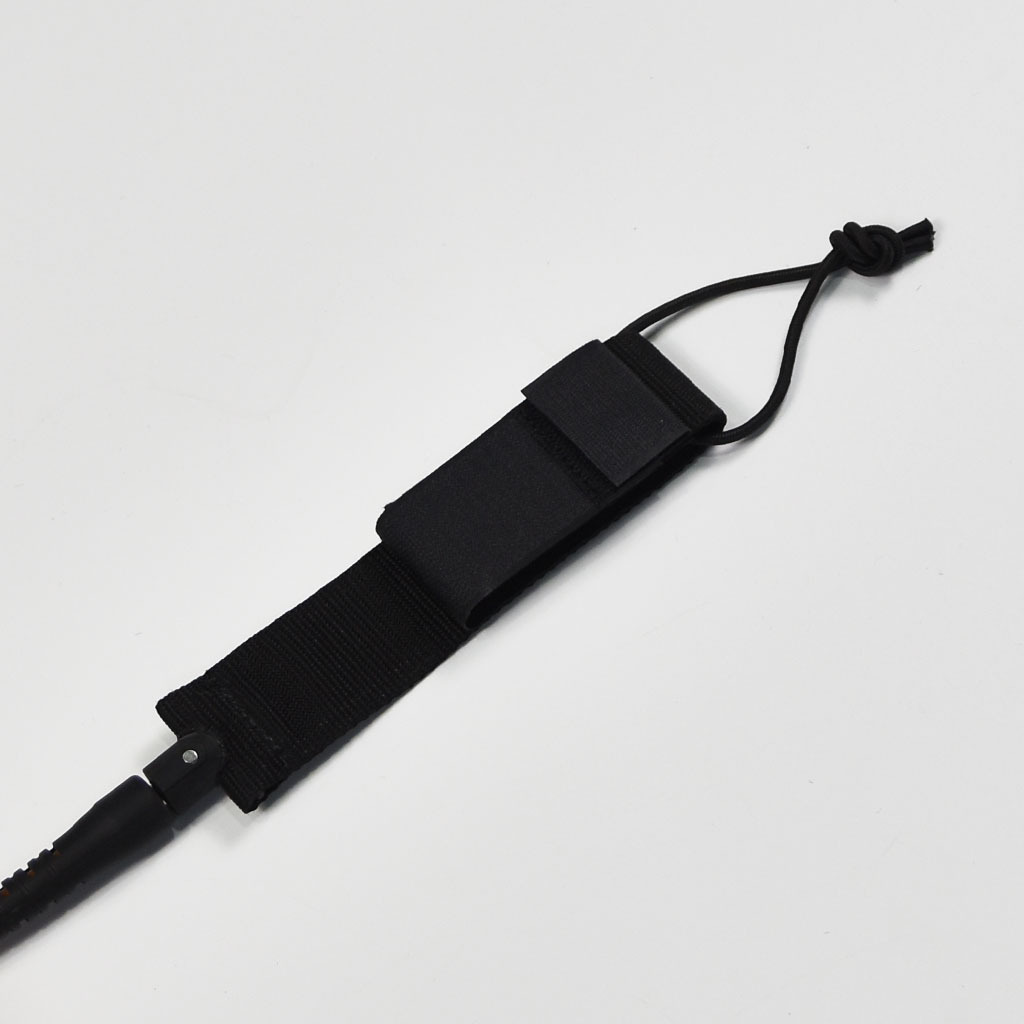
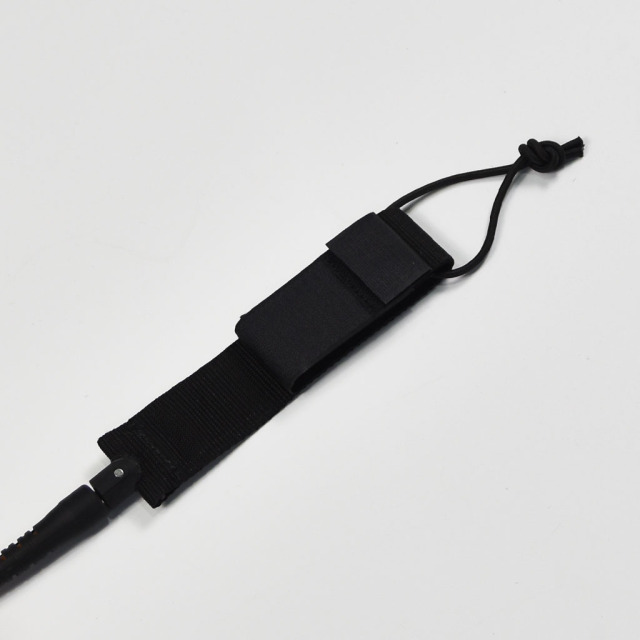
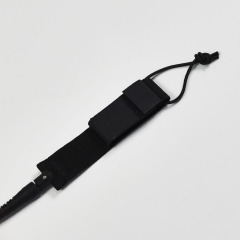
- Knee-cuff attachment — the strap closes below the kneecap instead of around the ankle, so the line stays clear when you step back on the tail, kneel through a turn or paddle with a wide stance, and the ankle bone never takes the rubbing. - A full 12 ft of reach — a 12ft SUP leash gives a long board room to drift before the line comes up tight, which is exactly what you want when a bigger board gets pushed away in chop. - 9 mm cord — the heaviest cord we put on a SUP; a 9 mm SUP leash is built for large boards and open water, where the line sees more abrasion and more strain than a short surf leash ever will. - Rail saver at the board end — the webbing strap spreads the pull across the rail and the cord loop takes the line, so the plug and the rail are not working against a bare cord. - Padded cuff with a wide closure — padding spreads pressure over the upper calf, and the broad hook-and-loop strap keeps its grip once it is wet. - Assembled in our own workshop — as a SUP leash manufacturer we build, check and pack every leash on our own line, so the cuff, cord and rail saver on a reorder match the sample you signed off.
Cuff Construction & Wearing Position
Cuff Construction
The cuff is where a leash usually fails first: padding flattens, stitching rubs through, and the strap stops gripping after a season of salt water and sand. We keep that part in-house. The cuff is built around a padded core with a soft lining against the calf and a wide hook-and-loop closure, so pressure is spread rather than concentrated on one narrow strip. As a SUP leash supplier we would rather be judged on a cuff that still looks and feels right in its second season than on a headline price.
Wearing Position
A knee SUP leash is not an ankle leash moved further up the leg. The strap is set to sit on the upper calf, just below the kneecap, where the leg is widest and the cuff has something to hold against. Put it on before you wade out, snug enough that it cannot slide down, then check it again at the water's edge — webbing and padding both give a little once they are soaked. Over a wetsuit, the cuff goes on top of the neoprene panel, not underneath it; on a bare calf in summer, the same strap should close comfortably without being pulled to the very end of its range. If the cuff can rotate freely around your leg, it is too loose, and a rotating cuff abrades faster than a snug one.
Board Matching
- Boards around 12 ft and longer — matching leash length to board length is the usual practice, so a 12ft SUP leash is the natural pairing for a 12 ft board and still has room on a 12 ft 6 in or 14 ft touring board. On a 9 ft board it will trail and drag; sell the shorter knee model instead. - Open water and chop — the point of the extra length is distance. In wind chop or boat wake the board gets thrown further than on a calm lake, and a long line keeps the pull progressive rather than sudden. - Heavy boards with thick rails — a thick-railed board carries more momentum when it goes, which is where a 9 mm sup leash earns its place: the cord has more material to resist abrasion against the rail and against itself. - Touring and race setups — long, fast boards are usually paddled in open water with a lot of board out ahead of the rider; the 12 ft length lets the board sit away from you while you are still attached and still paddling. - Inflatable SUPs with a D-ring — a SUP board leash of this length works on a large inflatable as long as there is a proper stainless D-ring at the tail. - When a shorter build is the better call — for a compact board, a packed rental fleet of mixed sizes, or a paddler who wants less line in the water, the 10 ft knee model and the SUP ankle range cover the same job with less to manage.
Specifications
| Specification | Detail |
|---|
| Model | L00333 |
| Product type | SUP knee leash |
| Length | 12 ft |
| Cord thickness | 9 mm |
| Cuff | Padded knee cuff |
| Cuff closure | Wide hook-and-loop strap |
| Board end | Rail-saver webbing with cord loop |
| Hardware | Stainless steel swivels |
| Assembly | Cuff, cord and rail saver built in-house |
| Packing | Individually tagged |
| Carton packing | Quantity per carton set with your order |
| Private label | Logo and packaging coordinated before production |
Fitting & Care
- Find the right attachment point — on a hardboard use the leash plug at the tail; on an inflatable use the stainless D-ring. Never tie off to a carry handle, a side strap, a fin box or the paddle itself.
- Thread the rail saver, not the cord — a SUP board leash attaches with the webbing strap looped through the plug or D-ring so the wide webbing, not the cord, sits against the rail. Pull the cord through the webbing loop and snug it down.
- Fit the cuff below the knee — set it on the upper calf, close the hook-and-loop strap flat against itself and check that the tail of the strap is fully engaged, not hanging.
- Run the line before you launch — pass the full 12 ft through your hands once, feeling for nicks, flat spots or a stiff section near the swivel. A cord that has been kinked in storage will tell you straight away.
- Rinse after every session — a stand up paddle leash lives in salt water and sand, and both attack webbing. Fresh water over the cuff, the strap and the cord, then hang it loose.
- Dry it out of direct sun — hanging in shade keeps the cord and the strap honest for longer. Do not leave it coiled tight and damp in a board bag between sessions.
- Retire it on evidence, not on age — replace the leash when the cord shows a nick deep enough to catch a fingernail, when the rail saver webbing frays at the plug end, or when the cuff strap stops holding tension.
Accessory Range
Most buyers fill more than one line at a time, and everything here comes out of the same catalogue. Because we are a SUP leash manufacturer with our own production sections, the fins, pads, covers and racks that ship alongside a leash order come from one supplier and one standard rather than four.
Leashes
The leash family covers the water you sell into: regular and hypalon surf leashes, non-slip cuffs, short coil models, and the SUP line this 12 ft knee model belongs to, with 10 ft and 8 ft knee builds and a run of SUP ankle leashes. A shop can hang a stand up paddle leash next to a 6 ft surf leash without having to explain two different suppliers to the customer.
Fins
Honeycomb fins made by resin transfer moulding, timber fins, G10 glass fins and nylon fins, plus fin accessories, with single tab and double tab options across the range.
Traction
Tail pads, centre pads, skimboard pads and waxless pads, so a board sold with a leash can leave the shop already gripped.
Covers
Basic bags, regular bags, stretch covers and bodyboard bags — the protection line that usually sells with a board rather than on its own.
Racks
Travel rax and tie-downs, storage racks, display racks and bike racks, for shops that need to stand boards up rather than stack them in a corner.
Ordering & Confirmation
- Order by code and cuff style — quote L00333 and confirm the knee cuff. The range carries 12 ft leashes in both knee and ankle builds and the codes sit close together, so a wrong pick is easy to make on a handwritten order.
- Approve a physical sample first — if you want the 9 mm cord and the cuff in your hand before committing, ask your sales contact about sample availability and the time needed for the approval piece.
- Ask what branding and packing options are open — hang tags and header cards are the usual trade route; ask your sales contact which parts can carry your own logo and which stay generic.
- Share quantities and in-store dates early — send the buy list and the date the stock has to be on the shelf, and we will build the run around your season rather than a mid-season top-up.
- Agree delivery terms and paperwork up front — confirm the shipping terms, port and documents your import process needs with your sales contact before the order is released.
- Build the whole matrix in one go — a wholesale SUP leash programme merchandises better when knee, ankle, coil and surf leashes ship together on one schedule and one set of labels.
- Order from the SUP leash manufacturer, not a trader — the cuff, cord, rail saver and packing spec stay with one team, so a change request has somewhere to land.
- Keep a reference piece on file — a SUP leash supplier is judged on the second order more than the first; ask us to hold a signed sample so the next run is matched against something physical.
Scale & Supply Capability
CIMI is a factory-based supplier with 16 years in surf and watersports hardgoods, manufacturing at our own facility rather than sourcing through traders. Chain stores, supermarkets and surf-brand stores buy from us because one supplier covers a full accessory assortment, so a season's order and its reorders can be planned together. We take on OEM and private-label work, adapting designs, colourways and branding to your programme, and we schedule production against your agreed range plan. Send us your buy list and target dates, and we will confirm what we can make and when.
FAQ
Is a 9 mm SUP leash too stiff for flat-water paddling?
It is the stiffest cord we put on a SUP, and on a large board that is the point — the extra material resists abrasion and does not fold up under the rail. The trade-off is a little more weight and drag through the water. On a big board paddled in open water you will not notice it; if you are mostly on a compact board in sheltered water, the 8 mm SUP models will feel lighter in the hand and in the water.
Does this knee SUP leash fit an inflatable board?
Yes, provided the board has a proper attachment point. Use the stainless D-ring at the tail and loop the rail saver webbing through it, then run the cord through the webbing loop. Do not clip to the carry handle, a side-mounted accessory strap or the valve area — those are not built to take a leash pulling against them, and they are the usual cause of a torn seam on an inflatable.
What is the rail saver for on a SUP board leash?
It is the webbing strap at the board end. It spreads the pull across a wide piece of fabric instead of letting a thin cord bite into the rail every time the board pulls away, and it keeps the cord clear of the sharp edge where the rail meets the tail. Loop the webbing through the plug or D-ring and let the cord hang from the webbing — not the other way round.
Will the cuff fit over a wetsuit leg?
Yes. The strap has a broad adjustment range and the cuff is worn over the neoprene panel, not tucked underneath it, so there is room for a wetsuit leg in winter and a bare calf in summer without changing the model. Close it snug enough that it cannot rotate around your leg, and check the strap again once you are in the water — both webbing and padding relax a little when soaked.
Can I use this stand up paddle leash in the surf?
It is built for length and open water, not for the impact zone. In breaking waves a long, thick leash puts a lot of line between you and the board, and the board gets pushed further than you want when a set goes through. For SUP surfing, a shorter leash matched to the board is the better tool; for a long board on flat water, chop and open crossings, this 12 ft build is doing the job it was designed for.