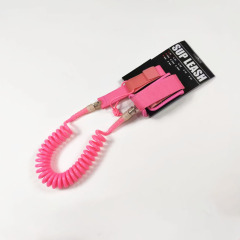
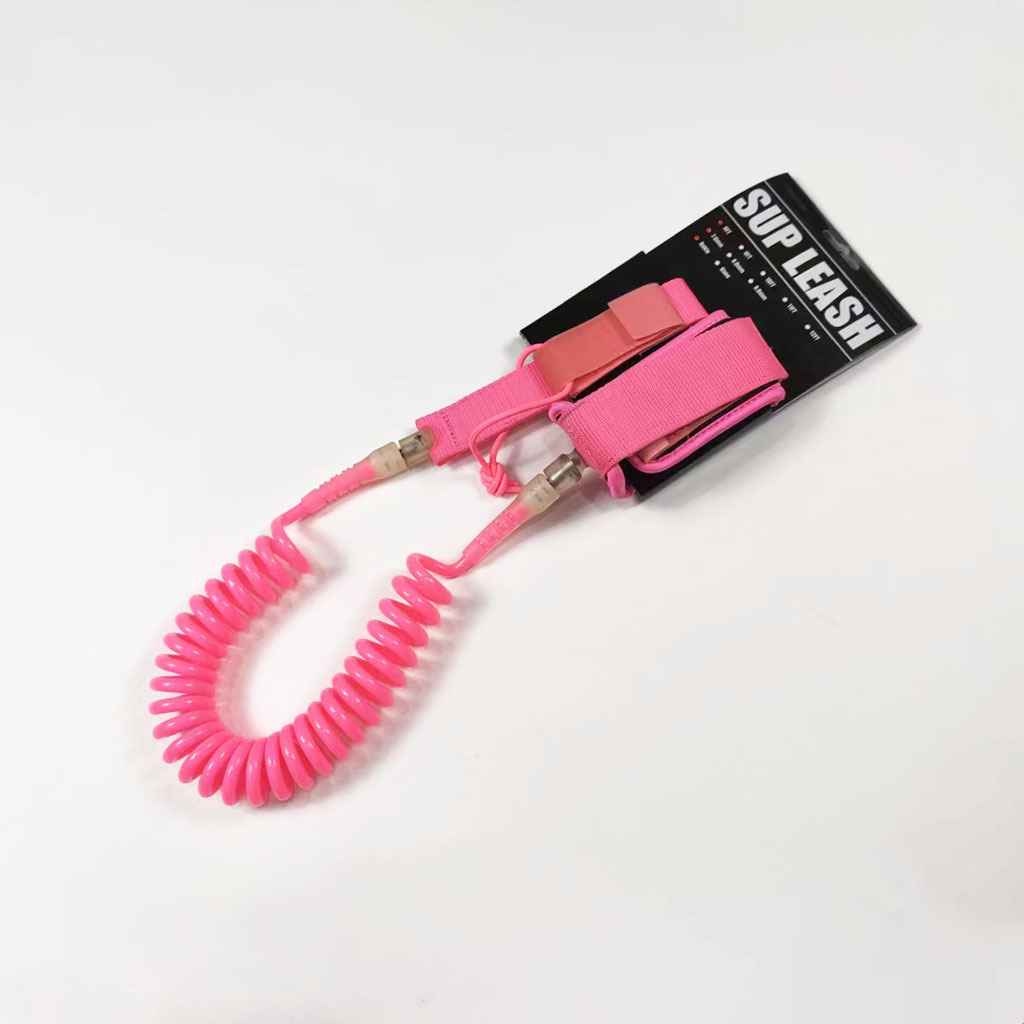
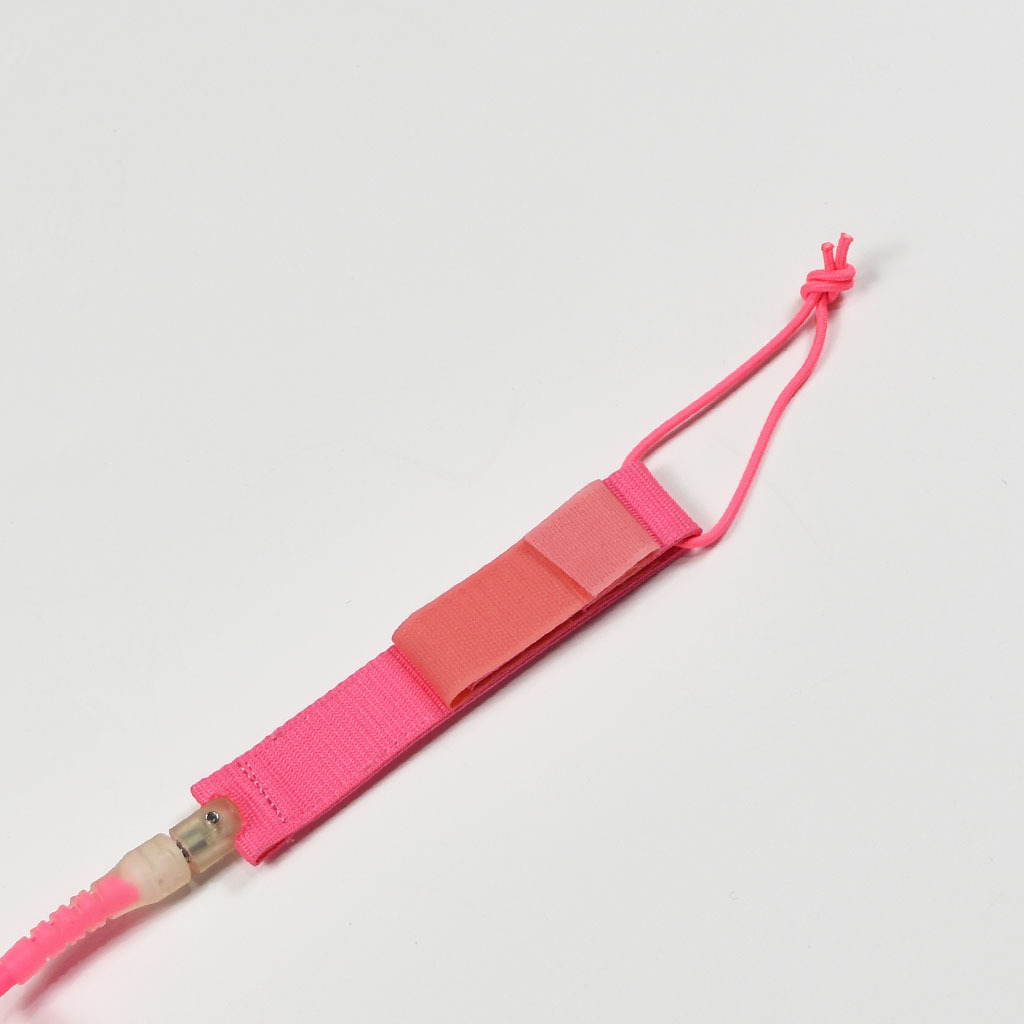
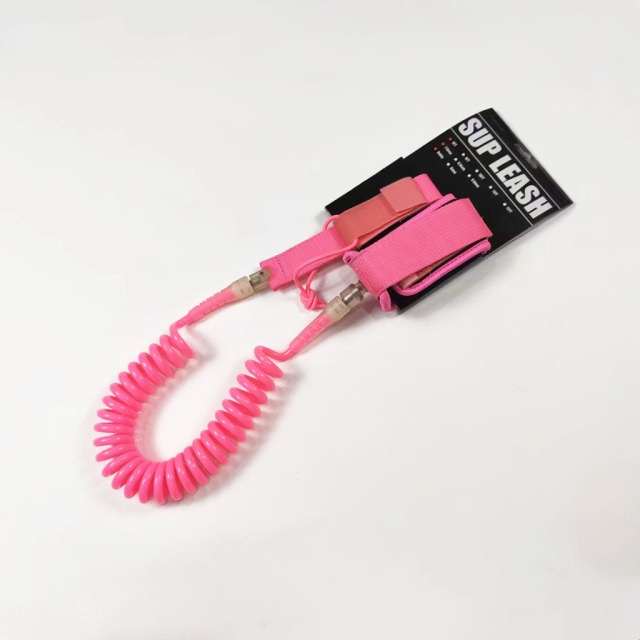
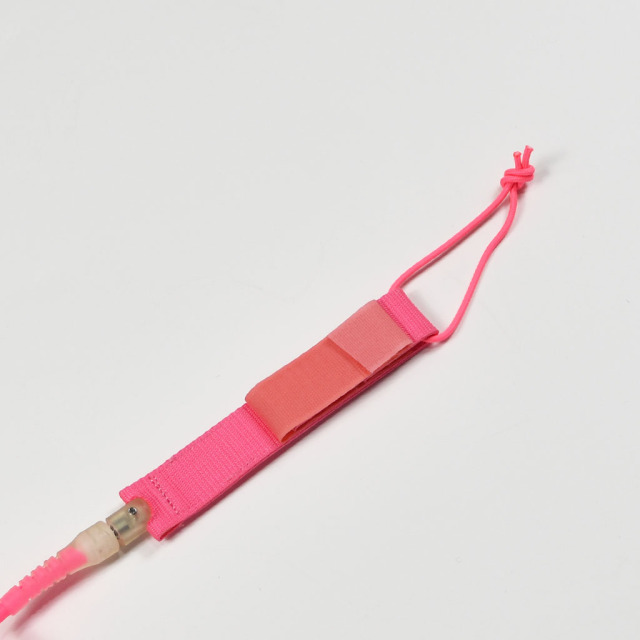
The L00335 is an ankle leash for stand-up paddleboarding: a cord joined to a soft cuff by a short webbing strap. As a paddleboard leash 8ft long, it sits in the middle of the range we build — longer than the short surf leashes, shorter and lighter than the longer board leashes — and it is the size most paddlers replace with the same size again.
As an 8ft SUP leash it does what a core size should: enough slack to stand, switch stance and step back to the tail without the cord going taut every time the board slides away, and little enough slack that the board stays within reach when you wade out through shorebreak or climb back on after a fall.
Paddlers use it on lakes, estuaries, harbours and small gentle surf, and it stands up to the places a leash gets treated worst: a rental board that lives on a trailer, a board bag thrown in the back of a van, a week of salt water without a rinse.
For shops and distributors this is the model that anchors a wholesale SUP leash line: one size that suits most recreational and all-round boards on the floor, with larger versions ready for the customer who moves up to a longer touring board. The sample shown is the bright pink colourway, cuff and cord matched, on a black product tag.

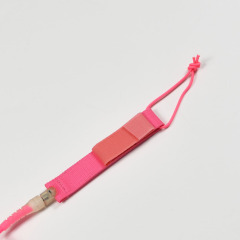
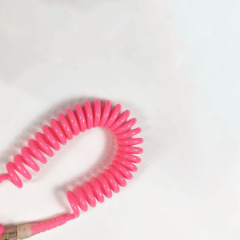
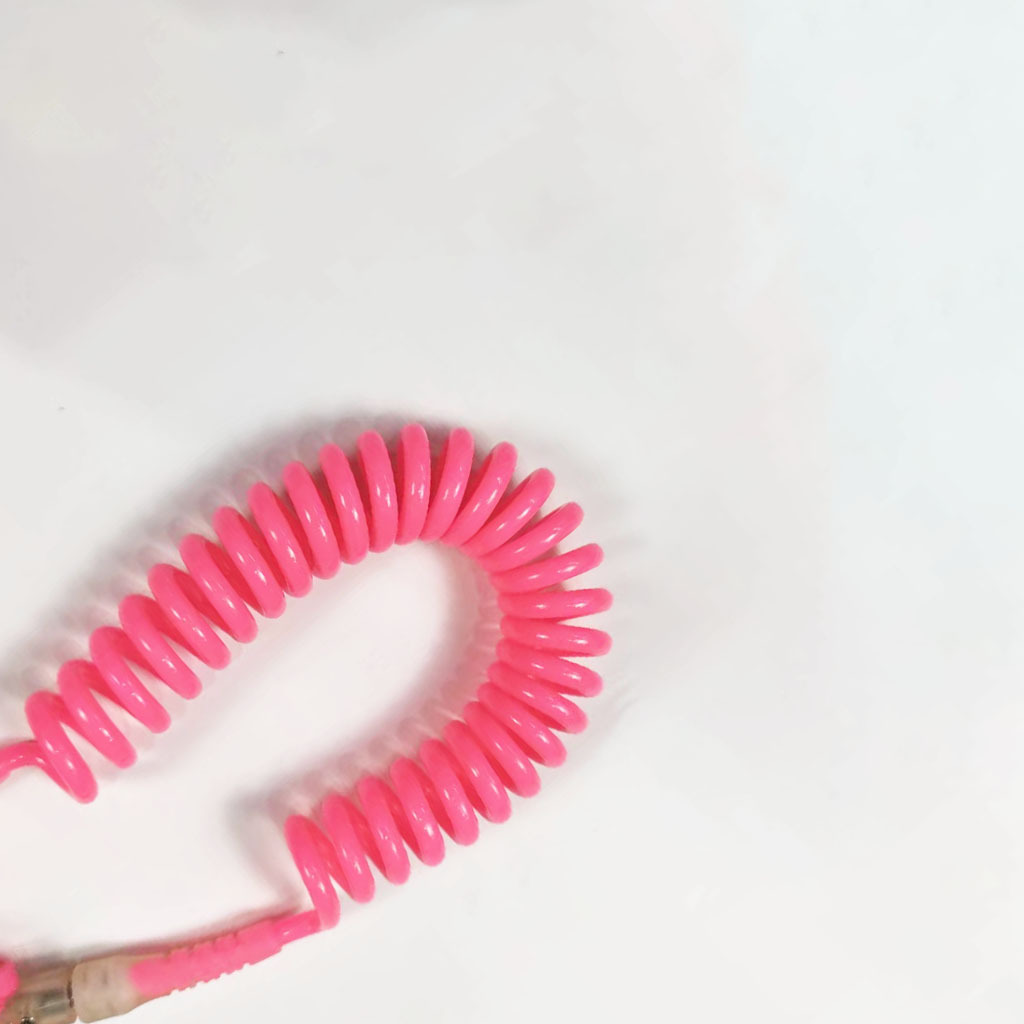
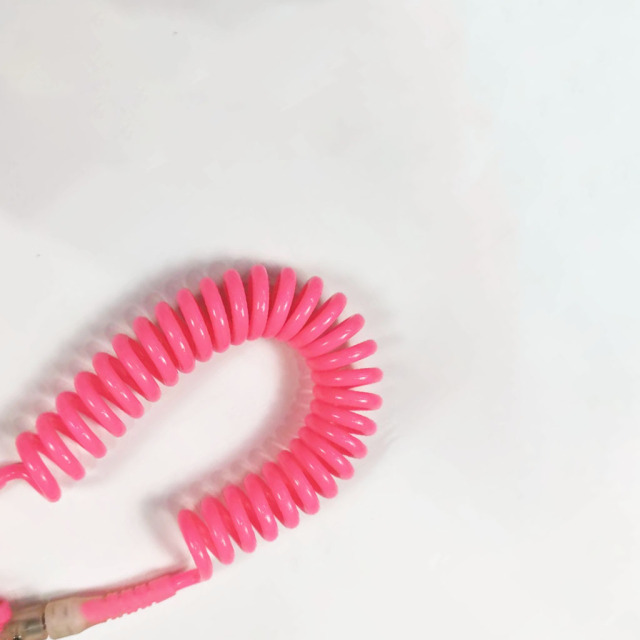
The cord is the load path on a paddleboard leash 8ft long, and it is made from a material chosen to hold its shape through repeated stretch rather than going soft after a season. It meets the cuff through a connector housing rather than a knot, so the length stays honest and there is no snag point at the ankle. The stitching at the strap and cuff edges is finished rather than left raw, because that edge is the first place a low-grade leash fails.
On this 7 mm ankle leash, the cord thickness is the middle of our range: slim enough to flex underfoot, substantial enough that it does not thin out or take a set after a few months of use. That balance is the reason this size gets chosen over both the shorter cords of a surfboard ankle leash and the thicker cords in the range.
As a SUP leash manufacturer we specify the cord, webbing and connector ourselves, which is why the wear points that matter — the connector, the strap edge and the cord surface — are the ones we design and inspect around.
Rinse the leash in fresh water after salt-water sessions, especially around the connector and the strap, and dry it out of direct sun. Lay it flat or hang it rather than leaving it knotted in a bag where the cord can take a set. Sand is the other quiet enemy: a grain worked into the strap stitching wears through it faster than salt does.
Check the cord, the stitching and the connector before each session. A nick in the cord, a frayed strap edge or a cuff that no longer holds its adjustment are all reasons to swap the leash rather than finish the season on it. Leashes are consumables, and a rental fleet should plan replacements instead of waiting for a failure.
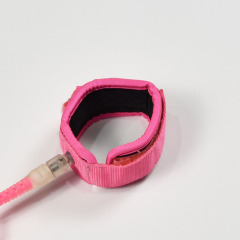
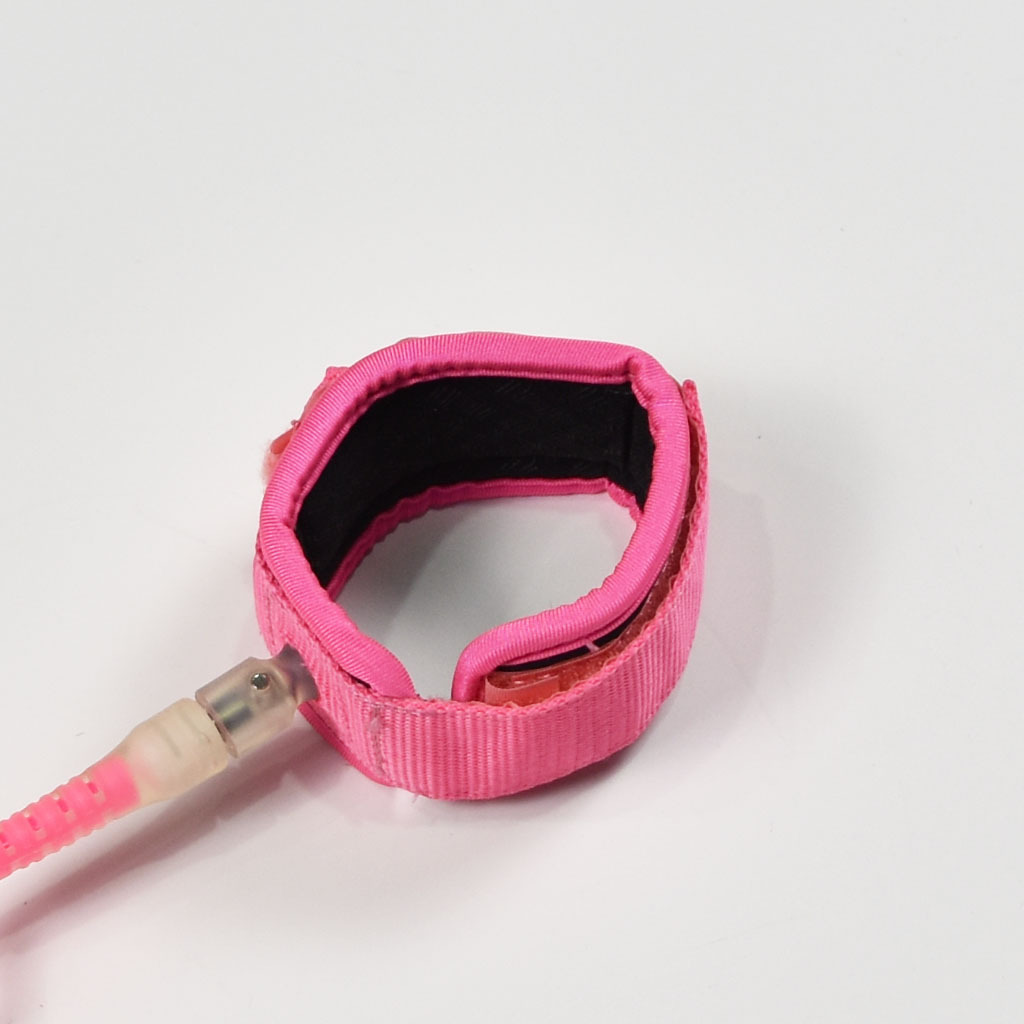
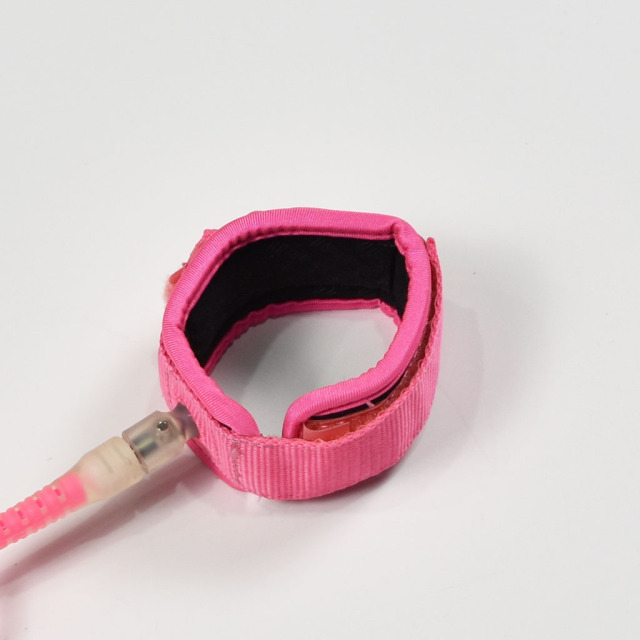
Whether it is a paddleboard leash or a surfboard ankle leash, the part you actually feel is the cuff. Here it is a padded band of webbing with a soft lining against the skin, closed with a hook-and-loop strap that sets the fit tight enough to stay put and loose enough to keep the blood moving through a two-hour session. Chafing almost always comes from movement rather than from the material. A cuff that sits too loose rotates around the ankle, the strap edge works against the skin, and by the end of the paddle the rub is obvious. On this ankle leash the webbing is wide enough to spread the load instead of cutting in, so the fix is simply setting the strap flat and snug rather than hauling it tight. It closes over a bare ankle in summer and over a wetsuit boot in colder water, and the strap has enough adjustment for both without adding bulk.
| Model reference | L00335 |
| Product type | SUP ankle leash |
| Length | 8 ft |
| Cord diameter | 7 mm |
| Cuff | Ankle cuff, soft and adjustable |
| Fastening | Webbing strap with hook-and-loop closure |
| Intended use | Stand-up paddleboarding |
| Water conditions | Calm lakes through to open ocean waves |
| Board pairing | All-round and recreational paddleboards |
| Materials | Wear-resistant cord and cuff materials |
| Colourway shown | Bright pink cuff and cord |
| Supply | Wholesale and OEM programmes |
This SUP ankle leash is built for one job: keeping a paddleboard attached to the paddler while they are on or near the board. The cord and the ankle cuff are designed around the loads that come from a board drifting away, a leg swinging over the tail and a remount in chop. It is not a rescue device, it is not load-rated, and it carries no certification for lifting, towing or anchoring — the leakage of a board in swell is the job, and nothing beyond it. In practice that rules out a few things. Never use it to tow another board or a swimmer, never anchor a board with it, never lift or drag a board by the cord, and never clip the cuff to a person as a tether to shore, a boat or a fixed object. The cuff is shaped for an ankle; a wrist, a belt or a deck line is not what it was designed for. Keep it away from white-water rivers, weirs and other moving-water situations where a cord around the leg becomes an entrapment risk rather than a convenience. We do not publish a breaking strength, a working load or a formal test standard for this model. If your market, your insurer or your account requires documented ratings, say so before the order is placed and we will confirm what can and cannot be supplied. Do not assume a rating that is not written on the specification you approve, and do not let any distributor listing imply one. For rental fleets and schools, the same caution belongs in the rider briefing: the leash keeps the board close, and that is all. It does not replace a buoyancy aid, a quick-release in fast-moving water, or the judgement to stay ashore when conditions are beyond the paddler's ability.
CIMI is a factory-based supplier with 16 years in surf and watersports hardgoods, manufacturing at our own facility rather than sourcing through traders. Chain stores, supermarkets and surf-brand stores buy from us because one supplier covers a full accessory assortment, so a season's order and its reorders can be planned together. We take on OEM and private-label work, adapting designs, colourways and branding to your programme, and we schedule production against your agreed range plan. Send us your buy list and target dates, and we will confirm what we can make and when.
Ningbo Cimi Sports Co., Ltd. has been making surf and paddle hardware since 2007. Leashes are one of the lines the factory runs continuously rather than seasonally, which is why the cuff, strap and tag you approve on a sample are still the ones in production a year later. Every SUP ankle leash goes through three inspection points: incoming material — cord, webbing, hardware and tags — before it reaches the line; in-line checks while the cuff is stitched and the cord is joined, because those are the two places a leash can fail later; and a final pass on length, cord thickness, strap adjustment, stitching and presentation before packing. A unit that does not pass does not ship. Design and tooling are in-house. We can change a strap length, a tag design or a cuff colour without going back to a third party, and we confirm tolerances with you before tooling is cut. Buyers who arrive from a trading company usually notice the difference here: a change request gets answered with a drawing and a date rather than a forwarded email. We supply brands and distributors across North America, Europe and Oceania, and more than a thousand customers have ordered from us over the years. Most of that business is repeat business, which is the part that matters when you are choosing a supplier for a range rather than for a single shipment.