Product Overview
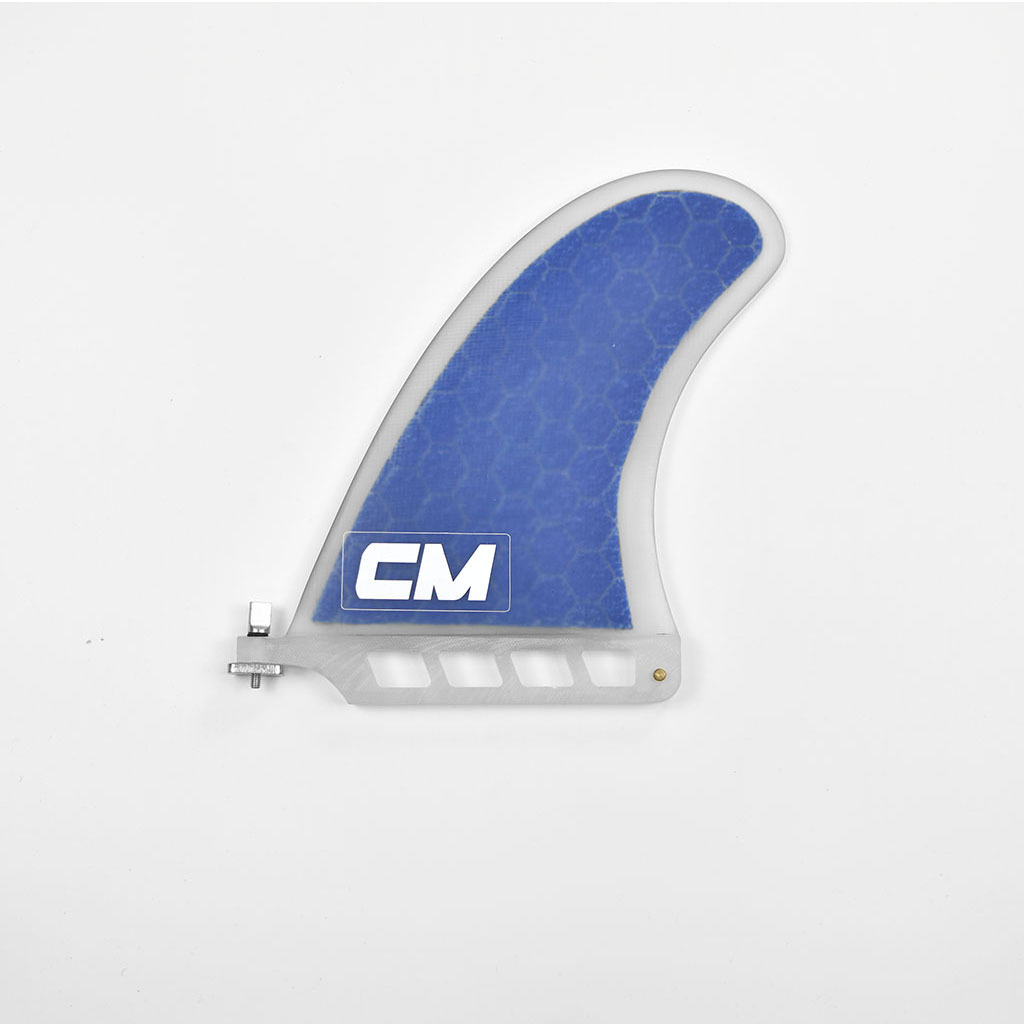
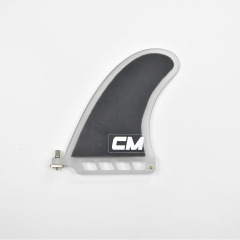
The F25124 Surf Fin Honeycomb Longboard is a single centre fin for longboards that run a fin box, and it is one of the wholesale longboard fins we build for shop shelves. It sits in the middle of the board and does most of the tracking work: it holds a line down the face, settles the tail when a rider steps forward, and pivots predictably off the bottom. Like the rest of our honeycomb longboard fins, it is built around a hexagonal core instead of a solid panel, and that is where its light, quick feel comes from.
On the water it is an easy fin to live with. Because these are lightweight surfboard fins, the tail does not feel weighed down when a rider walks up to trim or to hang five, and the fin comes back to centre quickly after a turn instead of loading up and releasing late. In small to medium surf it is a forgiving centre fin to put in front of a customer who wants one fin that behaves the same way session after session.
As a honeycomb surf fin manufacturer and custom surfboard fins supplier, we run our own moulding floor, so the core, the layup, the finishing and the base work on this fin all happen in our own workshop rather than across a chain of subcontractors. That is what keeps the fit in the box and the finish on the panel where we set them.
Honeycomb Build & Materials
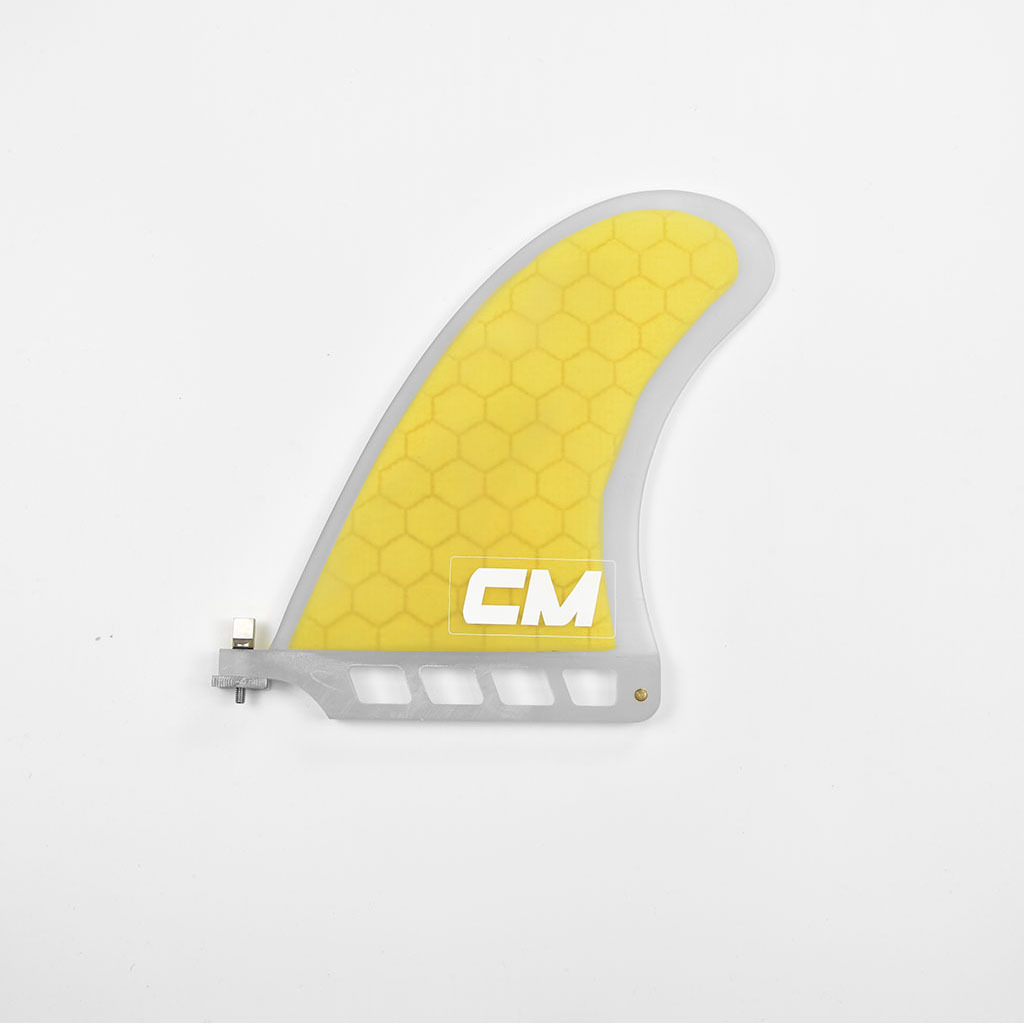
- Honeycomb core, half of the finished fin — The centre of the fin is a hexagonal lattice rather than a solid sheet. It gives a firm base where the fin meets the box and keeps the tip light, which is exactly what longboard surfboard fins need when the board is being walked.
- Glass fiber skin, 30% — The glass wraps the core and takes the knocks, so the honeycomb stays protected underneath. As with our other glass fiber surf fins, the skin is what carries the fin through a turn and what you are looking at on the finished panel.
- Epoxy resin, 20% — Epoxy bonds the glass to the core and gives the fin its gloss. It is also what keeps the panel from going chalky after a season of sun and salt, as long as the fin is rinsed and dried rather than left in a hot car.
- Resin transfer moulding — The core and dry glass go into a closed mould and the resin is drawn through under pressure. Every fin comes out with the same resin content, so the flex point sits in the same place on the fin you approve and on the reorder.
- Weight you notice on the beach — These are lightweight surfboard fins, and on a longboard that matters more than it sounds: the fin slides into the box easily, re-seats fast in the shorebreak, and is less punishing when the board swings on its leash.
- Made start to finish in our workshop — As a custom surfboard fins supplier, we mould, finish and fit the base ourselves, so the tang and the screw seat stay square to the fin instead of being trimmed to fit afterwards.
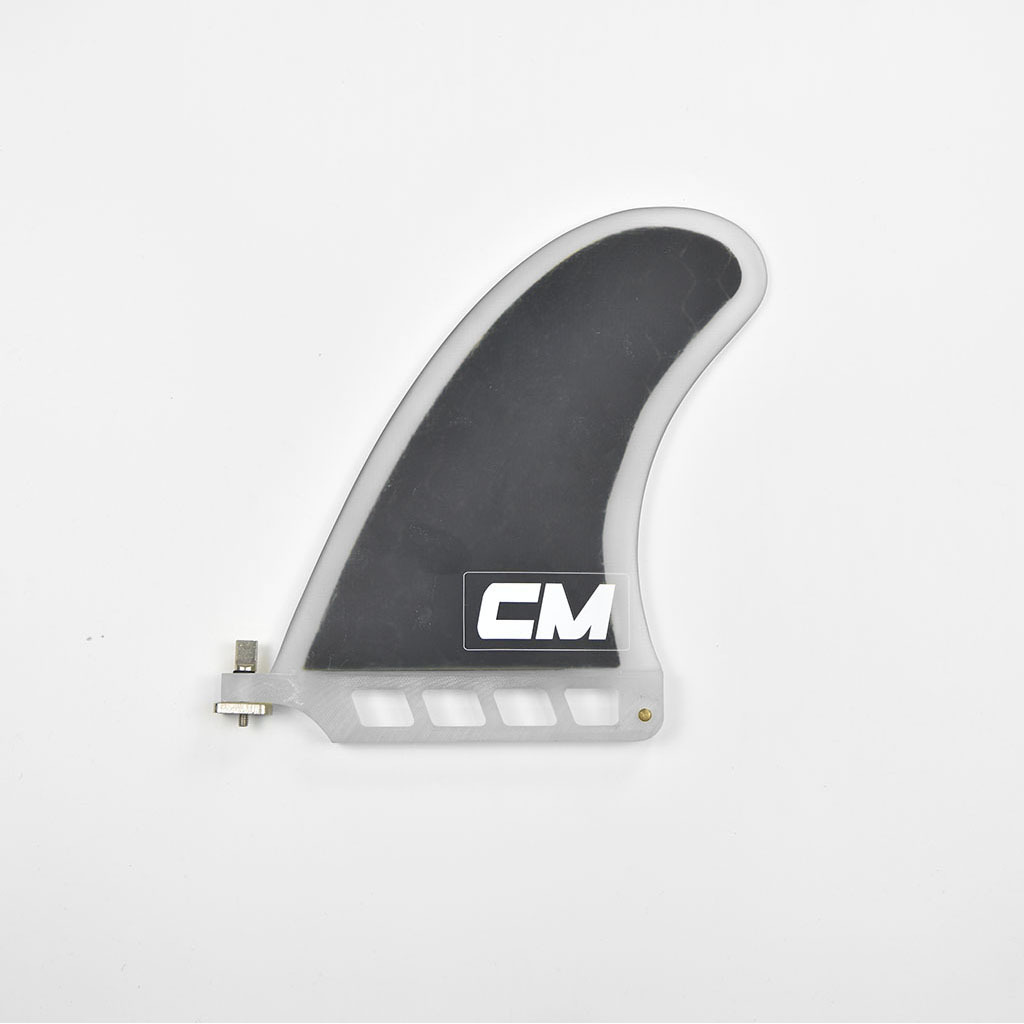
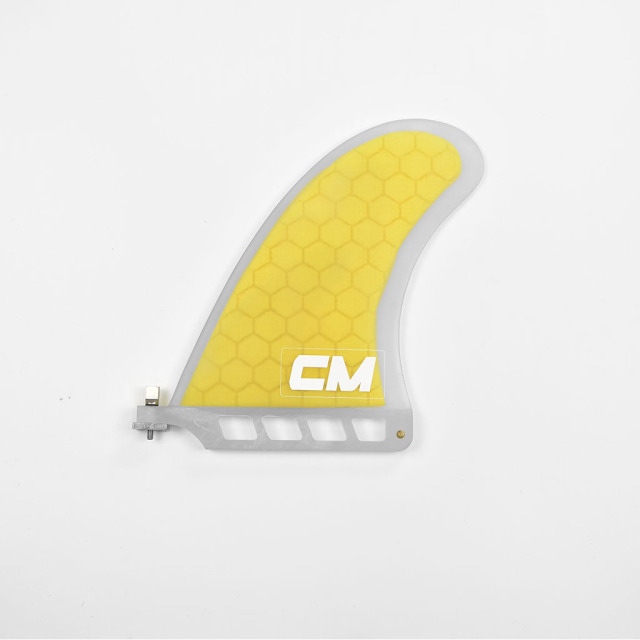
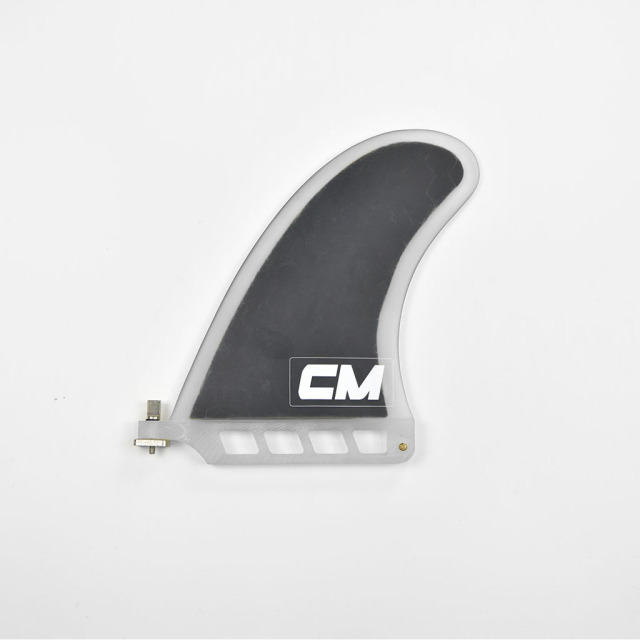
- Finish and marking — The finished fin has a gloss panel with the hexagonal core visible through it and a white CM mark on the face, so it reads clearly on a peg without a shelf card.
Box Fin Fitment
- Check the box on the board first. This is a box-fin longboard surfboard fin, so the board needs a centre fin box with a channel and a screw hole, not the two-slot tab box. If the board has a tab box, the same build is made in tab versions.
- Slide the fin to the position you want. With the screw loose, the fin runs fore and aft in the channel. Further forward gives a looser, quicker pivot; further back adds drive and hold when a rider is up on the nose. Note the spot you like so you can find it again after cleaning.
- Seat the base plate. The plate drops into the slot in the base of the fin and lines up with the screw in the box. It spreads the load, so the screw clamps the plate rather than biting into the fin itself.
- Tighten by hand, then a quarter turn. That is enough to hold the fin. Over-tightening distorts the base and can crack the box, and it is the most common way a longboard fin gets damaged at the point of fitting.
- Cover the other fitments in the same wholesale longboard fins order. The same honeycomb build is produced as single tab surf fins and as double tab, so a shop can stock every board on the floor from one range instead of two.
- Rinse and reset after salt water. Sand works into the channel; a rinse and a dry before the fin goes back in keeps it sliding freely instead of needing to be forced.
Riding Conditions & Applications
- Mellow points and rolling beach breaks — On waves with time in them, longboard surfboard fins have one main job: hold a line while the rider walks forward and stay predictable when they step back to turn. Set this one a little further back in the box when the wave has push behind it. - Nose riding and trimming — The fin tracks under the tail and keeps the board from sliding out sideways while the rider is over the nose, which is the difference between a trim that runs and one that stalls. - Rental and school fleets — Fleet longboards lose centre fins faster than any other part. A box fin is a straight swap with a plate and a screw, so a staff member can put a board back in the water between lessons without a workshop visit. - Board builders and repairers — Fitting a replacement centre fin to a finished board, or matching a fin to a board coming off the bay, is a one-fin job rather than a set. - Travel — The fin comes out for packing, so a board travels flat inside a cover instead of standing on its fin in the back of the van.
Specifications
| Product type | Longboard centre fin, box fitment |
| Core | Honeycomb, 50% of the build |
| Skin | Glass fiber, 30% |
| Resin | Epoxy, 20% |
| Moulding | Resin transfer moulding |
| Sizes | XS, S, M, L, XL |
| Base hardware | Base plate and screw |
| Fin systems | Box fin; the same build is also made as single tab surf fins and double tab |
| Finish | Gloss, with the hexagonal core reading through the panel |
| Marking | CM logo on the fin face |
Size & Rider Weight
| Size | Rider weight | Where it suits |
| XS | Under 55 kg (120 lb) | Lighter riders on shorter longboards and clean small surf |
| S | 55–70 kg (120–155 lb) | Mid-weight riders on an all-round longboard |
| M | 65–80 kg (145–175 lb) | Adult riders on a standard log |
| L | 75–90 kg (165–200 lb) | Heavier riders, or a bigger board that wants more fin |
| XL | Over 85 kg (190 lb) | Strong, heavy riders on big boards in bigger surf |
Companion Accessories
A centre fin is rarely sold on its own. The Hypalon leashes on the same wall run from 6 ft 6 mm up to 9 ft 8 mm, and the length follows the board: a 9 ft log takes the 9 ft leash, a mid-length takes the 7 ft or the 8 ft. Sending the fin and the leash out together gives the customer a set that already matches.
Fins are stocked in the same glass fiber surf fins build in single tab and double tab beside this box fin, so the honeycomb section of the wall covers every centre box a shop is likely to meet. A shop that carries all three fitments can finish a board without sending the customer down the road.
Traction, covers and racks complete the set. Tail pads and centre pads go on the deck of the board the fin is fitted to; a basic bag or a stretch cover protects the board between sessions and gives the fin somewhere to sit when it is out of the box; and a storage or display rack holds the boards upright on the shop floor or in the van. Building the honeycomb longboard fins into the same order as the rest of the wall keeps the shelf consistent in packaging and finish.
Ordering & Confirmation
- Work out the sizes and systems you need. The ladder runs XS to XL; most shops start with the middle three and add the ends for the riders who need them. Note which boards on your floor take a box and which take tabs.
- Send the list through as one wholesale longboard fins order. Sizes and systems can be combined in the same buy, so the wall can be planned in a single step rather than in several.
- Confirm the colourway and the branding. If the fins go out under your own mark, we run the programme as a custom surfboard fins supplier: logo on the fin face and artwork on the carton. Send the artwork with the buy list.
- Ask about samples if you need one in the hand. Your sales contact can tell you what is available to check the template, the finish and the colour before the range is committed.
- Confirm packing and carton marks. Tell us how the fins should be packed for your shelf or your warehouse, and how the cartons should be marked for your receiving team.
- Settle the commercial terms in writing. Lead time, payment terms, shipping port and freight are quoted per order, so confirm them with your sales contact before the order is released.
- Plan the reorder on the same specification. Because we are a honeycomb surf fin manufacturer, the template, the layup and the size ladder stay the same between production runs; quote the model number when you reorder so nothing drifts.
Scale & Supply Capability
CIMI is a factory-based supplier with 16 years in surf and watersports hardgoods, manufacturing at our own facility rather than sourcing through traders. Chain stores, supermarkets and surf-brand stores buy from us because one supplier covers a full accessory assortment, so a season's order and its reorders can be planned together. We take on OEM and private-label work, adapting designs, colourways and branding to your programme, and we schedule production against your agreed range plan. Send us your buy list and target dates, and we will confirm what we can make and when.
FAQ
Will this fin fit the fin box my longboard already has?
It is a box fin: the tang at the base slides into a centre fin box and is held by a plate and a screw. That is the fitment most longboard surfboard fins are built around, so it covers the standard centre box. If the board has a two-slot tab box instead, this fin will not seat, and you want the tab version of the same honeycomb build.
What should I hand a rider who falls between two weight bands?
Use the bands as a guide and let the board decide the rest. A bigger, thicker board carries the next size up comfortably, and a rider chasing more drive and hold will usually prefer the larger fin; a lighter board, or a rider who wants a looser feel, takes the smaller one. When a shop is unsure, the middle of the band is the sensible stock choice.
How does the honeycomb build hold up over a season?
The glass and epoxy skin takes the everyday knocks, so the board going down or the fin catching sand usually lands on the glass rather than the core. Watch the base and the screw seat whenever the fin comes out, because those are the two places that wear, and a fin re-seated wet and sandy is the one that starts to loosen. On any glass fiber surf fins build, a deep crack at the base is a replacement rather than a repair.
Can I get the same fin for boards with tab boxes?
Yes. The same 50/30/20 build is produced as single tab surf fins and as double tab, so a shop stocking several board brands can cover each fitment from one range. The sizing ladder and the outline logic carry across; what changes is the base.
How is this different from the other honeycomb longboard fins you make?
The honeycomb longboard fins in the range share the same core, glass and epoxy, so the difference between them is the outline and the fin system rather than the material. This one is the box-fin version, built for a longboard centre box and for the tracking and hold a longboard asks for. Choose between templates by the board and by the way it is ridden.
Does the fin really feel light on a heavy longboard?
Yes, and it shows most when the board is being walked. Because these are lightweight surfboard fins, the tail stays easy to move under a rider's back foot and the fin comes around quickly when they step back to turn. On a heavy log that difference is felt on the first wave rather than after a season.