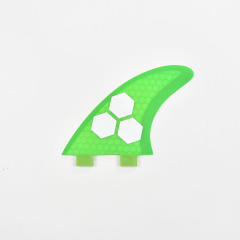
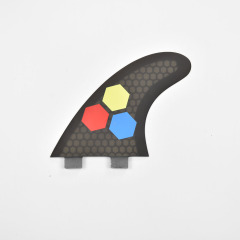
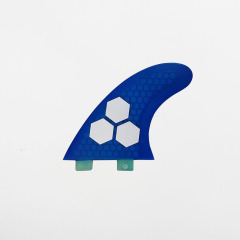
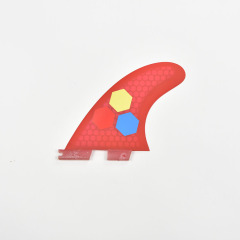
Product Overview
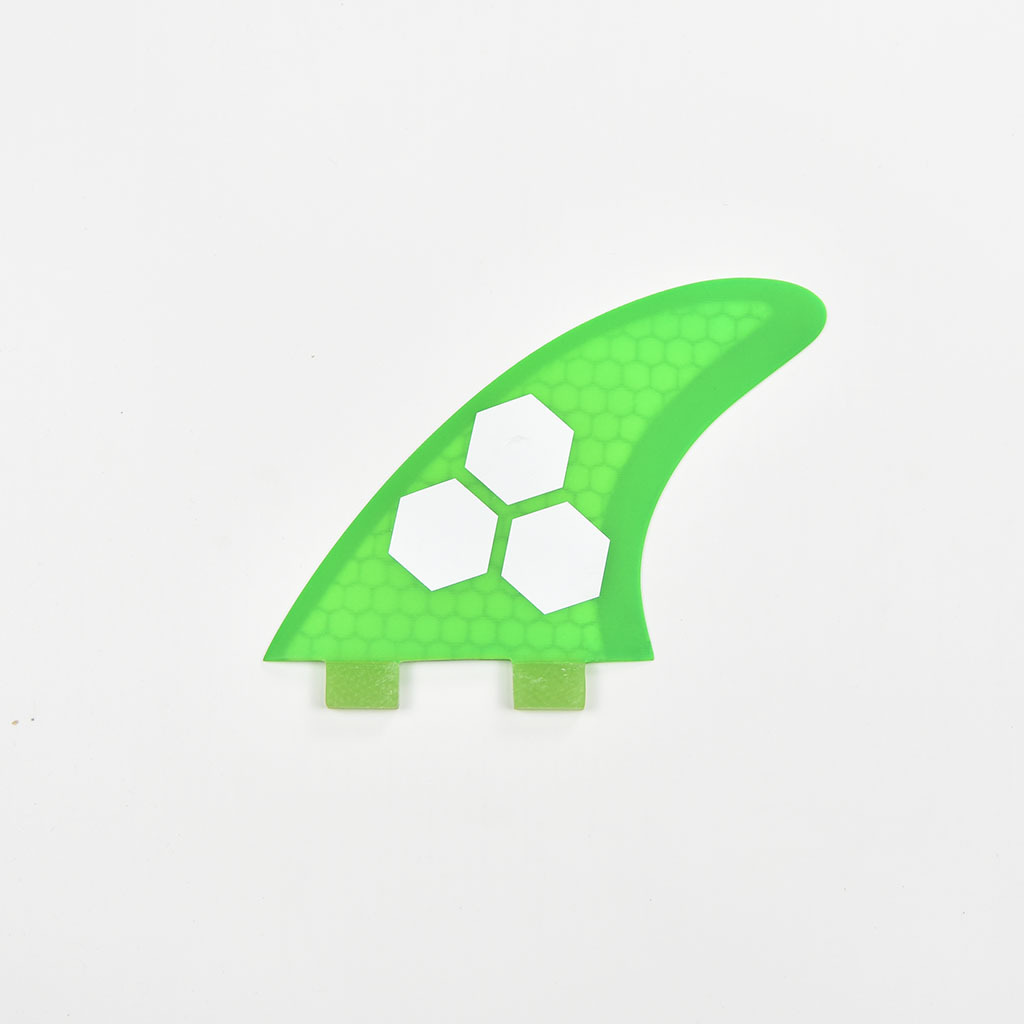
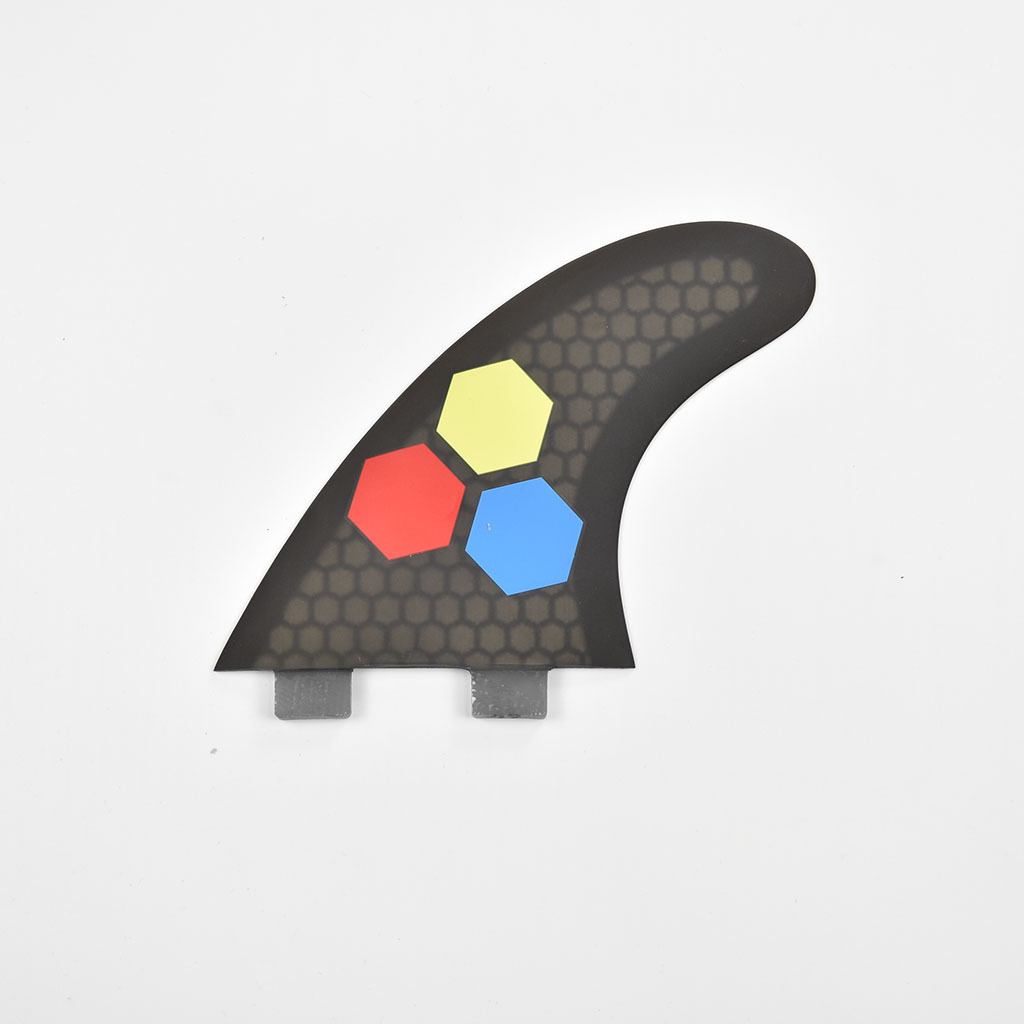
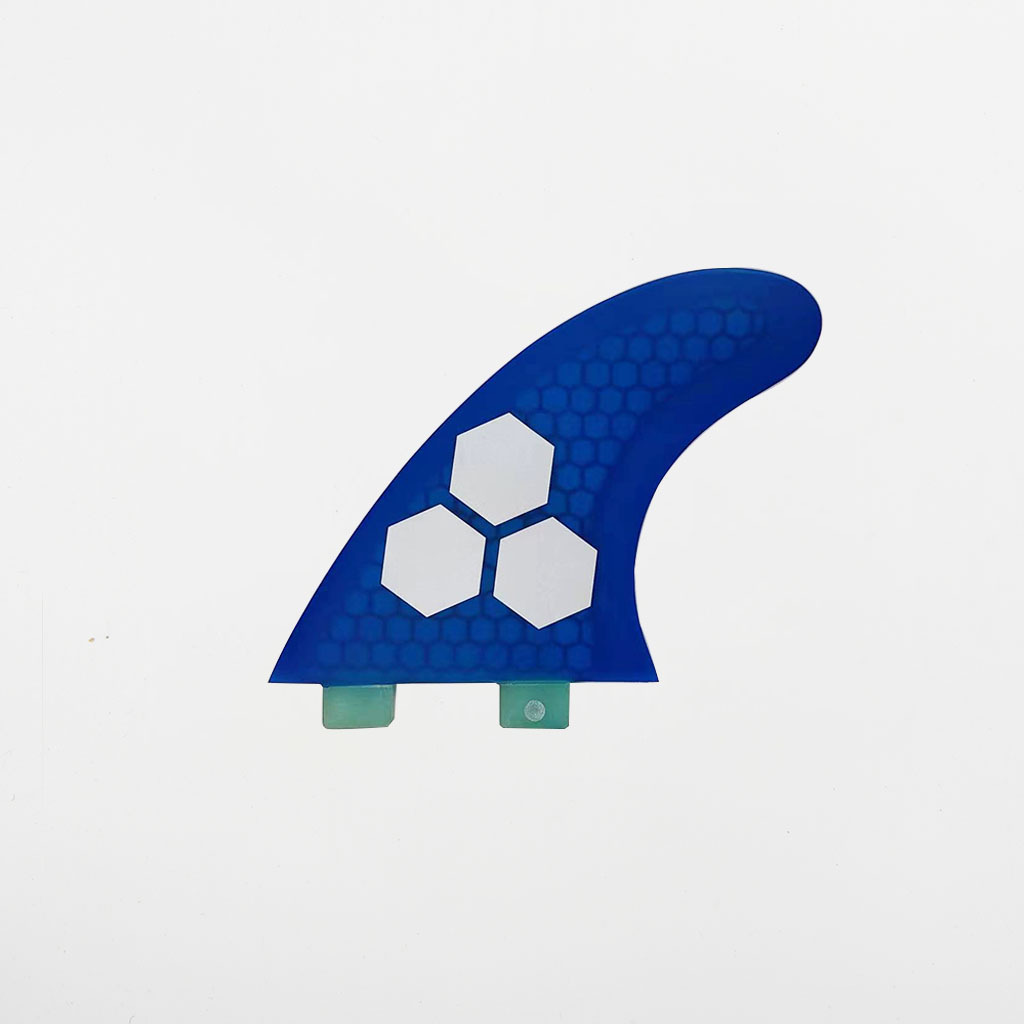
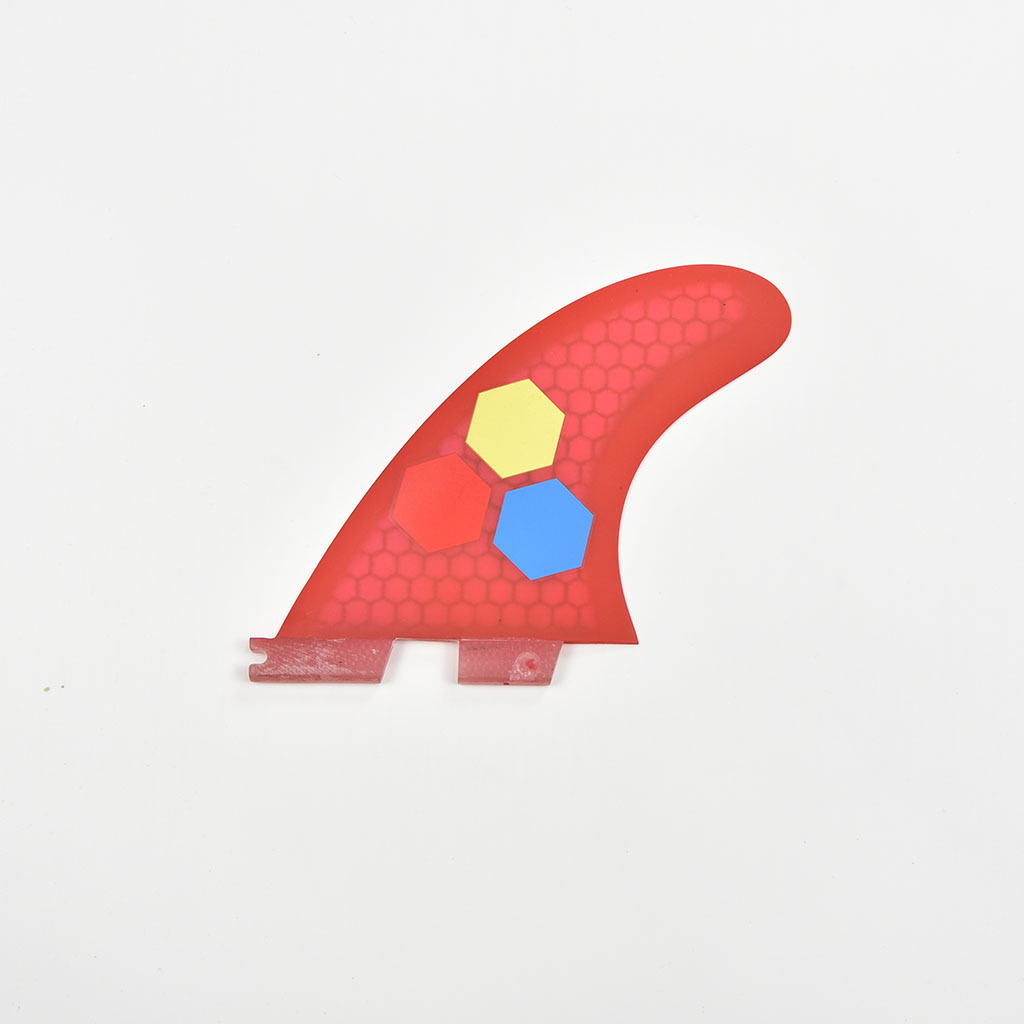
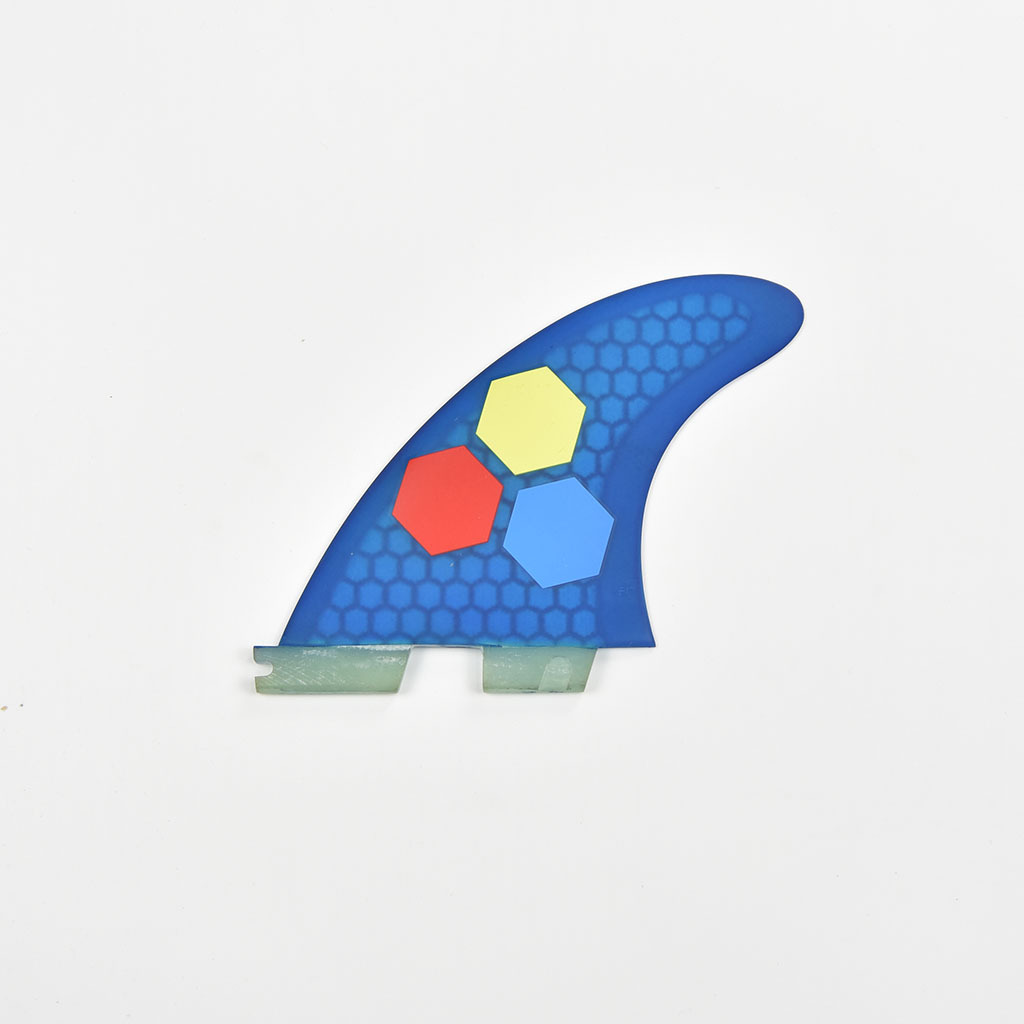
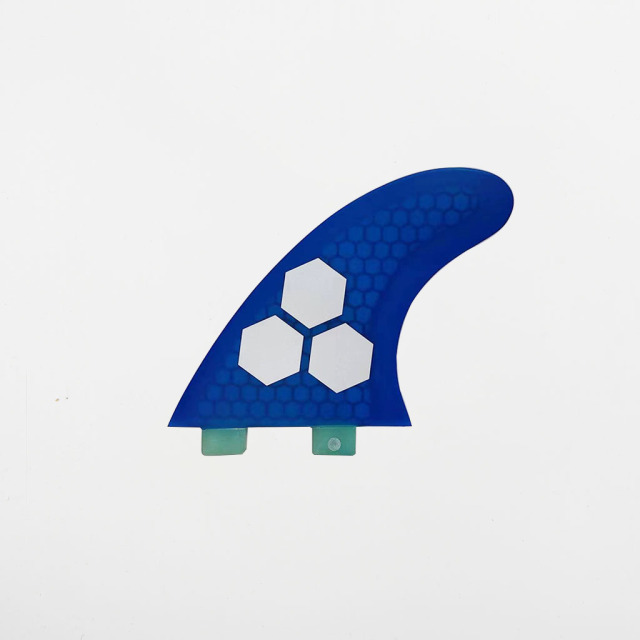
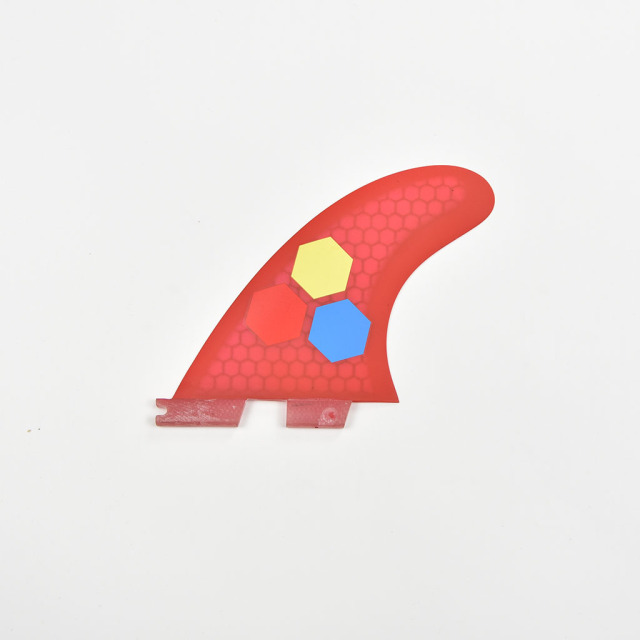
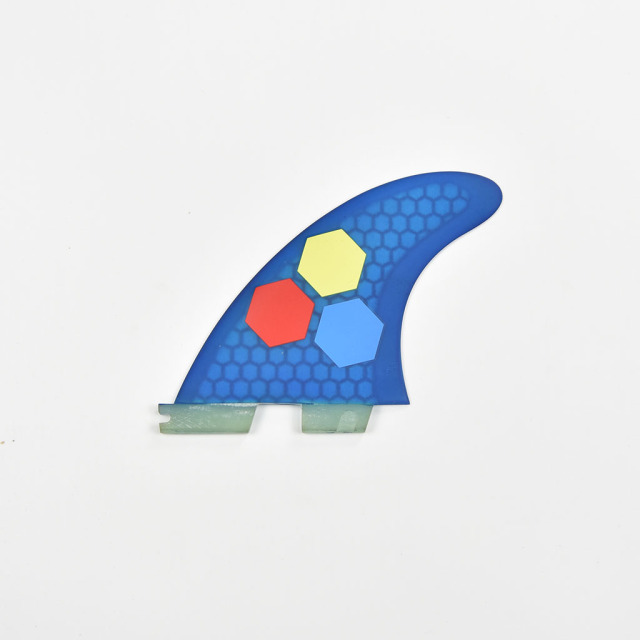
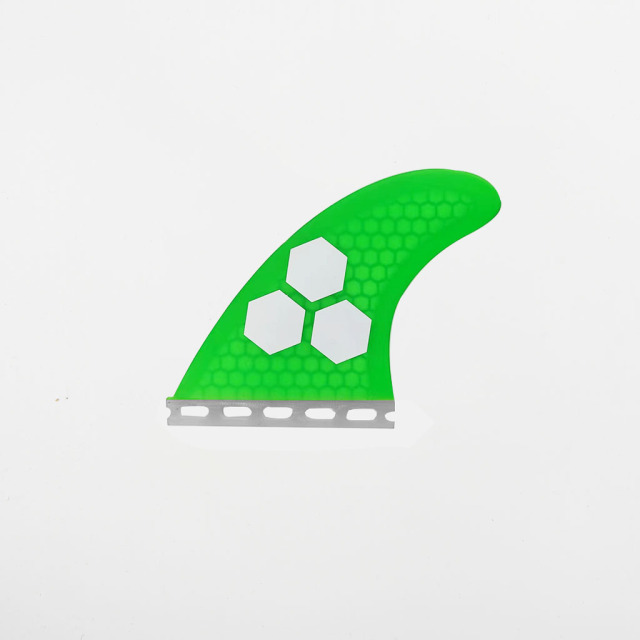
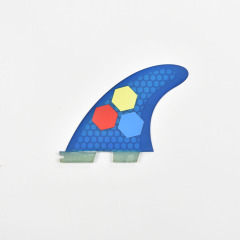
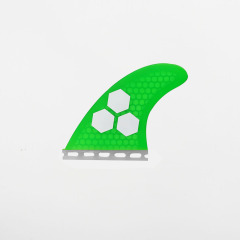
A honeycomb surf fin for everyday replacement work: a moulded honeycomb core, glass reinforcement and epoxy resin, built on a double tab base and sized across five rider-weight bands. The finished fin is light in the hand and light on the board. This is the fin a shop reaches for when a customer has lost a fin, cracked a tab or wants to re-fin an older board. It also goes onto complete boards at the build stage, where a light fin keeps freight sensible per carton and a repeatable mould keeps the next batch matching the last. Sizes run from XS for juniors and lighter surfers up to XL for heavier riders, and the same build is produced for single tab, double tab and box mounts — one family of surf fins covering most of the boards on a shop floor. Nothing about it is aimed at one kind of wave. Honeycomb is the general-purpose build a shop can put on the wall and reorder with confidence, and it sits alongside the carbon, timber, glass and plastic versions in the catalogue when a customer wants a different look or a different material story. If a shop is starting a wall from scratch, this is the one we would put on it first, and it is one of several types of surf fins we produce in the same outlines.
Honeycomb Construction
- Honeycomb core — The core gives the fin its thickness without the weight of a solid laminate: a lattice of cells inside the section rather than a solid block of material. It is the reason a fin this size feels much lighter than a glass layup of the same outline.
- Glass fiber reinforcement — Glass adds the stiffness the core cannot provide on its own, so the fin holds its shape under load instead of folding over, and the base stays true against the box.
- Epoxy resin — Epoxy binds core and glass into a single part and seals the outside against water, which is what keeps the finish stable through repeated salt-water sessions.
- Resin transfer moulding — Resin is drawn through a closed tool around the core. Because the tool and the layup stay fixed, the outline and the resin distribution repeat closely between runs, so a reorder placed a season later still lands on the same fin your customers bought before.
- Light where it counts — The core removes weight from the middle of the section without hollowing the outline. That shows up twice for a buyer: lighter in the hand on the shelf, and lighter per carton when the freight invoice arrives on a low-value accessory such as a surf leash.
- Replacement-ready — Shops reorder these as general-purpose surf fins for the repair bench and the wall, in the sizes that move fastest, because the build covers a wide spread of boards and conditions rather than one specialist case.
Fin System Compatibility
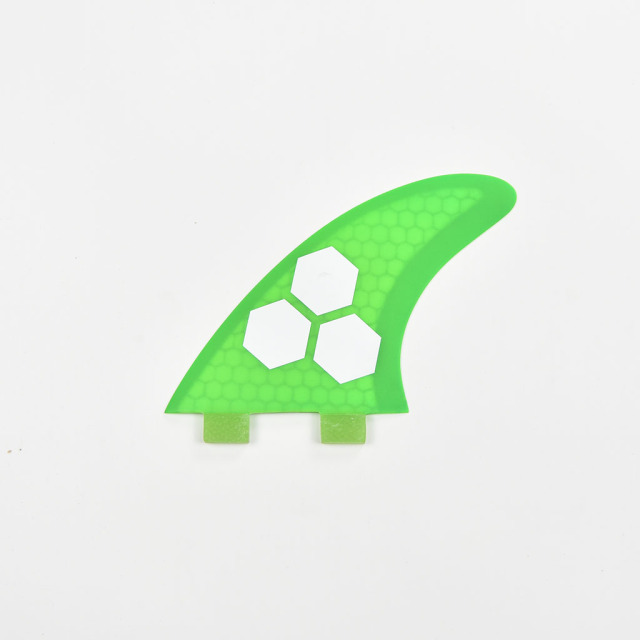
Double tab — Two short tabs at the base drop into a box with two slots and two grub screws. This is the mount F25210 is built on, and it is what most modern shortboards, and a good share of twin fin surfboard shapes, are set up for. The two screws let the fin be set fore or aft in the box instead of sitting in one fixed spot.
Single tab — One long tab, held by a single screw at the front of the box. The same honeycomb build is produced in this version, so a shop can keep one material story across boards from two different generations.
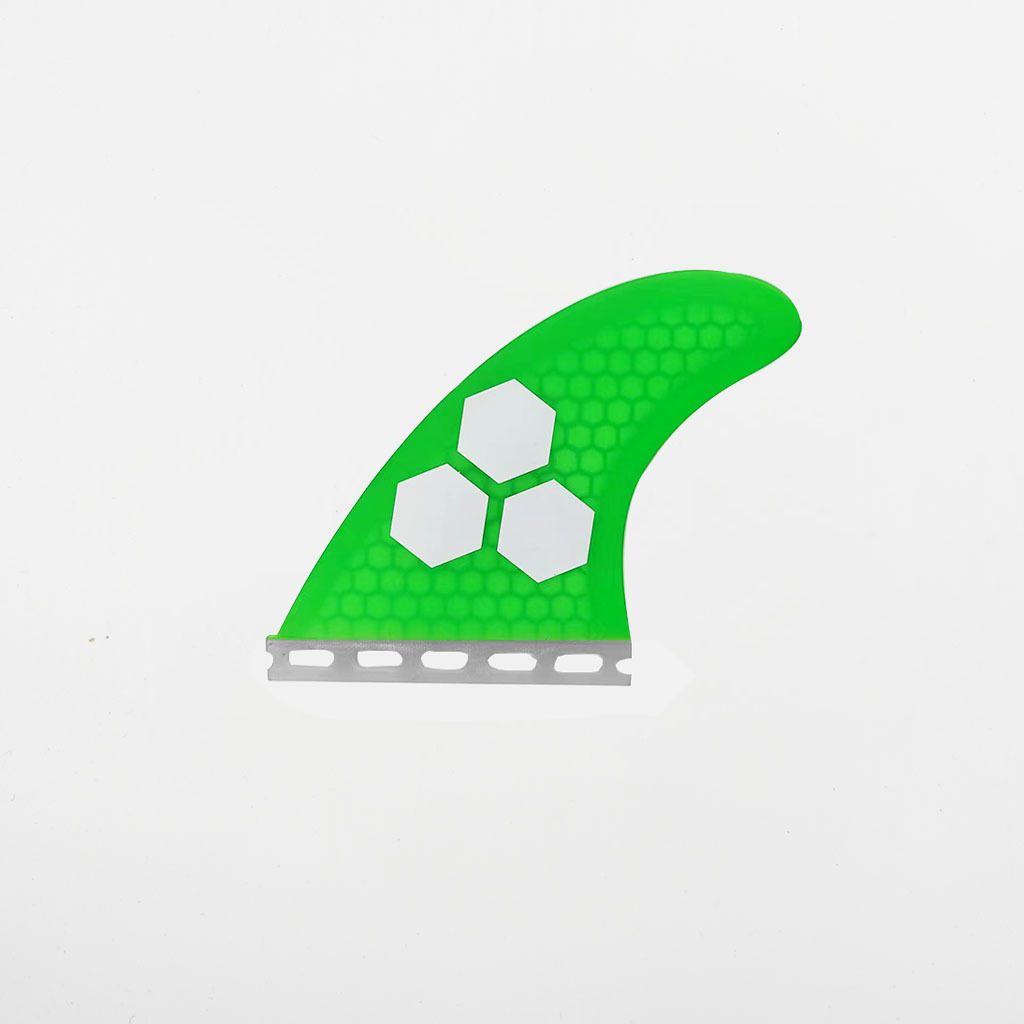
Box fin — A long base that slides into a deep channel with the screw at the rear, the traditional longboard mount. Tabbed versions will not fit a box, and a box fin will not fit a tabbed box, so the mount has to be settled before size.
Reading the box on a real board — Look at the board, not at the fin that came out of it. Two slots and two screws mean double tab; one long slot with a single screw at the front means single tab; a deep channel with the screw at the back means box. Retro-fitted and repaired boards are worth checking twice, because the fin that came out may not have been the fin that belonged there.
Mixed fleets — Rental operators, repair benches and shop walls all end up holding more than one system. Keeping a size spread in each mount your boards actually use means the customer who walks in with a broken fin is sorted from stock rather than sent away.
What to confirm — Tell us the mount when you order. The surfboard fins we produce run across all three systems, and the rider-weight bands are the same whichever base you choose.
Size & Rider Weight
The five size bands overlap on purpose, and that overlap is where most counter conversations start. M covers 65–80 kg and L covers 75–90 kg, so a 76 kg surfer sits inside both. The band will not settle it on its own; what settles it is how much load that rider puts through the fin. Treat the weight as a range, not a cut-off. On a crossover, a lighter or less forceful surfer takes the smaller of the two bands, and a heavier or stronger surfer at the same weight takes the larger. A junior moving out of XS stays on XS until the fin actually starts to feel small — buying a band ahead leaves a young surfer on a fin that is too much for their weight, and they will not enjoy it. Weigh the board alongside the rider. A wide, thick board with a broad tail already gives lift, and carries a heavier rider on the smaller of two bands. A narrow, thin board, or one with a pulled-in tail, needs the larger band to hold its line under the same rider. The same 78 kg surfer on a generous everyday board and on a slim performance board is two different fin sizes. Keep a set matched. A thruster set, or the pair on a twin fin surfboard, should all come from one band. Mixing a medium centre with large sides changes how the set works and makes the sizing impossible to explain at the counter, so set matching matters more than the exact band you land on. Stock the crossover bands deepest. Most adult buyers fall between 65 and 90 kg, so M and L are the two to hold in depth. Take XS, S and XL lighter and reorder them against actual sell-through rather than a hunch, especially where junior sizes move slowly through the year. Label the rental rack. Rental and school fleets should mark the band on the board, not only on the fin bag — heavier riders take L or XL, lighter riders and juniors take XS or S — so staff fit from the board in front of them instead of guessing at the counter. Ask us before the run. Send the rider weight, board width and thickness, and the mount, and we will confirm the band we would ship for that combination. Where a shop is genuinely torn between two bands, take the larger for the shelf: a slightly larger fin is an easier conversation at the counter than one a customer brings back.
| Size | Rider weight | Who it suits | How it feels on the board |
| XS | Under 55 kg / 120 lbs | Juniors, groms and smaller-framed surfers | The smallest outline in the range, so the loosest, easiest turn for a light rider |
| S | 55–70 kg / 120–155 lbs | Lighter adults, older juniors and teenagers moving up a size | A little more drive than XS without making a light board feel stiff |
| M | 65–80 kg / 145–175 lbs | The middle of the adult range | Balanced drive and pivot for everyday conditions |
| L | 75–90 kg / 165–200 lbs | Taller or heavier adults | More surface under a heavier rider, so the board holds its line through a turn |
| XL | Over 85 kg / 190 lbs | The heaviest riders in the range | The most stability in the range, so a bigger rider's turns hold instead of sliding out |
Fitting & Care
- Rinse the box out before anything goes in. Sand, old wax and dried salt sit in the slot and stop the tabs seating fully — a fin that will not sit flush is usually a dirty box, not a faulty fin.
- Loosen the grub screws until they clear the slot, and keep each screw with its own box. On a twin fin surfboard the two rear boxes are separate, so work one at a time and do not mix the screws.
- Slide the tabs in to the position you want, then tighten the screws hand-tight. Over-tightening is what strips a screw head or cracks a tab; firm is enough.
- Check the base sits flush with the bottom of the board and that the fin stands upright. A fin sitting proud of the bottom or leaning to one side is the first thing to check when a board does not feel right.
- Rinse the fin in fresh water after every salt-water session and let it dry before it goes back into a bag or a cover. Salt left on the surface dulls a finish over a season, and a damp fin in a closed bag is worse.
- Store fins flat or upright on a surfboard rack rather than leaning on the tip, and keep boards out of a closed car in hot weather — epoxy does not like sustained heat.
- Keep spare screws and a screw key at the bench, and run through the screws before a session and again after travel.
- None of this is special to this model. It is the routine that keeps any surf fins on the shelf or in a rental rack ready to go out.
Matching Accessory Range
- Leashes — Hypalon surf leash in 6 ft, 7 ft, 8 ft and 9 ft: a light 6 ft for shortboards in small surf, up to the 9 ft ankle leash for longboards and bigger days.
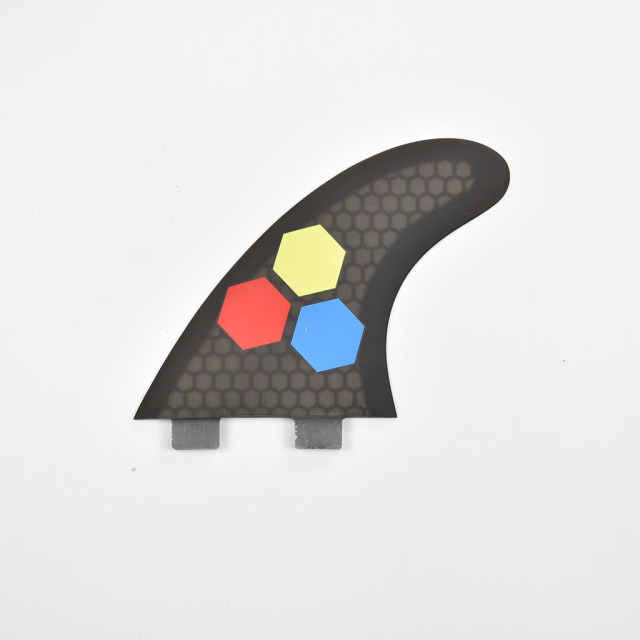
- Fins across materials — The honeycomb build on this product for general stock, plus carbon honeycomb, timber, G10 glass and nylon surfboard fins for buyers who want a wider spread or a different look on the wall.
- Traction — Tail pads, centre pads, skimboard pads and waxless pads, so the deck side of the board is covered from the same order.
- Covers — Basic bags, regular bags, stretch covers and bodyboard bags for the travel and storage customer.
- Racks — Travel rax and tie-downs, storage racks, display racks, bike racks and a surfboard rack for wall or floor, which is also how a shop keeps loose fins from migrating between sizes.
- Planning them together — A fin wall, a leash hook and a pad shelf are usually bought as one seasonal order. Tell your sales contact which ranges you want on the same schedule so the mix can be planned into one run and one shipment.
Specifications
| Model | F25210 |
|---|
| Product type | Honeycomb surf fin |
| Base | Double tab |
| Core | Honeycomb, 50% |
| Reinforcement | Glass fiber, 30% |
| Resin | Epoxy, 20% |
| Construction | Resin transfer moulding |
| Sizes | XS, S, M, L, XL rider-weight bands |
| Finish | Translucent resin over a visible honeycomb core |
| Range options | Single tab and box fin versions in the same construction |
Ordering & Confirmation
- Confirm the size split you want — which bands go to which shop and how deep to stock each one. Most buyers take a spread across the range rather than loading a single size.
- Confirm the mount: double tab for this model, or the single tab and box fin versions if your boards need them.
- Confirm the finish and any graphic direction against a physical sample. The translucent resin and the hexagon inlay are the two details buyers most often want in the hand before committing a run — ask your sales contact about sample availability.
- Confirm packing, labelling and barcode format for your shelf. How fins are bagged, ticketed and cartoned changes from one account to the next, so send us the format you need.
- Confirm order quantity and delivery schedule with your sales contact. Lead time generally depends on the mix of sizes and mounts in the order, so send the full breakdown rather than an estimate.
- Tell us if the order covers more than one shop, brand or market. We produce for surf board manufacturers, chain accounts and distributors on the same line, and a split order is planned into the run rather than added afterwards.
- Add the rest of the range if you need it — leashes, traction pads, covers and racks. Consolidating with those lines is usually what makes the freight work on an accessory this size.
- Tell us the mix of types of surf fins your shelf or repair bench actually needs, and we will confirm what is available in each before the run is scheduled.
Scale & Supply Capability
CIMI is a factory-based supplier with 16 years in surf and watersports hardgoods, manufacturing at our own facility rather than sourcing through traders. Chain stores, supermarkets and surf-brand stores buy from us because one supplier covers a full accessory assortment, so a season's order and its reorders can be planned together. We take on OEM and private-label work, adapting designs, colourways and branding to your programme, and we schedule production against your agreed range plan. Send us your buy list and target dates, and we will confirm what we can make and when.
FAQ
Which size should I pick when a rider falls between two weight bands?
The bands overlap on purpose, so a rider at the top of one band is also at the bottom of the next. Read it as a range, not a boundary: a lighter or lower-power surfer at the crossover takes the smaller fin, and a heavier or stronger surfer on the same crossover takes the larger one. For a junior who is still growing, start one band down and let them move up rather than putting them on a fin they will grow out of in a season. If a shop is splitting stock, take the middle bands deepest and hold the two extremes lighter.
How does this compare with the carbon honeycomb fin in the range?
Same honeycomb core and the same closed-tool moulding, with carbon added to the layup: the carbon version carries carbon fibre in the mix, an internal carbon framework shaped to its own template, and a carbon twill at the base. The carbon build is the one to stock when a customer is specifically asking for carbon and is willing to pay for it; the plain honeycomb build covers the everyday replacement customer who wants a light fin at a working price. Many shops carry both and let the customer choose at the counter.
Can these fins be produced under our own brand?
Yes. We run private-label programmes for surf board manufacturers, chain stores and distributors, working from your artwork, logo placement and colour direction. Send the artwork and the colour you want matched, and our team will confirm what can be reproduced directly and what needs a print or tooling change before the run is scheduled. Fins carrying your own branding are produced to order rather than pulled from stock.
What is the recommended way to display loose fins in a shop?
Keep them off a flat shelf where sizes mix. A wall or a display rack that lets a customer see the outline and the size marker at a glance sells faster than a box on the counter, and it makes a missing size obvious at reorder time. Group by size rather than by colour, keep pairs together, and put a sample board next to the fin display so a customer can see how the base sits in a box. A surfboard rack nearby and the surf leash hooks on the same wall turn three separate purchases into one stop.
A customer has brought back a fin with a cracked tab. Can it be repaired?
Treat a cracked tab as a replacement rather than a repair. The tab is the part that carries load from the fin into the box, and on any of the types of surf fins we mould a repaired tab is the joint most likely to fail again under a turn. Fit a new fin, then check the box itself: a cracked or loose box will crack the next tab as well, and that is the failure a shop misses when it only looks at the fin. Keep a small stock of the common sizes at the bench so the customer is not sent away.