Product Overview
The F25136 is a double tab honeycomb fin built for the replacement side of the wall. There are several types of fins a shop can carry, and for a fins surf shop this is the one that answers the everyday question — a customer has lost a fin off a board, a repair bench has a set in with a snapped blade, a rental fleet needs the same model back on the rack by the weekend. It is an all-round shape rather than one tuned to a single pocket of swell, so a single model covers the conditions most customers actually surf. The honeycomb fins in this range run from XS to XL on rider weight, so one model covers a light junior on a shortboard and a heavier adult on a longer board — a range that behaves like a range rather than five unconnected sizes.
Material & Build
- Honeycomb core — The cell structure runs through the middle of these surfboard fins and carries the stiffness, so the blade holds its shape without being solid material all the way through.
- Glass fiber — Glass layers wrap the core and form the outer shell of these surf fins, giving the blade its working surface and its resistance to the knocks of beach, car park and roof rack.
- Epoxy resin — The resin binds glass and core into one unit and forms the glossy outer skin on the finished fin.
- Resin transfer moulding — Resin is drawn through the dry glass and the core inside a closed mould, so the honeycomb is bonded to the skin in one shot instead of being assembled afterwards.
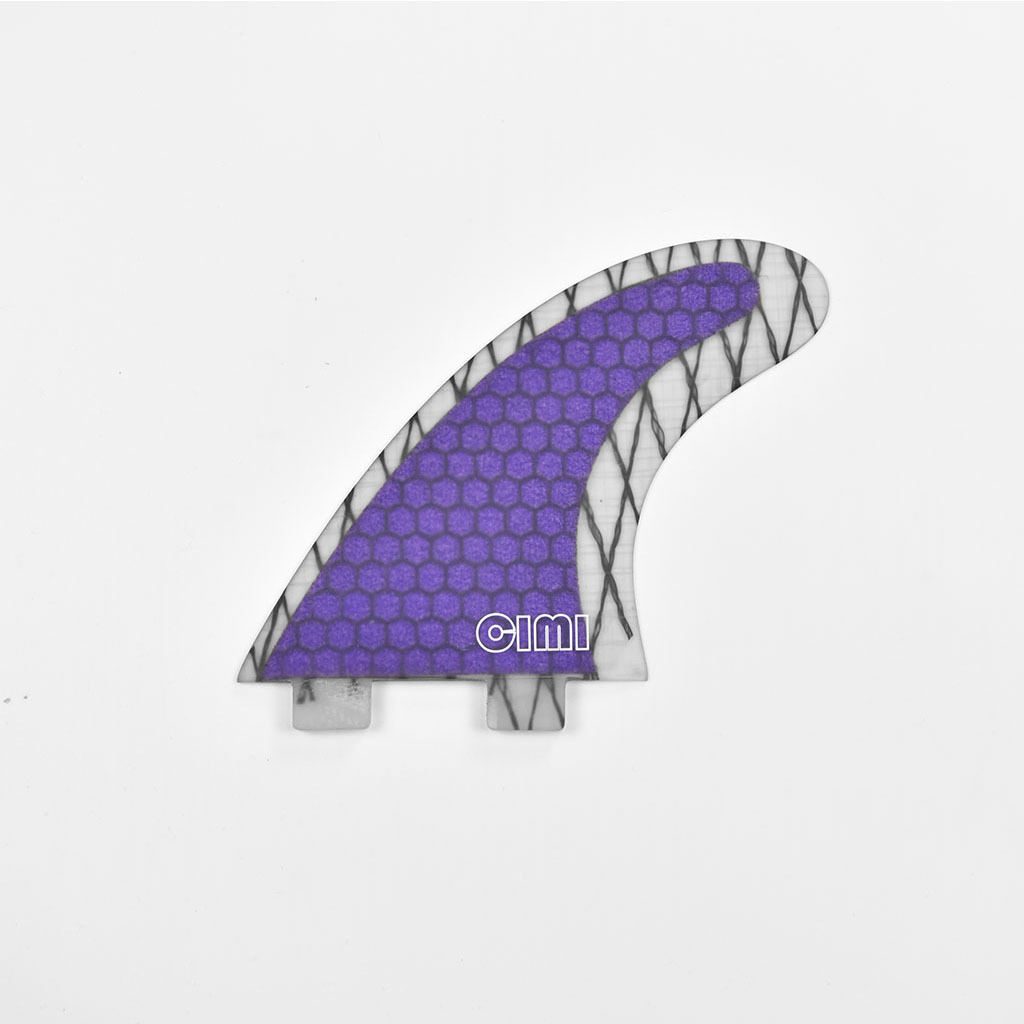
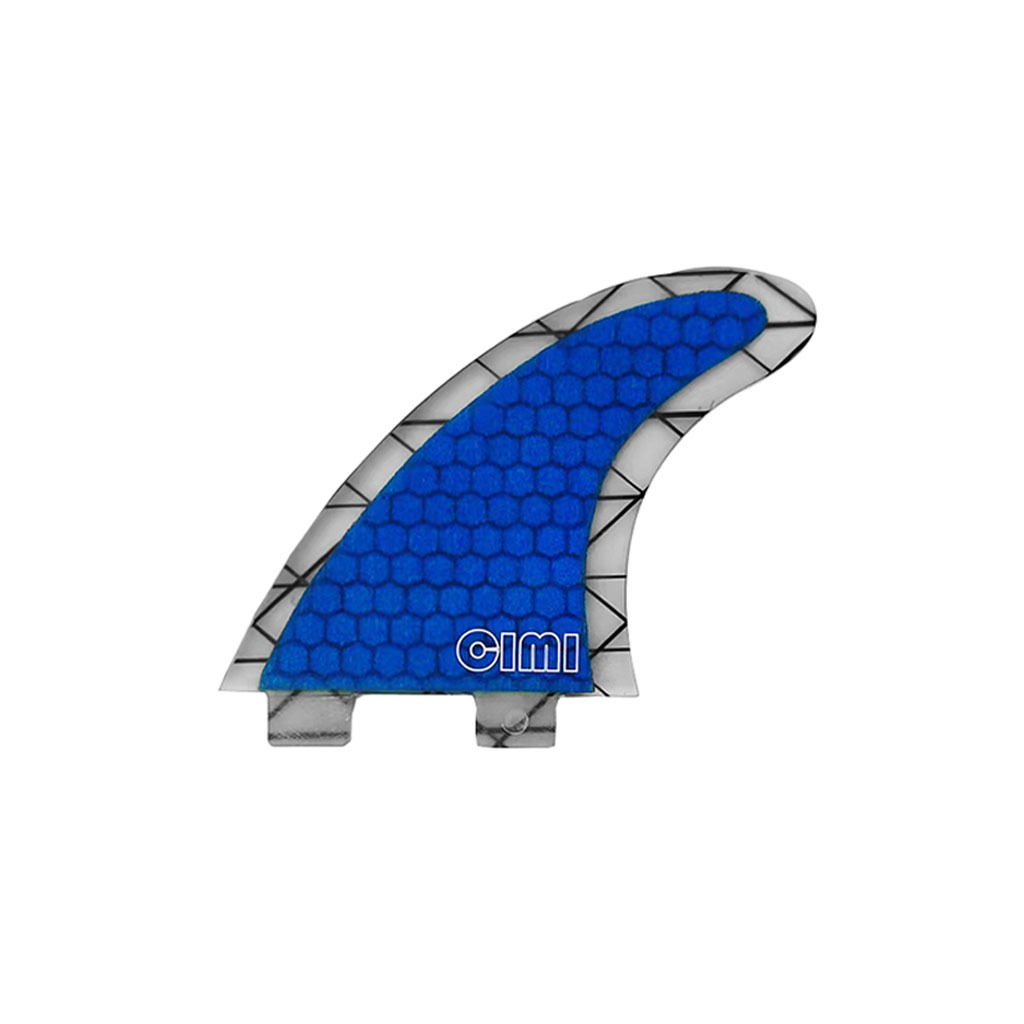
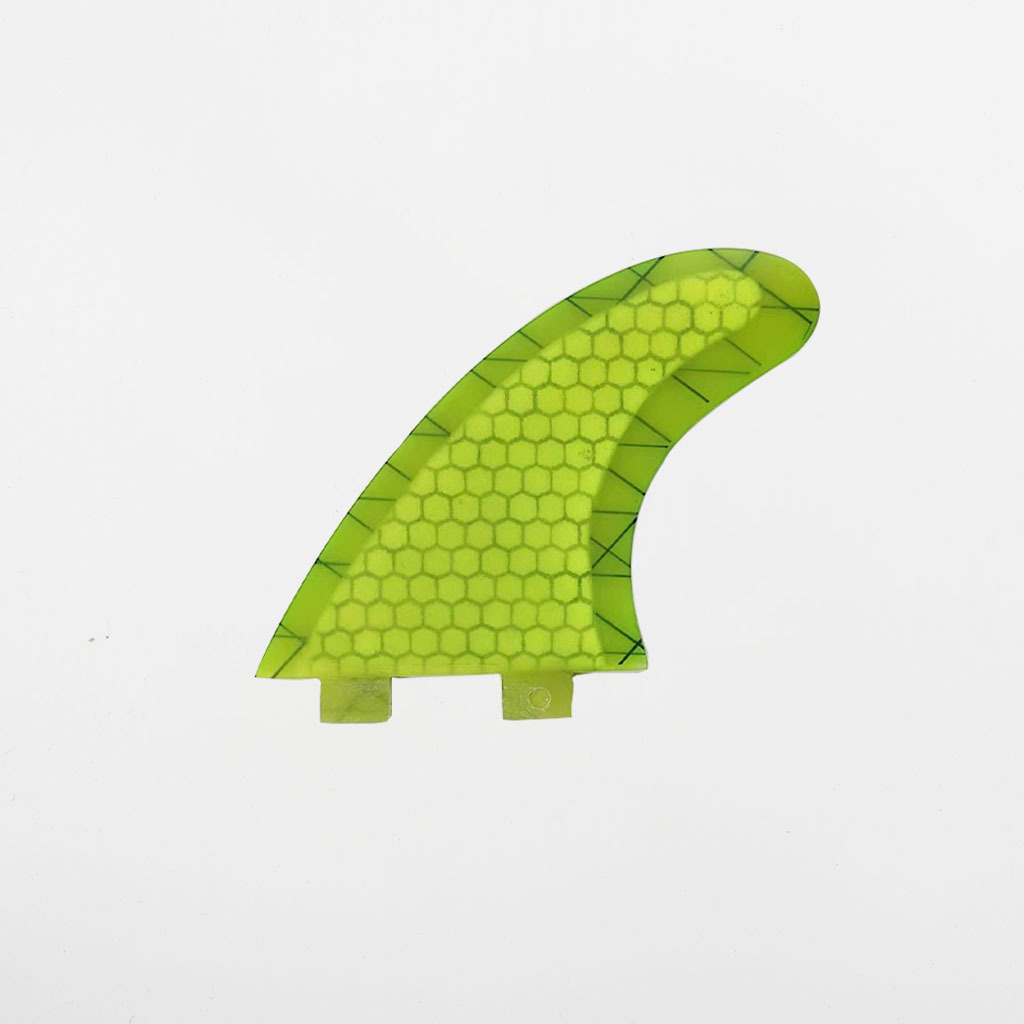
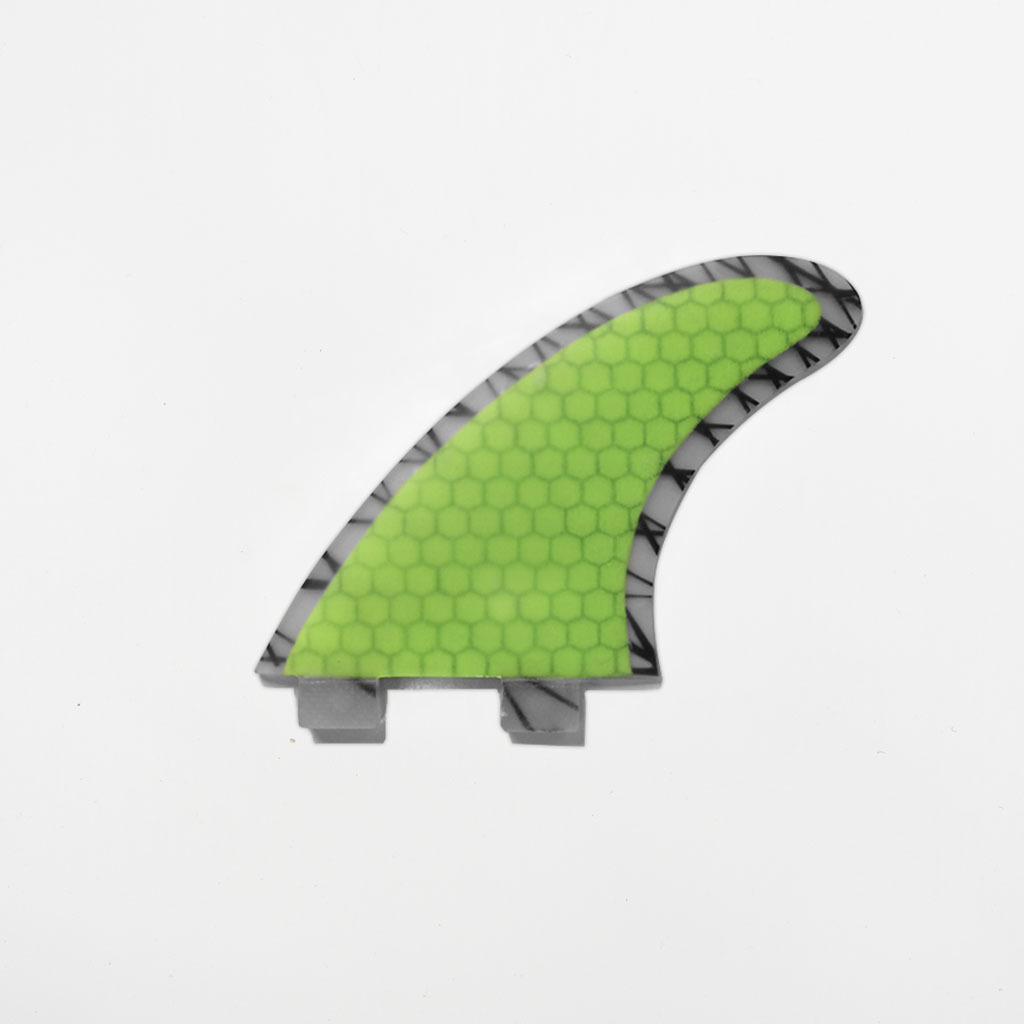
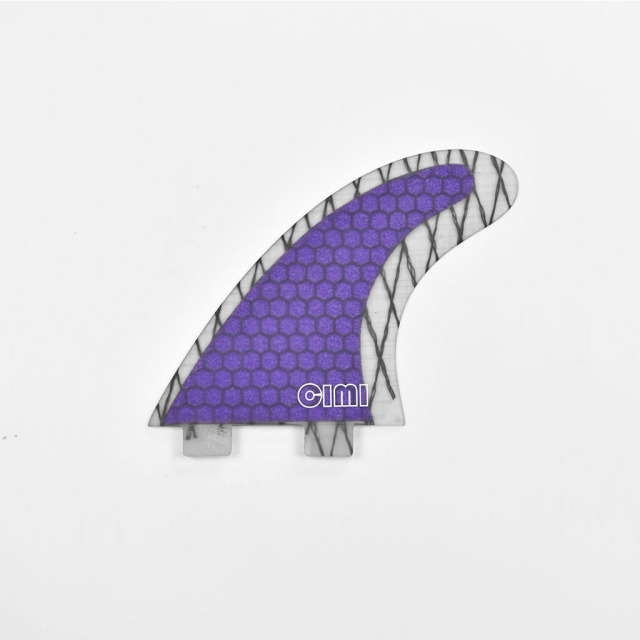
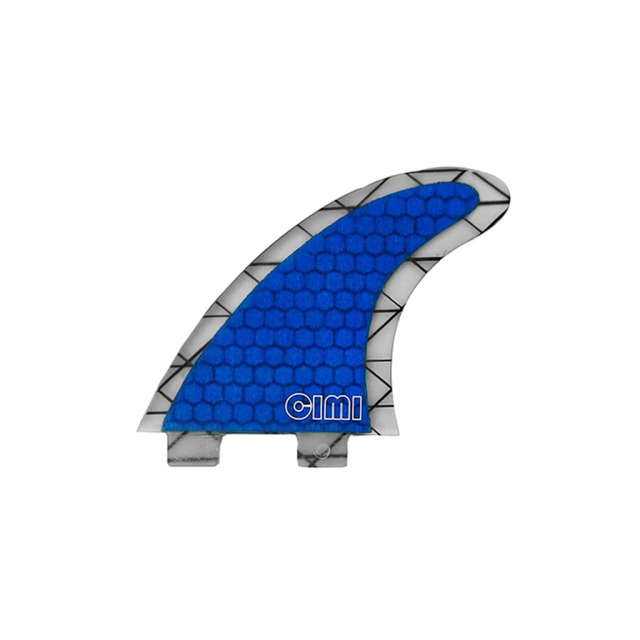
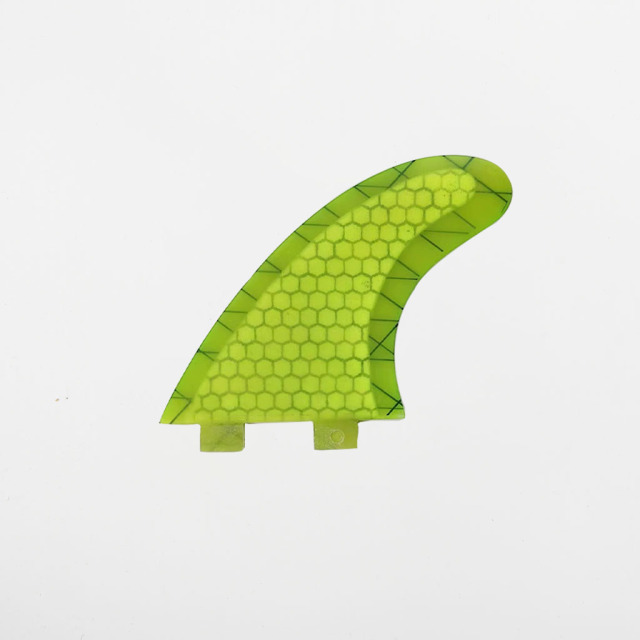
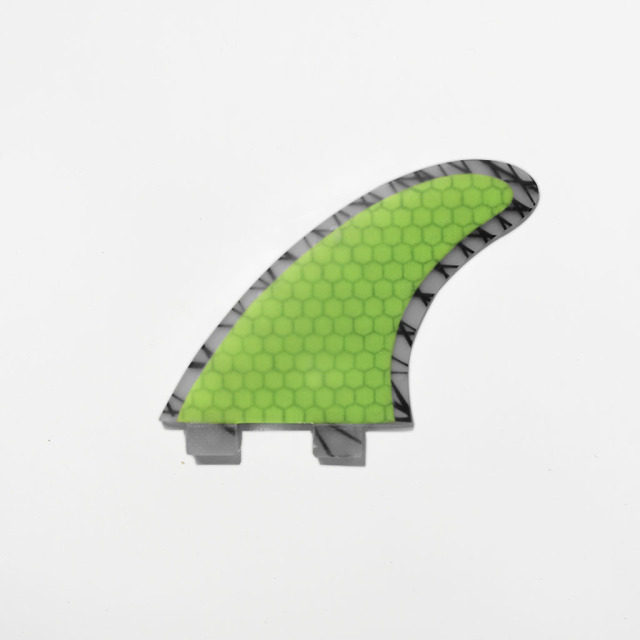
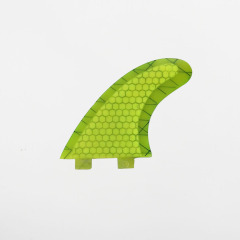
- The core reads through the skin — The outer layer is translucent enough that the cell pattern shows across the blade, with the core colour picking up along the edges.
- Light in the hand — Picking one up is the quickest way to feel what the core does: the fin feels light for its size, which is the whole point of the construction.
- Consistent from run to run — A closed mould produces the same shape every time, so a reorder matches the fins already on your wall — the sort of repeatability surf board manufacturers build a replacement line around.
Fin System Options
A surfboard fins guide usually starts with the base, because on the wall there are several types of fin and the base separates them far more sharply than the outline does. A fin seats into the box built into the board, and a base made for one box will not sit properly in another — a fin that looks right can still be the wrong one. We build this honeycomb model in three bases: single tab, double tab and box fin. The fin on this product is the double tab version; the single tab and box fin versions use the same core, glass and epoxy build and the same weight bands.
The reliable check is to look at the box on the board rather than at the fin you are taking off, then compare the base of the old fin with the new one before anything is tightened. When a board arrives with no fins at all, the box is the only answer, and reading it takes seconds.
That has a direct effect on stock. A twin fin surfboard and a thruster can hang side by side in the same rack and still need different bases, so a single fin wall has to cover all three to be useful.
Carrying all three is what lets a fins surf shop serve the walk-in without a special order — and it is the difference between a fin wall that works and one that sends buyers to another supplier.
Size & Rider Weight
- Weigh the rider as they will surf. These are rider-weight bands, so weigh with wetsuit and boots on. XS fits riders under 55 kg (120 lbs), S covers 55–70 kg (120–155 lbs), M covers 65–80 kg (145–175 lbs), L covers 75–90 kg (165–200 lbs), and XL is for anyone over 85 kg (190 lbs).
- Read the overlaps as a choice. S and M meet between 65 and 70 kg, and M and L meet between 75 and 80 kg. A rider in either overlap can go down a band for a lighter feel underfoot, or up a band when they want more fin area in the water.
- Order by the rider, not the board. A twin fin surfboard and a thruster follow the same weight-to-band logic; the board decides the base you order and the rider decides the band.
- Stock the whole spread. A wall that only carries M sends the lightest and heaviest half of your customers somewhere else. Five bands from one supplier is what makes a replacement line work for a fins surf shop.
- Ask when the call is close. If a customer sits right on a boundary and you cannot weigh them, ask what they ride and how they surf, then take the band that matches the weight you would guess.
- Keep the bands at the counter. Treat them as your surfboard fins guide — they answer the size question before it turns into a conversation.
Specifications
| Property | Detail |
|---|
| Material composition | 50% honeycomb core, 30% glass fiber, 20% epoxy resin |
| Core | Honeycomb cell core |
| Construction | Resin transfer moulding (RTM) — an in-house process common to surf board manufacturers |
| Fin systems available | Single tab, double tab, box fin |
| Base on this model | Double tab |
| Size bands | XS, S, M, L, XL — matched to rider weight |
| Skin finish | Glossy, translucent over the core |
Fitting & Care
- Seat it before you tighten. Push the fin down until the base sits flush, then take up the screw or plate. Tightening a fin that is not fully seated is how boxes get cracked.
- Loosen fully before you pull. Undo the screw all the way before lifting a fin out. Levering a fin out with the screw still engaged damages the tab and the box together.
- Recheck after the first session. A new fin can settle a fraction under load; a quick look at the screw after the first surf catches it before a good fin goes missing.
- Rinse after every session. Salt and sand collect around the base and in the thread. Fresh water and a wipe keep the fin seating properly next time.
- Dry before storage. Store spare surf fins flat, out of direct sun and dry — a fin kept wet inside a bag holds moisture right where the base meets the blade.
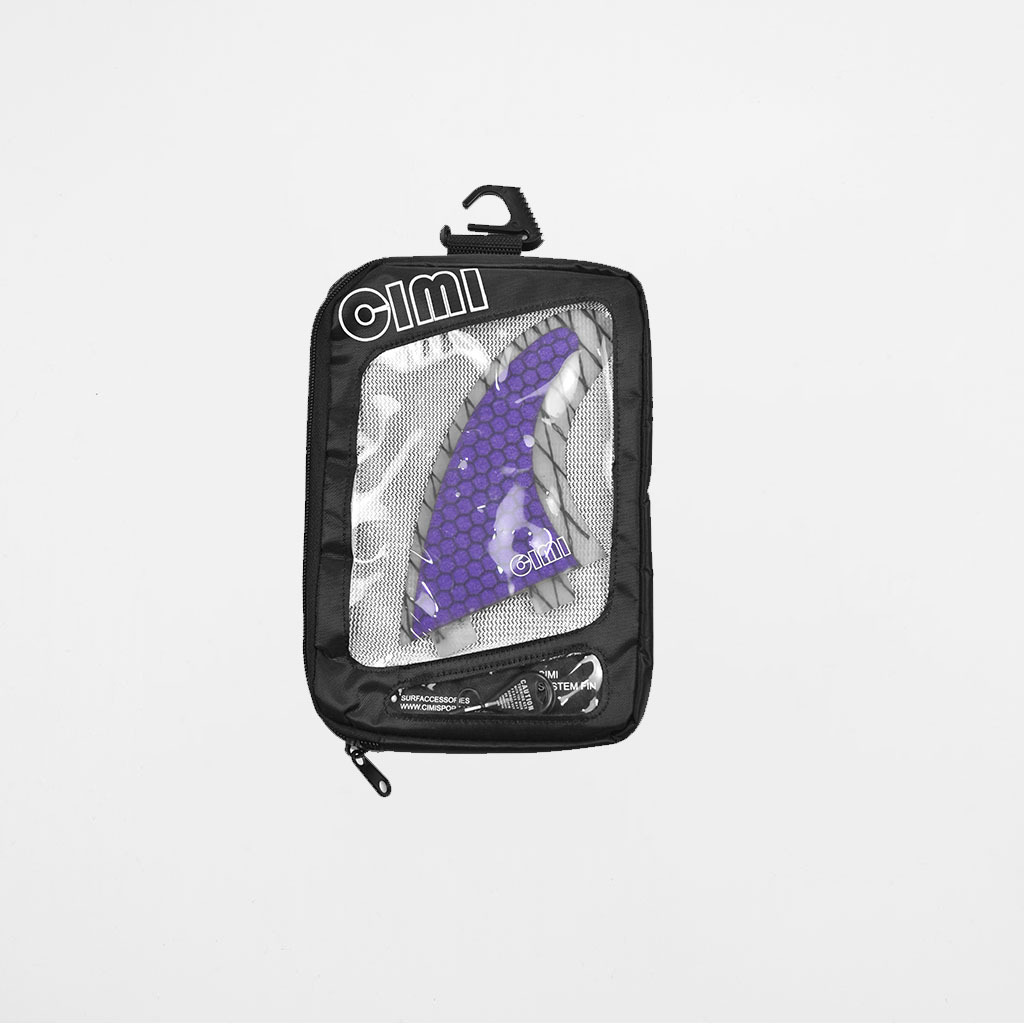
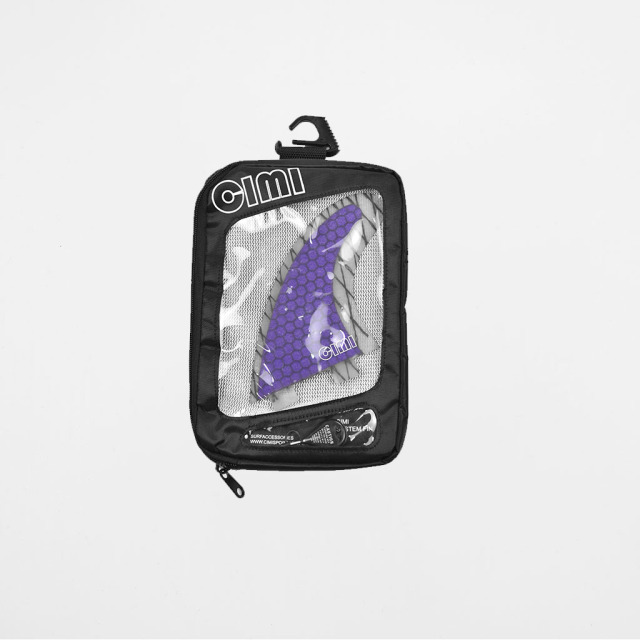
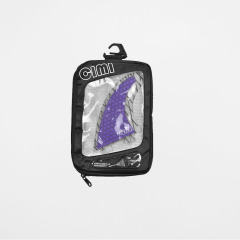
- Use the pouch for spares. Fins ship in a small black mesh pouch with a clear window, which is a sensible place to keep a spare between sessions.
- Look at the base, not just the tip. The tabs carry the load on a surfboard fin, and a worn tab will not sit tight even when the blade itself looks perfect — a check worth putting in any surfboard fins guide.
Related Accessories
- Leashes. Hypalon leashes run from a 6 ft 6 mm for small to medium waves up to a 9 ft 8 mm for longboards and bigger days — the piece a customer usually needs in the same visit as a fin. - The rest of the fin wall. Beyond this honeycomb model, the surf fins line covers carbon honeycomb, timber-finish honeycomb, plastic and inkjet versions, plus the single tab and box fin bases. - Traction pads. Tail pads, centre pads, skimboard pads and waxless pads — deck grip ordered alongside the fins that go underneath. - Covers. Basic bags, regular bags, stretch covers and bodyboard bags for the board the fins are going on. - Racks. Travel rax and tie-downs, storage racks, display racks and bike racks, for shops fitting out a wall and for customers who need somewhere to keep a board. - Fin accessories. Screws, plates and the small fittings that go missing between one set and the next.
Scale & Supply Capability
CIMI is one of the surf board manufacturers that has spent 16 years in surf and watersports hardgoods, making at our own facility rather than sourcing through traders. Chain stores, supermarkets and surf-brand stores buy from us because one supplier covers a full accessory assortment, so a season's order and its reorders can be planned together. We take on OEM and private-label work, adapting designs, colourways and branding to your programme, and we schedule production against your agreed range plan. Send us your buy list and target dates, and we will confirm what we can make and when.
FAQ
How do I tell which types of surfboard fins fit my board?
Look at the box set into the board, not at the fin you are replacing. Single tab, double tab and box fin bases each seat into a different box, and a fin that looks right can still be the wrong base. This model is the double tab version; if the board takes a single tab or box fin base, order the same honeycomb surfboard fin in that version.
Will this fin work on a twin fin surfboard?
It will, provided the board's boxes match the base you order. A twin fin surfboard carries two fins where a thruster carries three, but the number of fins only changes how many you order — the base type is what decides whether a fin seats. Check the box first, then take the weight band that suits the rider.
Is the honeycomb pattern visible on the finished fin?
Yes. The outer skin is translucent, so the cell structure reads across the blade and the core colour picks up along the edges. The surface itself is glossy and sealed, so the fin wipes down and dries like any solid fin.
How does this fin differ from the carbon honeycomb version?
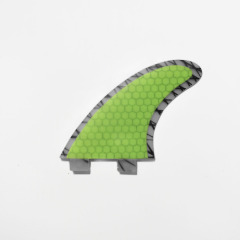
The carbon version adds carbon fiber to the lay-up and uses a carbon frame inside the fin; this model is the glass and epoxy honeycomb build. Both are produced in the same three bases and the same weight bands, so the choice comes down to which build you want on the wall rather than which size or base fits.
What should we confirm before placing a batch?
Three things settle most orders: the base type the boards take, the weight bands your customers actually fall into, and the fittings you need supplied with the fins. Get those agreed first and the rest of the order is straightforward.