Product Overview
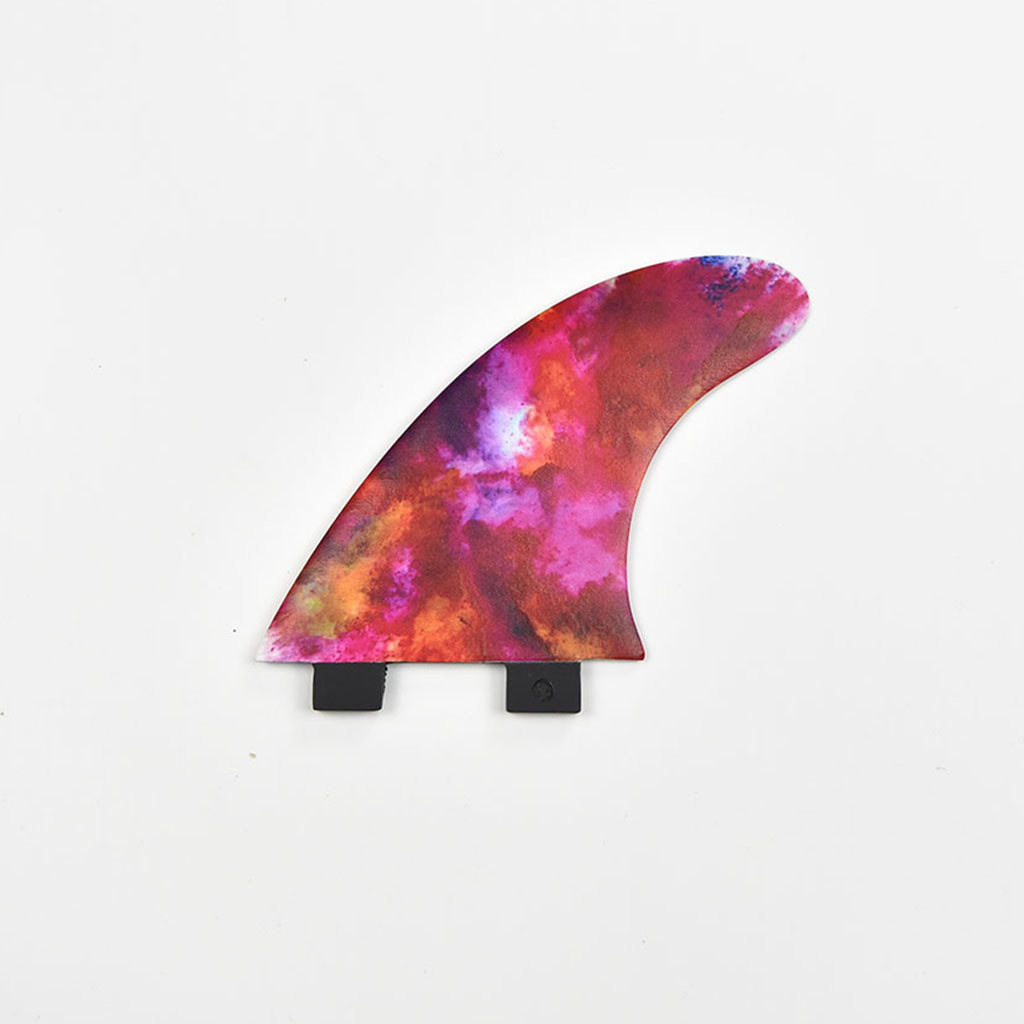
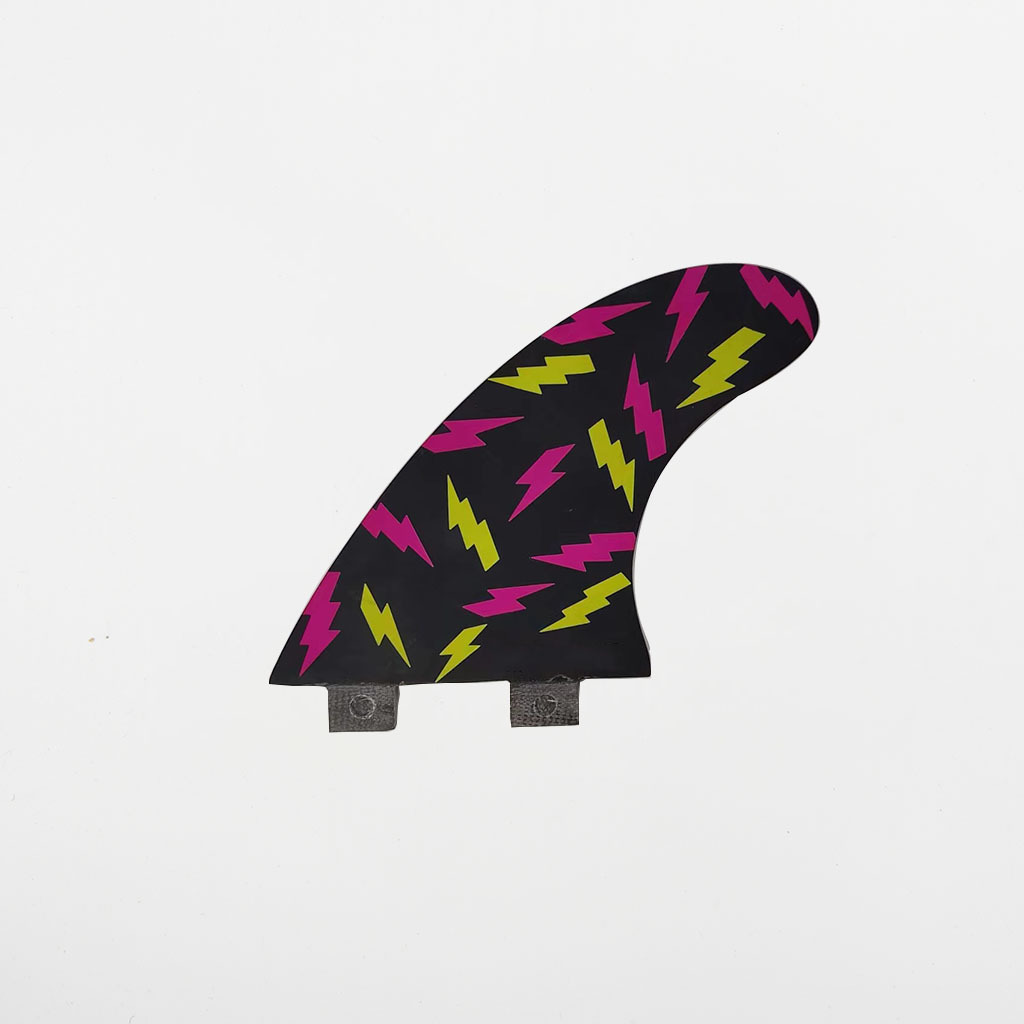
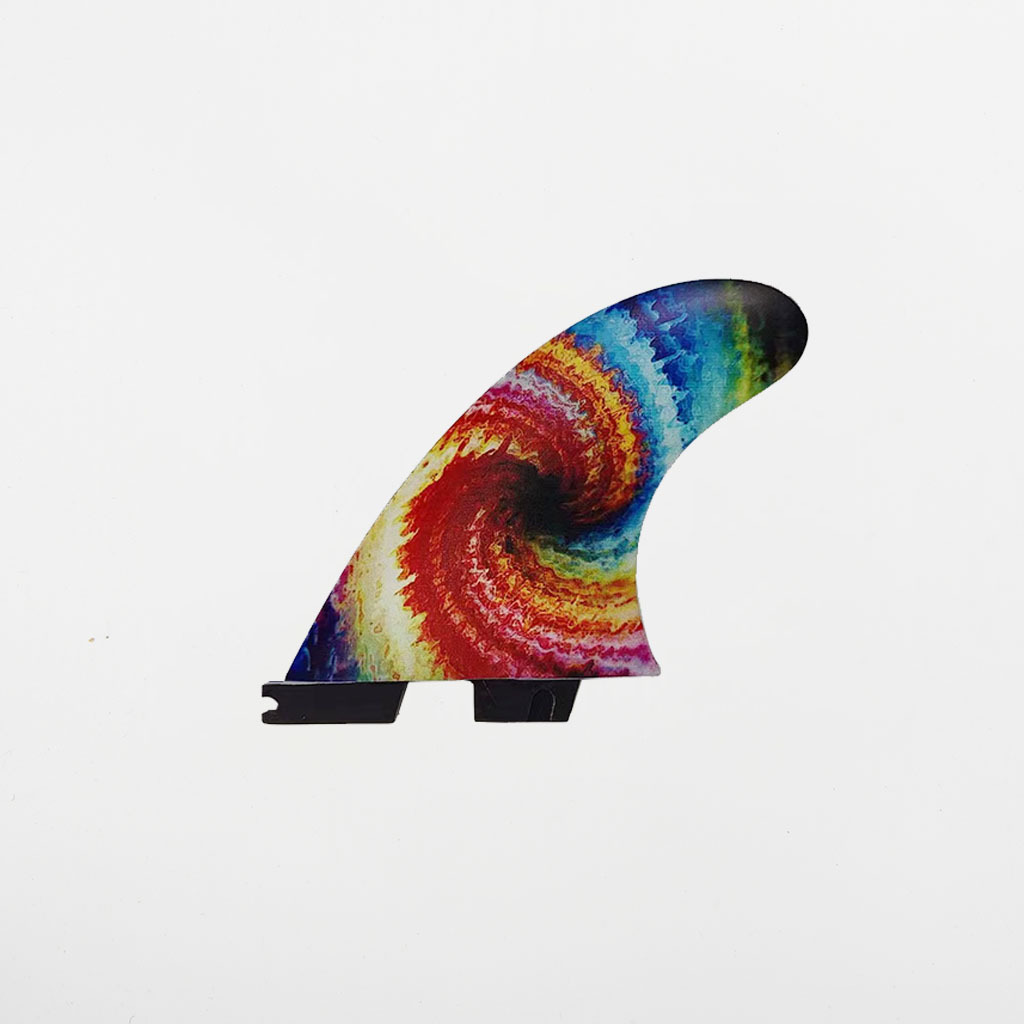
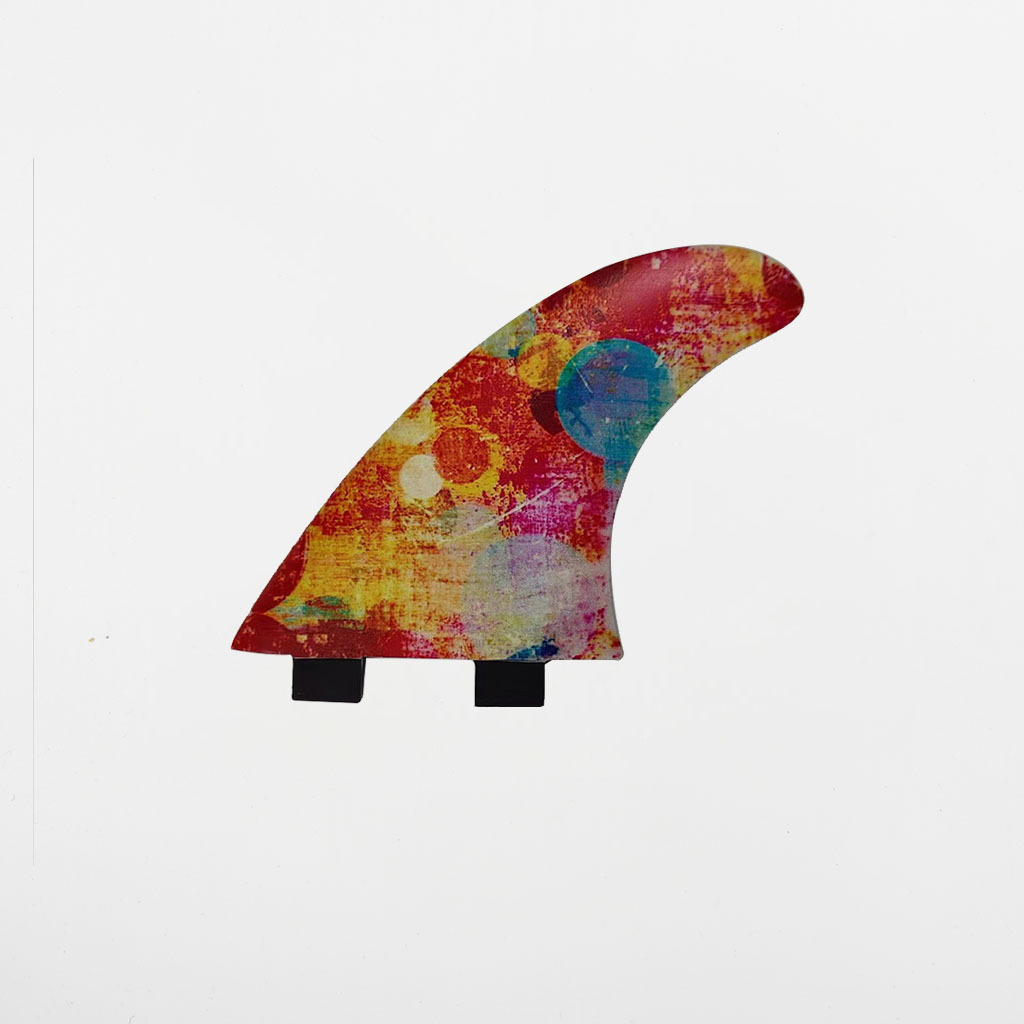
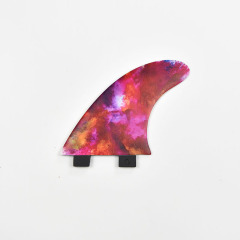
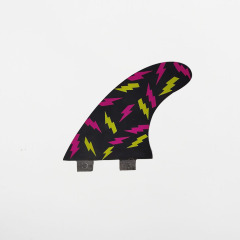
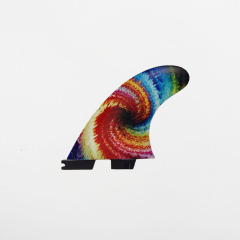
Double-tab fins do the unglamorous work in a board range. They replace the one that snapped on Saturday, they go back on a rental board on Monday, and they keep a brand's graphic story running right out to the tip of the blade. This one is a swept-back shape with a curved trailing edge, two plain black tabs at the base and a printed graphic across the face. We supply these surf fins as replacement stock for shop walls, rental desks, repair benches and board programmes, and the surf leash length range that goes with them. As surf board manufacturers we keep the shapes and the size bands fixed rather than redesigning them each season, so the box a buyer refills next year still matches the one that sold this year.
Double-Tab Base & Fitting
- Two tabs, two slots. The base carries two moulded tabs that key into a matching double-tab box. Seat both fully and the fin sits flat on the box ridge instead of rocking under load.
- Read the box before you commit. Two short parallel slots take a double-tab base, one long slot takes a box fin, one short slot takes a single tab. Count the split across the boards you carry and order to it.
- One template, three bases. The same surfboard fins are produced with single-tab, double-tab and box bases, so a shop refilling a mixed wall can keep one shape and one supplier.
- Dry-fit, then screw. Line the trailing edge up with the box before the screw goes in. A screw that only half-threads will chew the tab, and the tab is the one part of a fin you cannot repair.
- Fit on the bench, not in the car park. Set the fin with the board flat and the box clean; sand or old wax under the base is the usual reason a fin sits proud and whistles at speed.
- Store boards off the fins. A surfboard rack, wall hook or floor stand keeps the weight off the tips. A board stood nose-down on concrete is how trailing edges get chipped before the season starts.
Rider Weight & Size Bands
- XS — under 55 kg / 120 lbs. Usually the thinnest row on the shelf and the one that runs out first: lighter surfers and groms break fins like anyone else and want the same size back.
- S — 55–70 kg / 120–155 lbs. The middle band and the safest first order. Most fins for surfboard repairs and walk-in replacements land here, so give it the deepest stock.
- M — 65–80 kg / 145–175 lbs. The step up for a heavier regular. Hold it at roughly the same depth as S, because customers drift between the two bands all season.
- L — 75–90 kg / 165–200 lbs. The adult regular's band. Worth a count before every weekend and before any holiday window.
- XL — over 85 kg / 190 lbs. Lower volume but steady repeat: the bigger rider buys, loses, and comes back for the same template, and often picks up a surf traction pad at the same time.
- The bands overlap on purpose. A 70 kg surfer can ride S or M depending on the board and the conditions, so stock both rather than treating the chart as a hard line.
Board-Side Accessories
| Family | What we supply |
| Leashes | Hypalon builds in a surf leash length from 6 ft 6 mm for small to medium waves up to 9 ft 8 mm for longboards and bigger days |
| Traction | Tail pads, centre pads, waxless pads and a skimboard pad; a surf traction pad sized to the tail keeps the back foot over the fin |
| Covers | Basic bags, regular bags, stretch covers and bodyboard bags |
| Racks | Travel rax and tie-downs, storage racks, display racks and bike racks — a surfboard rack for the shop floor, the van or the garage |
| Fins | Honeycomb, carbon-honeycomb, timber-look, G10 glass and nylon, covering several types of surf fins from one line |
Specifications
| Property | Detail |
|---|
| Fin system | Double tab |
| Base | Two moulded tabs, plain black |
| Range | Honeycomb fins |
| Build | Honeycomb core with glass fibre and epoxy resin, resin transfer moulded |
| Finish | Printed graphic over a gloss surface |
| Outline | Swept-back with a curved trailing edge |
| Size bands | XS to XL, set by rider weight |
| Other bases in the range | Single tab and box |
| Graphics | Stock prints as they run; programme artwork on OEM orders |
Printed Graphics & Finish
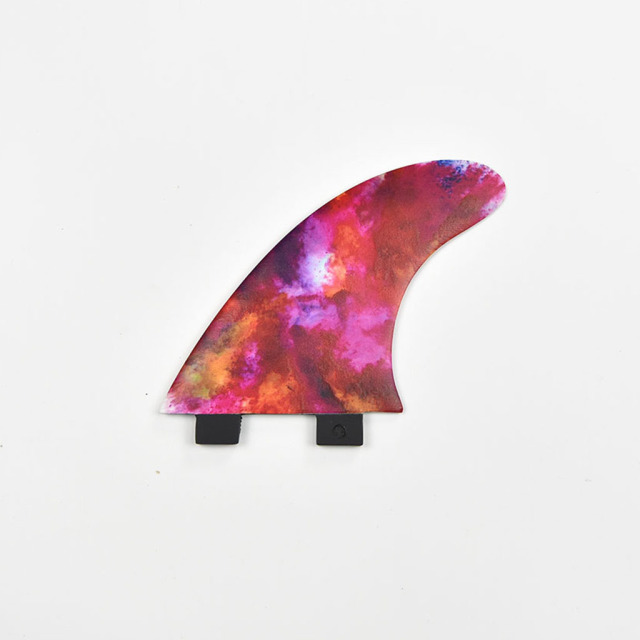
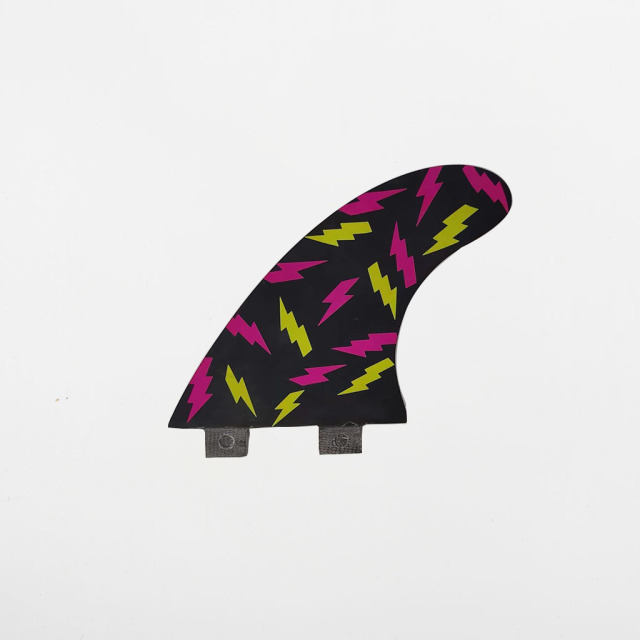
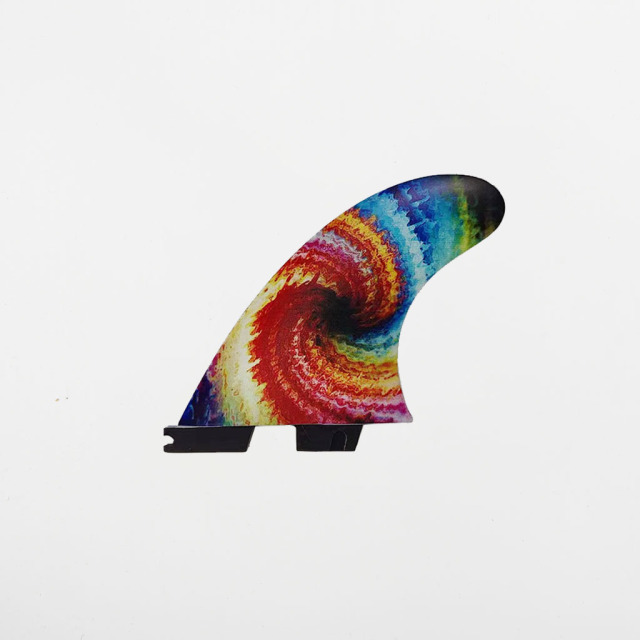
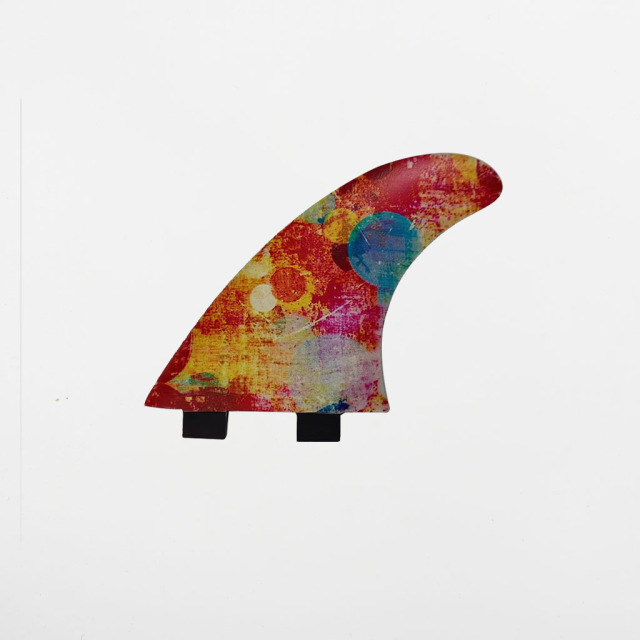
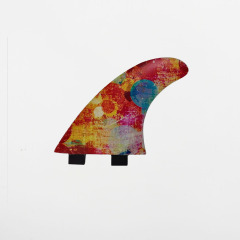
The graphic runs across the full face of the blade and stops cleanly at the base, so the tabs stay plain black and disappear into the box. Prints range from a marbled pink, orange and purple abstract to a black blade carrying pink and yellow lightning flashes, and a red, blue and yellow swirl — colour that reads from the other side of the shop rather than from arm's length.
That colour is also why printed surf fins turn over faster than plain ones. A customer replacing a single fin wants the closest match to the set still on the board, and a print covers the light scuffs a gloss surface picks up over a season far better than a flat black blade does.
Stock prints rotate through the year, so confirm what is running for your delivery window. On OEM orders we develop artwork across several types of surf fins so a board and its replacement fins carry the same graphic instead of a near-match.
Ordering & Confirmation
- Tell us what the boards are. Base type, board type and the mix of surfboard fins you carry — double-tab, single-tab and box versions can travel on one order.
- Set the size split. Give us the number of fins for surfboard repair and straight stock replacement you expect per band, and we will build the ratio with you.
- Choose the print. Stock graphics as they run, or send artwork if the order is going out under your own brand.
- Add the leashes. Order the surf leash length you sell most alongside the fins so the carton leaves complete rather than half-finished.
- Complete the deck. A surf traction pad, a cover or a bag turns a fin order into a board-set order for the same shelf.
- Plan the display. Tell us whether the shop uses a surfboard rack, a wall or a floor stand, and we will confirm the packing that suits it.
- Agree timing and terms with your sales contact. Lead time, packing and shipping detail are confirmed against your order before production starts.
Scale & Supply Capability
CIMI is a factory-based supplier with 16 years in surf and watersports hardgoods, manufacturing at our own facility rather than sourcing through traders. Chain stores, supermarkets and surf-brand stores buy from us because one supplier covers a full accessory assortment, so a season's order and its reorders can be planned together. We take on OEM and private-label work, adapting designs, colourways and branding to your programme, and we schedule production against your agreed range plan. Send us your buy list and target dates, and we will confirm what we can make and when.
FAQ
What is a double-tab fin, and how do I check my board takes one?
A double-tab fin carries two moulded tabs on the base instead of one long tongue. Turn the board over: two short parallel slots mean a double-tab box, one long slot means a box fin, one short slot means a single tab. If it is not obvious, send a photo of the box and we will tell you which surf fins fit it.
How do the fins in this range differ from each other?
The templates are shared, the build and finish are not. The standard honeycomb version is light and works across a range of conditions; the carbon-honeycomb versions add a carbon twill at the base for a more user-friendly flex; timber-look and plastic versions cover lower price points and rental use; and a printed blade like this one puts the colour on the shelf. Ask your sales contact about sample availability if you want to compare types of surf fins side by side.
Can the fins carry our own artwork?
Stock prints — marbled abstracts, lightning graphics, colour swirls — rotate through the year, so confirm what is running for your delivery window. For a brand programme we develop the graphic with you: send the artwork, where it should sit on the blade, and the size bands you order, and we will come back on what can be printed and how it behaves on a gloss surface.
Will these work on a longboard as well as a shortboard?
It depends on the box rather than the board length. Many longboards and retro shapes are built with a long box, which takes a box fin instead of a tabbed base; if your longboards run that setup, order the box version of the same template. Before you commit the fins for surfboard stock you sell most, confirm the base mix across the range.
How do I reorder exactly the same fin next season?
Note the base type, the outline and the print name on your purchase record. If you only have an old fin in hand, photograph the base and the blade with a ruler alongside and we will match it against the surfboard fins we run. Prints do get retired, so if the original graphic has gone we will tell you what is closest before you place the order.
How should I look after the fins between sessions?
Rinse in fresh water after every session and dry the fin before it goes back in a bag — salt left on the tabs dries into a crust that makes the next fit tight. Check both tabs for hairline cracks while you clean, keep boards on a rack rather than standing them on the nose, and keep the fins out of a hot car, which dulls a gloss finish faster than salt water does.