Product Overview
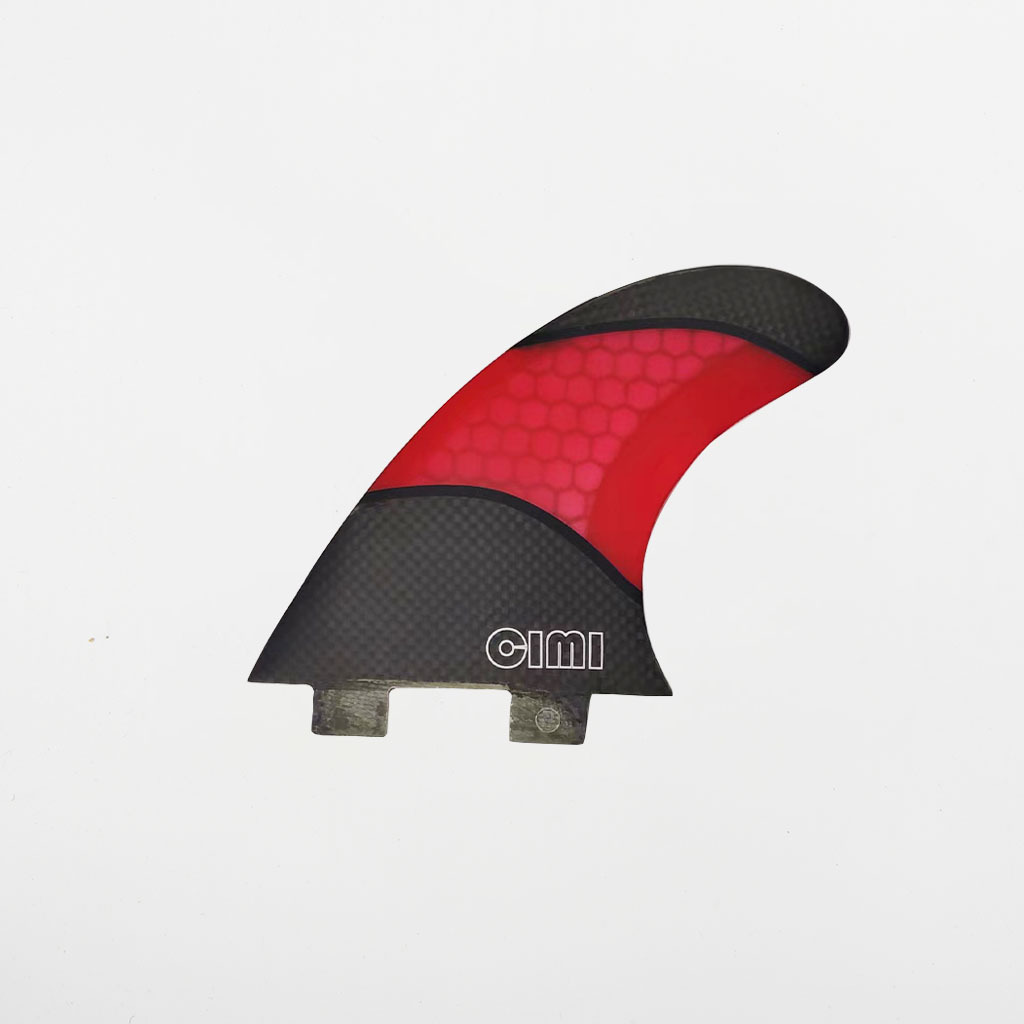
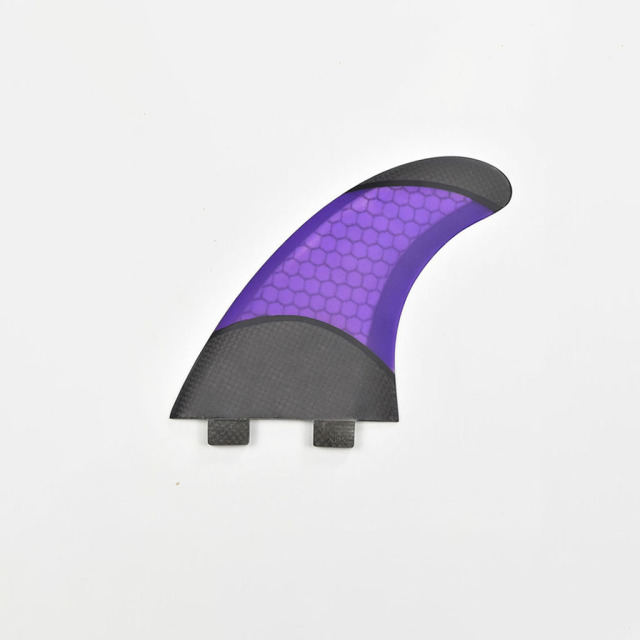
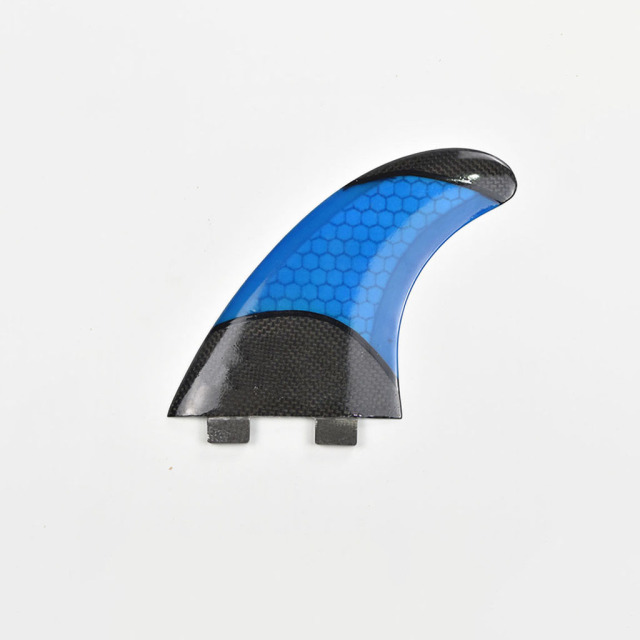
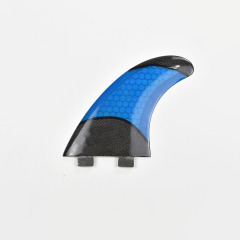
This is the carbon version of our honeycomb double tab surf fins: the same resin-transfer-moulded honeycomb build as the glass-filled models, with 10% carbon fiber in the layup and an internal carbon framework shaped to follow the outline of the fin. It feels light in the hand, and the carbon is there to give an easier, more user-friendly flex rather than a rigid blade. The double tab base is the format that drops into the two slots of a double tab box, so a fin can be moved between boards in a quiver in the time it takes to undo two screws. Because the material is built to work across a variety of different conditions, one set can stay fitted for most sessions instead of being changed every time the swell shifts. For a buyer, the useful part is that this is not a new and untested outline. It is the carbon-honeycomb entry in a line that already runs glass honeycomb, timber, G10 glass, nylon and plastic, so shops and surf board manufacturers can add a carbon option without taking on a second supplier. If your customers compare types of surfboard fins by material first, this is the one that sits between the plain honeycomb build and the more technical constructions. On a shelf it reads as a technical fin: the honeycomb core shows through a translucent panel, framed by black edge sections over a tabbed base, so it holds its own on a display peg next to a plain glass fin.
Material & Construction
- Honeycomb core at 50% — the cell structure carries most of the weight saving and is also the reason the panel shows a honeycomb pattern on the finished fin.
- Glass fiber and epoxy resin at 20% each — the skins and resin are consolidated by resin transfer moulding, so the core is wetted out in one closed-mould step and the finish stays consistent from fin to fin.
- Carbon fiber at 10% — enough carbon to stiffen the internal structure without making the fin rigid and unforgiving in the hand.
- Internal carbon framework — laid to suit each template, so the carbon follows the outline of that particular fin rather than being one standard insert dropped into every shape.
- Carbon twill at the base — the base and tabs take the load every time the fin is fitted or knocked, so the twill sits there to reinforce that transition.
- A carbon step above the glass build — the honeycomb, glass and epoxy layup is shared with the glass-filled surf fins in the range; the carbon content, the internal frame and the base twill are what change, and they deliver the stated more user-friendly flex pattern.
Fitting & Routine Care
- Check the box before anything else. Of the main types of surfboard fins, this is the double tab format: two moulded tabs, two slots, no plate through the deck. If the board has a different base, stop here.
- Dry-fit with the board upside down and press both tabs down until the base sits flush. On a twin fin surfboard, set both fins at the same time so you can see they sit at the same angle.
- Fasten with the board's own screws and plate and take them to snug rather than forced. An over-tightened screw distorts the tab, and a distorted tab is the usual reason a fin starts to rock in the box.
- Rinse the fin and the box with fresh water after every session, especially after a sandy day, and dry the tab area before the board goes back into a bag.
- Inspect the tabs, the base and the trailing edge each time the board comes out. A small chip on a tab can be dressed back; a crack running into the panel means the fin should come out of service.
- Store the board flat, in a cover, or nose-up on a surfboard rack rather than standing it tail-down on the fins, which is what shortens the life of a tab more than anything else.
Applications & Stock Profiles
- Fin walls and replacement shelves — the carbon-honeycomb tier gives a shop a clear step above the plain glass fin and sits beside the other carbon models instead of replacing them. - Board builders and surf board manufacturers — when a new model goes into production, matching it with a fin in the same finish keeps the complete board package consistent. - Repair benches — most fin repairs are a snapped or lost double tab fin, and having XS through XL on the shelf lets the technician finish the job the same day. - Rental fleets and surf schools — a twin fin surfboard on a rental surfboard rack goes through fins quickly, and a light fin that is easy to read makes a straightforward replacement. - E-commerce accessory sellers — clear material, size and system information is what lets a fin sell without a member of staff standing next to it, and a surf traction pad or a leash listed with the same clarity sells the same way.
Specifications
| Property | Value |
|---|
| Model | F25319 |
| Product type | Double tab surf fin |
| Construction | Resin transfer moulding |
| Honeycomb core | 50% |
| Glass fiber | 20% |
| Epoxy resin | 20% |
| Carbon fiber | 10% |
| Internal frame | Carbon framework shaped to each template |
| Base reinforcement | Carbon twill at the base |
| Fin systems | Single tab, double tab, box fin |
| Size range | XS to XL |
| Flex character | More user-friendly flex pattern |
Rider Size & Weight Bands
| Size | Rider weight | Typical rider profile |
| XS | Under 55 kg / 120 lbs | Groms and lighter juniors stepping onto their first shortboard |
| S | 55–70 kg / 120–155 lbs | Lighter adults and older juniors; a common call on smaller performance boards |
| M | 65–80 kg / 145–175 lbs | The middle of the range and the band most mixed shop orders lean on |
| L | 75–90 kg / 165–200 lbs | Average to heavier adults on standard shortboards |
| XL | Over 85 kg / 190 lbs | Heavier surfers, plus longboard and single-fin set-ups asking for more fin area |
| Band overlaps | 65–70 kg, 75–80 kg and 85–90 kg | Two adjacent sizes cover each of these weights, so a set can sit in either band |
| Sizing basis | Rider body weight | Matched to the person first, then to the board and the conditions |
| Direction of travel | Down a size for a looser, quicker feel; up a size for drive and hold | Riders sitting at the edge of a band often move one step |
| Applies to | Any rider | Weight sets the band, not gender or age |
Panel Finish & Presentation
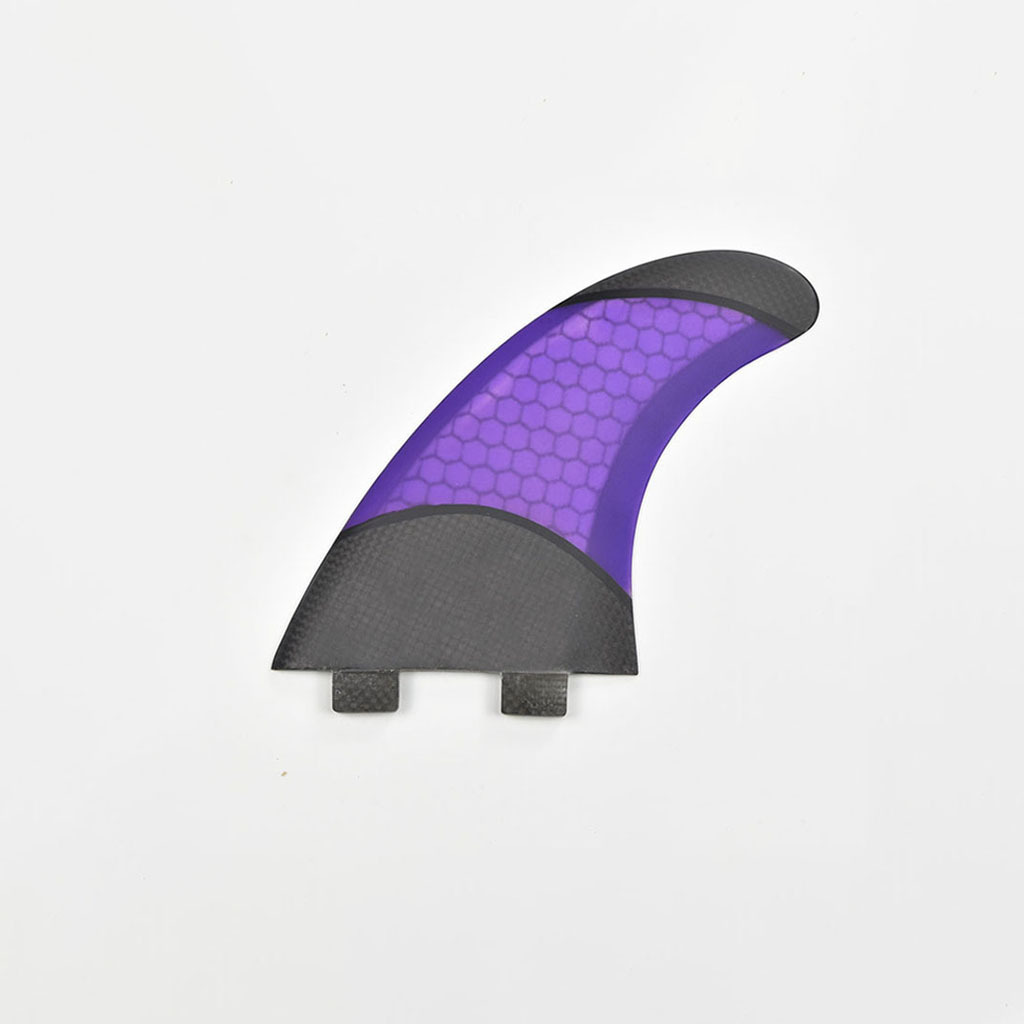
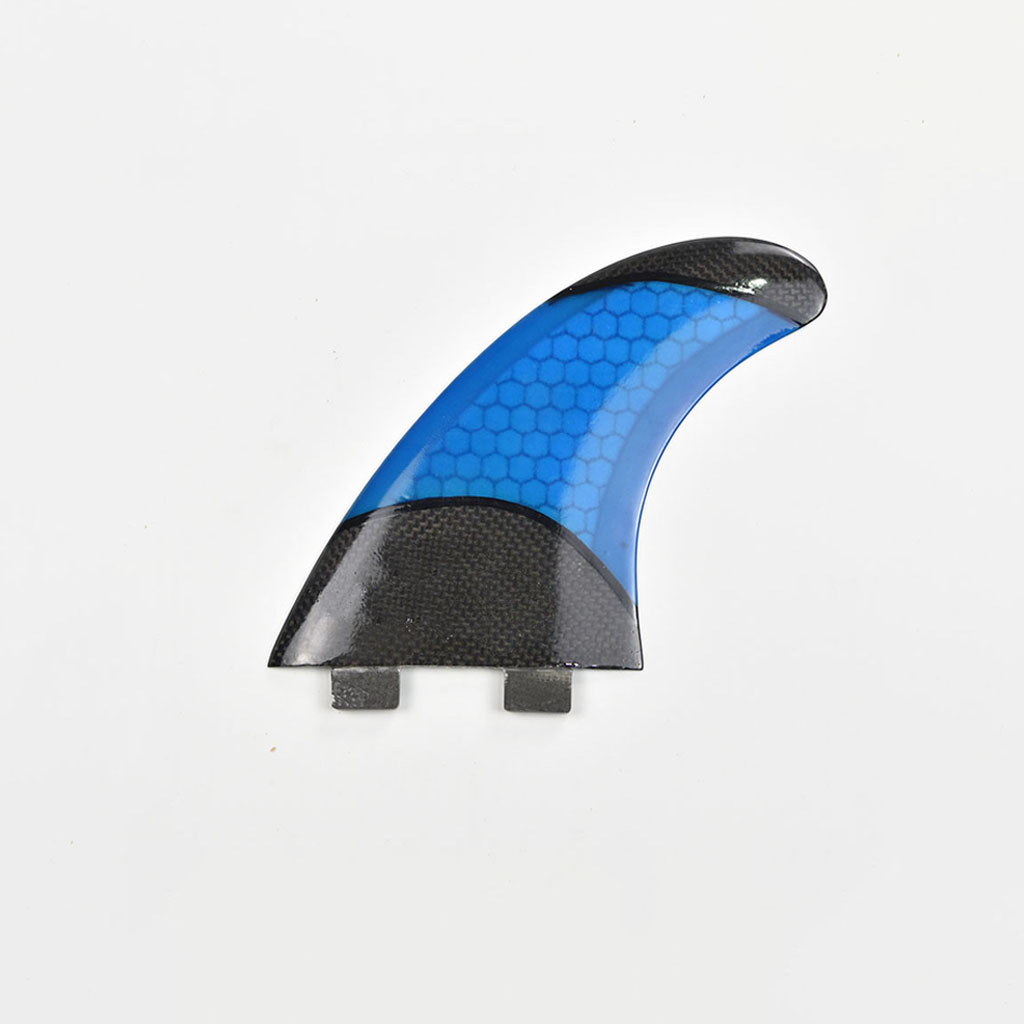
- The face is a clear honeycomb field: a regular hexagonal cell grid filled with resin, so the pattern reads as structure rather than print and stays put as the light moves across it.
- The carbon twill at the base is the part shoppers recognise first. It sits just above the tabs as a small woven carbon block, which is why a close-up of the base sells this model faster than a full-fin shot.
- Under the skin, the internal carbon framework follows the outline of the template, and in strong daylight it shows as a faint darker line running inside the perimeter. That line is the quickest visual difference between this fin and the plain honeycomb version beside it on the wall.
- The glass and epoxy at the edge wet out denser than the core, so the outline draws a darker rim around the honeycomb field. On a pale shelf that rim is what makes the fin read as a finished component rather than a raw moulding.
- Shot side-on against a plain background, the flat base and tabs let the fin sit level without a stand, so the whole outline is visible in one frame. Keep the background light for the honeycomb panel and darker for a shot that leads on the carbon base.
- Hanging on a peg, a double tab surf fin goes on a hook through the gap between the two tabs with the panel facing out, and it sits flat without a sleeve. Run the pegs in size order so the XS to XL ladder is obvious at a glance. A screen carries the colour, but the cell pattern, the carbon base and the rim only read properly in the hand — and they are what your customer is judging when they pick a set of surfboard fins off the wall.
Pairing & Accessories
A fin sale is usually a leash sale too. Our Hypalon surf leash line runs from a 6 ft 6 mm for small to medium waves up to a 9 ft 8 mm for longer boards and bigger days, and length is chosen by board rather than by fin: 6 ft or 7 ft on a shortboard, 8 ft or 9 ft on a longboard. Keeping the lengths that match your board range on the same order keeps the wall complete. Grip belongs in the same conversation. A tail pad or a centre surf traction pad is usually fitted when the fins are checked, and shops that carry the fin, the pad and the leash together sell a full setup rather than a single part. Protection and storage finish the picture. Basic bags, regular bags, stretch covers and bodyboard bags keep a board safe between sessions, while storage racks, display racks, bike racks and travel racks handle the shop floor, the van and the beach.
Ordering & Confirmation
- Set the size mix first: which of XS through XL you want and how many of each, based on the rider weights your shop or region actually serves.
- Confirm the system. This fin is the double tab version; single tab and box versions of the same template can be confirmed with your sales contact if your boards need them.
- Confirm the face colour and finish against a sample. The product photographs show the honeycomb panel in more than one colour, and the face is the part a customer sees first.
- Ask your sales contact about sample availability and the lead time for the quantity you have in mind, so the range lands ahead of your season.
- Settle packaging and labelling at the same time — poly bag, hang tag, or your own brand on the header.
- If the same order includes a surf leash, pads or a surfboard rack, confirm everything together so it ships as one consignment.
- Board builders and surf board manufacturers should send the fin box dimension and the template they are matching, so the fin is checked against the board rather than against a photograph.
Scale & Supply Capability
CIMI is a factory-based supplier with 16 years in surf and watersports hardgoods, manufacturing at our own facility rather than sourcing through traders. Chain stores, supermarkets and surf-brand stores buy from us because one supplier covers a full accessory assortment, so a season's order and its reorders can be planned together. We take on OEM and private-label work, adapting designs, colourways and branding to your programme, and we schedule production against your agreed range plan. Send us your buy list and target dates, and we will confirm what we can make and when.
FAQ
Which fin boxes will this fin fit?
It is the double tab format, so it seats in a double tab box: two slots, two moulded tabs, no plate through the deck. Of the main types of surfboard fins, this is the one most shortboards and performance longboards are set up for. The same template is also made as a single tab fin and as a box fin, so if your boards run a different base, tell your sales contact which one you need. Checking the box on the board first is the surest way to keep returns off a surfboard fins order.
What does the 10% carbon fiber actually change?
It changes the way the fin flexes more than the way it looks. The glass honeycomb version uses 30% glass fiber; here the glass drops to 20%, 10% carbon fiber goes in with an internal carbon framework shaped to the template, and a carbon twill is added at the base. The stated result is a more user-friendly flex pattern — easier to read underfoot and less abrupt at the end of a turn — while the honeycomb core keeps the weight down. It is the carbon step within the surfboard fins range, not a different outline.
How do I choose between XS and XL?
Sizes follow rider weight: XS under 55 kg (120 lbs), S 55–70 kg (120–155 lbs), M 65–80 kg (145–175 lbs), L 75–90 kg (165–200 lbs) and XL over 85 kg (190 lbs). The bands overlap on purpose, so a rider at around 68 kg can ride either S or M; the choice usually comes down to the board and how the rider likes it to sit in the water. Stocking the middle sizes deepest and holding a few XS and XL for junior and heavier riders is the usual split.
Will it work on a twin fin surfboard?
Yes, as long as the board has double tab boxes. Fit both fins at once so you can see they sit at the same angle, and keep the pair in the same size — a mismatched pair is a common reason a board feels like it is tracking oddly. If the board uses single tab or box fin boxes, the same template is available in those formats.
Do you supply the leashes, pads and storage that go with the fins?
Yes. The same range covers Hypalon surf leash models from 6 ft to 9 ft, tail pads and centre pads, board bags and covers, plus display, storage, bike and travel racks. Ordering them alongside the fins is the practical way to deliver a complete board setup, and it keeps everything on one delivery instead of several. Ask your sales contact for the current colour and size options in each line.