Product Overview
It sits alongside the glass-only honeycomb fins in our range, for buyers who want the low weight of a cored fin with carbon structure worked into it rather than a solid layup. Most of these fins go into the replacement market. That consistency is the part worth testing when you compare surf board manufacturers. The first delivery is easy; the second order, six months later, is where a fin built to a lower specification stops matching. A twin fin surfboard builder and a longboard brand can both be supplied from this range without either of them receiving a different core or a different flex.
Material & Construction
- Resin transfer molding — The honeycomb core and the fiber layers are loaded into a closed mold and epoxy resin is drawn through them. Because the resin content is set by the mold rather than by hand, every fin in a run comes out at the same weight and the same flex, which is what makes a reorder match the first delivery. It is what keeps the weight down, and it is why the core reads as a pattern through the tinted tip. The internal carbon framework is laid up to suit each template, so the stiffening follows the outline instead of turning the whole fin into a rigid plate. - Carbon twill at the base — A carbon twill is added where the fin meets the box, the point that takes the heaviest load. - Where it sits among types of surfboard fins — A carbon honeycomb fin lands between a plain glass honeycomb fin and a heavy solid layup: as light as the cored fin, but with a frame that returns predictably rather than going dead under load.
Fin System Compatibility
Double tab is the system this code is molded in, and it is one of three the template is produced in. Single tab and box fin are made to the same outline, so a board programme that mixes systems can be fed from one shape: a shortboard range on double tab, a longboard with a centre box, and a retro single-fin all from the same fin.
The fins on a surfboard sit in whichever box the shaper installed, and the boxes are not all the same. Two separate slots with a gap between them take double tab; a single long slot is a box fin; a single short slot at the rail end of the box is a single tab. Repaired boards are the usual trap, because a replaced box does not always match the original.
When you are matching surfboard fins to a board you have not handled, ask for a photo of the box with the old fin's base beside a ruler. That one image settles the system question faster than any description, and it matters most on a twin fin surfboard or a retro shape, where fin position and box type vary more than they do on a standard thruster.
Fitting Steps
- Clean and dry the box slots first. Sand, wax and dried salt stop the tabs seating fully, and a tab sitting proud puts load on the wrong part of the base.
- Offer the fin up dry. Both tabs should drop in with light hand pressure and the base should sit flush with the box before any screw goes in.
- Line the leading edge up with the marks left by the previous fin, so the set matches front to back.
- Start the screws by hand, then tighten. An over-tightened screw crushes the tab; a loose one lets the surfboard fin work in the box and wears the slot.
- Check the set as a whole once every fin is in. One sitting higher or further back than the others will make a board track to one side.
- Re-check the screws after the first session. A fin that was seated dry can settle a fraction once it has been under load.
- Note the box type and the size on the repair sheet. The next time you order fins for surfboard repairs, the note saves measuring the board again.
Size & Weight Bands
- The bands are deliberately wider than one number. XS runs under 55 kg and S picks up at 55 kg, so a rider sitting on that join has two valid answers. The real overlaps are wider still: S and M both cover 65-70 kg, M and L both cover 75-80 kg, and L and XL both cover 85-90 kg. Outside those three windows the chart gives one answer and there is nothing to weigh up. - Inside a window, take the board before the scales. A rider at the top of the S/M seam on a short, low-volume board is usually better served by the smaller band, because the fin needs to hold a compact board under a lighter load. The same rider on a longer, fuller board is usually better served by the larger one. - Ask what they ride now. A customer replacing a set they were happy with is the easiest decision in the shop: match that size, then use the overlap only when they say the old set felt small or large for them. - Stock the seams deeper than the middle. When you plan a first order, the sizes that deserve backstock are the ones where two bands meet, because that is where a customer can be talked out of their first choice. A single fin per size on the shelf and depth behind the seam sizes sells more sets than an even spread across all five. - Count sets before you count fins. A twin fin surfboard takes two fins, a thruster takes three, and a 2+1 longboard takes a box centre plus two sides. Two sizes inside the same seam, multiplied by the set types your customers ride, is the step where a small opening order becomes a large one. - Let sell-through settle it. After a season, look at which side of each seam ran out first and which side sat. If one keeps emptying while the other stays full, move the split one step at the next reorder instead of adding a new size to the range. - Print the range, not just the letter, if you make your own shelf cards. A card reading 55-70 kg does the work of the overlap for you, and a customer can choose their own band without a member of staff translating a letter into a weight.
| Size | Rider weight | Typical rider |
| XS | Under 55 kg / 120 lb | Juniors and lighter surfers |
| S | 55-70 kg / 120-155 lb | Smaller adults on shortboards |
| M | 65-80 kg / 145-175 lb | Most adult riders |
| L | 75-90 kg / 165-200 lb | Heavier riders on standard boards |
| XL | Over 85 kg / 190 lb | Heavy riders and larger boards |
Specifications
| Property | Value |
|---|
| Product type | Double-tab fins for surfboard use |
| Model | F25315 |
| Core | 50% honeycomb core |
| Reinforcement | 20% glass fiber, 10% carbon fiber |
| Resin | 20% epoxy resin |
| Carbon build | Internal carbon framework, carbon twill at the base |
| Flex | More user-friendly flex pattern |
| Molding | Resin transfer molding |
| Fin system | Double tab, also produced in single tab and box fin |
| Sizes | XS, S, M, L, XL |
| Rider weight | Under 55 kg (120 lb) to over 85 kg (190 lb) |
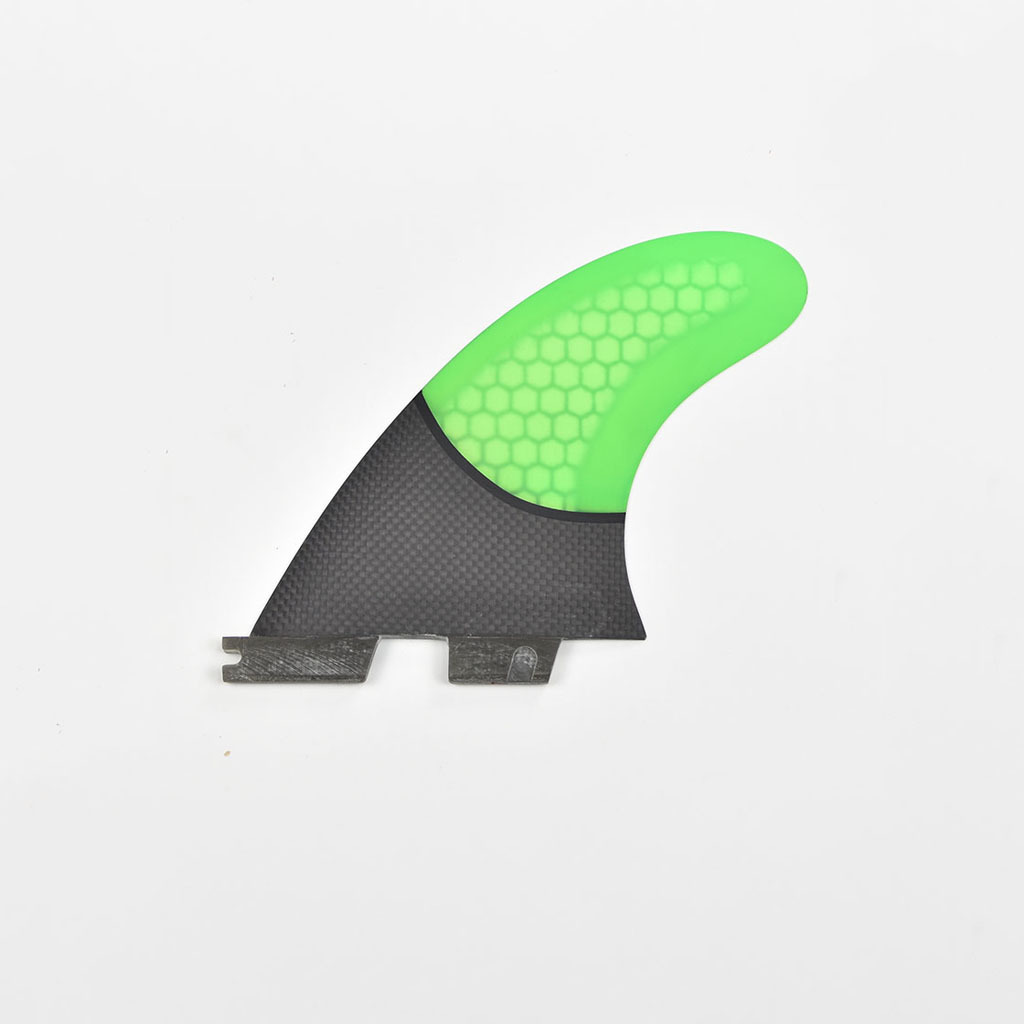
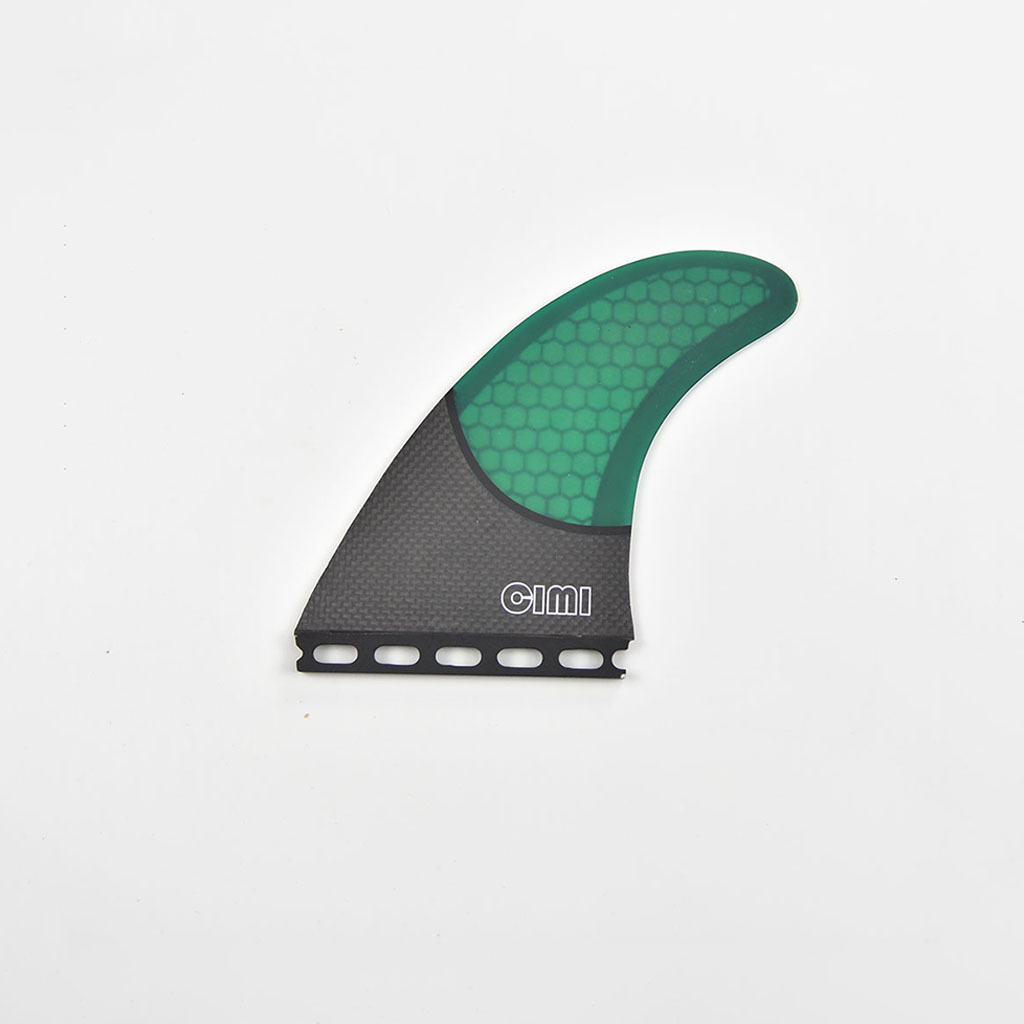
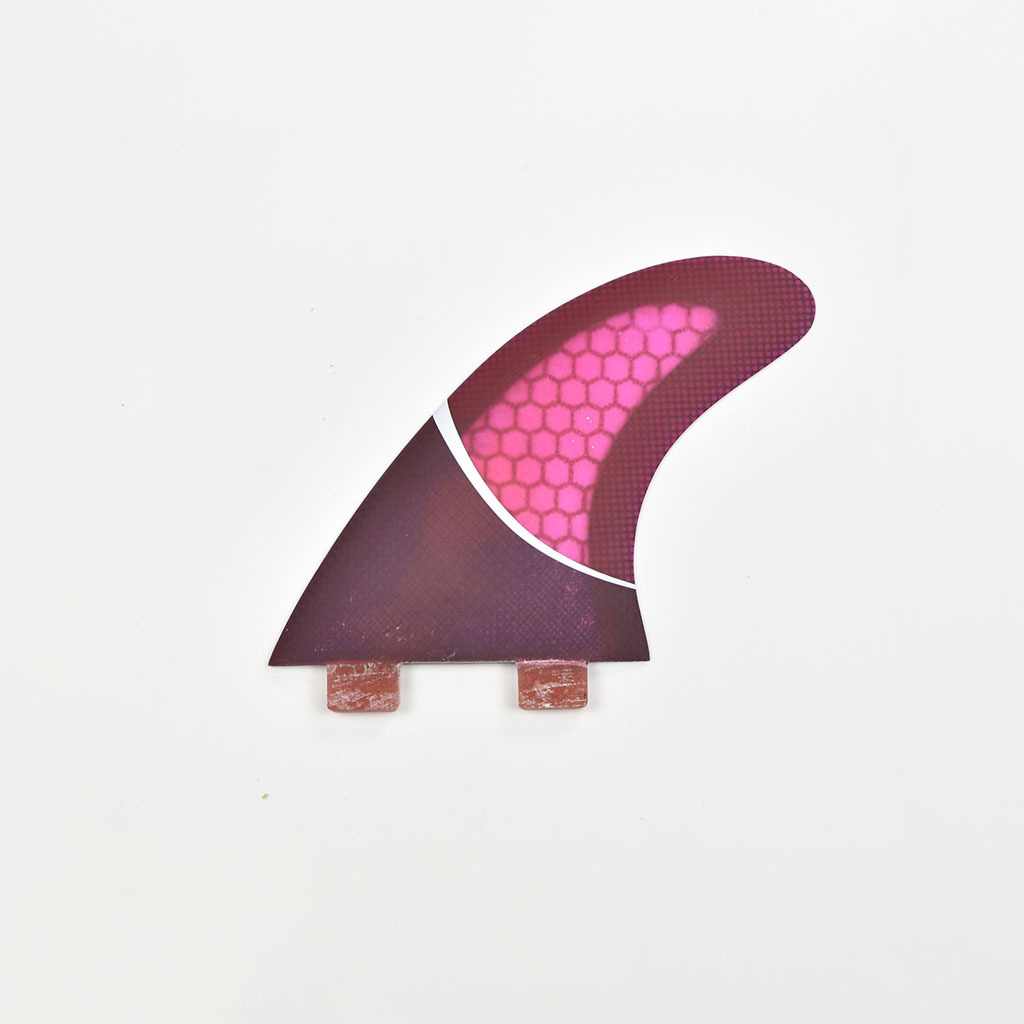
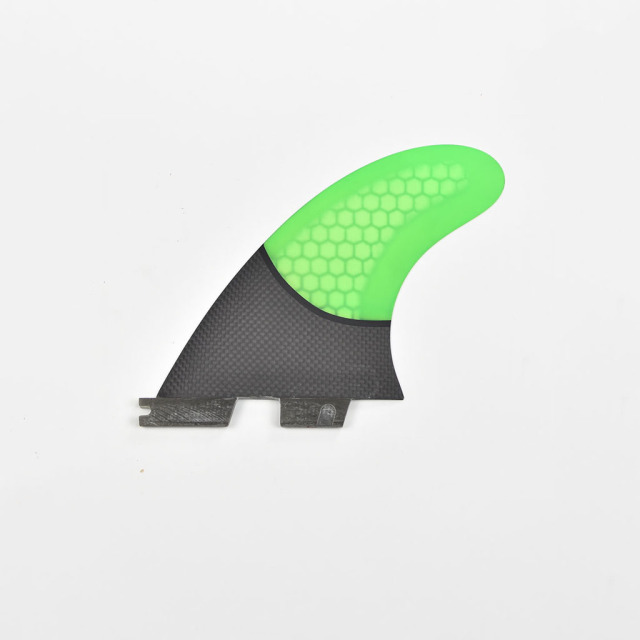
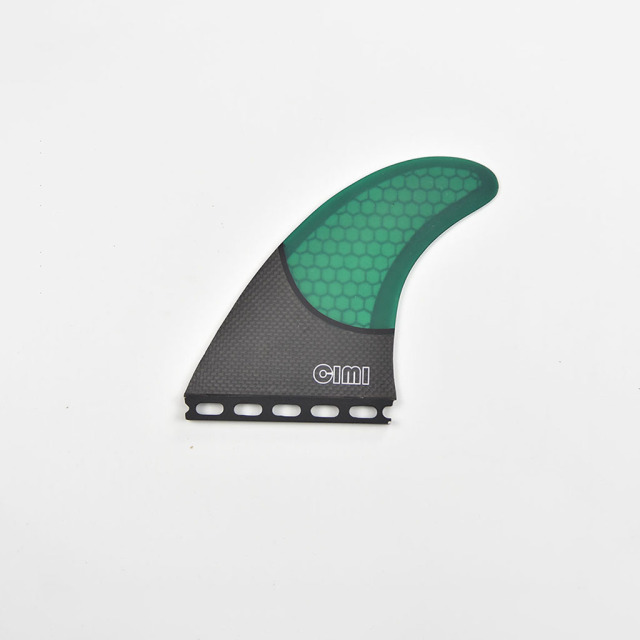
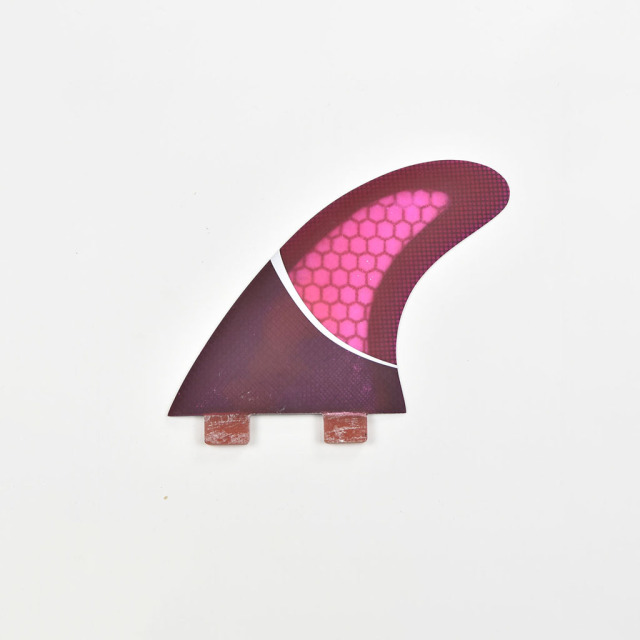
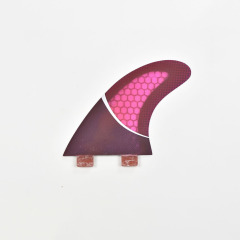
| Finish | Tinted tip with the honeycomb core visible, textured base |
Appearance & Upkeep
In the hand
Out of the box the F25315 reads as a technical fin rather than a plain molded one. The foil is glossed, the base where it meets the box is left textured, and the tip holds a clean, unrounded outline. None of that pattern is printed; it is the layup itself, so what a customer sees on the shelf is the structure that is doing the work. Matching stock you already hold Tint and core pattern come from the build, not from a graphic, so the only honest check is in the hand. Stand a current surfboard fin next to a fin from your existing stock in daylight and compare three things: the darkness of the tip, the width of the carbon band above the tabs, and the outline at the trailing edge. If those line up, the shelf stays consistent; if they do not, that is worth settling with us before a reorder rather than after the delivery arrives. Between sessions Rinse the fins in fresh water after every session in salt water and let them dry before they go back in the board or into a bag. Flush the box slots at the same time, since salt and sand left sitting in the slot are the usual reason fins on a surfboard become stiff to pull a season later. Check the tab root after a solid knock: a hairline crack at the base is the one to catch early, because it spreads into the box once it starts moving. Keeping a set a set Label each set with its size and keep it together. Two sets mixed on a bench is how a customer ends up with a mismatched pair, and on a rental or school fleet a single odd fin changes how the whole set feels underfoot. Keep spare surf fins flat, resting on their base with nothing pressing on the tips, and pull any fin with a crack at the tab root out of service instead of refitting it. On a shop rack the fins are handled all day, so check the tips once a month for chips from being dropped; a chip at the tip is cosmetic, a crack at the base is not.
Matching Accessories
- Leashes — Hypalon leashes in 6 ft 6 mm, 7 ft 7 mm, 8 ft 7 mm and 9 ft 8 mm. Match the length to the board: 6 ft for a shortboard in small to medium surf, 8 ft or 9 ft for a longboard or bigger days. A counter that can hand over a leash with the fin saves the customer a second stop.
- Fins — The wider range covers honeycomb, timber, G10 glass, nylon and inkjet fins, plus single-tab and box-fin versions of this template. That is enough types of surfboard fins to fill a wall from one supplier without mixing core materials between brands.
- Traction — Tail pads, centre pads, skimboard pads and waxless pads. Grip is the next thing to go on a board that is surfed hard, so pads sit naturally beside the fins on a surfboard on the same order.
- Covers — Basic bags, regular bags, stretch covers and bodyboard bags. A cover matters when the fins travel with the board, since a set knocked in transit is the most common reason a fin comes back.
- Racks — Travel rax and tie-downs, storage racks, display racks and bike racks. A wall or floor rack is what turns a fin and pad range into something a customer can browse, and it keeps a rental fleet off the floor.
- Why the range is worth ordering together — Fins are the part customers lose, pads are the part they wear out, and leashes are the part that fails first. Ordering all three on one schedule keeps the shelf complete through the season.
Ordering & Delivery
- Send your buy list with the size band and fin system for each line.
- Set the size mix before you set the quantity. If the range is new to your shelf, the size table works as a short surfboard fins guide for a first order: most trade buyers weight it toward M and L, with smaller counts of XS, S and XL for the junior and heavier ends.
- Confirm quantity, price and lead time with your sales contact. Those terms move with volume, size mix and how many systems are in one shipment, so agree them before the season is locked.
- Agree packing and labelling in writing. Bulk packed, bagged by set, or with your own header card are different specifications from the fin itself, and trade-ready packing needs settling before production rather than after.
- Confirm payment terms, shipping terms and the delivery port with your sales contact, and ask for the packing list to follow the size and system breakdown of the order.
- Keep the confirmed code and size on file.
Scale & Supply Capability
CIMI is a factory-based supplier with 16 years in surf and watersports hardgoods, manufacturing at our own facility rather than sourcing through traders. Chain stores, supermarkets and surf-brand stores buy from us because one supplier covers a full accessory assortment, so a season's order and its reorders can be planned together. We take on OEM and private-label work, adapting designs, colourways and branding to your programme, and we schedule production against your agreed range plan. Send us your buy list and target dates, and we will confirm what we can make and when.
FAQ
How is the carbon honeycomb fin different from the standard honeycomb fin?
The standard honeycomb surfboard fin is a honeycomb core with glass fiber and epoxy resin. This one adds carbon: an internal carbon framework laid up to suit the template, plus a carbon twill at the base. In use that means it keeps the light cored feel but returns more predictably instead of stiffening up through a turn. Across the types of surfboard fins we mold, it is the middle option between the plain glass honeycomb fin and a heavier solid layup.
What do these fins look like out of the box?
The honeycomb core shows through the tinted tip, so the structure reads as a pattern inside the surfboard fins rather than a printed graphic. The base carries a textured finish where it sits against the box, and the foil is glossed. If a shelf has to match an earlier delivery, put a current fin next to your old stock before you commit the order.
Is there a version for a longboard centre box?
Yes. The template is molded in box fin as well as single tab and double tab. A longboard with one centre slot takes the box-fin version; a 2+1 setup needs the centre fin and the side surf fins in whatever base each position uses, so check both before ordering.
Two size bands overlap - which one should a shop stock?
A rider can fall inside two bands, because weight is only half the decision. Someone at 68 kg sits in both S and M: the smaller band keeps the set loose for a lighter or lower-force surfer, and the larger band holds its shape better under a heavier stance or in stronger surf. Most shops carry the overlap in M and L and use XS and XL to cover the ends of the range. Treat the bands as a starting surfboard fins guide, then settle the mix by how your customers actually surf. Remember that a twin fin surfboard runs a two-fin set, so the count per board changes how many you need per size.
How should I look after a set of honeycomb fins?
Rinse in fresh water after salt water and dry them before they go back in a bag. Salt left in the box slots is the usual reason the fins on a surfboard become hard to remove a season later. Check the tab area and the base for cracks after a solid knock, and keep spare fins out of a closed car or long spells of direct sun, since heat is harder on the resin than cold water. Store a spare set flat rather than standing on the tips.
How do I check a fin will match a board I have not seen?
Ask for a photo of the box with the old fin's base next to a ruler. Double tab, single tab and box fin look clearly different once the old fin is out, and the length of the base tells you whether the template will sit in the same position. Send the board's dimensions as well if it is a custom shape. This is the same check we use when we supply fins for surfboard repair accounts, and it works as a practical surfboard fins guide for anything unfamiliar that comes through the workshop.