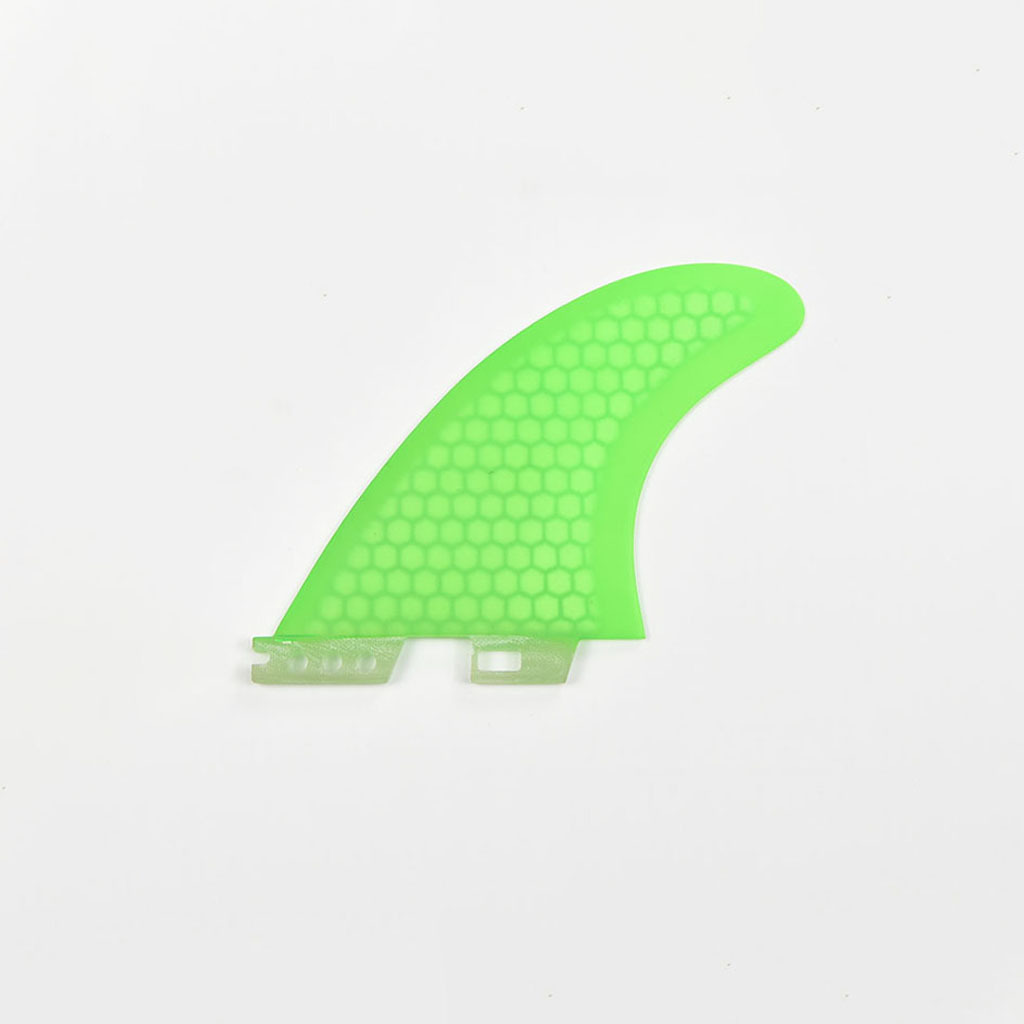
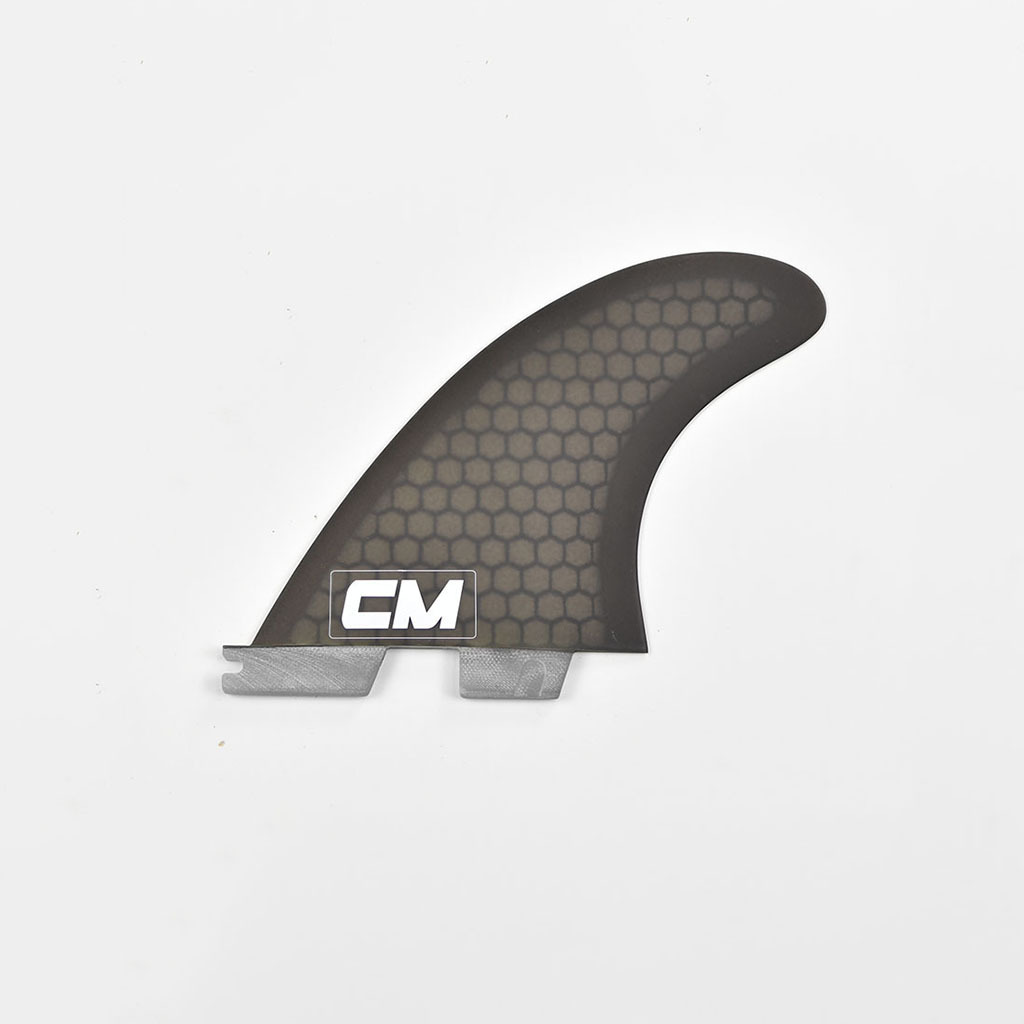
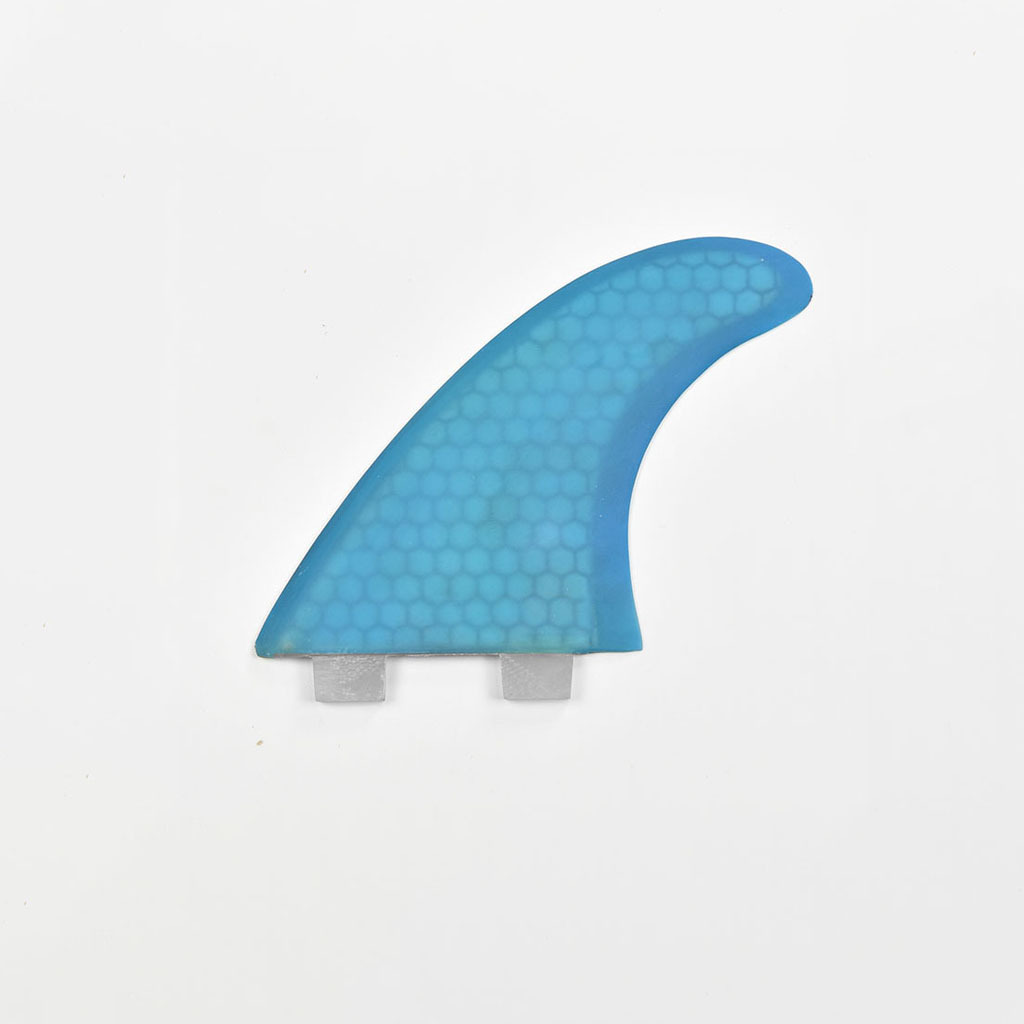
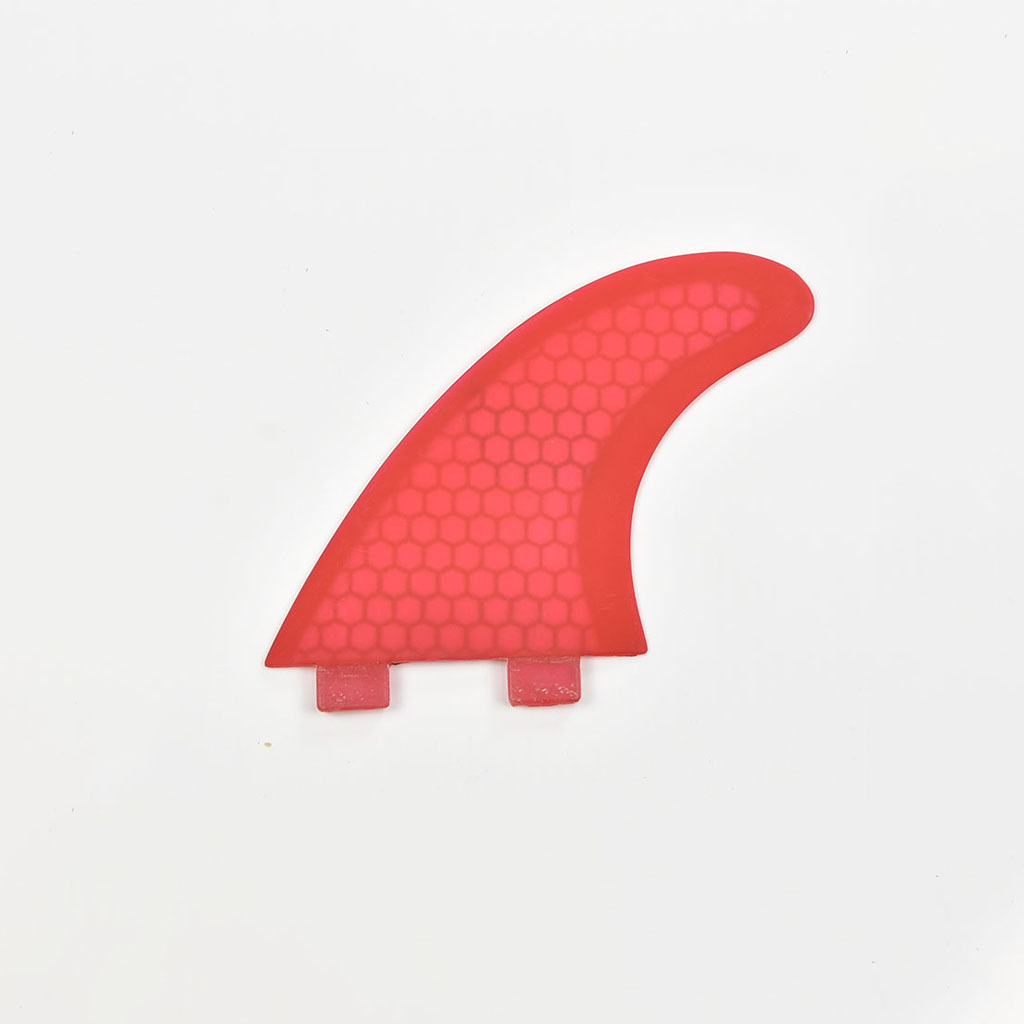
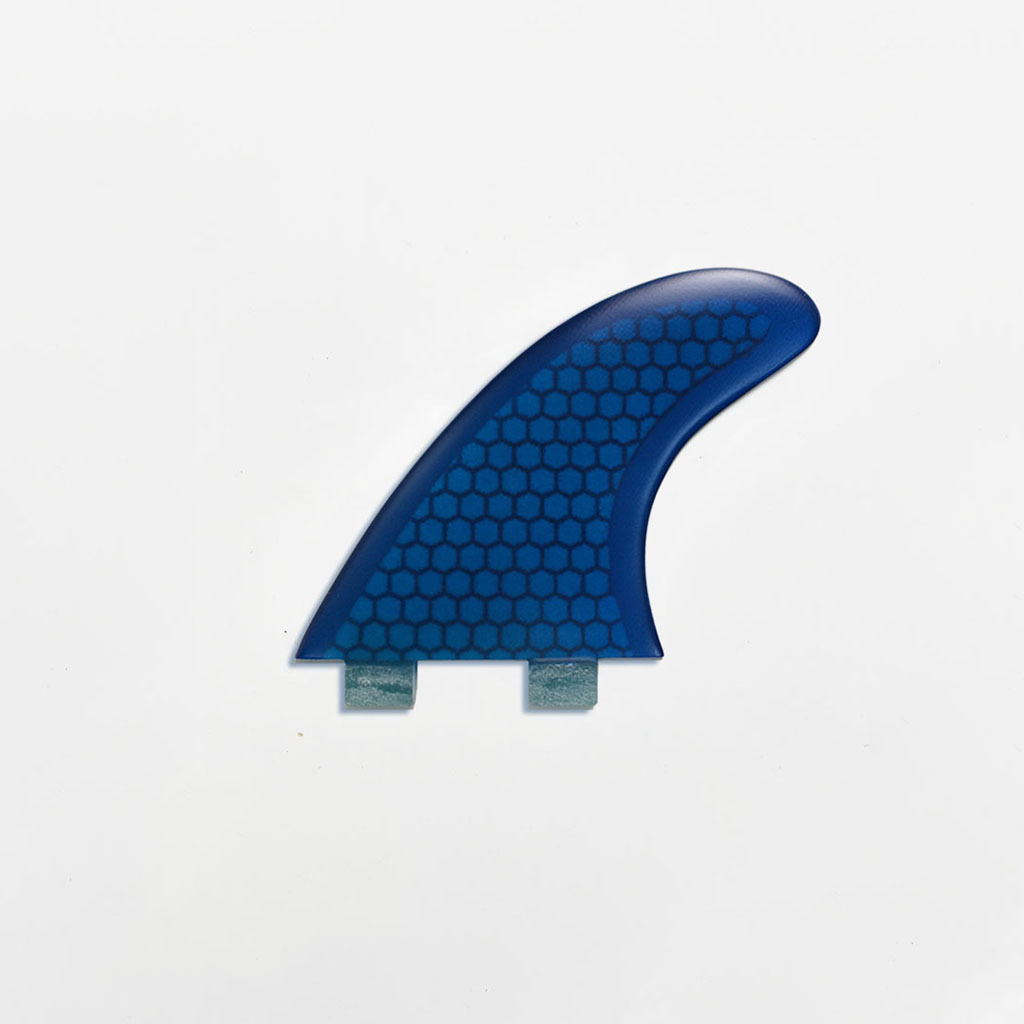
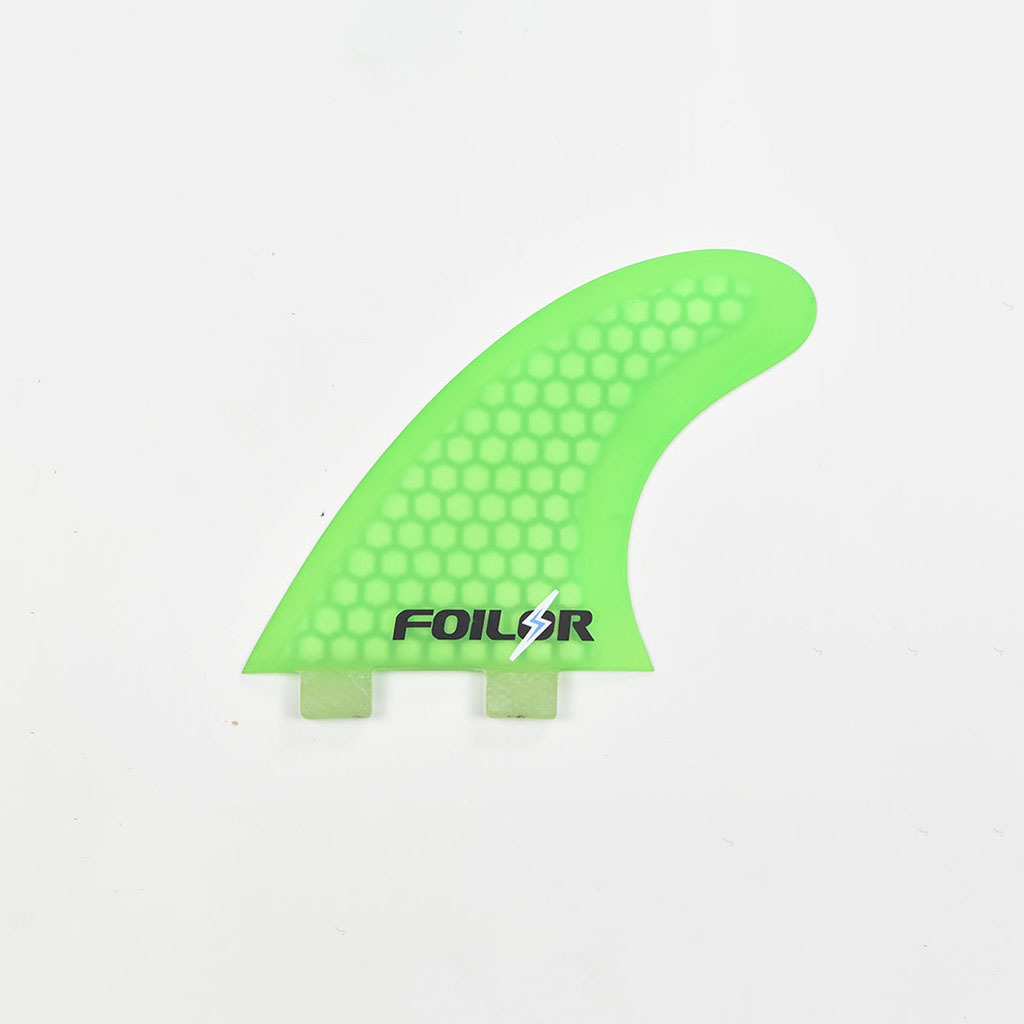
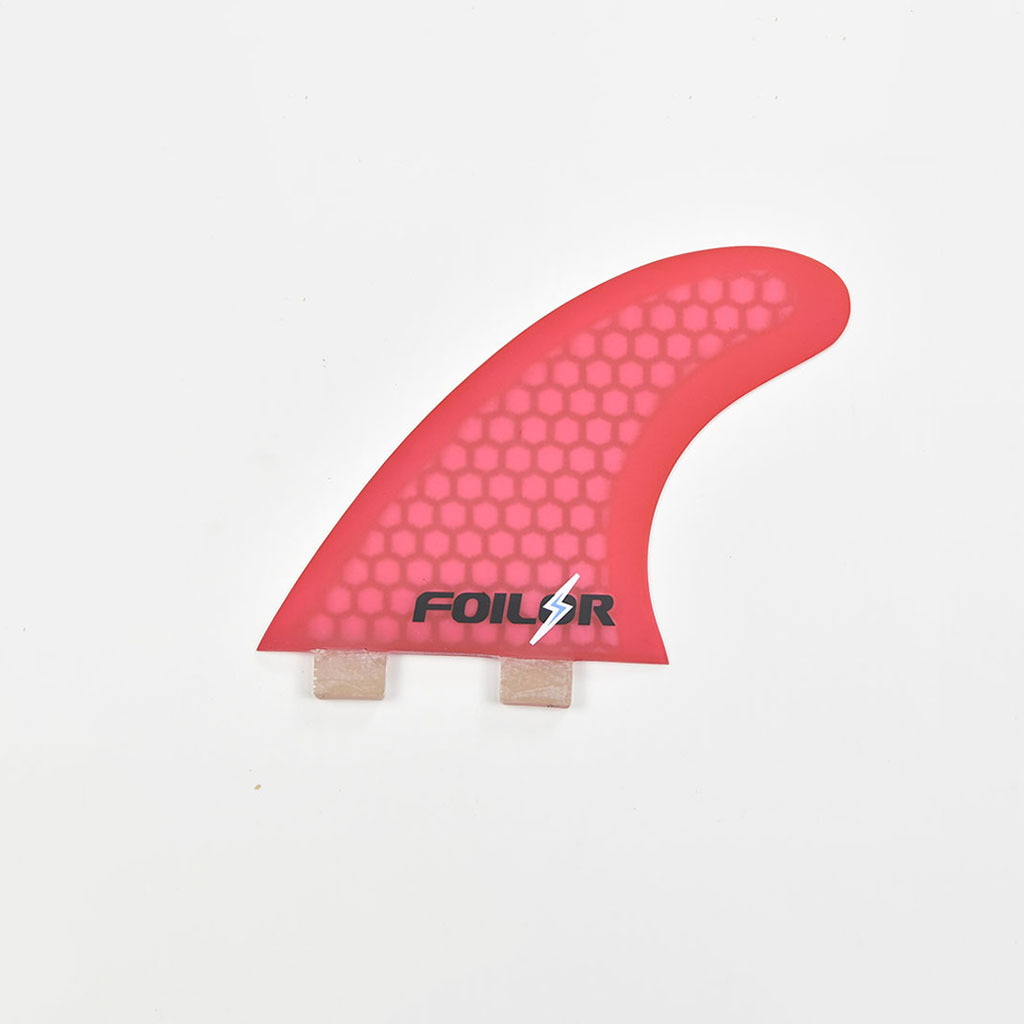
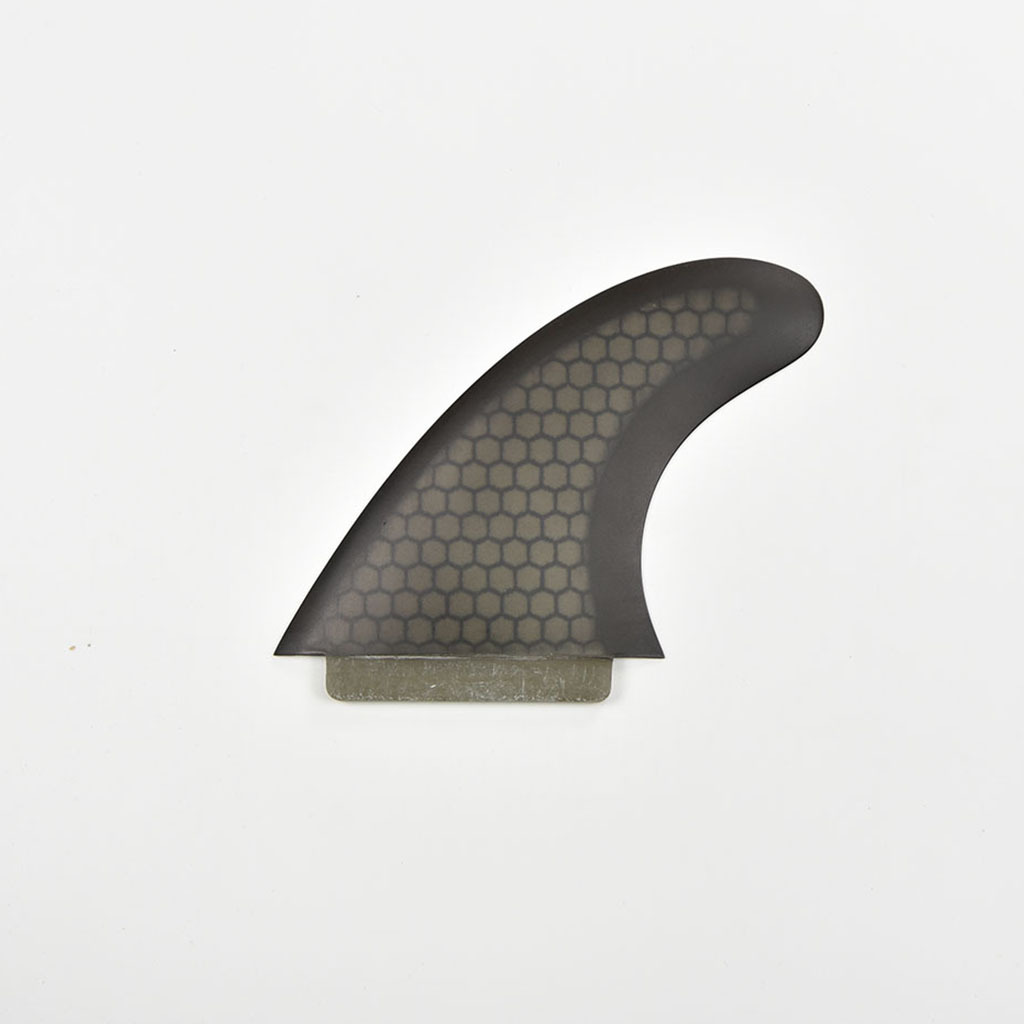
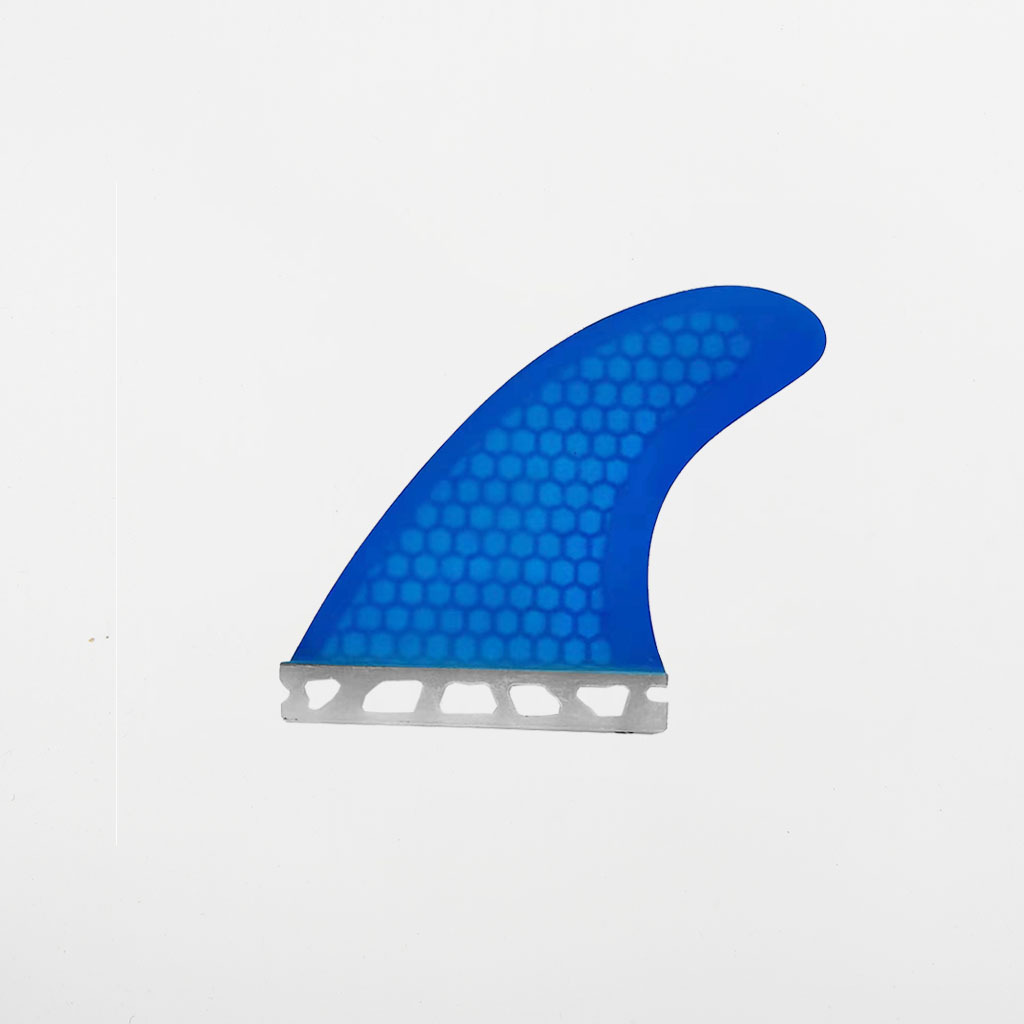
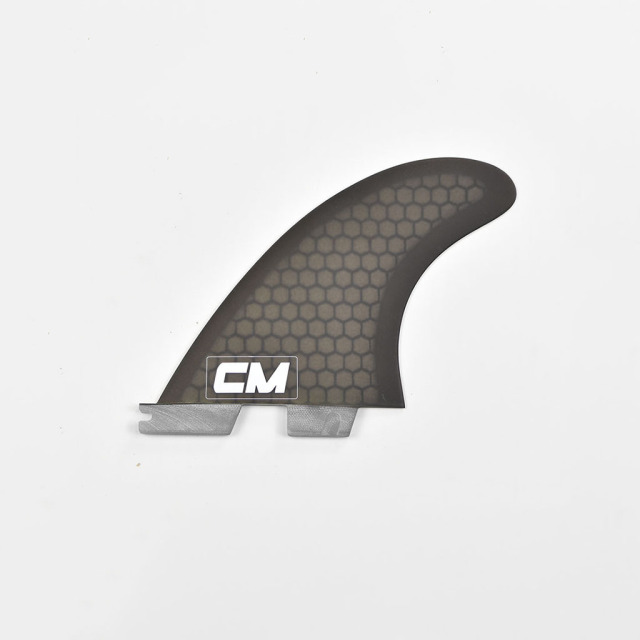
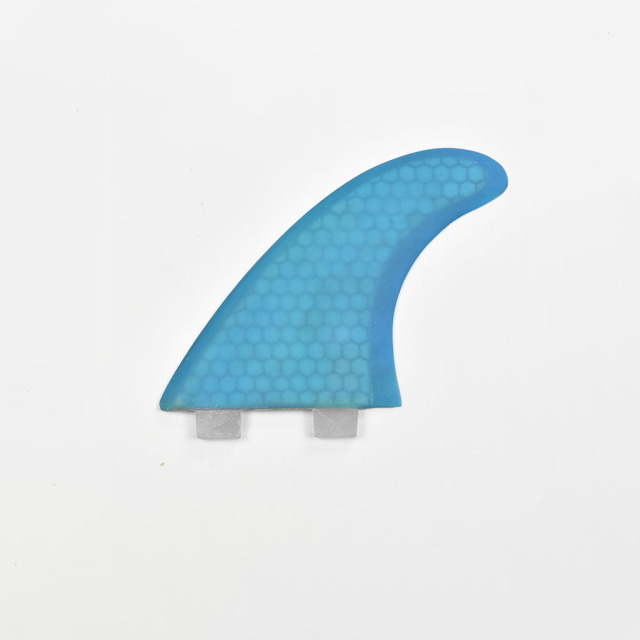
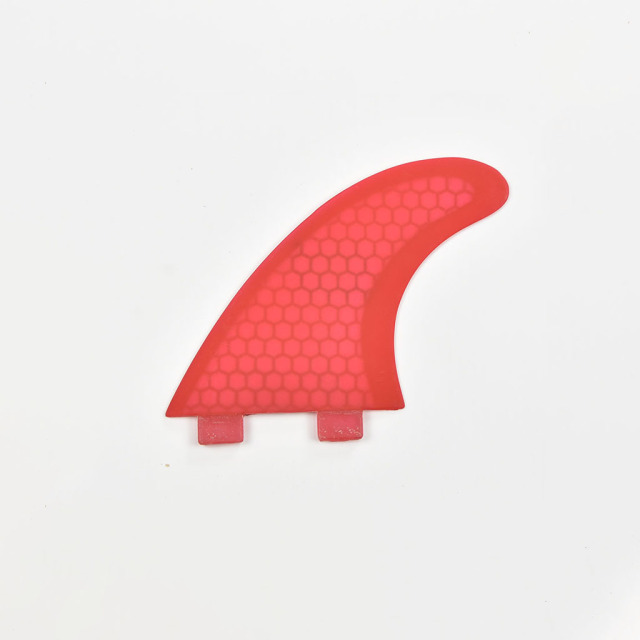
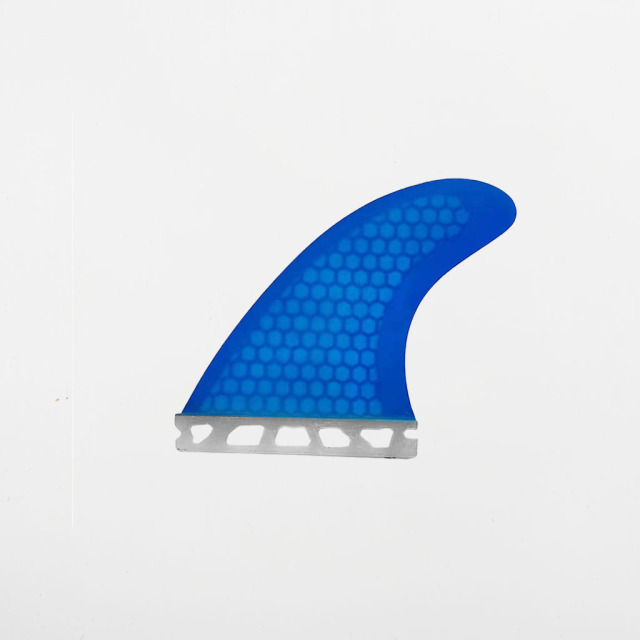
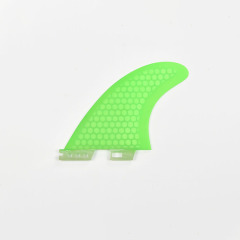
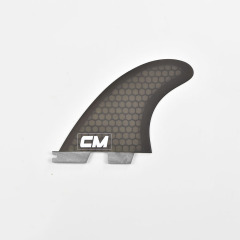
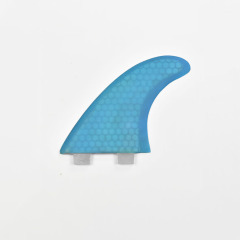
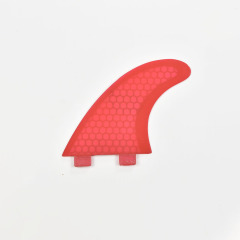
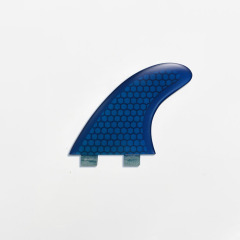
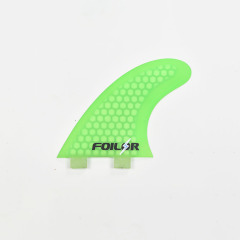
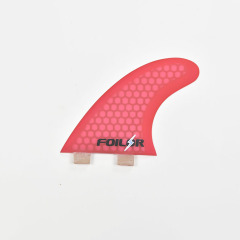
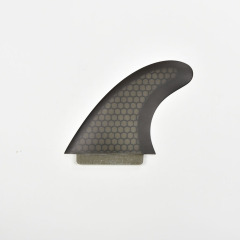
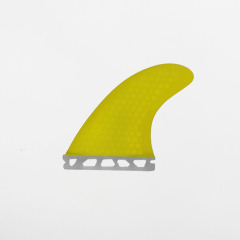
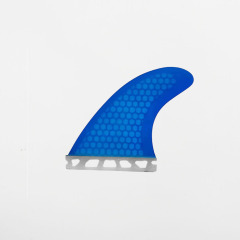
A light fin for the board already in use
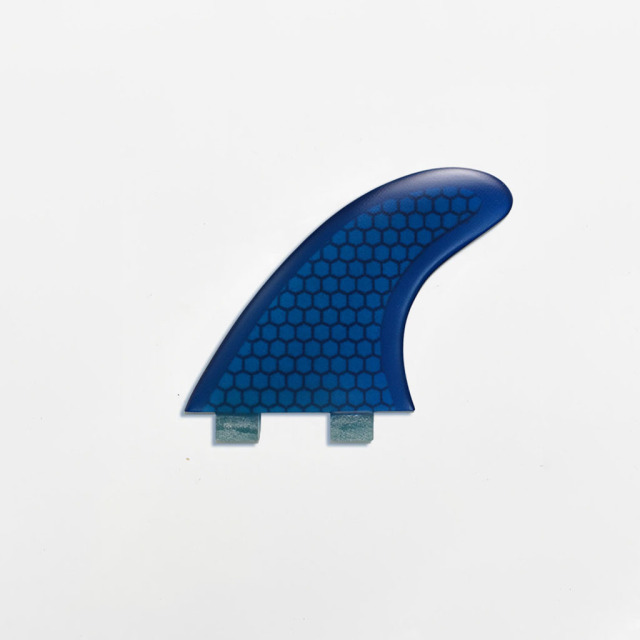
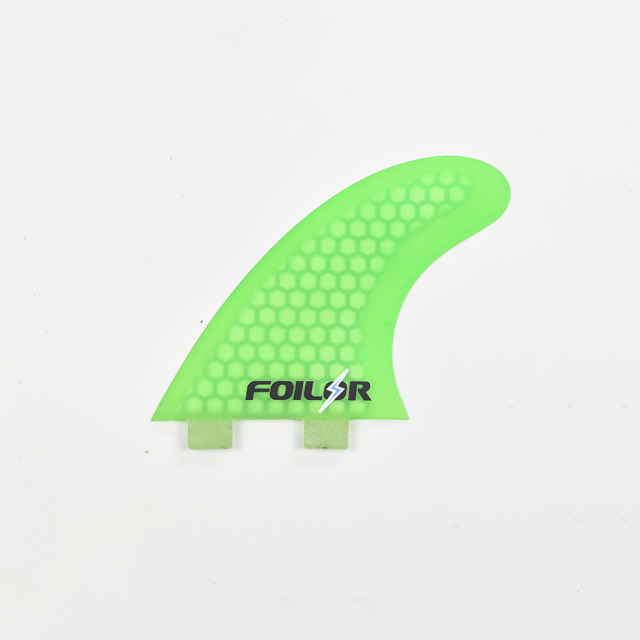
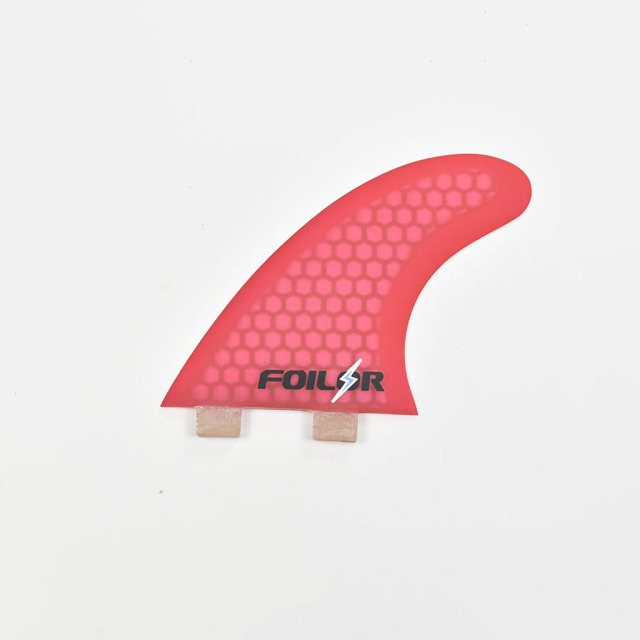
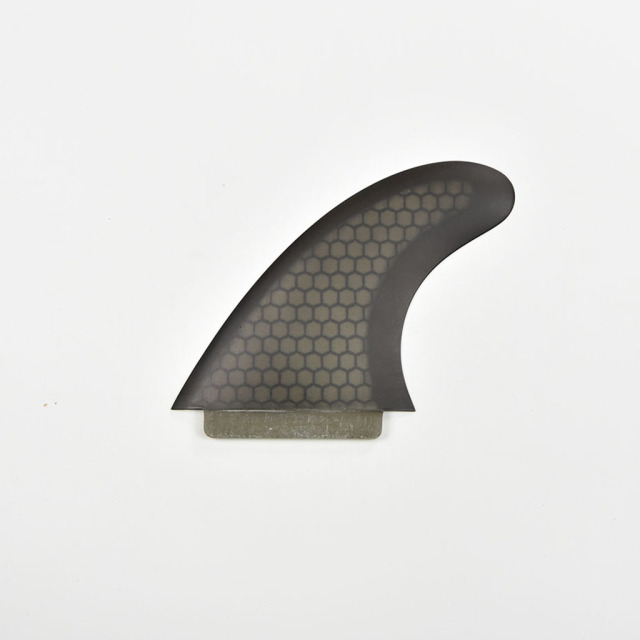
The F25120 honeycomb double tab surf fins are the plain honeycomb option in our double-tab line: a cellular core bonded between glass skins and sealed in epoxy, with two short tabs at the base. The build keeps the middle of the fin light while holding the foil, so the fin stays usable in the mixed, everyday conditions most boards actually see.
What the honeycomb core changes
- The core is a honeycomb sheet, not a solid slab. Its cell walls hold the glass skins apart so the fin keeps its thickness and foil under load.
- Glass fiber forms the outer skins and carries the bending load from base to tip. Epoxy resin wets out the glass, bonds it to the core and closes the surface against water.
- The stated mix is 50% honeycomb core, 30% glass fiber and 20% epoxy resin.
- Resin transfer molding sets the resin content with a closed tool rather than by hand. Two fins from the same mold come out with the same weight and tab thickness, which is what makes a reorder match the set you approved.
- The honeycomb pattern reads through the outer skin. On a new fin it is part of the look; after a hard knock it also shows whether the core behind the skin has taken damage.
Double-tab fit, plainly
This model is made for a double-tab box: two short slots side by side, a common set-up on shortboards and twin-fin boards. It will not seat in a single long slot, and it will not seat in the through-box used for a longboard’s centre fin. The same honeycomb layup is molded in single-tab and box-fin versions, so the base has to match the box before anything else is decided. To identify what a board takes, pull the old fin: two short tabs mean double tab, one long tab means single tab, and a deep blade-shaped base means box fin. Fit the tabs dry first, check the base sits flush front and back, then tighten evenly and gently — snug is enough, and over-tightening one side is what cracks a tab.
Where the F25120 fits in a quiver
| Use case | Why it fits |
| Everyday shortboard | A light, versatile fin for mixed beach break, reef and point days, where one set has to cover changing conditions. Twin-fin and two-plus-one boards |
| The double-tab base drops into the side boxes on twin fins and on many mid-lengths run as a two-plus-one. Replacement sets | Most fins come off because the old one was lost, cracked or worn; carrying XS through XL covers the common walk-in sizes. Rental and school fleets |
| A repeatable mold means the tenth replacement feels like the first, which matters when a quiver is repaired in batches. New-board assembly | Surf board manufacturers can fit the same fin across a size run and keep the build consistent from board to board. |
Sizing by rider weight, not board length
- XS — under 55 kg (120 lbs). The lightest band, for juniors and smaller riders.
- S — 55–70 kg (120–155 lbs). Overlaps M between 65 and 70 kg.
- M — 65–80 kg (145–175 lbs). The widest band; overlaps S below and L above.
- L — 75–90 kg (165–200 lbs). Overlaps XL between 85 and 90 kg.
- XL — over 85 kg (190 lbs). The heaviest band.
- Between two bands, use the overlap: a 68 kg rider sits in both S and M; S keeps the fin area lower, while M adds area for bigger or faster waves.
Upkeep & Wear Checks
After every session
Rinse the fin and its box in fresh water, working water through both slots so sand and salt flush out. Salt left in a slot dries into crystals that scuff the tab faces and can hold the fin slightly proud of the box, so the next fitting never sits flush. Let the board dry with the fin in place before it goes into a bag; a box that stays wet keeps water sitting against the tab roots. Clean the slots, not just the blade Wax, sand and dried salt in the channel are the usual reason a fin will not seat properly. Scrape the slots with a soft tool, like the corner of a wax comb or a wooden stick, rather than a metal blade, and wipe the tab faces before refitting. Grit trapped under a tab wears the box and the base at the same time. Watch the base, not only the tip Most fin trouble shows at the tab roots. After a hard knock, look for whitening or a stress line where the tab meets the blade, and for cracks running back from the trailing edge. A tab that has been glued or screwed back together will not carry a load and should be retired, because refitting it is how the box itself gets damaged. Never lever a fin out with a screwdriver braced against the board — push up from the base of the blade or use a fin puller, so the load goes into the tab instead of the glass around the box. Storage and travel Stand boards upright or on a rack, never fin-down on concrete where the tip carries the whole weight. If the fin stays fitted in a board bag, leave room at the tail so the bag does not press on the tip, and keep boards out of a closed car in the sun; sustained heat is what ages a resin finish and dulls the look of the honeycomb skin. For shops and rental fleets The advice at the counter can stay short: rinse, check the tabs, do not over-tighten. Surf schools and rental operators lose fewer board-days by holding a spare set in each size band and checking tab roots at every wash-down, rather than waiting for a fin to fail mid-season. Marking the size on the base with a paint pen gets a returned fin back onto the right board without measuring it again.
Made in our own factory, to a repeatable mold
The closed-mold RTM process is the reason a repeat order can match the last one: the tool sets the shape and resin content, so the fin that arrives next season is built the same way as the set you first approved. We also take on OEM and private-label work, adapting colourways and graphics for surf board manufacturers and private-label programmes. Send your buy list and target dates, and we will confirm what we can make and when.
Scale & Supply Capability
CIMI is a factory-based supplier with 16 years in surf and watersports hardgoods, manufacturing at our own facility rather than sourcing through traders. Chain stores, supermarkets and surf-brand stores buy from us because one supplier covers a full accessory assortment, so a season's order and its reorders can be planned together. We take on OEM and private-label work, adapting designs, colourways and branding to your programme, and we schedule production against your agreed range plan. Send us your buy list and target dates, and we will confirm what we can make and when.
FAQ
What does the honeycomb core do for the fin?
It holds the glass skins apart so the fin keeps its thickness and foil without solid mass through the middle. The glass carries load from the base to the tip, and the epoxy bonds the layers and seals the surface. On this model the stated build is 50% honeycomb core, 30% glass fiber and 20% epoxy resin, molded by resin transfer.
Which boards will the double-tab base fit?
It fits a double-tab box — two short slots side by side — which is common on shortboards and twin-fin boards. It will not fit a single long slot or the through-box used for a longboard centre fin. The same honeycomb layup is also molded in single-tab and box-fin versions.
Which size should a 68 kg rider take?
At 68 kg the rider sits inside both S (55–70 kg) and M (65–80 kg). S keeps the fin area lower; M adds area for bigger or faster waves. A strong rider or a wide board usually supports M.
Is this fin meant for one type of wave?
No. Honeycomb is a light, versatile fin material, and this model is intended for a variety of conditions rather than a single wave. It is the plain honeycomb build in the line; the carbon version adds carbon fiber and a different flex character, while the timber version changes the look.
How should I check and store the fin?
Rinse it in fresh water after every session, work water through both slots of the box and let it dry before the board goes back in a bag. Check the tab roots and trailing edge for hairline cracks after a hard knock; whitening at the base of a tab means the fin is moving and should be replaced. Store boards upright or on a rack rather than leaning fin-down on concrete.
Can the finish be customised for our own range?
Yes — the F25120 can be finished to your own range rather than supplied only in stock looks. Customisation at this level is a finish change, not a new fin: the template, foil and base stay as they are, while the colourway and any graphics are set to your brief. That keeps a private-label line visually distinct without splitting your buying across a second shape, and it means the riders who already know the model still get the same feel underfoot.
Brief the finish with something physical rather than a screen colour. A swatch, a painted panel, or the board graphic the fin has to sit alongside tells us far more than a monitor does, because resin and glass read differently from a backlit image. Send artwork in a usable file format with the placement marked — tip, base, or running along the foil — and say whether the graphic should sit quietly under the honeycomb texture or read strongly across it. Because that cell pattern shows through the outer skin, a design built for a flat opaque surface will look different once it is moulded, so it is worth designing with the texture in mind or asking us to advise on placement before the artwork is finalised.
Sign off on a physical sample, not a digital proof. Look at it in daylight and again under the lights your shop actually uses, and hold it against the boards and packaging it will sit beside on the shelf. Keep that signed sample on file with us and with your own quality contact — colour drift between batches is the usual complaint with custom finishes, and a retained reference is what settles the question quickly. When you reorder, order against the same reference and confirm the finish is still running before you commit to a season's stock.
Before placing a custom-finish order, it is worth confirming the practical points: the minimum quantity per colourway, how a custom run affects lead time compared with a stock colour, whether a smaller run can be split across sizes, and how the graphic is applied — beneath the surface or on top of it — since that decides how it wears against wax, sand and a board bag. Private-label packing, hang tags and logo placement on the fin itself can be discussed at the same time, so the finish and the packaging arrive as one range rather than two separate projects.