Product Overview
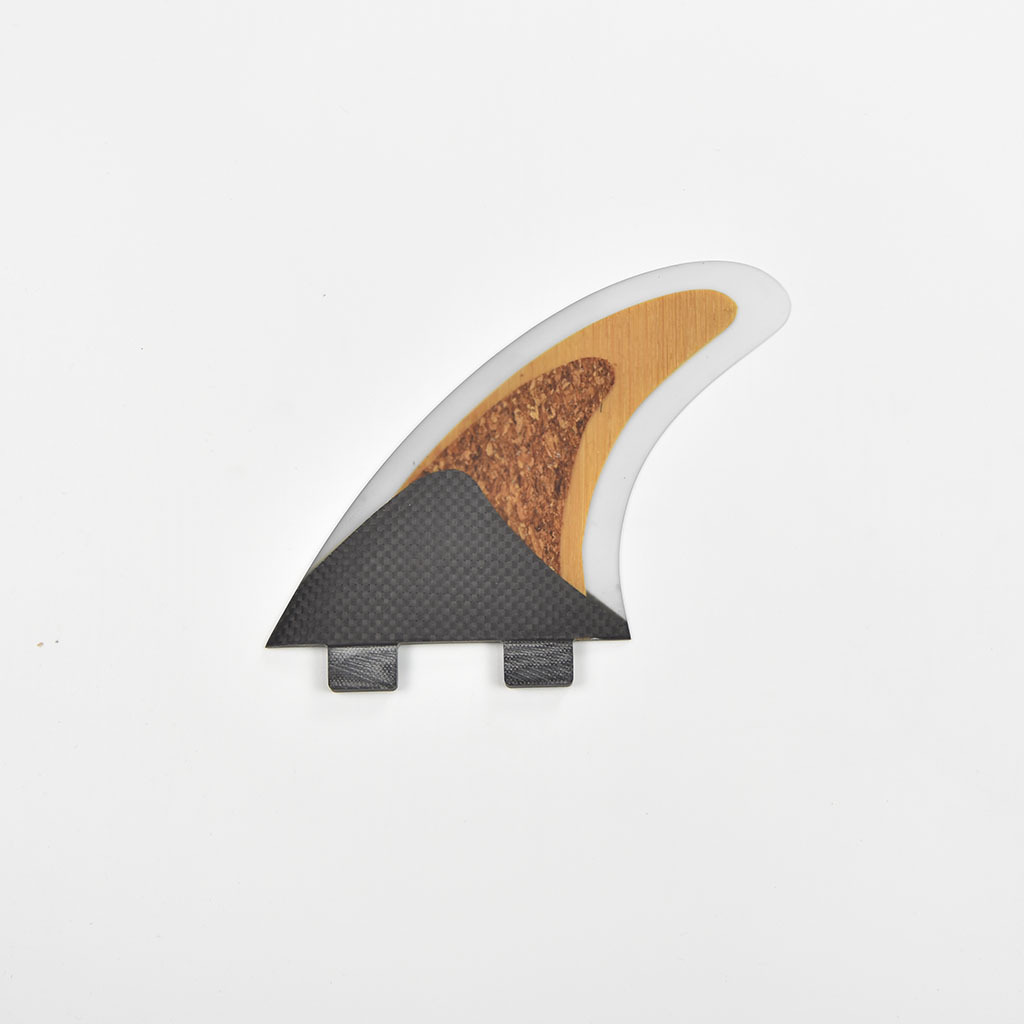
Fins decide a lot about how a board feels underfoot, and this honeycomb carbon double tab model is built to be a dependable stock line rather than a special-order piece. The carbon here is structural, not decorative. That balance is what makes it easy to hold as a line. Riders who want the light weight of a honeycomb build but a more forgiving feel tend to settle here, and these are the surfboard fins board builders fit to new boards and distributors carry across several rider weights, so one template does the work of several. That is the practical reason it belongs in stock rather than in a specialist slot on the wall.
Carbon-Honeycomb Construction
Honeycomb construction is one of the lightest ways to build surfboard fins, and it is a laminate rather than a solid blank. A honeycomb core sits at the centre, glass and carbon are laid over it, and epoxy resin binds the stack; the fin is then molded in a resin transfer process, where resin is drawn through a closed mold under pressure. Closed molding holds the resin-to-fibre ratio steady and gives a part that comes out of the tool the same way each time, which is what makes a repeatable layup possible.
The carbon is where this version separates from the plain honeycomb fin. Each template gets an internal carbon framework shaped to suit that specific outline, so the stiffening follows the way the fin is actually loaded instead of being spread evenly. A carbon twill is also laid into the base, tying the tabs into the structure and producing a more user-friendly flex pattern: the fin bends progressively under load and returns without a hard snap.
In the water that reads as predictability. Feedback arrives early in a turn instead of the fin going from stiff to loose all at once, and the light core keeps the tail responsive without the fin feeling hollow or fragile in the hand.
These are molded in our own tooling rather than shaped from a foam core afterwards, which keeps the structure even through the tip and the tabs rather than relying on hand finishing. As surf board manufacturers we set the layup at the tool, so the fin is built the same way in every size.
Fin System Fit
- Know what double tab means. Two short tabs drop into two side-by-side slots per fin position and are held by a grub screw at the rear of each box, which is the layout double tab surf board fins are built for.
- Lay the board upside down and look at the fin area: a double tab board shows two separate slots per position, set side by side and running fore and aft.
- Compare the slots with the fin's tabs. The two tabs should drop in without force and sit flush; if they will not, the board is not a double tab board.
- Check where the screw sits. A double tab box takes its grub screw at the rear of the slot, while a long open channel with a front screw belongs to a different system.
- Check every board in the quiver, not just one — sets are often bought to cover several boards at once.
- Photograph the fin area if you are unsure which types of surfboard fins your board takes, and send it with the board model; we will confirm before the order is packed.
- Cover mixed systems in one order. This template is also made in single tab and box versions, so tell us the split if one shipment has to serve boards with different boxes.
Rider Weight & Sizing
- Start with the rider, not the board. Size is set by rider weight rather than board length, which is how most surf board fins are matched in a shop or on a builder's bench.
- Weight first, system second. The bands follow rider weight rather than which types of surfboard fins a board takes, so the size conversation stays the same whatever box sits in the board.
- Bands overlap on purpose. The S and M windows share a few kilos, and so do M and L, so a rider in the overlap can go either way: the smaller size feels looser and easier to pivot, the larger one gives more drive and hold.
- Use the weight the rider actually surfs at. Weigh with the wetsuit on — a winter suit and boots can be enough to move a borderline case up a size.
- Keep the scale consistent. The same XS to XL weight bands run across the honeycomb range, so staff are not learning a new chart for every model.
- Light riders on longboards. Under 55 kg, XS keeps the fin in proportion; a light surfer on a long board still gets plenty of fin area, so a smaller set of surf fins is usually the better call.
- Heavier riders. The XL band covers riders over 85 kg; where a rider sits between L and XL and surfs with power, size up before changing template.
Riding Conditions & Applications
- Everyday sessions. The layup is specified for a variety of conditions, so this is the fin that stays on the board through a normal run of days rather than coming off at the first change in the forecast.
- Replacement demand. A lost or broken fin is the most common reason a single fin leaves the wall, and the double tab interface lets staff match a replacement without walking the whole range.
- New board assembly. Surf board manufacturers fit fins at the end of the build and prefer one template that covers a size run, so a new model does not need three different fins standing behind it.
- Travel quivers. Fewer spare sets of surf fins in the bag, because one template covers the boards a rider is likely to take away.
- Rental and school fleets. Standardising on one fin keeps maintenance simple: staff swap sizes by rider weight instead of learning a different fin for every board.
- Board-and-accessory bundling. Shops selling a board with a bag and a surf traction pad can finish the package with a fin, so the customer leaves with a complete set-up.
- Accessory wall replenishment. Fins, pads and a surf leash programme ordered together keep the wall stocked on one schedule instead of several.
Specification Sheet
| Specification | Detail |
|---|
| Model | F25309 |
| Fin system | Double tab |
| Construction | Resin transfer molded honeycomb laminate |
| Core | Honeycomb core, 50% of the layup |
| Reinforcement | Glass fiber 20%, carbon fiber 10% |
| Resin | Epoxy resin 20% |
| Carbon detail | Template-specific internal carbon framework with a carbon twill at the base |
| Sizes | XS, S, M, L, XL |
| XS rider weight | Under 55 kg / 120 lbs |
| S rider weight | 55 kg – 70 kg / 120 – 155 lbs |
| M rider weight | 65 kg – 80 kg / 145 – 175 lbs |
| L rider weight | 75 kg – 90 kg / 165 – 200 lbs |
| XL rider weight | Over 85 kg / 190 lbs |
| Systems available in this template | Double tab, single tab, box |
Range & Set-Up
| Category | What the range covers |
| Leashes | A surf leash range covering regular, non-slip strap and Hypalon strap builds, plus bodyboard and SUP options |
| Fins | Honeycomb, timber, G10 glass and nylon fins across single tab, double tab and box |
| Traction | A surf traction pad range covering tail pads, centre pads, skimboard pads and waxless decks |
| Covers | Basic bags, regular bags, stretch covers and bodyboard bags |
| Racks | A surfboard rack range covering travel rax and tie-downs, wall storage, display and bike carry |
| Fin accessories | Spare parts and fittings that go with a fin change |
Fin Care & Handling
- Fresh water after every session. Rinse the blade, the tabs and the box slots, then dry with a towel before the fin goes back into a bag. Salt left to dry in the slot makes a fin seat tight, and it hides hairline marks at the tab root until the next session finds them.
- Dry before it goes into storage. A fin packed wet inside a cover or a board bag keeps moisture against the carbon twill and the base, and the screw thread picks up grit. A quick wipe is enough; a fin left damp for weeks looks dull and feels rough where it meets the box.
- Carry and store boards fin-up. Lay the board fin-up in the car, use a bag with a fin slot, and stand boards on the tail rather than on the fins. A fin that takes the weight of a board is the most common way a tab gets crushed.
- Seat the fin, then snug the screw. Drop the tabs in fully before touching the grub screw, and tighten with the correct key until it just holds. Over-tightening crushes the tab, while a screw left loose lets the fin work in the box and wear the slot instead.
- Check the tabs before every fit. Stress shows at the tab root first, long before anything is visible on the blade, so a two-second look on the tailgate catches the fin that took a knock last week and keeps it out of the water.
- Clear the slot. Rinse and wipe sand out of the box before refitting; grit trapped under a tab stops the fin seating flush and puts the load on the screw rather than on the box.
- Keep the small parts on hand. Grub screws, fin keys and one spare set cover most of what goes wrong, and for a school or rental fleet a season-start walk of every board — check each screw, retire any fin with a marked tab — costs far less than a board sitting out of service.
- On the shop floor. Display fins in a rack rather than a loose bin, check returned fins for tab marks before they go back on the wall, and take the customer through the fitting check so the right system and size leave the shop.
Ordering & Confirmation
- Send the board list. Tell us which boards the fins are going on and flag any that do not take a double tab box, so the system split is right before packing.
- Give the size split. Order by size band rather than a single size where the account covers a spread of riders; the weight bands are what the packing is checked against.
- Ask before the tooling run. Questions about outline, layup or flex reach the production team directly, because these are made by surf board manufacturers rather than assembled from bought-in parts — send them with the order sheet.
- Settle marking and packing. Confirm what the line needs to carry — labels, artwork and packing format — with your sales contact before the order is finalised.
- Plan the bundle. If the same shipment includes a surf leash programme, a pad line or covers, list everything on one sheet so production and packing are scheduled together.
- Add storage or display if you need it. A surfboard rack line for travel, wall storage, display or bike carry can travel with the same order; tell us the format and how many boards it has to hold.
- Get the terms in writing. MOQ, price, lead time, payment and shipping terms are confirmed per order, so check them against your season before committing.
- Approve a reference piece. Where a sample is part of your process, ask your sales contact about availability and keep the approved fin as the reference the batch is checked against.
Scale & Supply Capability
CIMI is a factory-based supplier with 16 years in surf and watersports hardgoods, manufacturing at our own facility rather than sourcing through traders. Chain stores, supermarkets and surf-brand stores buy from us because one supplier covers a full accessory assortment, so a season's order and its reorders can be planned together. We take on OEM and private-label work, adapting designs, colourways and branding to your programme, and we schedule production against your agreed range plan. Send us your buy list and target dates, and we will confirm what we can make and when.
FAQ
Will this fin fit my board's fin boxes?
Double tab models fit boards built with two side-by-side slots per fin position, held by a grub screw at the rear of each box. Turn the board over and check that every fin position has two separate slots; a single long channel means the board takes a box fin, and one long tab slot with a front screw means it takes a single tab. Boards vary more than the labels suggest, so if you are unsure which of the types of surfboard fins your board takes, send a photo of the fin area and we will confirm.
Which size should I pick for a given rider weight?
The sizes are set by rider weight, not board length: XS for riders under 55 kg, then S, M, L and XL up to riders over 85 kg. The bands overlap by a few kilos, so a rider sitting between two sizes can go down for a looser, easier pivot or up for more drive and hold. Judge the weight with the wetsuit the rider actually wears. The same weight scale runs across all the surfboard fins in this honeycomb template, so a mixed order does not need a separate size conversation.
What does the carbon framework change about the way the fin feels?
It changes how the fin loads. Each template has its own internal carbon framework shaped to that outline, and the carbon twill laid into the base ties the tabs into the structure. The result is a more user-friendly flex pattern: the fin bends progressively through a turn and returns without a snap. Riders moving across from a plain glass fin usually notice it first in longer turns, where these surf fins keep feeding back instead of loading up suddenly.
How should I look after the fins between sessions?
Rinse the surf board fins in fresh water after salt water and dry them before they go back in a bag, especially if the board lives in a hot car or a closed cover. Check the tabs and the area around the base screws each time you fit them, because a fin that has been knocked usually shows a stress mark at the tab first. Avoid resting a board fin-down on hard ground, and keep a spare set in the quiver so a damaged fin does not end a session.
Can this fin be matched with your tail pads?
The traction range is built to sit alongside these fins, so a shop can put a deck-and-fin package together from one order. Match the surf traction pad to the board's tail width and the fin to rider weight; the two decisions stay independent of each other. Confirm colours and graphics against your assortment before the order is finalised.
Do you also supply storage and display equipment?
Yes. Racks sit in the same range as the fins, so a commercial account can put a surfboard rack on the same order instead of sourcing display separately. Tell us the floor space and how many boards have to sit on it, and we will point you to the format that fits.