Product Overview
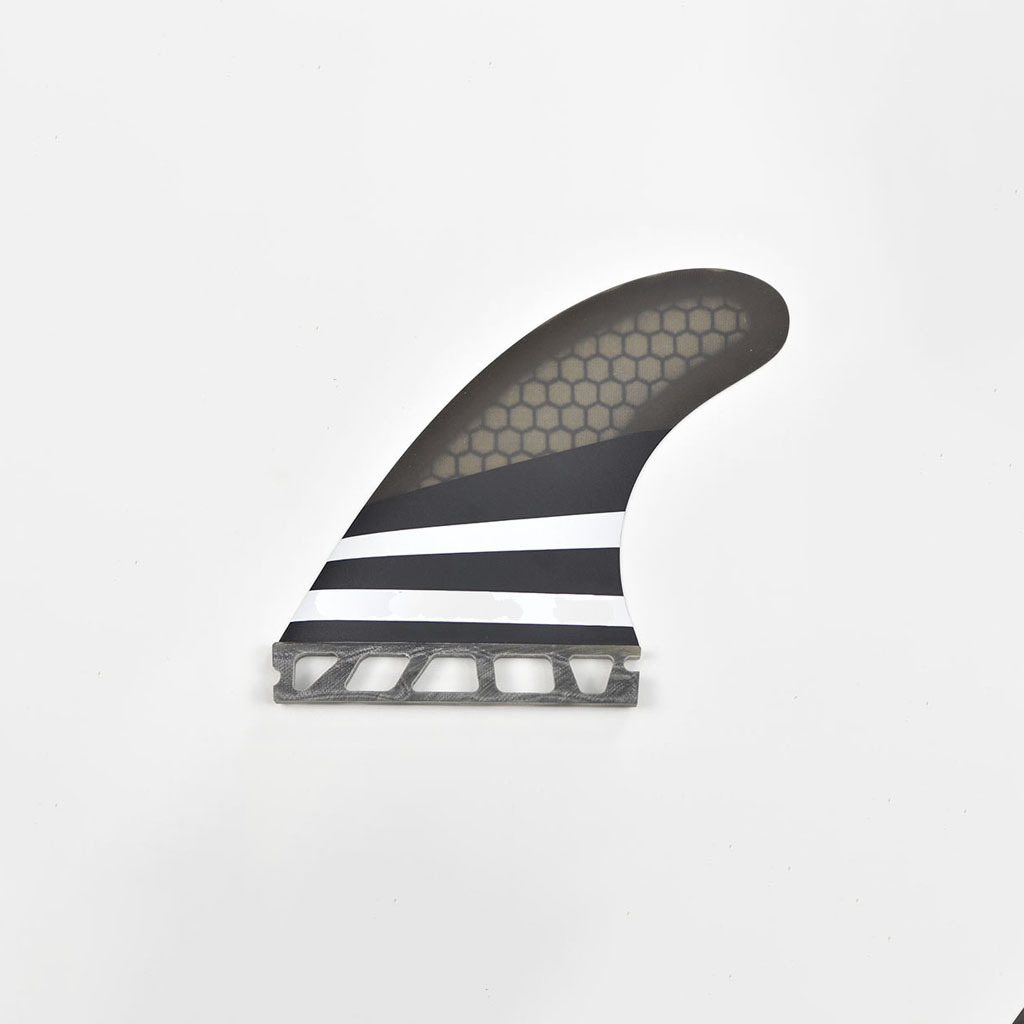
This is a single tab honeycomb fin for the surf most boards actually see — waist-high beach breaks, soft reef lines, the long run of clean summer days. The outline is swept and upright, with enough area under the tip to hold a line through a drawn-out turn and enough release at the trailing edge that the board still comes off the top. Riders moving up from a moulded plastic fin feel it first as drive out of the bottom turn; riders already on glass notice how little weight it adds at the tail for the hold it gives. It stays predictable as the tide and the wind shift through a session, which is what makes it an easy fin to leave on the board rather than swap around. The same build covers the bases a shop needs on the wall: this single tab version for boards with a single-tab box, and double tab honeycomb fins for boards drilled with two slots, all from one honeycomb surf fins manufacturer. Sizes run XS to XL, so one outline serves a small grom and a heavy regular without changing shape.
Honeycomb Construction
- A lattice core, half the build. On these honeycomb surfboard fins the core is a closed honeycomb lattice rather than a solid panel, and it makes up 50% of the fin. The lattice carries load across the inside of the fin, so the outer skin can stay thin and the whole piece stays light. - 30% glass fiber as the structural skin. Glass wraps the core, takes the point loads at the base and the tip, and gives the fin its memory when it flexes. On glass fiber surf fins the layup is what decides whether the fin springs back or goes soft after a season. - 20% epoxy resin. Epoxy bonds core and glass into one piece and cures with little shrinkage, which is why the finished fin feels crisp rather than dead underfoot. - Resin transfer molding. Resin is drawn through the closed mould under pressure, so every fin leaves the tool with the same resin-to-glass ratio. As a honeycomb surf fins manufacturer we mould to a fixed template rather than laying each fin up by hand, and that is what keeps a reorder on the same shape. - Light at the tail. A light fin adds less swing weight behind the back foot, so the board releases faster out of a turn and the fin is less likely to be dragged off line through chop. - A finished base and a recognisable face. The tab is finished flat so it sits against the plate in the box instead of rocking, and the dark panel is left clean enough that the honeycomb core reads through it, with two white stripes across the face.
Single Tab Fitment
- Identify the box. Single tab surf fins need a board with one long slot and a screw plate running inside it. If the board has two separate short slots, or a deep rectangular channel, this is the wrong base — the same template is made in the other two fits. 2. Drop the tab in. Slide the tab down from above with the plate underneath and push until the base sits flush. Do not force it: a tab that will not drop in is usually a plate sitting at the wrong end of the slot. 3. Set it fore and aft before tightening. Moving the fin forward puts more of the base under the rear foot and makes the board turn tighter; moving it back adds drive and hold. Mark the position once you find it so the next swap goes back in the same spot. 4. Tighten, then check by hand. Snug the screw down — firm, not cranked — and try to move the fin sideways. Any rock means the plate is not seated; loosen, reseat and tighten again. 5. Boards with two slots. If the board takes two separate tabs, order the same outline as double tab honeycomb fins from the same honeycomb surf fins manufacturer. The panel, sweep and size ladder are unchanged; only the base is different. 6. The honeycomb build carries over to that fitment, seated in the box and locked with the box's own screw and plate.
Size & Rider Weight
| Size | Rider weight |
| XS | Under 55 kg / 120 lbs |
| S | 55 - 70 kg / 120 - 155 lbs |
| M | 65 - 80 kg / 145 - 175 lbs |
| L | 75 - 90 kg / 165 - 200 lbs |
| XL | Over 85 kg / 190 lbs |
| Sizing basis | Rider weight, not board length |
| Weight units | Kilograms listed first, pounds alongside |
| Band overlap | Adjacent sizes share part of their band, so a rider between two sizes can ride either |
Honeycomb, Carbon & G10 Tiers
- Plain honeycomb — the everyday tier. 50% honeycomb core, 30% glass fiber and 20% epoxy, resin transfer molded. It is light in the hand and releases quickly, which is why it covers the widest spread of riders and the conditions most shops sell into.
- Honeycomb carbon — the step up in response. The same 50% core with 20% glass fiber, 20% epoxy and 10% carbon fiber. The internal carbon framework is designed to suit each template, and switching to epoxy resin with a carbon twill added to the base delivers a more user-friendly flex pattern. It springs back rather than folding away, so a rider who finds the plain build a touch soft under the back foot gets more snap without a punishing ride.
- G10 glass — the stiff tier. Machine cut from layers of solid fiberglass at 60% glass fiber and 40% epoxy, these glass fiber surf fins are stiff and hold the integrity of their flex under immense force in the most extreme conditions — the build pro-level surfers ask for.
- Why the three belong on one wall. Plain honeycomb carries the volume, carbon answers the customer who wants more response from a familiar outline, and G10 is the top end for strong surfers in demanding, high-energy waves. Keeping the ladder means a shop buying from a wholesale surf fins supplier can answer “something stiffer” from its own rack instead of losing the sale.
- One size ladder across all three. Every tier runs XS to XL on the same rider-weight bands and comes in single tab surf fins, double tab honeycomb fins and box fin surfboard fins for longboard centre boxes. A customer moving up a tier keeps the same size and the same box, so the upgrade is a fin swap rather than a new fitment.
- Who should stay on plain honeycomb. Lighter surfers, improvers and anyone riding small, soft waves get more from the light build; G10 rewards a rider who can load the fin hard and hold it through a turn. The carbon tier is the middle answer for someone who wants response without going all the way to solid glass.
- Avoid duplicating the same outline three times. Because the tiers share templates, there is no need to carry every shape in every build and every size. Pick the tier that matches your customers, fill the size run around it, and add the next tier once demand shows up.
- Mixing tiers on one order. All three come from the same custom surfboard fins factory, so a single order can carry honeycomb, carbon and G10 together. Confirm the mix, carton quantities and packing with your sales contact when you build the list.
Care & Wear Points
Rinse the fin in fresh water after a session and let it dry before it goes back in a bag; salt left around the base is what stiffens a screw over a season. Check the tab and the base for stress marks after any session where you touched bottom, and check the screw before you paddle out rather than after. Small chips along the trailing edge are worth smoothing so they do not lift the glass further, but a cracked tab or a base that has started to delaminate is a replacement rather than a repair. Boards travel better with the fin fitted or with the fin in a pocket of the bag — loose in a car is how most fins get stood on. The same routine is worth applying to the glass fiber surf fins and the timber fins in the range, because the wear points sit in the same places whichever material is on the board.
Specifications
| Property | Value |
|---|
| Model | F25213 |
| Product type | Honeycomb surfboard fin |
| Honeycomb core | 50% of the build |
| Glass fiber | 30% of the build |
| Epoxy resin | 20% of the build |
| Moulding process | Resin transfer molding |
| Fin system | Single tab |
| Base fitting | Flat tab, locked in the box with plate and screw |
| Other system builds | Double tab honeycomb fins and box fin versions |
Accessory Range
- Leashes. A 9 ft, 8 mm hypalon leash is the usual pairing for the longboard end of the wall, and a 6 ft 6 mm leash covers the shortboard end; both come from the same house. Ordering fin and leash together keeps an accessory delivery arriving as one set rather than three, which is the practical side of buying from a wholesale surf fins supplier. - Traction pads. Tail pads, centre pads and waxless pads sit in the same programme. A pad and a fin change the same thing from two ends — grip under the back foot and hold at the tail — so shops usually specify them together for a board they are building up. - The rest of the fin wall. Alongside these honeycomb surfboard fins, the range covers timber, G10 glass and nylon, in single tab, double tab and box fin bases. A shop can cover longboards, shortboards and rental boards from one line rather than three. - Covers and bags. Basic bags, regular bags, stretch covers and bodyboard bags. Most covers take a board with the fin left fitted, so a customer buying a cover is often buying a fin in the same visit. - Racks. Travel racks, storage racks and display racks. A display rack is what turns a box of fins into a wall a customer can read without asking a staff member.
Ordering & Range Planning
- Send the template and the size run. Write down how many of each size you want against this outline, with the base named for each line. 2. Confirm the base. Say so if the order is single tab surf fins, and flag any other base going into the same order so it is clear which fin is destined for which board on the wall. 3. Branding and colour. Buyers working with us as a custom surfboard fins factory send artwork and a colour reference with the order; our team confirms what can be matched on this template before anything is scheduled. 4. Terms, packing and timing. Carton quantities, payment terms and lead time are confirmed per order, because they depend on the size run and the mix of bases you need. Ask your sales contact for current terms on the quantity you have in mind, and about sample availability if you want to handle a fin before committing. 5. Longboards on the same order. If the wall also carries longboards, add box fin surfboard fins to the list so the centre fins travel with the rest of the fin order rather than as a separate purchase.
Scale & Supply Capability
CIMI is a factory-based supplier with 16 years in surf and watersports hardgoods, manufacturing at our own facility rather than sourcing through traders. Chain stores, supermarkets and surf-brand stores buy from us because one supplier covers a full accessory assortment, so a season's order and its reorders can be planned together. We take on OEM and private-label work, adapting designs, colourways and branding to your programme, and we schedule production against your agreed range plan. Send us your buy list and target dates, and we will confirm what we can make and when.
FAQ
Which size should I take if my weight falls between two bands?
Take the larger of the two if you ride a wide-tailed board, surf punchy water, or weigh more in a winter suit with boots and gloves on. Take the smaller one on a narrow-tailed board, in mostly small soft waves, or if you want the board to feel looser under the back foot. The bands overlap deliberately — between 65 kg and 80 kg you can ride M or L, and the choice comes down to the feel you want.
How do I know whether my board takes this fin?
Look at the channel in the tail. Single tab surf fins need one long slot with a screw plate inside it; two separate short slots take a double tab base, and a deep rectangular channel takes a box fin. If you are not sure, send a photo of the box together with the board model and we will tell you which base to order.
I like this template but my board has two slots. Is there a version for that?
Yes — the same outline is made as double tab honeycomb fins. Only the base changes: the panel, the sweep and the size ladder stay as they are, so a rider who likes this fin on one board can run the same template on a board with a different box.
Will it work on a longboard with a through-box?
Not this base — a longboard centre fin needs box fin surfboard fins. We make the same honeycomb build for that fitment, so the light feel and the moulded construction carry over, held by the box's own screw and plate.
How does honeycomb compare with your G10 glass fins?
G10 is machine cut from layered solid fiberglass and comes out stiff, holding its shape under a hard load — the pick for strong surfers in demanding waves. The honeycomb build here is far lighter and releases more quickly, which suits everyday conditions and a wider spread of riders. Most shops stock both: the glass fiber surf fins for the customer chasing hold at speed, honeycomb for everyone else.
Will these honeycomb surfboard fins work in small, weak surf?
That is where they are most at home. A light fin is easier to get moving in soft waves, and the upright template keeps the board turning when there is not much push behind it. In bigger, faster surf the same fin stays predictable rather than turning twitchy, which is why it is an easy one to leave on the board across a whole trip.