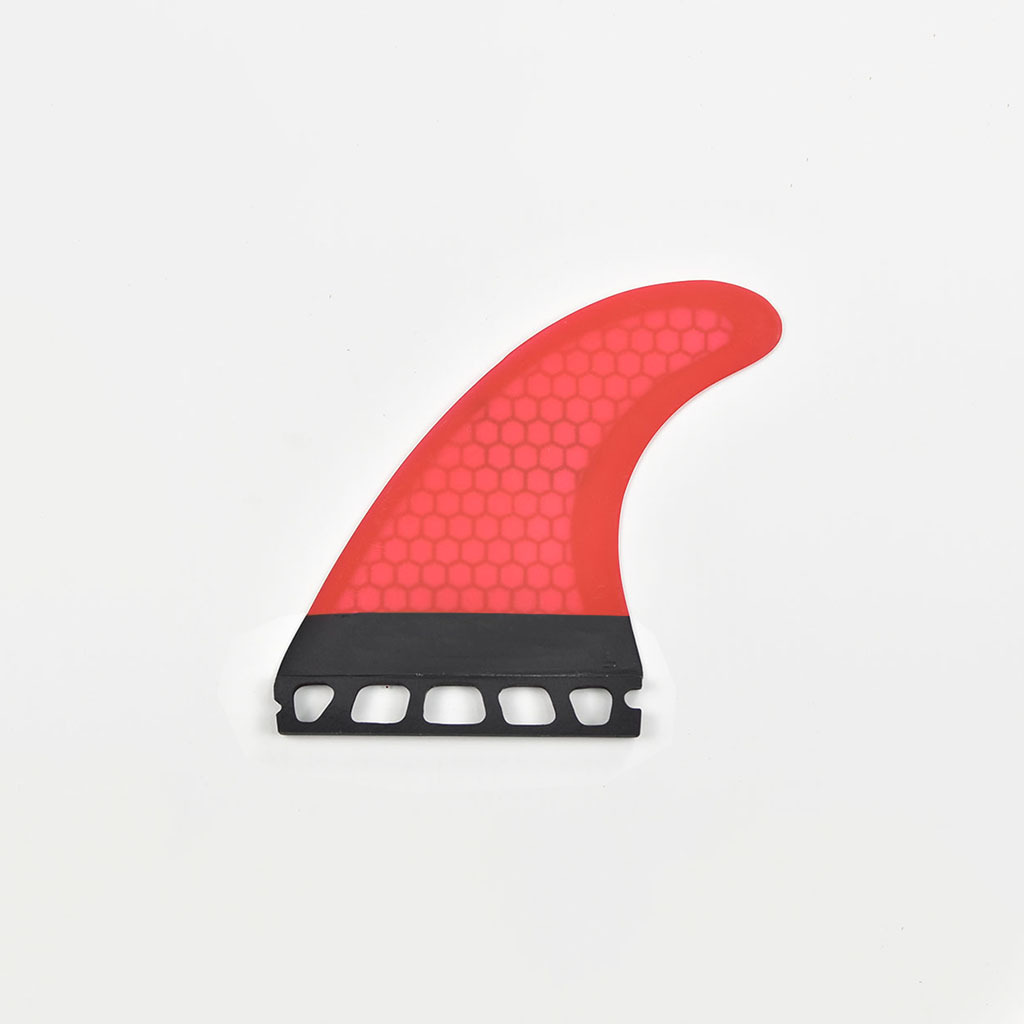
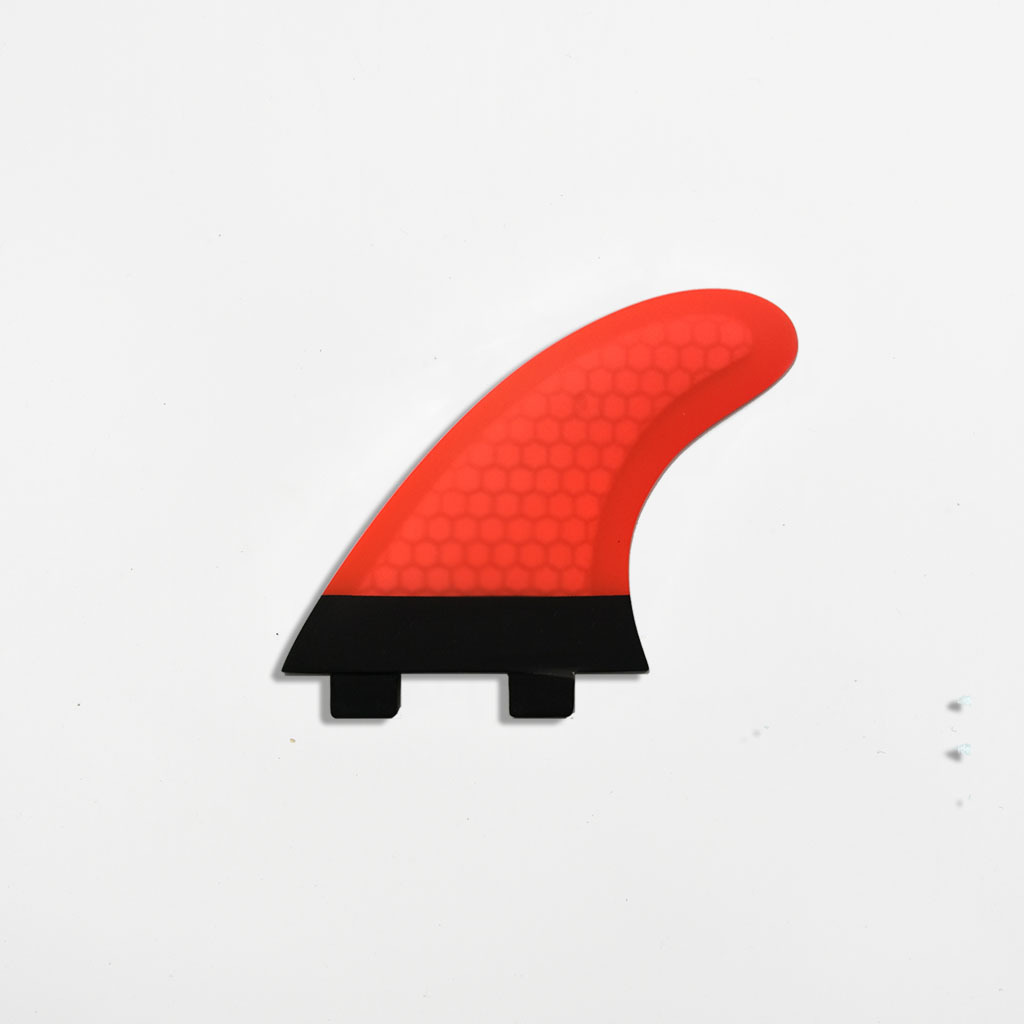
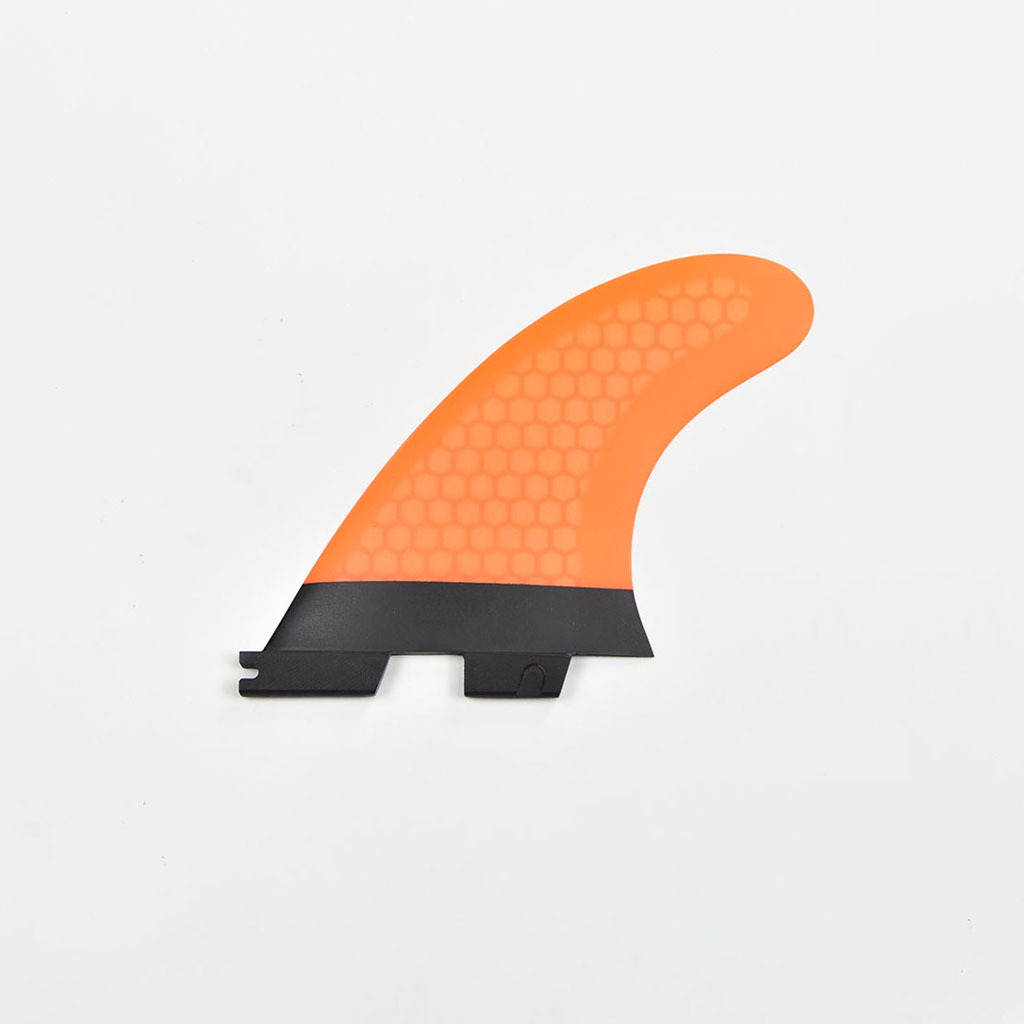
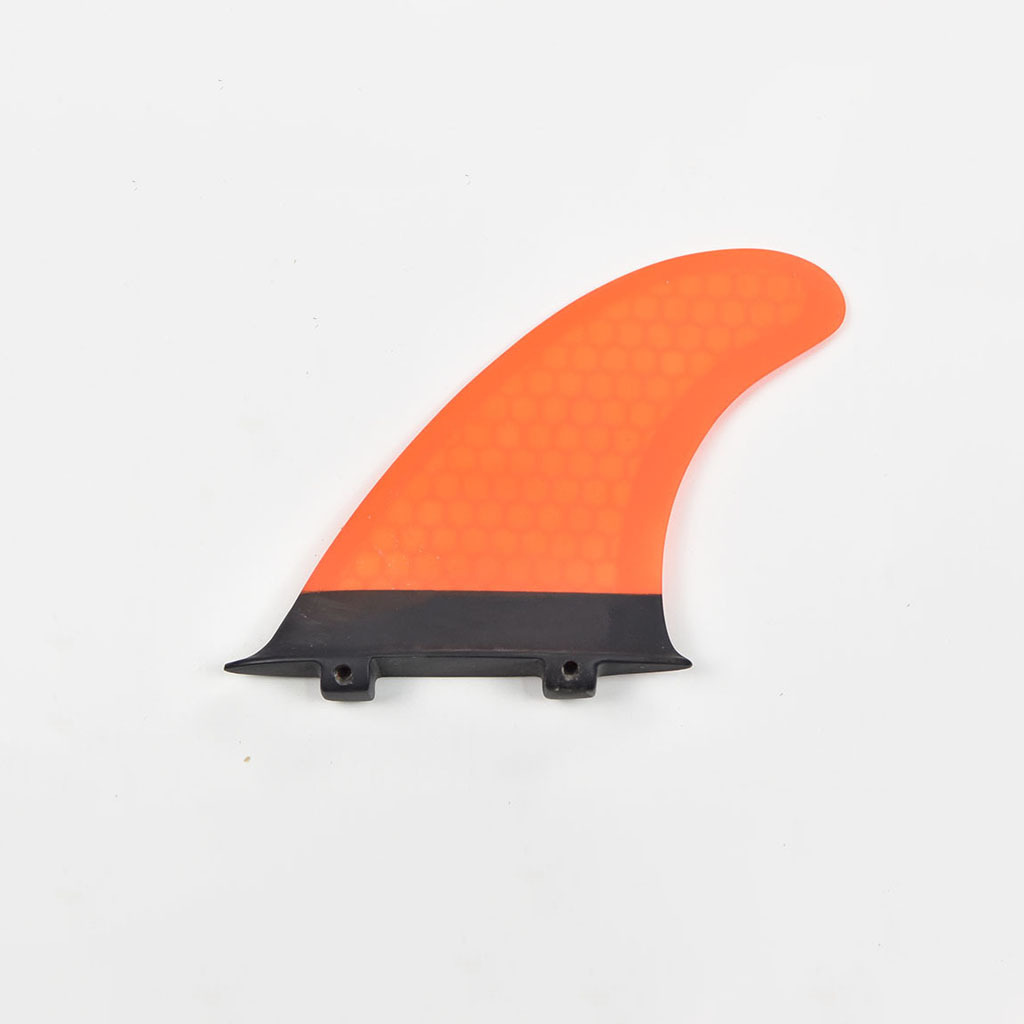
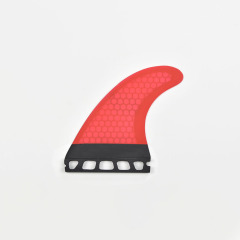
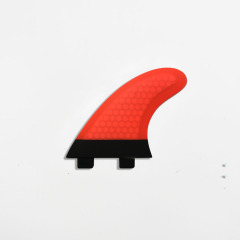
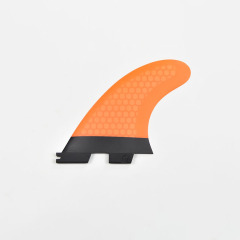
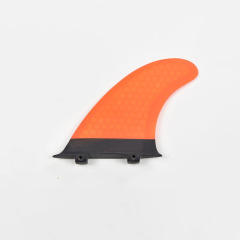
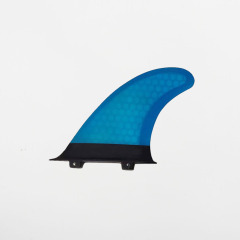
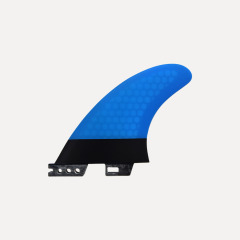
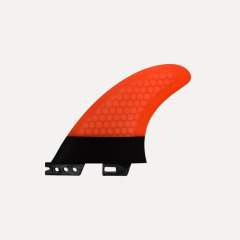
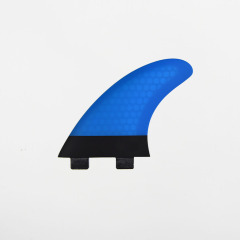
Honeycomb Template Differences
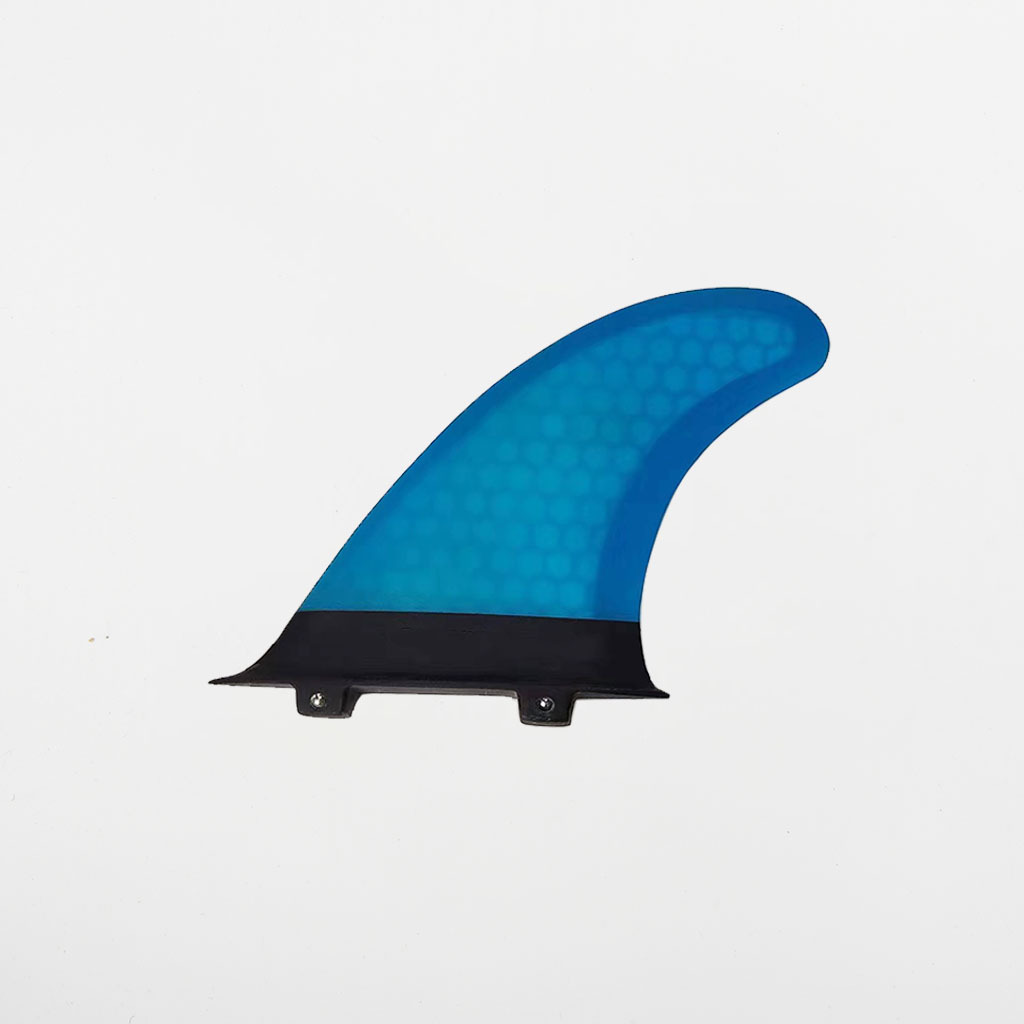
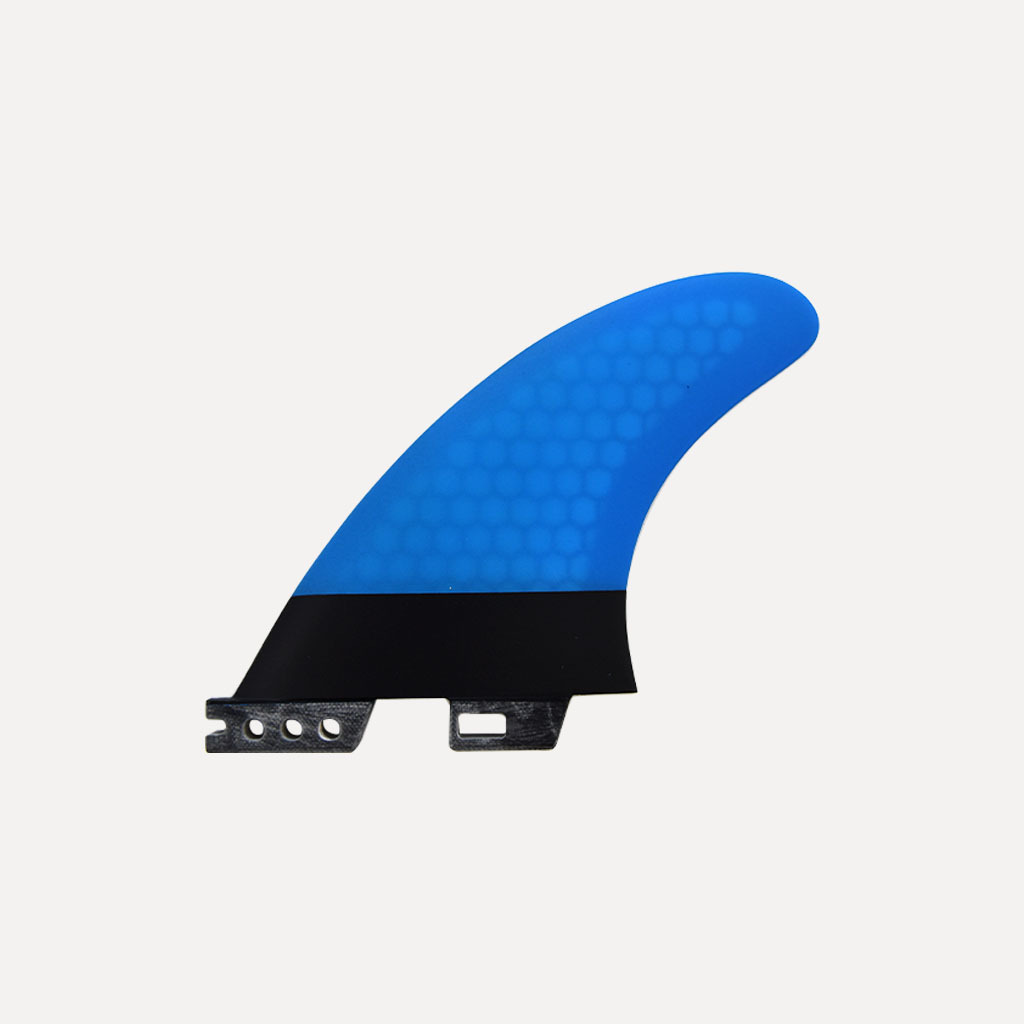
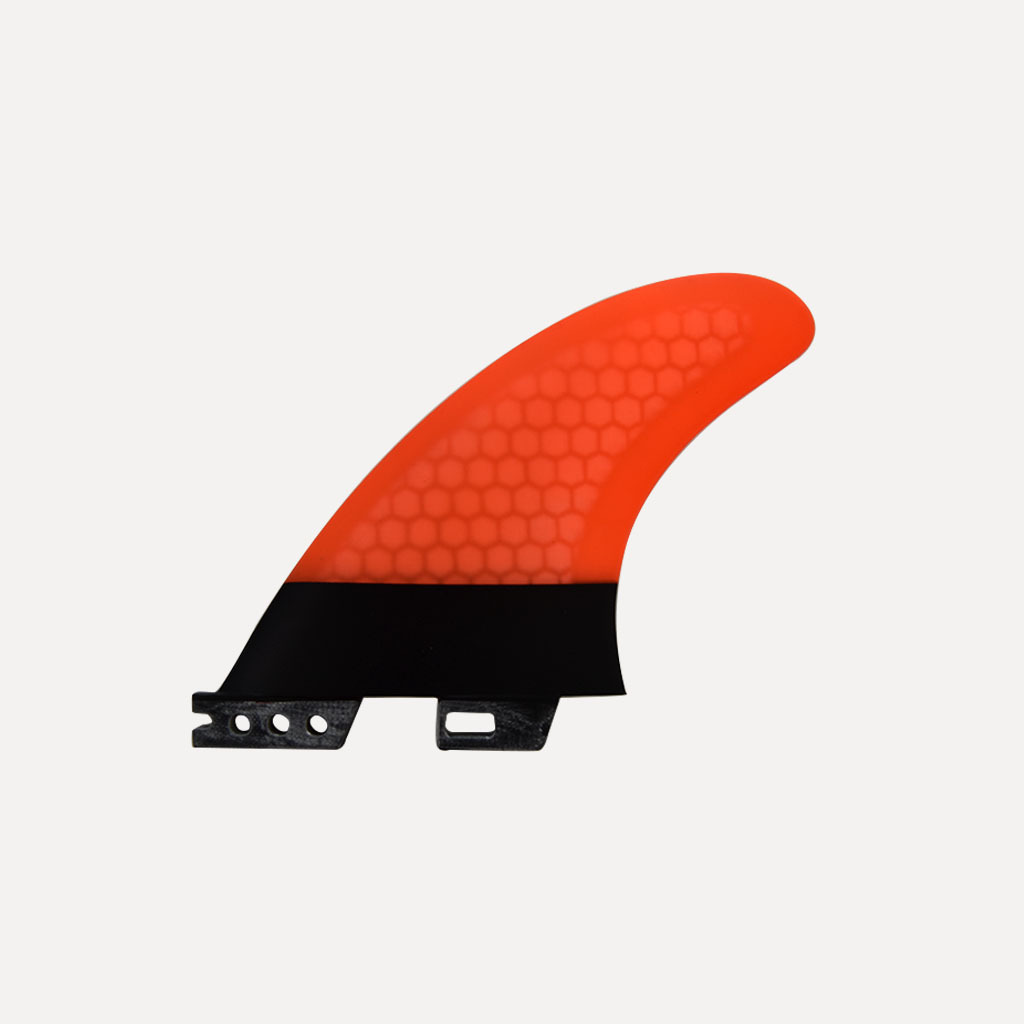
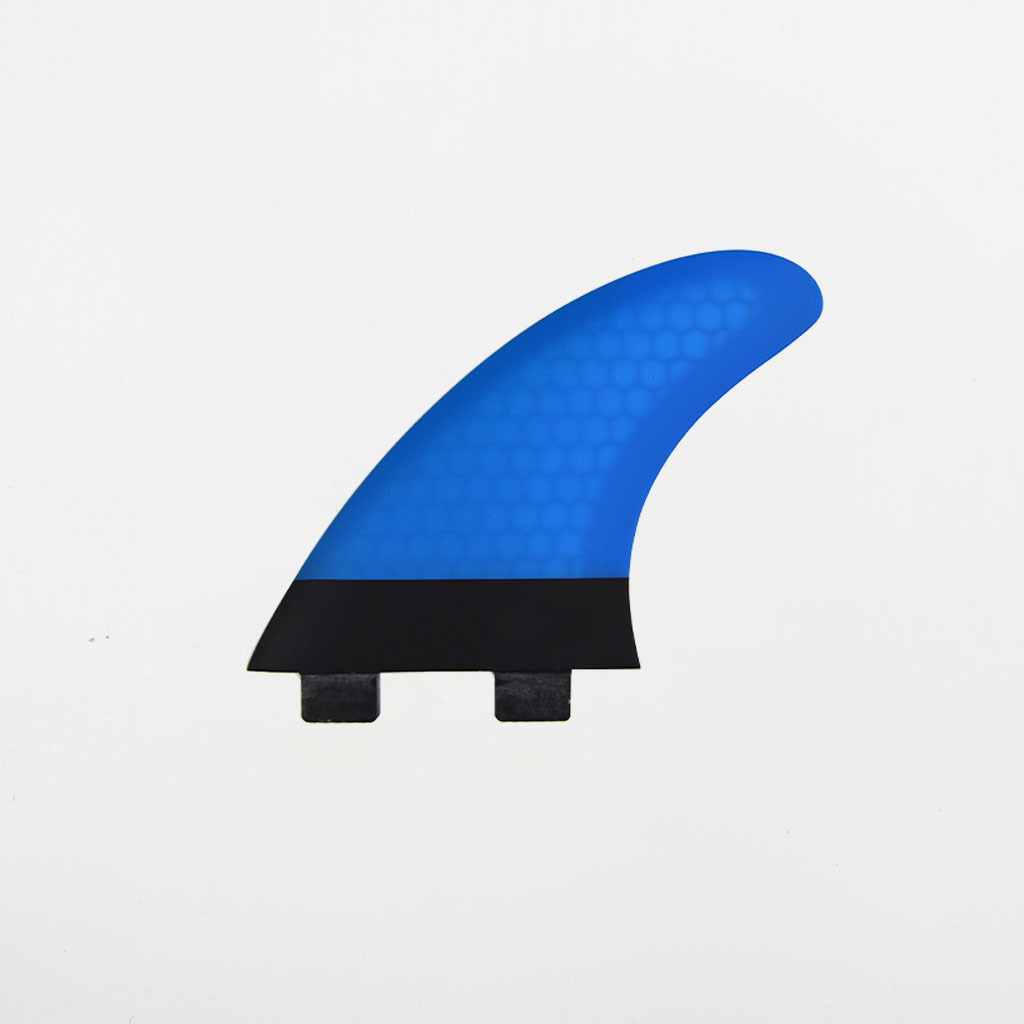
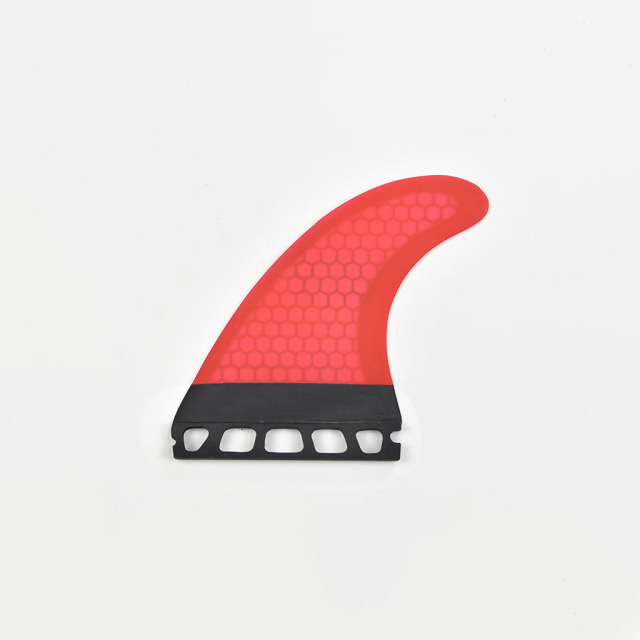
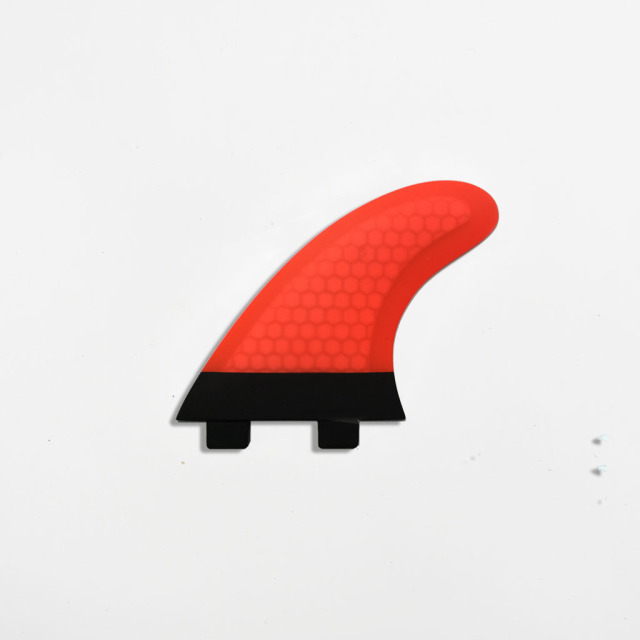
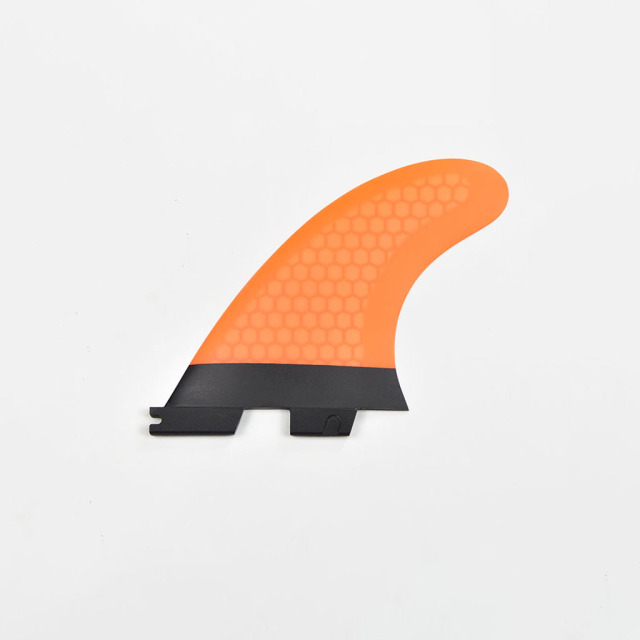
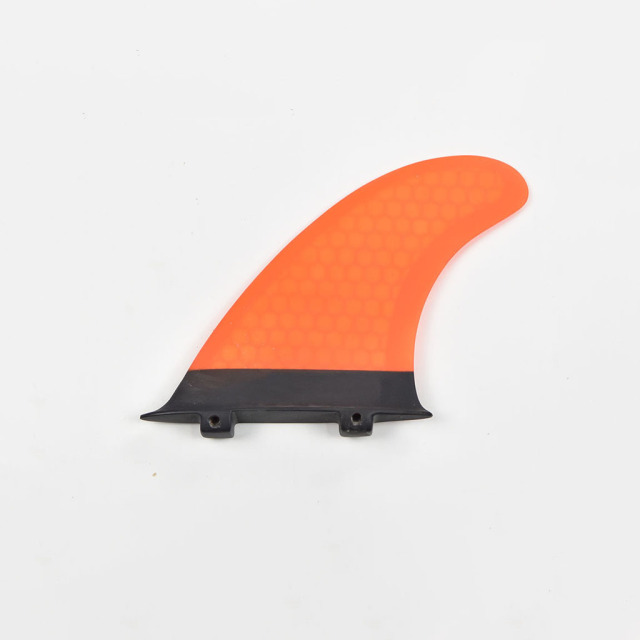
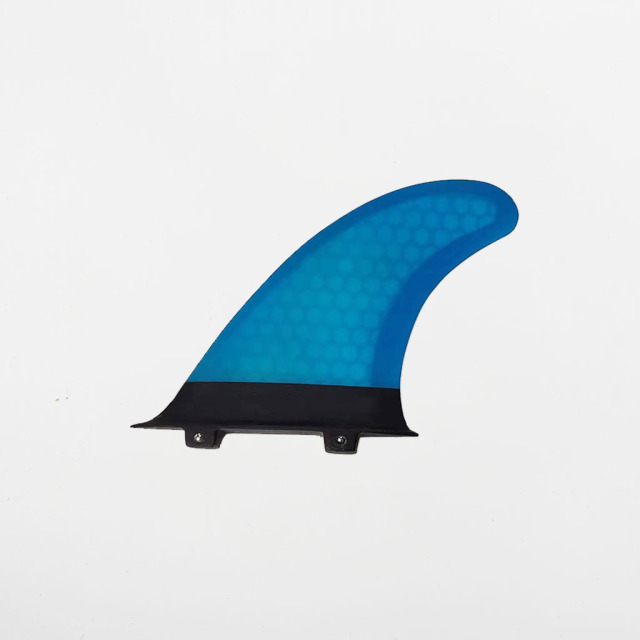
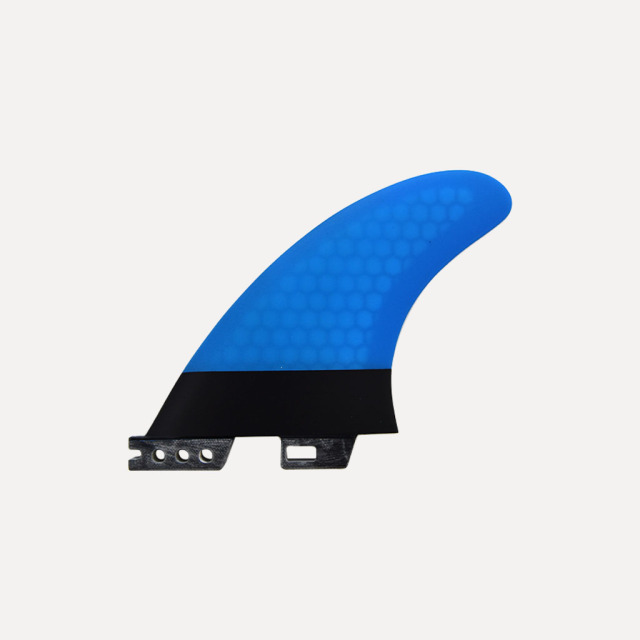
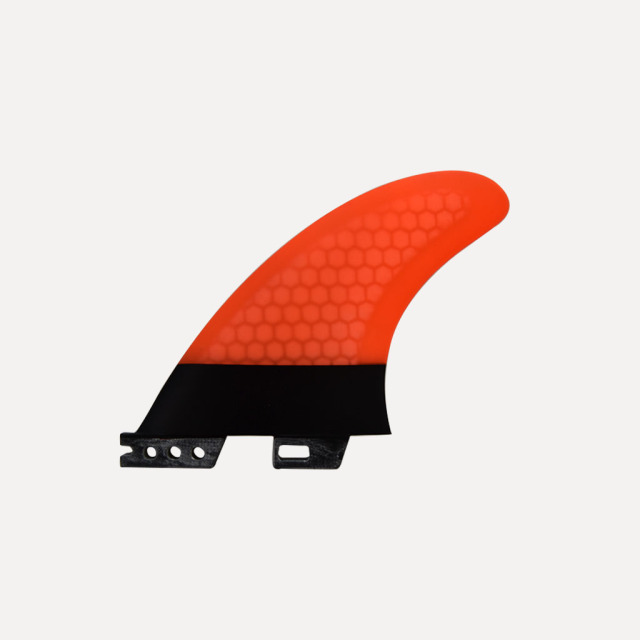
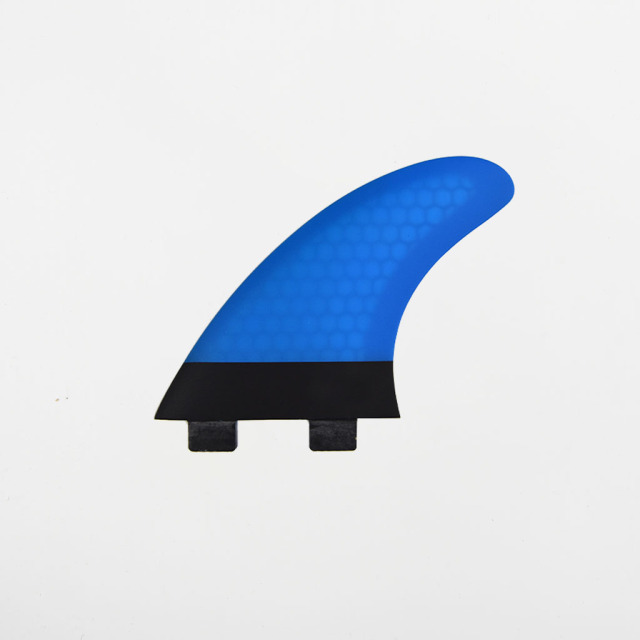
Several honeycomb fins on the same peg can look near-identical, and that is deliberate rather than a fault in the range: the core, the glass, the black base and the XS–XL ladder are shared across the family so a shop can reorder any of them without a visible mismatch on the wall. What changes from one to the next is the template itself — the sweep of the trailing edge, the area carried under the tip and the width of the base where it meets the board. Those three things decide how the fin turns, and they are the reason more than one of these honeycomb surfboard fins earns a place on the peg.
Compare the outline, not the spec sheet. Stand two fins base-down on the counter and sight along the trailing edge. A fuller tip carrying more area holds drive and suits a heavier rider or a longer board; a narrower, more raked tip releases earlier and frees the tail. Look at the base chord too, because that is how much of the fin is working against the board rather than through the water. Two fins that read the same in a small photograph usually differ by a few millimetres in exactly these places — and a customer can feel that difference on the first turn.
Give every template a job. Before a fourth set of single tab surf fins goes on the peg, or into a custom surf fins OEM line-up, decide which situation it covers that the three already there do not, and put that on the shelf label in plain words — smaller surf, everyday conditions, bigger days, heavier riders. A template with no assigned job is the one that sits unsold while its neighbours sell through, and it is also the one that makes staff hesitate at the counter.
Let weight pick the size, then let the template pick the feel. Staff should ask rider weight first, take the size from the ladder, and only then choose between outlines. That order keeps the conversation short and stops a customer buying a bigger fin than they need because they liked the look of a different shape.
Fill the size ladder before widening the shape range. A shop with XS to XL covered in one template can fit almost any rider who walks in; a shop with five templates but gaps at S and L cannot. If the budget only stretches so far, complete the ladder first and add a second outline second — a size gap loses a sale outright, while a missing alternative shape usually only costs a preference.
Let the photograph do the selling. The shape is the whole argument for stocking more than one of these, so shoot each template square-on in profile, plus a base shot showing the tab and the black finish. A buyer comparing fins on a screen cannot read sweep from a three-quarter lifestyle shot, and neither can a customer standing at the peg with nobody to ask.
Keep one fin of each size as a reference. Because the build is identical across the family, a new delivery should sit beside last season's stock without a visible difference — check it against the reference fin before it goes on the wall. That habit protects the reorder, and it is the same routine that lets a wholesale surf fins supplier and a shop work from one shared standard season after season.
If your customers mostly ride one kind of board in one kind of surf, you do not need the full spread of shapes; carry the outline that matches those boards and put the money into size depth instead. The lightweight surfboard fins feel stays the same whichever template you choose, so the decision is about matching shape to the boards on your floor, not about buying a different grade of fin.
Product Overview
Honeycomb surfboard fins sit in the busy middle of the fin wall: light enough to keep a board lively underfoot, with enough structure to hold a line when the wave stands up. This is the single tab version of the CIMI honeycomb build — a honeycomb core bonded inside a glass and epoxy skin in one closed mould, finished with a black base that drops straight into a single tab box. It is the fin a shop reaches for when a customer needs a straight replacement or a first step up from a basic moulded fin, and it covers the ladder from junior riders to the heavier end of the adult range.
Nothing about it is specialised. The outline is the all-round honeycomb template rather than a dedicated small-wave or big-wave shape — which makes it a straightforward base for a custom surf fins OEM range and is exactly why it earns its peg space: staff can fit it to most boards on the floor without a long conversation about conditions. Shops buying from a wholesale surf fins supplier usually take the whole size run and let the ladder sell itself, and because the same core, glass and resin run across the honeycomb family, a reorder sits next to last season's stock without a visible difference.
Who it is for: surf shops filling a fin wall, rental and school fleets that lose and break fins through a season, board builders finishing a new board, and riders replacing the fin they left in the sand. They all want the same thing — a fin that fits what is already under the board, in the size the rider actually needs.
Key Features
- Low swing weight. The honeycomb core takes mass out of the tail without hollowing the blade, so the board rotates and releases faster underfoot. That is what lightweight surfboard fins mean in practice: easier to break loose off the top, easier to reset through a turn, and less tiring over a long session.
- Structure where it is needed. Hexagonal cells bonded between glass skins spread load across the whole blade instead of down one spine, so the fin holds its foil and outline through a hard bottom turn rather than folding flat.
- One shape, repeatable. Closed-mould production fixes the resin-to-glass ratio and finishes both faces in the tool, so two fins of the same size come out the same. There is no hand-lay variance to explain to a customer comparing two fins on the peg.
- Single tab base. One tab seats in the box and is held by the box screw, so the fin can be set fore or aft before it is locked down. Single tab surf fins are the quickest to swap on the beach and the simplest for a shop to cover across several templates.
- A finish that shows the build. The lay-up is translucent, so the honeycomb core reads through the blade in the light and the black base gives a clean break against the board. It looks like what it is, which helps it sell from a peg with nobody explaining it.
- A full ladder from one template. XS through XL are scaled from the same outline, so a shop offers five rider weights without five designs — and a rider who changes size keeps the feel they already liked.
Material & Construction
As a honeycomb surf fins manufacturer we keep that recipe across the whole honeycomb range and through every custom surf fins OEM run, which matters more than it sounds — a shop ordering three templates and five sizes gets one build rather than three slightly different ones, and staff only have to learn the story once. The glass is the working part. Two glass skins carry load across the core, hold the foil on both faces and take the knocks a fin collects on a reef or in a board bag. On these glass fiber surf fins the skins go into the same closed mould as the core, so the blade is one bonded piece rather than a core with a cover glued over it; there is no seam to lift and no filler hiding a dry patch. Resin transfer moulding is what makes those percentages mean something. Dry glass and the honeycomb core load into the tool, resin is drawn through under vacuum, and the part cures in the shape of the mould. Because the resin quantity is set by the tool instead of by hand, weight and glass-to-resin balance stay close from fin to fin, and both faces come out finished. Epoxy does the sealing. It bonds the glass to the core, gives the blade its surface and keeps water out of the cells underneath. That is why a fin with a crack reaching the core should be retired rather than ridden: once the skin is open, salt water has a path in, and the fin will not come back to its original weight or feel.
Single Tab Fitment
- Check the box before fitting anything. Clear sand and old wax out of the slot and look at the screw thread and the box walls. A fin that sits loose usually has a box problem rather than a fin problem.
- Set the position before tightening. Slide the tab fore or aft to trim the board: as a rule, forward loosens the tail and back adds drive and tracking. Mark the spot with a pencil the first time so you can return to it.
- Seat the tab fully. Press the fin down until the base sits flush with the board. A tab that is only part-way in will stand at an angle and feel vague through a turn.
- Tighten hand-snug. Stop when the fin no longer moves. Over-tightening crushes the tab and is the usual reason a fin works loose later in the day.
- Sight down the board. Stand the board on its tail and look along the bottom: the fin should stand straight, with no twist and with its trailing edge in line with the rest of the set.
- Re-check after the first session. Screws settle and tabs bed in, so a fin that felt tight on the beach can be loose after an hour in the water.
- Know which base you are holding. These are single tab surf fins and the base is moulded for that box only — they will not seat in a double tab receptacle or in a longboard box.
- Match the board, not the other way round. If the boards on your floor take a different base, order the same outline as double tab surfboard fins or as a box fin; the honeycomb build and the size ladder are identical across the three systems.
Size & Rider Weight
- XS — under 55 kg / 120 lbs. Junior riders, small surfers and narrow boards that need less fin area. The size a school or rental fleet notices first, because the youngest riders are the hardest on fins.
- S — 55 kg to 70 kg / 120 to 155 lbs. The everyday choice for lighter adults and teenagers on a hybrid, funboard or wider shortboard.
- M — 65 kg to 80 kg / 145 to 175 lbs. The middle of the ladder and the size that covers most adult riders; the one to keep deepest in stock.
- L — 75 kg to 90 kg / 165 to 200 lbs. Stronger surfers and longer boards, where the extra area keeps a turn from sliding out.
- XL — over 85 kg / 190 lbs. Heavy riders and bigger conditions, where hold matters more than release.
- The bands overlap on purpose. A rider at 68 kg sits in both S and M, and that overlap is the useful part: stay on the smaller size for a looser tail, step up for more drive. Weight is the first filter, then move one step for board length, ability and the surf the rider actually gets.
- Counter script. Weight is the one thing staff can ask for without a seminar on conditions. If a customer is coming off a heavier glass fin, the difference in these honeycomb surfboard fins shows up first in small, soft surf, where a lighter fin lets the tail come round with less effort.
- Avoid the habitual oversize. Riders who have not tried lightweight surfboard fins before often go a size up out of caution; if the board already feels stiff and tracky, stepping down does more for the feel than changing template.
Care & Storage
Nothing about these fins is fussy. Rinse them in fresh water after salt-water use, dry them before they go back in the bag, and flush the box slot when you change fins — sand left in the slot is what wears a tab down. The glass fiber surf fins in this range only need that routine plus a look at the tab and screw each time they come off the board.
Keep them out of a closed car in direct sun and out of a bag where loose tips can knock together; a fin pocket or a sock saves trailing edges for very little money. Inspect the blade after a reef or a rocky shore session. A scuff is cosmetic, but a crack that reaches the core is not, because the skin is what keeps water out of the honeycomb — retire that fin rather than riding it. The routine does not change across the wall, whether a shop stocks single tab, double tab surfboard fins or box-fin versions.
Specifications
| Model | F25121 |
|---|
| Construction | Honeycomb core, glass fiber and epoxy resin, moulded as one piece |
| Core | Honeycomb, 50% of the lay-up |
| Reinforcement | Glass fiber, 30% |
| Resin | Epoxy, 20% |
| Moulding | Resin transfer moulding in a closed mould |
| Fin system | Single tab |
| Base | Black moulded base with a single tab |
| Finish | Translucent, with the honeycomb core visible through the blade |
| Sizes | XS, S, M, L, XL |
Range & Accessories
- Fins across the range. The same honeycomb build in other templates, plus G10 glass and carbon-framework versions, with box-fin and double tab bases for boards that need them. A shop can fill the fin wall from one family and still offer a stiffer or springier option to the riders who ask for it. - Leashes. Hypalon leashes in 6 ft, 7 ft, 8 ft and 9 ft lengths, so the leash on the peg matches the board the fin is going on — longer for longboards, shorter for shortboards and hybrids. - Traction. Tail pads, centre pads, skimboard pads and waxless pads for the grip side of the same sale. - Covers. Basic bags, regular bags, stretch covers and bodyboard bags for the customer who buys a board and needs something to carry it in. - Racks. Travel racks and tie-downs, storage racks, display racks, bike racks and wax inserts, for the shop floor and for the customer's garage. - One order instead of four. Taking the fin wall, the leashes and the pads from a wholesale surf fins supplier keeps the accessory buy on one schedule and one packing list, which is what makes a planogram reset practical rather than a week of chasing parcels.
Ordering & Delivery
- Order by template, size and system. A line reads single tab, honeycomb, size M — the size code and the base are what a picking list runs on, and it is the fastest way to stop a wrong base arriving.
- Talk to the people who mould it. You are buying direct from the honeycomb surf fins manufacturer, so questions about a template, a size gap or a mixed order go to the team that runs the tooling.
- Set the branding early. If the fins go out under your own name, send logo artwork, placement and packaging requirements before production is scheduled; changes after that point cost time.
- Agree the packing for your shelf. Say whether the fins should arrive bagged, carded or loose to carton, and how they should be labelled for your stock system.
- Confirm the commercial details before release. Ask your sales contact for current lead time, payment terms and freight options for your destination; these are confirmed per order.
- Ask about samples. If you have not handled this template before, ask your sales contact about sample availability so you can check the base, the finish and the size against your own board.
- Flag mixed sizes and systems. If an order spans several sizes or the three fin systems, say so when you send the list so picking and packing can be planned together.
Scale & Supply Capability
CIMI is a factory-based supplier with 16 years in surf and watersports hardgoods, manufacturing at our own facility rather than sourcing through traders. Chain stores, supermarkets and surf-brand stores buy from us because one supplier covers a full accessory assortment, so a season's order and its reorders can be planned together. We take on OEM and private-label work, adapting designs, colourways and branding to your programme, and we schedule production against your agreed range plan. Send us your buy list and target dates, and we will confirm what we can make and when.
FAQ
Which boards are these honeycomb surfboard fins built for?
Boards with a single tab box: shortboards, hybrids, funboards and most performance shapes. The tab drops into the slot and the box screw holds it, so there is nothing to tape or adapt. It is not a longboard box fin and it will not seat in a double tab receptacle. As a honeycomb surf fins manufacturer we also build this outline in double tab and box-fin versions, so a mixed board wall can be matched to the fins rather than the other way round.
How do these compare with the double tab surfboard fins in the range?
Same core, same glass, same all-round outline — the difference is the base. The double tab version seats on two tabs in a fixed position, while this one sits on a single tab that can be moved fore or aft to trim the board. Riders who like to experiment with fin position tend to prefer the single tab; riders who want a fit-and-forget set tend to prefer the double tab. The lightweight surfboard fins feel underfoot, quick to release and easy to reset, is common to both.
Can these single tab surf fins be supplied under our own brand?
Yes. Own-brand and custom surf fins OEM programmes are part of what we do: your logo and packaging on this build, with the template, the lay-up and the size ladder unchanged. Artwork, placement and packaging are agreed with your sales contact before production is scheduled, and it is worth settling those details early rather than at the point of shipping.
Will a size M reordered next season match the M we already stock?
It should match closely, and that comes down to how the fin is made rather than to luck. The glass fiber surf fins are moulded in a closed tool with the resin quantity set by the mould, so outline, foil and finish stay consistent between runs. Keep one fin from each size as a reference sample and check a new delivery against it — the quickest way to catch a change before stock reaches the wall.
Does one template cover the whole size range?
Yes. XS through XL are scaled from the same outline, so the fin keeps its character as it grows or shrinks instead of becoming a different design at the ends of the ladder. That is what makes the run practical to stock: a rider who moves up a size gets more area and more hold, not an unfamiliar fin. As a wholesale surf fins supplier we build the full ladder, so a size gap can be filled without switching templates.