Product Overview
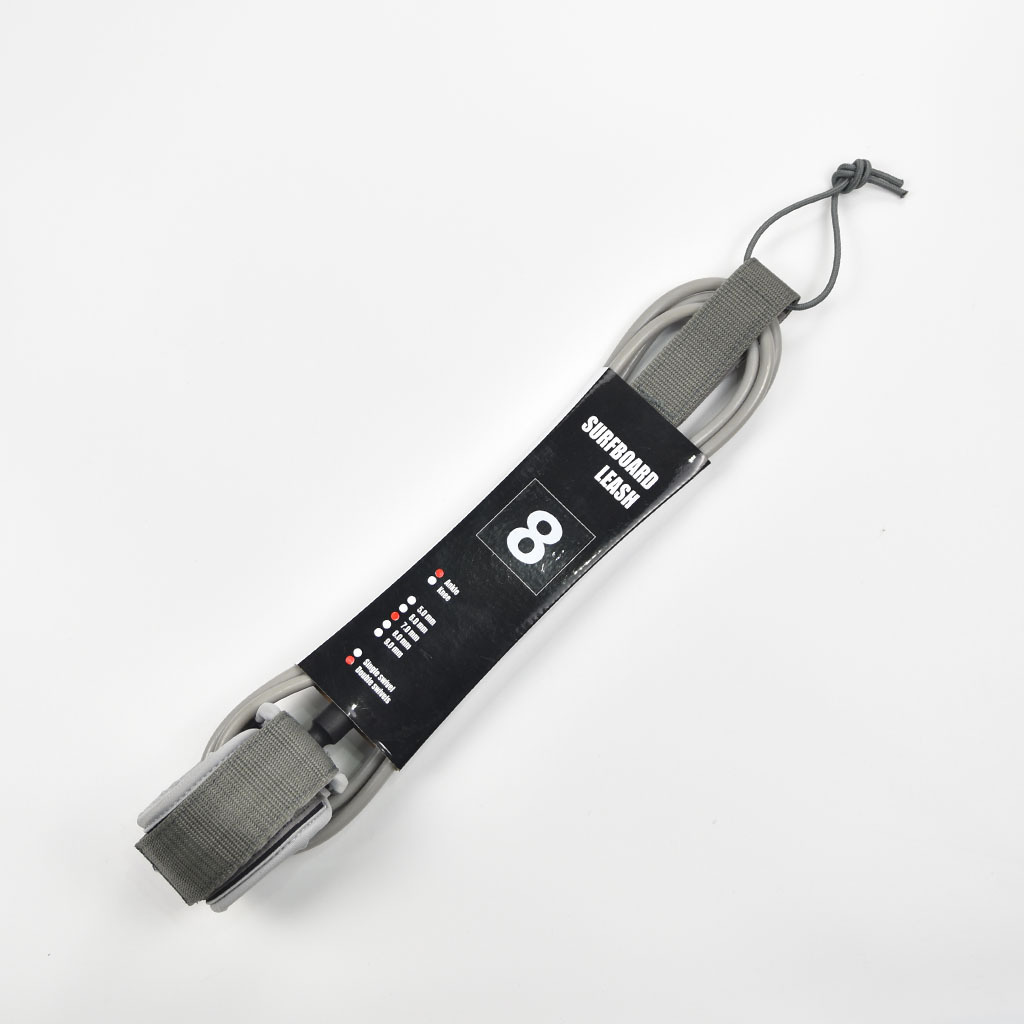
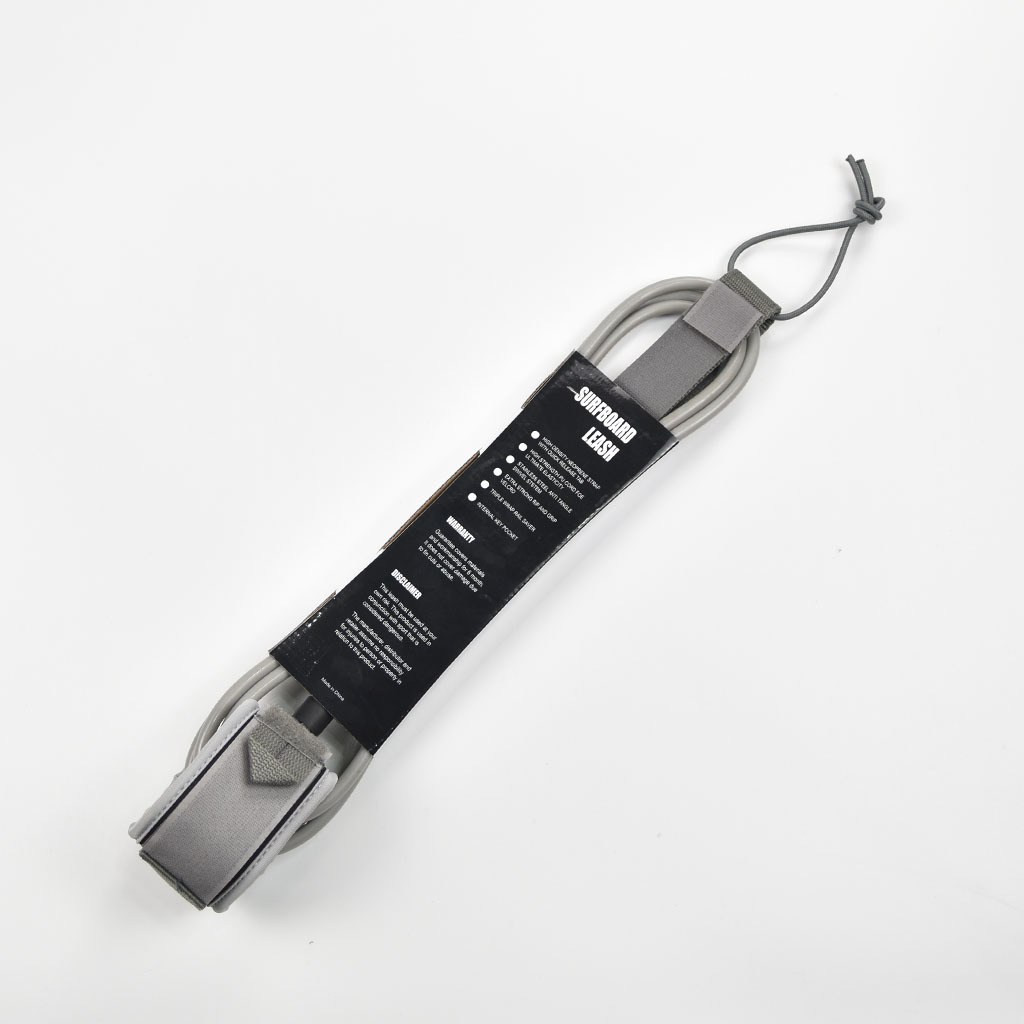
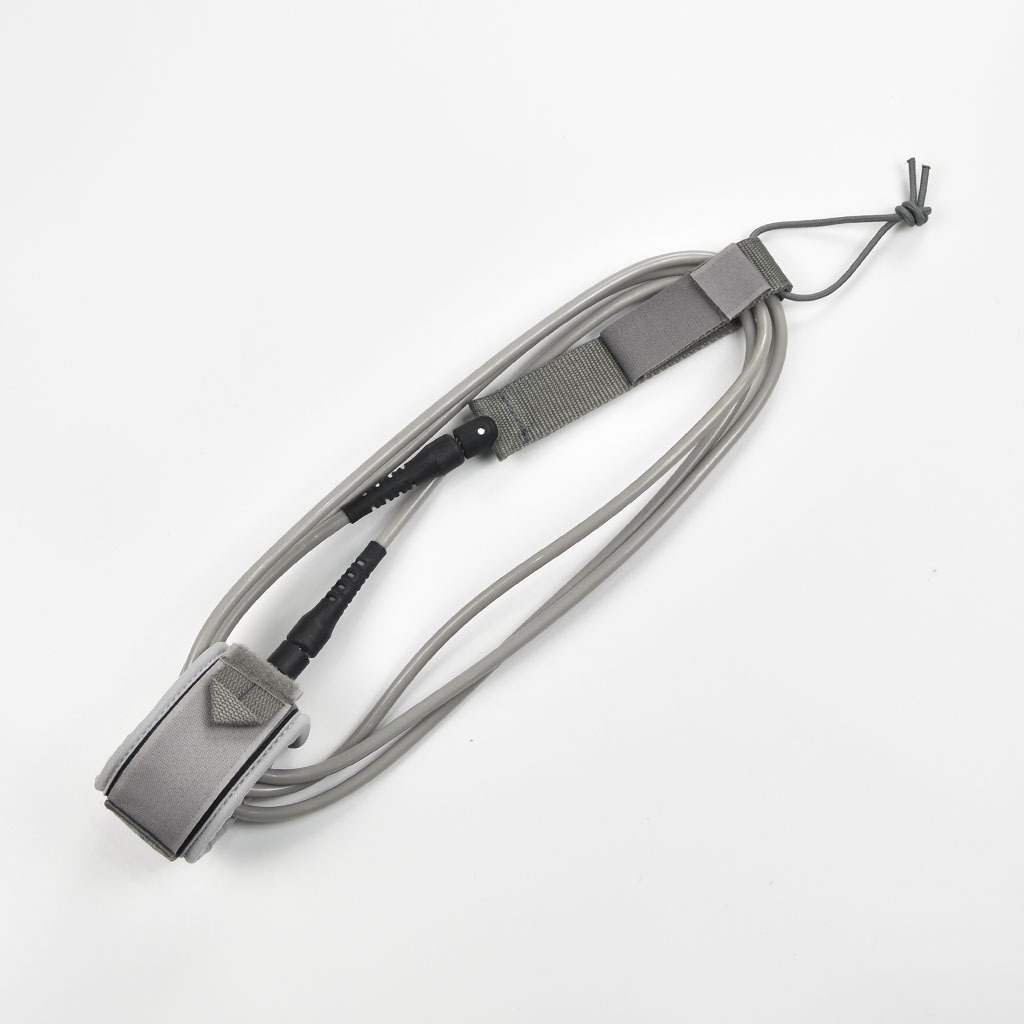
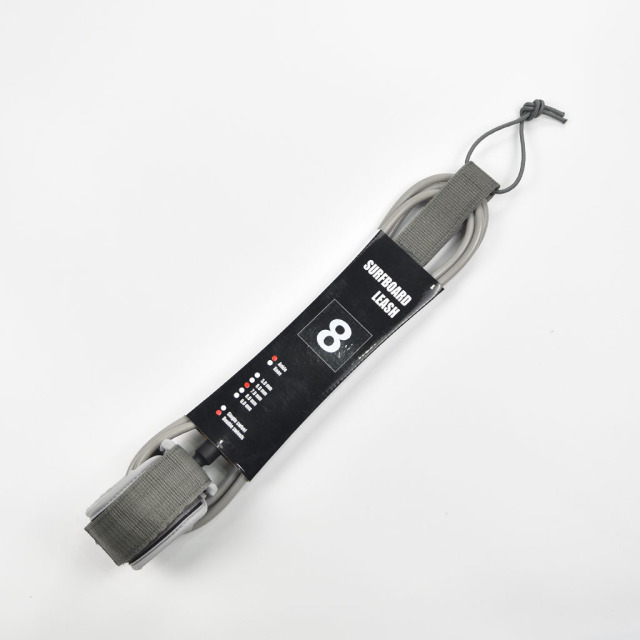
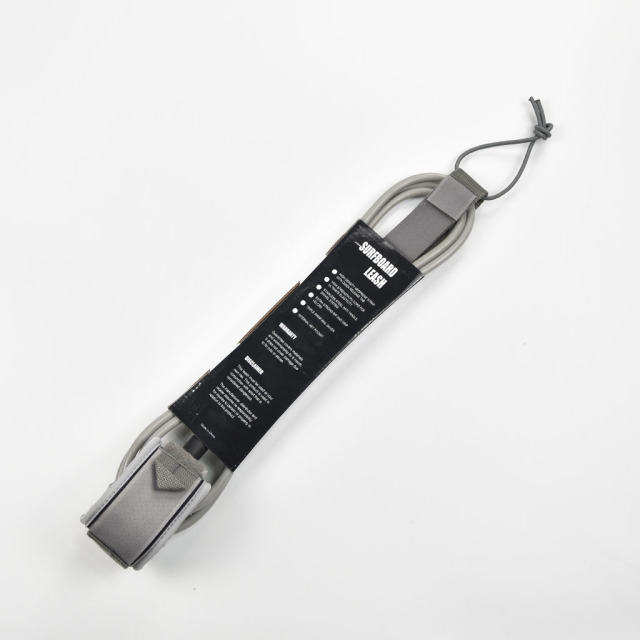
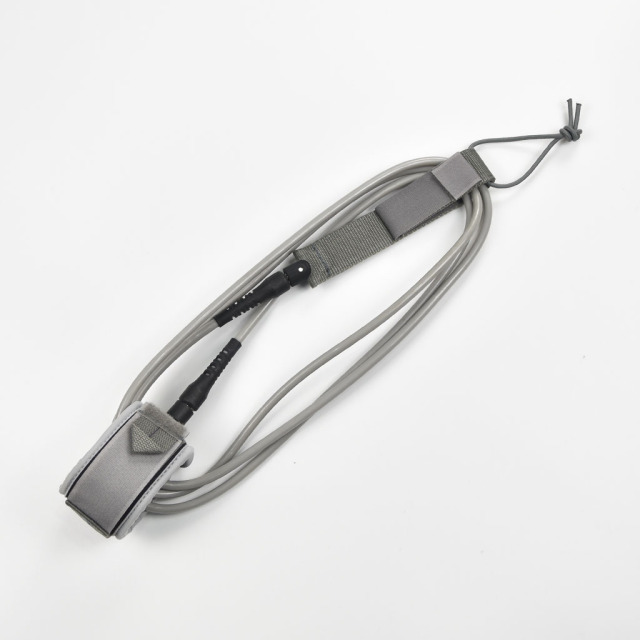
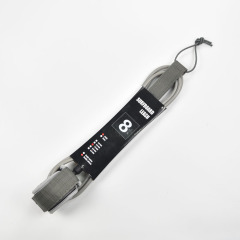
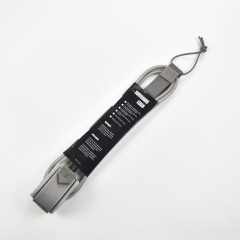
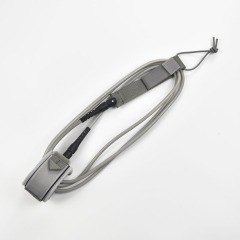
An 8ft surf leash is the length longboard riders reach for once a board is big enough to keep travelling after a wipeout, and the 7 mm cord on this model is what carries that momentum without turning into a rubber band under load. It is sized for medium surf and the all-round conditions most people actually paddle out in — a 7 mm surf leash for a heavier board, not a specialist big-wave cord, and not a thin string for a small board. The cuff is where this non slip surf leash earns its place in a range. On a board handed to a different rider every hour, that is the difference between a leash that gets re-fitted in the shorebreak and one that quietly does its job. Everything about the build is aimed at that working life. It is a piece of kit made to be issued, used and handed back out rather than admired on a shelf, which is why it turns up on rental racks as often as on wholesale walls. Shops stock it as the 8ft option on the leash wall; schools and rental centres make it the default for their longboard fleet.
Materials & Build
- TPU cord — 60% of the build. The surf leash tpu cord is the part that takes every load. Thermoplastic polyurethane is chosen because it stretches and recovers rather than going soft, so the jolt from a longboard is absorbed along the cord instead of landing straight on the plug.
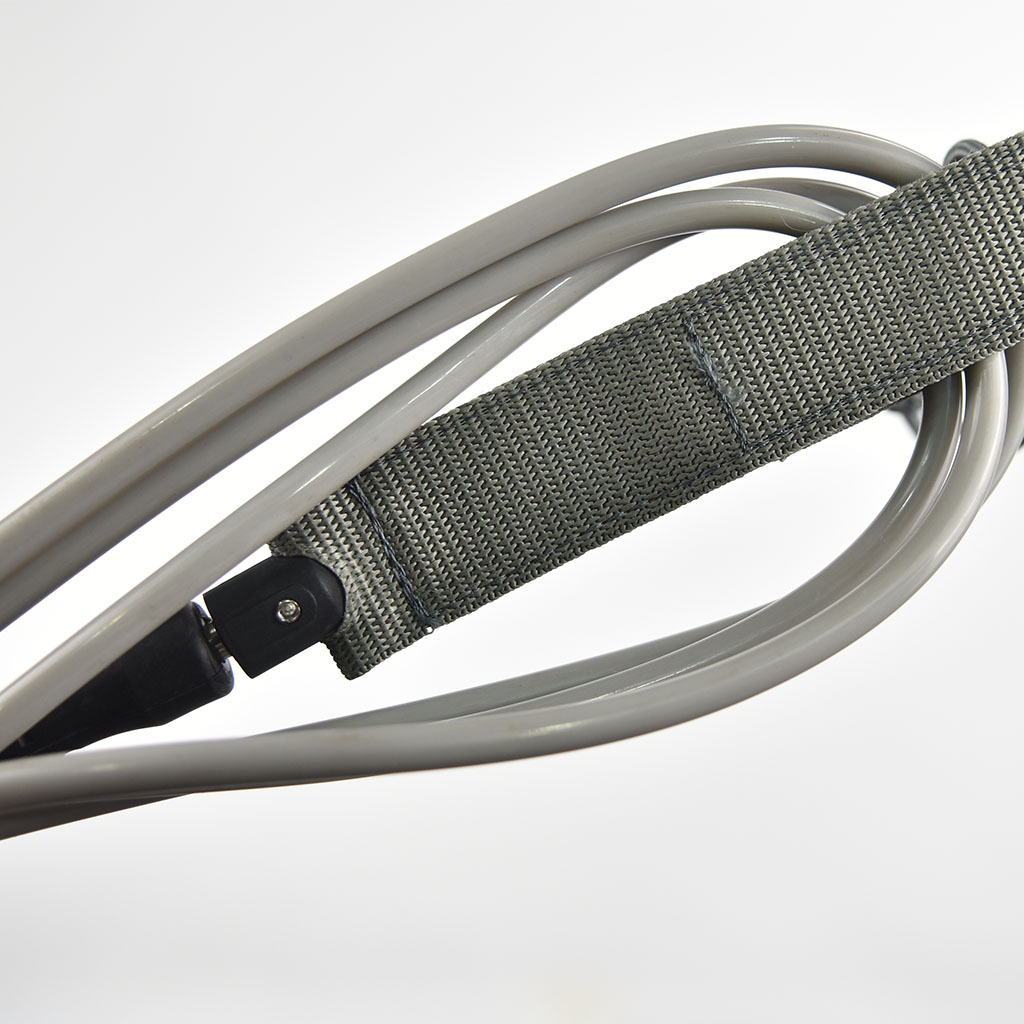
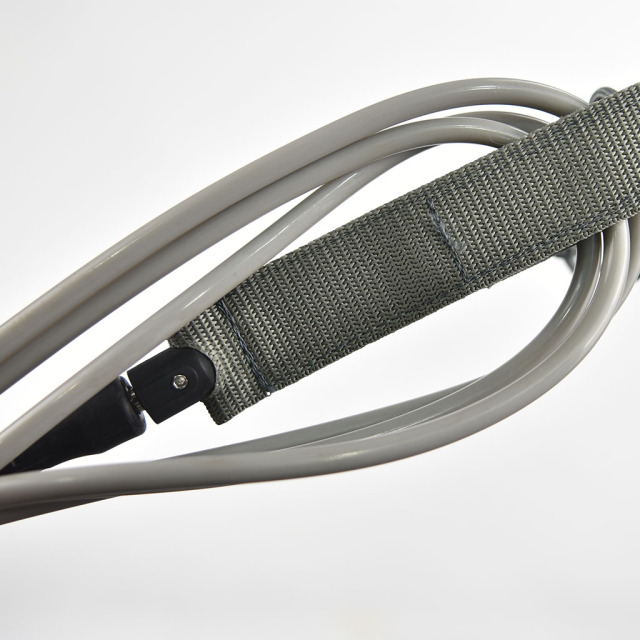
- Polypropylene — 15%. This sits in the webbing components, the rail saver included. It is light, it does not soak up water, and it does not stiffen into a board after a few sessions in the sea.
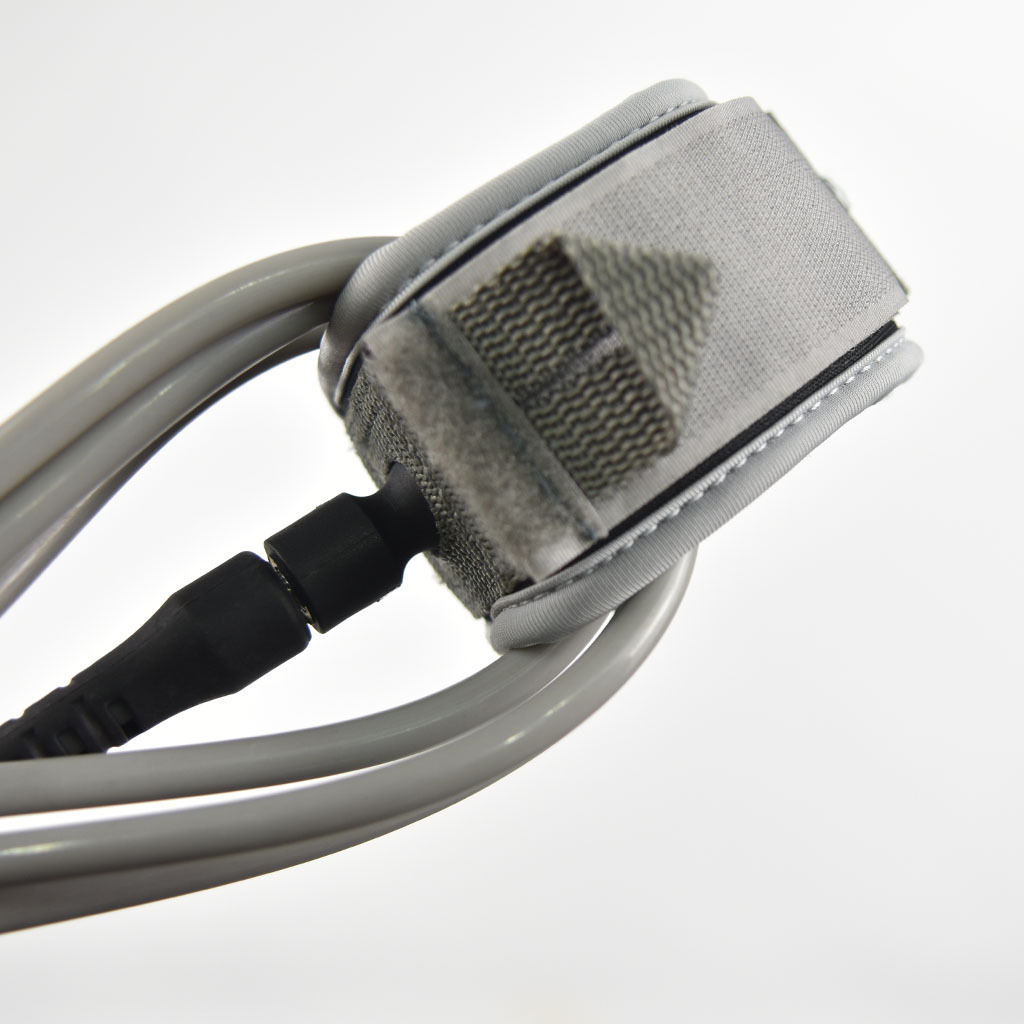
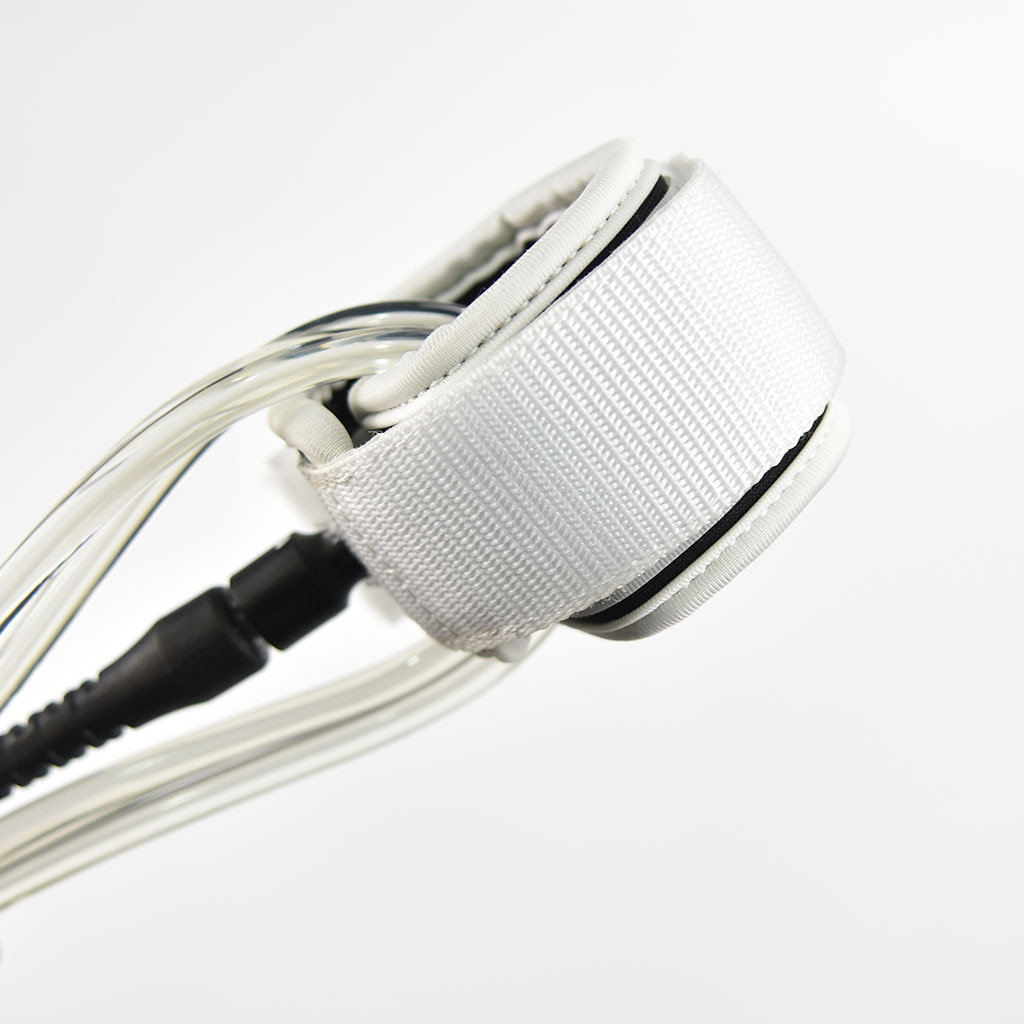
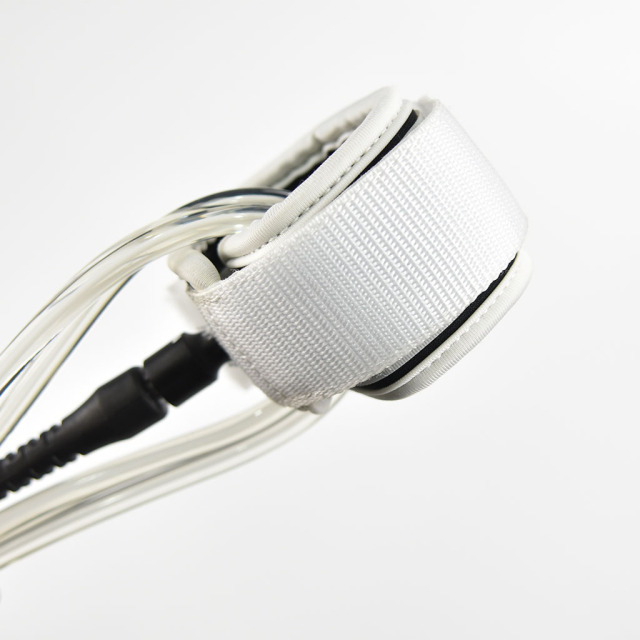
- Neoprene — 10%. The cuff padding. It is what keeps the strap comfortable against a bare ankle and what still cushions when the whole leash is soaked.
- Nylon — 10%. Adds strength to the strap and webbing, and holds the stitching that joins the components together.
- 316 stainless steel — 5%. The swivels at each end. Marine-grade stainless is specified so the joints keep turning after repeated saltwater exposure and rinsing, instead of seizing into a fixed fitting.
- Assembled in our own workshop. As a surf leash manufacturer we join the cord, cuff, rail saver and swivels ourselves rather than buying finished leashes from a trader, so the material mix above is the mix you get on every reorder.
- The cord is the heart of any leash. We specify a top-grade TPU cord because it has to stretch and recover thousands of times without taking a permanent set; a low-grade extrusion goes baggy within a season and starts transmitting shock instead of absorbing it. On a 7 mm surf leash the extra diameter over a 5 mm or 6 mm cord is what gives it authority over a heavier board in medium surf, and the memory in the material is what brings it back to shape between waves. At the board end, a streamlined rail saver spreads the pull across a patch of webbing instead of concentrating it at the leash plug. That is the spot where rails get chewed, and a wider spread of load is the simplest way to protect them. The shape is kept slim on purpose so it does not catch on the board, flap in the wind or add drag when the leash is stretched out behind a longboard. Both ends turn on 316 stainless steel swivels. Two swivels — one at the cuff, one at the rail saver — let the cord spin free at each joint, so twist has somewhere to go rather than winding up into a spring that snaps back at the rider. Marine-grade stainless is the right material for that job: it keeps the joint free-turning through salt water and rinsing far longer than a plated fitting. Taken together, the result is stable strength rather than brittle strength. The leash gives under a hard pull and comes back, which is what makes it usable session after session instead of only until the first serious tug.
Length & Board Pairing
| Board or use | What to pair it with | Why it works |
| Shortboards 5ft8–6ft2 | 6ft leash in 5–6 mm cord | A short cord keeps the rail clear on fast turns |
| Fish and hybrids 6ft6–7ft0 | 7ft leash in 6–7 mm cord | Matches the board without trailing slack |
| Mid-lengths 7ft2–7ft6 | 7 mm surf leash in 7ft | Lets a bigger board roll out instead of snapping back |
| Longboards 8ft0–9ft1 | This 8ft surf leash | The length the board was designed around |
| Beginners on longboards | 8ft longboard surf leash | Enough cord that the board is not pulled back into the rider |
| Schools and rental fleets | One length across the fleet | Fewer sizes to sort at the desk |
Non-Slip Cuff & Ankle Fit
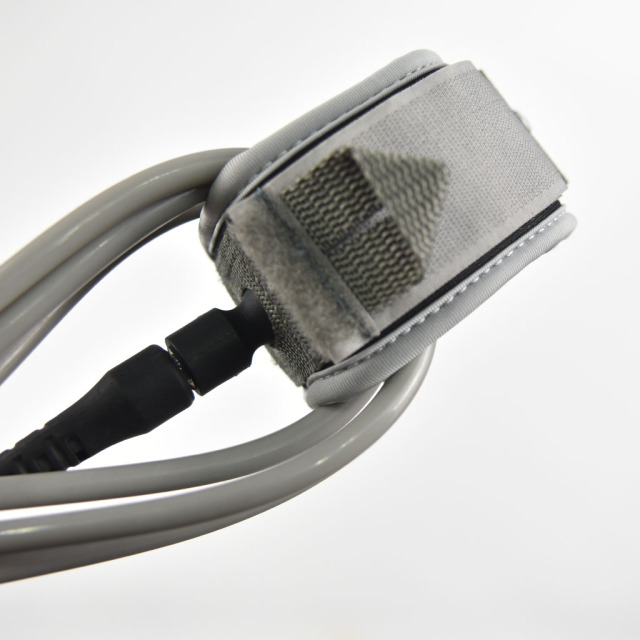
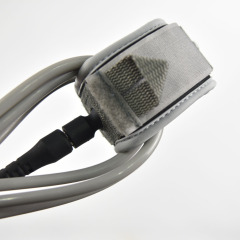
- Grip without over-tightening. A wet ankle is a slippery surface, and most leashes are done up too tight to compensate. On a non slip surf leash the cuff's inner face holds rather than glides, so the strap can be closed firmly rather than tourniquet-tight — which matters over a two-hour session. - One cuff, many riders. The strap has enough overlap to close over a bare summer ankle and still sit correctly over a winter boot, so a rental desk does not have to keep two cuff types on the shelf. - Where it should sit. Fasten the cuff just above the ankle bone rather than directly on it, with the strap flat and untwisted. A twisted strap is the usual reason a cuff works loose. - Getting out in a hurry. The cuff releases on a pull at the tab, which is what you want when a leash wraps around a fin or a rock and the board is still moving. - Padded where it counts. Neoprene cushioning under the strap stops the cuff biting on the ankle during a long paddle out, when a hard edge becomes noticeable quickly. Tell your sales contact what you have in mind; as a custom surf leash supplier we will confirm what is possible for your quantity.
8ft Cuff Variant Comparison
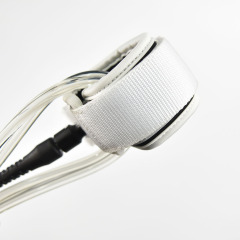
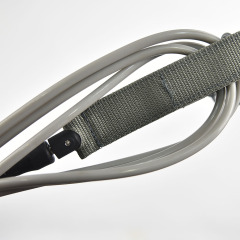
- Standard padded cuff — L22513. The regular 8ft surf leash carries the double-padded neoprene cuff. It feels soft from the first session and is the version most riders already know, so it fits a board that goes home with one owner and keeps the same leash on it. - Non-slip cuff — L22513N, the model on this product. The non slip surf leash here keeps the same cord and hardware as the standard version — only the inner face of the cuff changes. - Hypalon cuff — L22512H. The third 8ft option replaces neoprene with an ultra-light Hypalon cuff built to stay strong. It puts the least weight on the ankle of the three and is the one longboarders ask for when they want the lightest cuff they can get on a 9ft board. - What does not change. All three run the same 8ft x 9/32 in (2.4 m x 7 mm) top-grade surf leash tpu cord, the same streamlined rail saver and the same 316 stainless steel swivels at both joints, on the same 60% TPU, 15% polypropylene, 10% neoprene, 10% nylon and 5% stainless build. The choice between them sits entirely in the cuff. - The same three cuffs at 6ft. This is not a one-length decision: the 6ft 6 mm line runs L22811 standard, L22811N non-slip and L22811H Hypalon, so a shop or a school can keep one cuff type across both lengths on the wall instead of splitting its fitting habits between sizes. - Reading the code. The letter after the number marks the cuff — nothing for the standard padded version, N for non-slip, H for Hypalon. Order from the full code on the label rather than the stem alone, because the stem does not tell you which cuff is inside the packaging. - Stocking them side by side. A wall that carries all three answers the individual rider who wants a familiar feel, the rental desk that needs the strap to stay put, and the longboarder moving up to the lightest cuff — three different buyers served from one cord specification.
Rental Fleet & School Use
A shop sells one leash at a time; a school or rental centre issues dozens a day, and the questions are different. The first is whether one length can cover the fleet. For a longboard fleet running from 8ft0 to 9ft1, it can: an 8ft model covers that whole spread, so the desk only has to track one leash size instead of three, and a leash returned with the wrong board is easy to spot.
The second question is the cuff. Shared leashes are fastened by people who have never used that leash before, often in a hurry and often with cold hands. A cuff that keeps its grip means fewer stops to re-tighten and fewer boards lost to a strap that slipped — which is why we make this the non-slip version rather than the plain one for fleet use, and why a longboard surf leash that stays put is worth more to a rental operator than one that merely feels soft.
The third is supply. Fleet buyers tend to order before the season and reorder through it, so a wholesale surf leash programme needs the specification to stay the same from batch to batch. Because we are a surf leash manufacturer building the cord, cuff and swivels ourselves, the leash that arrives on the second order is put together the same way as the first, and a fleet does not end up with two subtly different leashes on the same rack.
If your fleet mixes longboards and mid-lengths, send us the board list and we will help you work out which lengths to standardise on and which ones to hold as spares.
Care & Storage
- Rinse the leash in fresh water after every session. The surf leash tpu cord, the webbing and the swivels all last longer when salt is not left to dry on them.
- Dry it out of direct sun and away from a hot car window. Prolonged heat is the one thing that ages urethane faster than use.
- Coil it loosely for storage. Never hang a leash by the cord, and never store it stretched between two points, or it will take a set.
- Shake sand out of the cuff and strap before it goes back in the tub. Grit under the hook-and-loop closure is what stops a strap gripping properly.
- Rinse the swivels and spin them while they are wet. A swivel that already feels stiff will not free itself once it dries out.
- Keep sunscreen, wax remover and other solvents off the cord. They are not kind to urethane, and a contaminated cord is a weak cord.
- Carry it coiled rather than wrapped around the board under tension, especially between the shop and the beach.
Specifications
| Model | L22513N |
|---|
| Length | 8 ft / 2.4 m |
| Cord diameter | 9/32 in / 7 mm |
| Cord material | Thermoplastic polyurethane (TPU) |
| Cuff | Non-slip neoprene, padded, hook-and-loop closure |
| Swivels | 316 stainless steel, double swivel |
| Rail saver | Streamlined webbing rail saver |
| Material composition | 60% TPU, 15% polypropylene, 10% neoprene, 10% nylon, 5% stainless steel |
| Wave conditions | Medium-sized waves and all-round conditions |
| Board pairing | Longboards and mid-lengths from about 8 ft to 9 ft |
| Cuff fit | Adjustable over a bare ankle or a wetsuit boot |
Matching Gear Range
- Leashes from 5ft to 9ft. 5 mm, 6 mm and 7 mm cords, with regular, non-slip and Hypalon cuffs, so the same wall covers shortboards, mid-lengths and longboards.
- Fins. Honeycomb in single tab and double tab, plus timber, G10 glass and nylon options and the fin accessories that go with them.
- Traction. Tail pads, centre pads and waxless deck pads for the boards the leash is going on.
- Covers. Basic bags, regular bags, stretch covers and bodyboard bags for storage and transport.
- Racks. Travel rax and tie-downs, storage racks, display racks and bike racks for the shop floor or the school van.
- One wholesale surf leash and accessory order. Pull the leash, fins, pad, cover and rack onto a single order and the assortment arrives as a matched set rather than five unrelated deliveries.
- Custom work across the range. As a custom surf leash supplier we also take on branding, colour matching and packaging requests, so a school or a shop chain can carry its own identity across the whole set.
Ordering & Delivery
- Send your list: how many leashes at each length, which cord thickness, and which cuff type you want on each. 2. 3. Ask your sales contact about sample availability and current lead times before you commit a season's volume. 4. Confirm the packaging and carton configuration that suits your peg display, your rental store room or your own label. 5. Confirm the shipping terms and destination with our team; they vary by volume and route. 6. Every wholesale surf leash order is quoted from its own confirmed specification, so a change to cord, cuff or packaging is re-quoted rather than absorbed. 7. Confirm payment terms and any import documentation you need, and tell us early if the order has to align with a season start. 8. For reorders, quote the original reference so we can match the build and the packaging exactly.
Scale & Supply Capability
CIMI is a factory-based supplier with 16 years in surf and watersports hardgoods, manufacturing at our own facility rather than sourcing through traders. Chain stores, supermarkets and surf-brand stores buy from us because one supplier covers a full accessory assortment, so a season's order and its reorders can be planned together. We take on OEM and private-label work, adapting designs, colourways and branding to your programme, and we schedule production against your agreed range plan. Send us your buy list and target dates, and we will confirm what we can make and when.
FAQ
How is this different from the regular 8ft leash in your range?
The cord, rail saver and swivels are the same — both are 8ft surf leashes on a 7 mm cord. The difference is the cuff: this model uses the non-slip neoprene cuff, while the regular version uses the standard padded cuff. For personal use either works; for a board that is issued to a different rider every day, the non-slip cuff is the one to specify.
Does a 7 mm cord feel heavy on a smaller board?
It can. A 7 mm surf leash is built for medium surf and heavier boards, and on a shortboard in small waves the extra diameter is more leash than you need — a 5 mm or 6 mm cord in a shorter length feels lighter and less draggy. On a longboard or a mid-length the thickness is the point: it holds the board without stretching like a thin cord would.
Can we order this leash with our own shop or school branding?
Yes. As a custom surf leash supplier we take on branding and strap detailing for shop, school and private-label programmes. Send your sales contact the artwork and the quantities you have in mind, and they will confirm what can be applied to the cuff and what the production schedule allows.
How do we know when a leash should be retired rather than kept in service?
There is no fixed replacement interval — it depends on use. The practical test is the surf leash tpu cord itself: run it through your fingers and look for nicks, flat spots, a chalky surface or sections that stay kinked after you straighten them. Any of those means the cord has lost the memory that absorbs a wipeout, and the leash should come out of the fleet before it fails in the water.
Do the swivels and rail saver arrive already fitted?
Yes. The leash comes fully assembled — rail saver at the board end, swivels at both joints, cuff ready to fasten. As a surf leash manufacturer we build that assembly in our own workshop rather than buying in finished leashes, so there is nothing to thread or tie before the first session and nothing extra to order.
Can this leash be used on a shortboard as well as a longboard?
It is a longboard surf leash first. On a shortboard the 8ft length leaves a lot of slack, which tangles more easily and can wrap around a rail during a fast turn. If your fleet runs both shortboards and longboards, keep a shorter 6ft or 7ft length alongside this one so each board gets a leash matched to its size.