Product Overview
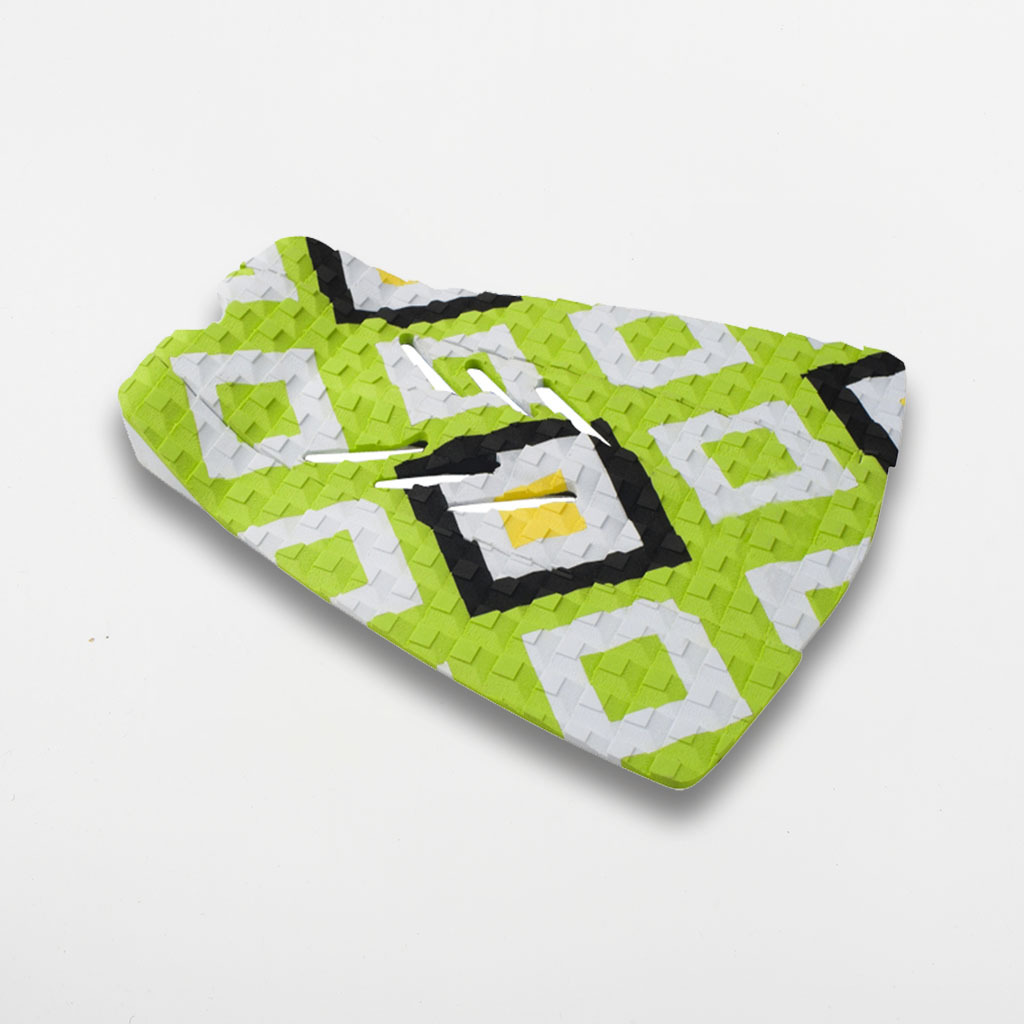
A three-piece surf traction pad that gives the tail of a board a defined, textured platform for the back foot. The set is cut into three separate pieces with a square tread, so each section sits flat on its own part of the tail curve instead of bridging it and lifting at the corners. The 3M adhesive backing is applied at the factory, which means the pad goes down without extra glue, weights or drying time. Fitting is a deck-side job rather than a workshop one: clean the tail, dry-fit the pieces, then press them into place. That makes this surfboard tail pad a sensible line for replacement demand as well as for new-board assembly, because a rider with a slick, worn tail can re-grip a board in a few minutes with nothing more than a clean cloth and a dry day. The square tread keeps the look neutral and even across a deck, which helps when a shop wants one design language across several board models instead of a different graphic on every tail.
Board Fit & Tail Compatibility
Tail shapes vary more than most buyers expect. A rounded pin pulls the outer pieces inwards, a squash lets them sit square, and a swallow leaves the stringer area open between them, so the pad has to be dry-fitted rather than assumed. On a longboard traction pad layout the same three pieces simply travel further apart, usually with a centre pad ahead of them to cover the area the back foot crosses on a bigger board.
Measure the deck where the back foot actually lands, not at the very tip of the tail. A surfboard traction pad should cover the zone the foot moves through during a turn; if the pad stops short of that zone, the rider ends up with grip in the wrong place and bare deck where the pressure is.
Because we are surf board manufacturers ourselves, tail fit is something we can answer before a run is scheduled: send the deck width at the pad position and the tail shape, and we will tell you whether the three pieces of the tail pad surfboard sit inside the outline as standard or need to be spaced out. That is a much quicker conversation than discovering the problem at fitting time.
Fitting & Adhesive Application
- Strip old wax from the tail, rinse with fresh water and let the deck dry completely — adhesive will not bond to a waxy or damp surface.
- Dry-fit all three pieces before peeling any backing, and mark the outline with tape or a pencil so each piece goes back in the same place.
- Set the centre piece of this surfboard tail pad first, lining its front edge up with where the back foot naturally lands, then add the two outer pieces.
- Peel a short section of backing at a time and press from the middle outwards, working trapped air ahead of your thumb.
- Press each piece firmly across its whole surface, with extra attention on the edges, which is where water gets under first.
- Fit at room temperature and let the board stand for a while before it goes back in the water — a cold deck or an immediate session weakens the first bond.
- Check the gaps between pieces with a fingertip once the tail pad surfboard is down; even spacing looks deliberate and keeps the tail symmetrical.
Square Pattern & Deck Coverage
- Tail pad surfboard fit: the outer two pieces are cut separately, so they can angle in or out with the tail instead of creasing where a single sheet would have to bend.
- Square tread: a grid of raised blocks gives an even, predictable feel under the back foot, with grip edges running both across and along the deck rather than in one direction only.
- Traction pad surfboard spacing: on a narrow tail the pieces sit close together and read as one pad, while a wide squash or swallow tail takes small even gaps that spread grip across more of the deck.
- Back-foot reference: the front edge of the centre piece gives the rider something to feel for when the foot slides back after a turn, which keeps the stance repeatable across a session.
- Wax-free tail: the textured surface grips bare, so the tail stays clean, the deck needs no re-waxing between sessions and a rack of boards keeps a consistent feel.
Grip & Care
- Fresh-water rinse: salt dries into a film that dulls the tread, so a quick rinse and a soft brush after a session keeps the blocks standing up.
- Matching the rest of the deck: a longboard traction pad performs most reliably when the area ahead of it carries either a centre pad or a fresh wax coat, so the foot never crosses a slick strip.
- Mild cleaners only: solvent cleaners and adhesive removers soften the backing, so soapy water is all the pad needs.
- Heat management: a board left in a hot car or direct sun softens the adhesive, so store it in the shade between sessions.
- Traction pad for surfboard fleets: school and rental boards need a monthly edge check, since they are in and out of the water far more often than a privately owned board.
- Edge check: run a fingernail along the border every few months; a small lift can be pressed back down while the adhesive underneath is still tacky.
Specifications
| Part number | T27046 |
| Product type | Traction pad surfboard, three-piece tail format |
| Intended use | Traction pad for surfboard tails and rear decks |
| Pieces per set | Three separate pieces |
| Tread pattern | Square |
| Adhesive | 3M, pre-applied with peel-off backing |
| Deck position | Rear deck, under the back foot |
| Board types | Shortboards, funboards and longboards |
| Finish | Supplied to the approved sample |
| Own-brand options | Pattern, colour and labelling arranged with our team |
Assortment & Ordering Notes
- Build the buy list by pattern, quantity per store and the tail widths you are fitting, so one conversation covers the whole pad order.
- Confirm the pattern and colour of the surf traction pad against a physical sample before production is scheduled.
- Agree packaging and labelling for the traction pad surfboard sets if they carry your own brand — this is where a schedule can move, so settle it early.
- Keep the approved sample on file as the reference for repeat orders, so the second batch matches the first.
- Confirm quantities, production timing and shipping terms with our team before the season build; those commercial details are agreed per order.
- Leashes | Regular leashes, non-slip strap, Hypalon strap, bodyboard leash and SUP leash Fins | Honeycomb, honeycomb carbon, timber, G10 glass and nylon fins, plus fin accessories Traction | Tail pads, centre pads, skimboard pads and waxless pads Covers | Basic bag, regular bag, stretch cover and bodyboard bag Racks | Travel racks and tie-downs, storage racks, display racks and bike racks Wax and inserts | Wax and insert accessories for shop counters
Scale & Supply Capability
CIMI is a factory-based supplier with 16 years in surf and watersports hardgoods, manufacturing at our own facility rather than sourcing through traders. Chain stores, supermarkets and surf-brand stores buy from us because one supplier covers a full accessory assortment, so a season's order and its reorders can be planned together. We take on OEM and private-label work, adapting designs, colourways and branding to your programme, and we schedule production against your agreed range plan. Send us your buy list and target dates, and we will confirm what we can make and when.
FAQ
What is included in one set?
One set is a single surfboard traction pad made up of three separate pieces in the square pattern, with adhesive backing already applied to each piece. Order one set per board; the pieces are packed and supplied together rather than as individual units.
Does the pad grip without wax?
Yes. The raised square tread on this surf traction pad is designed to be ridden bare, and it holds better clean than waxed. Wax belongs on the bare deck ahead of the pad, not on the tread itself — keep the blocks clear and the grip stays consistent.
Will it work as a longboard traction pad too?
Yes. A surfboard tail pad and a longboard pad use the same three pieces; on a wider tail they are simply spaced further apart, often with a centre pad ahead of them. The square tread stays identical, so a shop can carry one design across shortboards and longer boards.
Can we order it under our own brand?
We produce private-label traction pads for surf brands and chain accounts: your pattern, colours and labelling are built to an approved sample that stays on file for repeat runs. As surf board manufacturers we are set up for this kind of programme, so the pad does not have to go out under our name.
How do I remove a worn pad?
Warm it gently with a hairdryer on a low setting, slide a plastic scraper under one corner and peel slowly, keeping the pad close to the deck as it comes away. A traction pad for surfboard use that has hardened in the sun usually releases in one piece, while a cold one tends to tear. Wipe the residue with a soft cloth and a little mild cleaner, then let the deck dry before fitting a replacement.