
• T00340 SURF TRACTION TAIL PADS
  • T00340 SURF TRACTION TAIL PADS
  • T00340 SURF TRACTION TAIL PADS
  • T00340 SURF TRACTION TAIL PADS

T00340 SURF TRACTION TAIL PADS

No.T00340
PIECES: 3 PATTERN: DIAMOND ADHESIVE: 3M
  • T00340 SURF TRACTION TAIL PADS
  • T00340 SURF TRACTION TAIL PADS

Description

Diamond Tail Pad Overview

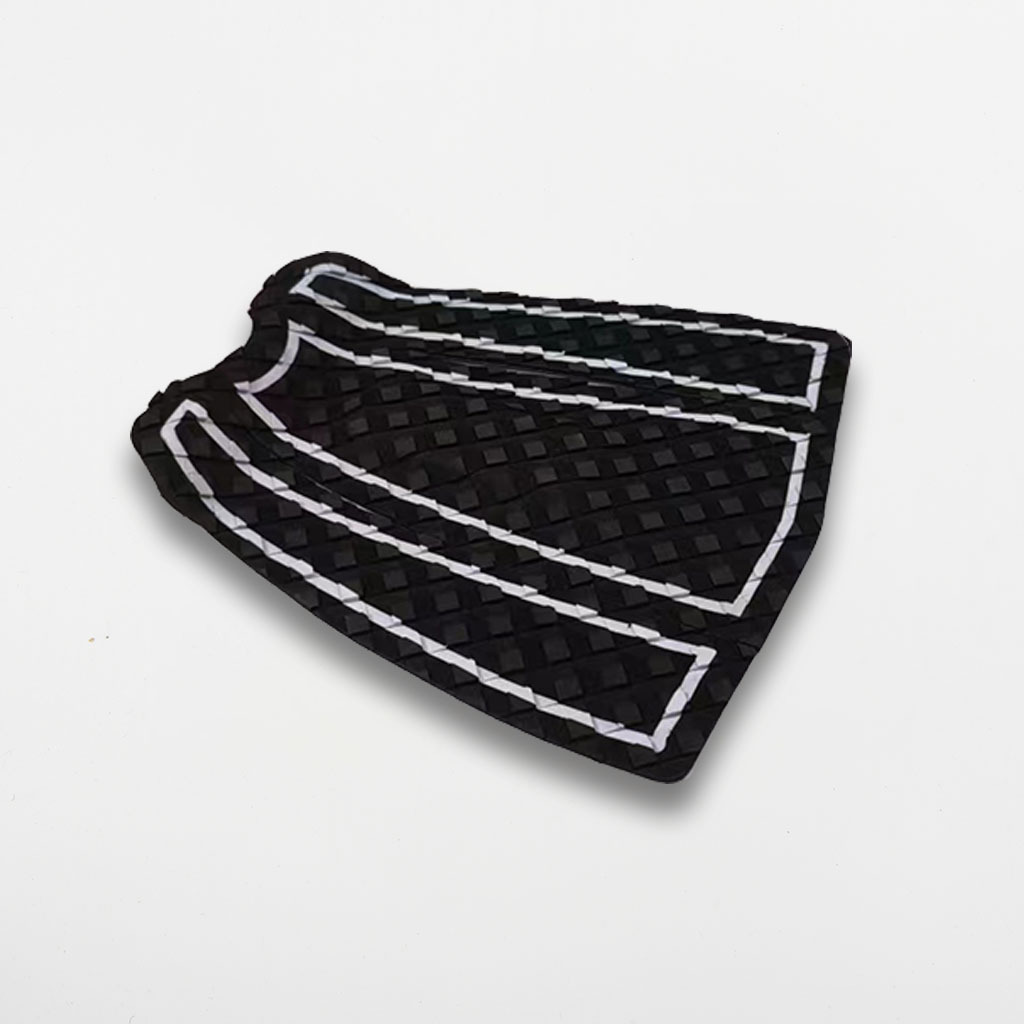
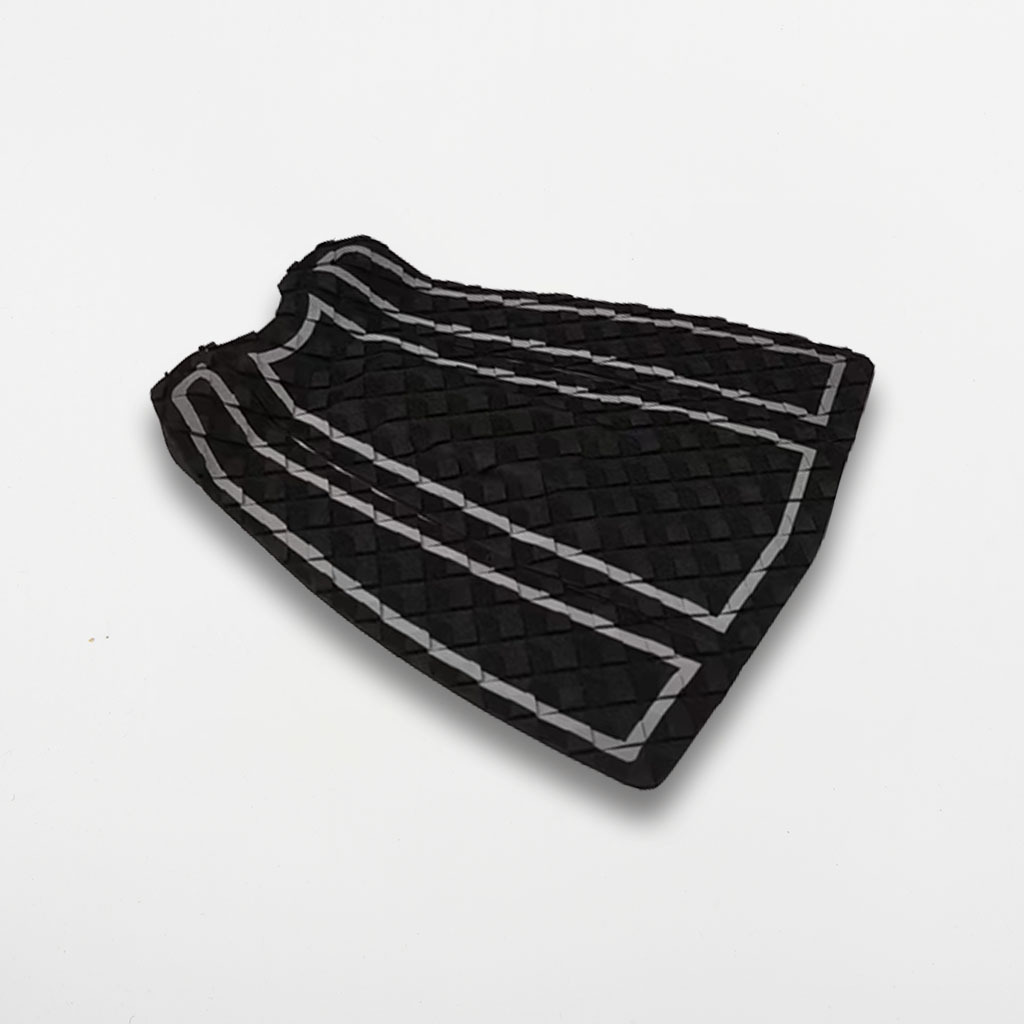
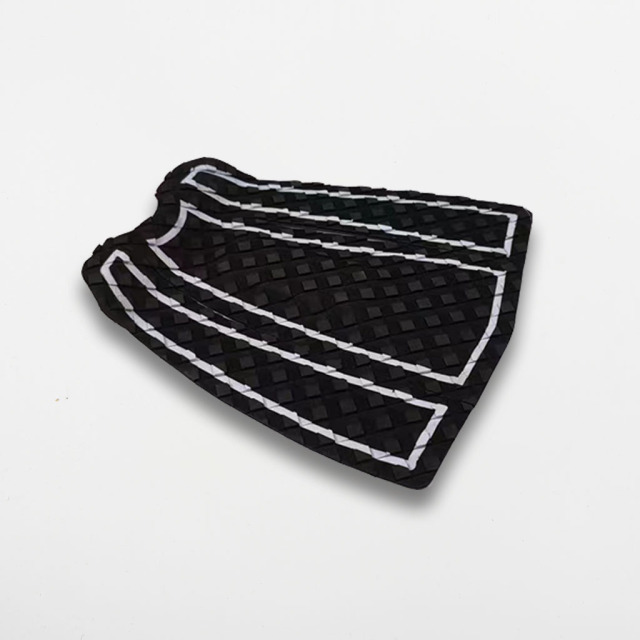
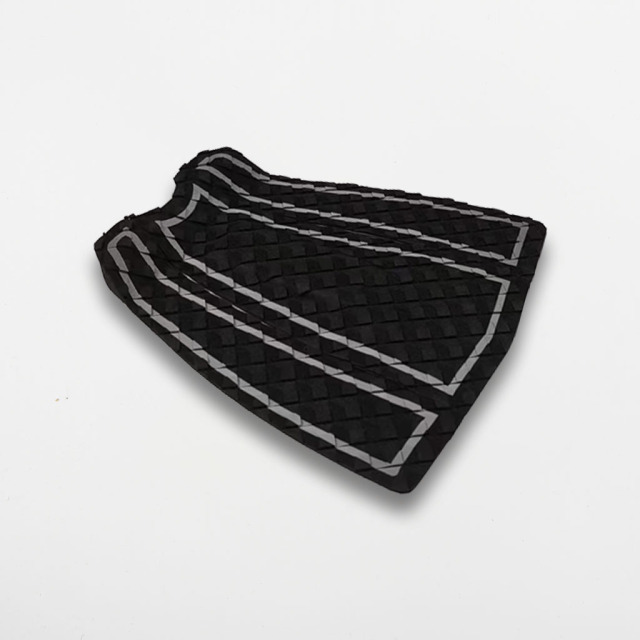
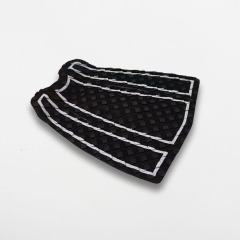
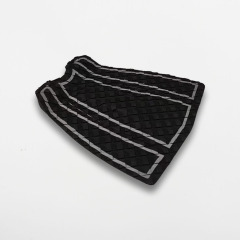
T00340 is a surf traction pad for the tail of a surfboard, cut in a diamond pattern and supplied with an adhesive backing. The set is built for the place where the back foot drives through turns: the deck surface is embossed for grip, the outline is trimmed with a contrasting edge, and the panels sit together as a compact footprint across the tail. Wholesale buyers and board builders use a pad like this to finish a new board, refresh a worn deck, or add a replacement option to the accessory wall. Because the panels are separate, the fitter can centre the layout on the stringer and spread the side panels to suit the tail width instead of forcing one large sheet onto the board. The pad is a tail-specific accessory: the right choice for shortboards and other tails that accept this compact panel footprint, and a longboard traction pad only where the tail offers the same flat zone; check the tail width and rail shape before you commit a production run.

Diamond Grip & Deck Feel

  • Diamond tread under the back foot: the raised diamond pattern gives the rider a defined contact point when weight shifts through a turn, so the foot reads the deck instead of sliding across a gloss finish.
  • Embossed, not printed: the grip texture is part of the pad surface, with a grid-like relief that stays visible as the pad wears. That matters on a surfboard tail pad that will be stood on session after session.
  • Shield-shaped three-panel footprint: the contoured outline follows the tail rather than sitting as a plain rectangle, so the finished board looks intentional and the side panels can wrap toward the rail.
  • A traction pad for surfboard use, not a full-deck grip: it covers the tail zone where the back foot lands, while the rest of the deck keeps its normal wax or deck finish.
  • Clean tail zone: riders who prefer a clean back foot can use the pad as the grip surface at the tail, which keeps wax away from the area that gets the most contact.
  • Wet or dry, the texture gives the foot something to push against; it is a mechanical grip surface, not a sticky coating, so it does not depend on a fresh top layer to feel secure.

Three-Piece Layout & Tail Fit

Three pieces give the fitter room to work. The centre panel can be aligned to the stringer first, then the two side panels set at equal spacing so the diamond pattern reads as one unit. On a narrow tail, the panels sit close together; on a wider tail, they can be opened slightly to cover more deck without changing the pad's overall shape. This is the main reason a three-piece surfboard tail pad is easier to place than a single die-cut sheet: you can correct the layout before the adhesive is exposed.

Measure the tail before choosing a pad. The usable area is the flat section between the rail curves, not the full width of the board at its widest point. A pad that runs too far onto the rail will lift at the edge; one that sits too far inboard leaves the back foot working around bare deck. The contoured outline here is intended to sit in that flat tail zone, with the side panels following the rail line rather than crossing it.

For a longboard traction pad or a wider retro tail, check the same three measurements: tail width at the back foot, distance from the leash plug, and how much flat deck remains behind the rear fin. The three-piece format can be spaced to cover a broader tail, but it is still a tail pad, not a full-length deck cover. If your board has a very pulled-in tail or a heavy concave, confirm the layout with a paper template before ordering.

Use a paper template when role a traction pad for surfboard tails with a deep concave or a very pulled-in outline. Lay the template on the deck, mark the stringer and rail line, then place the three panels on the template before peeling any backing. This is a simple check that prevents a pad from being fitted into an area that is too curved to sit flat.

The pattern also helps with repeat fitting. Once the centre and side positions are set on a sample board, the same spacing can be repeated across a production batch, so a shop's display boards and a brand's new models keep the same tail look. For wholesale accounts, that consistency is useful when the pad is merchandised next to leashes, fins and covers from the same accessory programme.

Installation & Adhesive

  1. Clean and dry the tail. Remove old wax, adhesive residue and sanding dust from the area where the pad will sit; a clean, dry surface supports consistent adhesion with the adhesive.
  2. Dry-fit every panel before peeling anything. Centre the main panel on the stringer, set the side panels at equal spacing, and check that the outline follows the tail without crossing the rail curve.
  3. Mark the position. A strip of masking tape along the front edge of each panel gives you a stop line when you place the adhesive side down.
  4. Work one piece at a time. Peel a short section of backing, press the panel into place from the centre outward, and keep the piece aligned to your tape line.
  5. Press the edges firmly. Run a thumb or a clean roller along the border and around the contrast outline so the traction pad bonds evenly to the deck.
  6. Leave the board flat for the initial bond. Avoid riding immediately after fitting; follow the adhesive maker's guidance if you are working in a cold or damp workshop.
  7. Check the finished layout from the tail. The panels should read as one unit, with no trapped air or lifted corners; if a corner lifts, lift the piece back to the centre and reset it.
  8. For production fitting, write the spacing down. A simple layout note saves time on the next board and keeps a batch consistent.

Assortment & Reorder Management

  • Use it as the core option in a surfboard traction pad wall, then place brighter or branded pads around it for riders who want a different look.
  • For surf board manufacturers, this pad can be specified as a finishing accessory on new board models, with the three-panel layout repeated across a production run.
  • A surfing traction pad is a frequent replacement purchase when a rental, demo or shop board loses grip at the back foot, so keep a small buffer beside the main stock.
  • Sample-to-production consistency matters more than a long feature list here.
  • If your range includes different tail widths, keep one pad as the standard and confirm the wider or narrower fit separately rather than assuming one layout covers every board.
  • Private-label buyers can build the pad into a branded accessory programme; the design, colour and packing are confirmed against your brief before production.

Care & Replacement

A surfboard traction pad does not need much maintenance, but it does need to be kept clean. Rinse the deck after salt water sessions, let the board dry fully, and brush out sand that collects in the diamond recesses. Avoid solvent-based cleaners and sharp scrapers; they can dull the embossed surface or lift the edge line. A soft brush and fresh water are enough for normal workshop and showroom display cleaning.

Inspect the edges first. The place a pad usually starts to fail is the rail-side corner, where the foot rolls over the edge or the board is set down on hard ground. If a corner lifts, clean out the grit, warm the adhesive area gently and press it back down; if the pad or backing has torn, replace the panel rather than gluing a patch over the top.

Replace the pad when the pattern has flattened at the back-foot zone, when the contrast outline has worn through, or when water has got under the adhesive and the panel moves. A worn surfing traction pad is not just a cosmetic issue: a smooth patch under the back foot changes how the board feels through turns.

For showroom stock, store pads flat and out of direct sun. Bending a carded pad or leaving it under a window can set a curl into the backing before it is ever fitted. Rotate stock so older packs go out first, and keep the original backing sheet intact until installation.

If you are fitting a replacement over a previous pad, remove the old adhesive completely. New adhesive will not bond reliably to a patch of old backing, and a raised edge will catch the foot. Work slowly, keep the tail clean, and dry-fit the new set before you expose the adhesive.

Related Accessories

  • Leashes: regular, non-slip, Hypalon, bodyboard and SUP leashes cover different board lengths and wave conditions; the Hypalon range runs in 6 ft, 7 ft, 8 ft and 9 ft lengths.
  • Fins: honeycomb fin sets in single-tab and double-tab systems let a board builder finish a complete tail package without sourcing from several suppliers.
  • Traction: centre pads, skimboard pads, waxless pads and additional tail-pad shapes sit alongside this three-piece model when a shop wants a fuller grip wall.
  • Covers: basic bags, regular bags, stretch covers and bodyboard bags protect boards in transit and storage.
  • Racks: travel racks, storage racks, display racks and bike racks keep boards organised in a shop, school or home quiver.
  • A surfboard traction pad is often bought with a leash or fin set, so grouping these categories on the same accessory wall makes the replacement purchase easier for the rider.
  • For a new board build, fit the tail pad before the leash is attached, then check that the leash plug and rail saver sit clear of the pad's rear edge.
  • Board builders can pull leashes, fins, pads, covers and racks from one programme instead of matching several suppliers' colours and pack styles.

Specifications

PropertyDetail
Product codeT00340
Product typeSurf traction pad
Set contentsThree die-cut panels
PatternDiamond
Adhesive3M adhesive backing
Adhesive applicationPeel-and-stick
LinerProtective peel-off backing
Panel edgeClean die-cut finish
Colour shownBlack deck with contrasting outline
ShapeContoured shield-like tail outline
PlacementSurfboard tail, centred on the stringer
SurfaceEmbossed diamond grip texture

Ordering & Confirmation

Ordering a stock pad is straightforward; ordering a private-label or production run needs a short brief. Tell us the board models or tail widths the pad will be fitted to, the quantity you expect per size or colour, and whether the pad is sold as a loose accessory or in consumer packaging. We will confirm the layout, outline colour and backing specification against your sample before production.

For surf board manufacturers and accessory brands, send the artwork, label copy and pack format you want us to work to. We will confirm the approval route, the sample stage and the production schedule with your team, so the pad that arrives matches the pad that was signed off.

Commercial details are quoted per order. Quantity breaks, lead time, payment terms, shipping method and packing are confirmed in the quotation rather than assumed from the catalogue listing. If you need a mixed container with leashes, fins, covers and racks, include the full buy list so we can plan the shipment together.

Consumer-ready packing, barcodes and carton markings are project-specific; confirm them before the purchase order is placed. If you are supplying a chain with its own label requirements, send the specification early so it can be checked against the production schedule.

Before a repeat order, compare the new batch against the approved sample: pattern depth, outline colour, three-piece spacing and adhesive backing. That check is the simplest way to keep a shelf looking consistent from one season to the next.

Ask your sales contact about sample availability, current lead times and the terms that apply to your destination. We will confirm what is possible for your order rather than leave you to guess from a general listing.

Scale & Supply Capability

CIMI is a factory-based supplier with 16 years in surf and watersports hardgoods, manufacturing at our own facility rather than sourcing through traders. Chain stores, supermarkets and surf-brand stores buy from us because one supplier covers a full accessory assortment, so a season's order and its reorders can be planned together. We take on OEM and private-label work, adapting designs, colourways and branding to your programme, and we schedule production against your agreed range plan. Send us your buy list and target dates, and we will confirm what we can make and when.
FAQ

What is included in this tail pad set?

The set is a surf traction pad with a diamond pattern and an adhesive backing. The die-cut panels are designed to sit together across the tail, with the centre panel aligned to the stringer and the side panels spaced to suit the board.

Will the three-piece layout fit my board's tail?

It fits tails that accept a three-piece surfboard tail pad footprint, but tail width and rail shape decide the final placement. Measure the flat area between the rail curves, allow for the leash plug, and dry-fit the panels before peeling the backing. For a very narrow or very wide tail, send us the measurement and we will confirm whether this layout is the right starting point.

How does the diamond pattern feel underfoot?

The raised diamond tread gives the back foot a defined surface to push against, and the embossed relief keeps that texture through normal use. As a traction pad for surfboard riding, it is intended for the tail zone rather than the whole deck, so the foot reads the pad without the rest of the board feeling over-covered.

Can this be used as a longboard traction pad?

A longboard traction pad usually needs a wider, flatter tail area, and this three-piece set can be spaced to cover some wider tails. It is not a full-length deck cover, so check the tail width and how far back the rider stands before choosing it for a longboard. If the tail is very rounded or heavily concaved, confirm the fit first.

How should I prepare the board before fitting?

Remove old wax, adhesive residue and dust from the tail, then let the surface dry completely. Dry-fit every panel, mark your lines, and press each piece from the centre outward. A clean, flat surface with old wax removed is the starting point for any surfing traction pad, and it gives the adhesive an optimal chance to bond.

Can the pad be supplied with our own branding?

Yes. Private-label and OEM work is part of our supply for surf board manufacturers and accessory brands. Share the artwork, colour direction and packing brief, and we will confirm the approval route and production details before the order is placed.

Leash

Fins

Traction

Cover

Rack

Regular longboard ankle leash for medium to large waves or a longer board
The CIMI Surf Leash Hypalon 8ft 7mm is the ideal choice for surfers seeking a durable and reliable leash. Made with high-quality Hypalon, this leash offers exceptional strength and comfort, ensuring a safe and enjoyable surfing experience.
Regular leash for medium-sized waves and all-around conditions
Lightweight leash for small to medium-sized waves
Honeycomb fins are made using a resin transfer molding process. This versatile fin material is light, and can be used in a variety of different conditions
The CIMI Double Tab Surf Fins are crafted to boost your surfing performance. With high-quality construction and superior design, these fins offer enhanced stability, control, and durability.
Honeycomb fins are made using a resin transfer molding process. This versatile fin material is light, and can be used in a variety of different conditions
Enhance your surfing experience with CIMI's high-performance Surf Traction Tail Pads. Designed for durability and superior grip, these tail pads provide exceptional control on your surfboard.
Your product's brief description