Product Overview
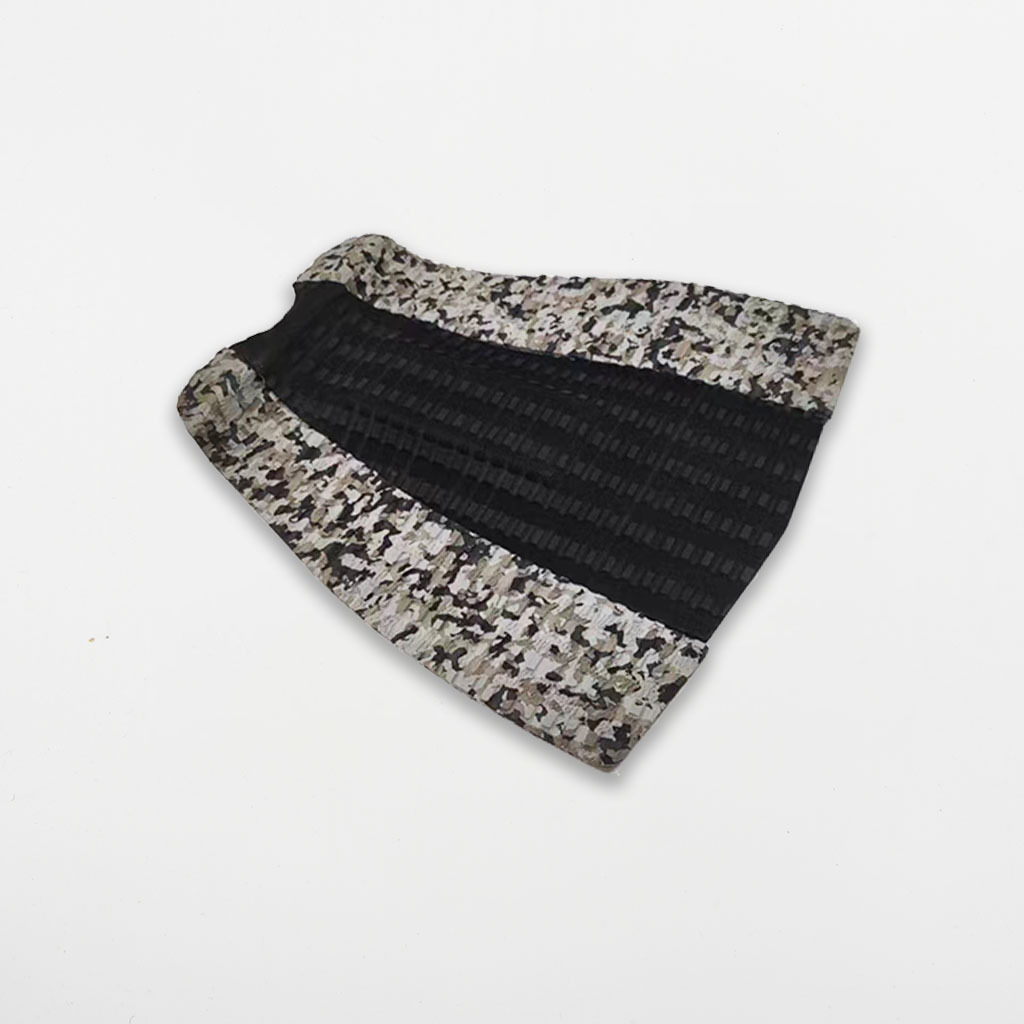
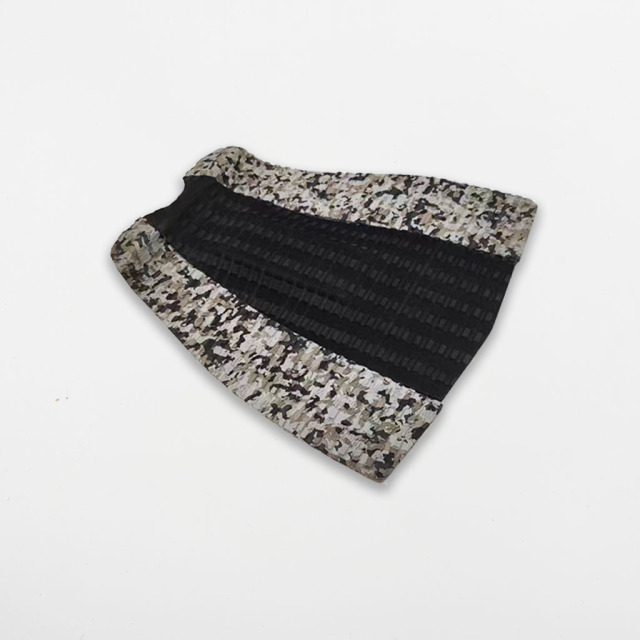
The T00343 Surf Traction Tail Pads are a three-piece diamond-pattern set for the rear deck of a surfboard. The pieces sit separately instead of on a single sheet, which lets the pad follow the curve of a tail instead of bridging it and lifting at the corners. Shops stock it as a standalone upgrade and as part of a board fit-out; board builders fit it during assembly; surf schools use it to keep rental decks usable through a season. - Diamond grip pattern: raised diamond lugs across the deck give the back foot edges to push against, with channels between them that let water run off instead of sitting under the sole. - Three separate pieces: the layout follows a squash, round or pin tail, and the side pieces can be set where your own stance wants them rather than where a single sheet dictates. - Deck protection: a barrier between the back foot and the tail, taking heel pressure and the small knocks that would otherwise go into the foam or glass. - Same build, order after order: pattern, piece count and adhesive stay consistent, so a surfboard traction pad from a later batch still matches the sample your buyers approved.
Diamond Grip & Deck Feel
A surf traction pad is only as good as what the back foot can feel through it. The diamond is the working part: each lug stands proud of the surface, so the sole presses onto a grid of raised edges rather than a flat sheet, and the channels between the lugs give water somewhere to go when the deck is wet. That is why the pattern keeps its bite through a full session instead of going slick once the board is soaked.
The pattern also helps the rider place the back foot. The front edge of the pad tells the back foot where the tail begins, and the diamonds under the arch make it obvious when the foot has drifted forward or back. Over time the lugs on the outside of the stance flatten first, and that wear line is the clearest sign of how hard a board is actually being ridden.
Tail Fit & Board Matching
- Measure the tail first: run a tape across the deck at the point where your back foot lands. That width decides whether the three pieces sit close together or open out.
- Dry-fit before anything else: lay the pieces along the centre line, step back and look at the gaps. A surfboard tail pad that looks even before the liner comes off is far easier to press down straight.
- Follow the outline, not the stringer: on a rounded pin the outer pieces angle inwards; on a squash tail they sit almost parallel. Let the rail curve set the angle.
- Keep clear of the plug and any artwork: check where the leash plug sits and what graphics are on the tail before committing, so nothing important ends up under a piece of pad.
- Longboards need a longer plan: this is a tail pad, so on a longboard it covers the back section only. A longboard traction pad set-up usually runs a centre or waxless pad ahead of it, ordered together so pattern and colourway match.
Installation
- Strip old wax and adhesive residue from the tail with a comb and a clean cloth, then wipe the area down so no oil, dust or sand is left behind.
- Let the deck dry fully. Adhesive bonds most reliably to a dry surface, and any moisture trapped under the pad will work its way out at the edges later.
- Run a strip of tape or a light pencil line down the centre of the tail, then lay all three pieces out dry and check the gaps against the rails. Dry-fitting a surfboard traction pad takes a couple of minutes and saves you from pressing a crooked piece down.
- Peel back only a short section of liner on the first piece, set that edge on the mark and press outward from the centre so air is pushed to the edges rather than sealed in.
- Fit the remaining pieces the same way with even gaps, then run a thumb firmly along every edge and around each diamond lug — a surfing traction pad bonds by pressure, and the edges are where lifting starts.
- Leave the board out of the water, out of direct sun and out of a hot vehicle while the adhesive settles, then check the edges again before the first session.
Accessory Range & Pairing
- Leashes: regular, non-slip, Hypalon and bodyboard leashes, plus SUP leashes, all plug into the tail of the board. Ordering the leash with the pad keeps the accessory wall consistent for a shop and the fit-out complete for a builder. - Fins: honeycomb, timber, G10 glass and nylon fins for the fin systems a board takes. The pad and the fin set are the two things riders change first, so stocking both in one look works well on the shelf. - Other traction: centre pads, waxless pads and skimboard pads cover the rest of the deck when a tail pad alone leaves grip in the middle. A longboard traction pad that runs the length of the deck, or any surfboard that needs coverage beyond the back foot, is often ordered alongside this tail set. - Covers and bags: basic bags, regular bags, stretch covers and bodyboard bags protect a freshly fitted deck between sessions and on the drive to the beach. - Racks: travel rax and tie-downs, storage racks, display racks and bike racks keep boards off the floor in a shop, a school or a garage.
Care & Longevity
Salt, sand and sun do most of the damage to a pad, so a little routine keeps it working. Rinse the tail with fresh water after a session, especially if the board lives near the beach, and let it dry before the board goes back in the bag. Keep solvent-based cleaners and abrasive pads away from it — they attack the foam and the adhesive edge, and the damage shows up as a lifting corner a few weeks later.
Wax is the other thing to manage. A soft brush and mild soapy water will lift most build-up out of the diamond pattern without digging into the lugs, and a wax comb is fine on the deck but should be kept off the pad itself. Treat it the way you would treat any surfboard traction pad: keep the board out of a hot car and out of long spells of direct sun, because heat softens the adhesive before anything else gives. Check the edges after a few sessions and press down anything that has started to lift, while the deck underneath is still clean.
Pad Wear & Replacement
- Judge the lugs, not the colour. A surfboard tail pad is worn when the diamonds under the back foot no longer stand proud of the base. Fading or a dull surface on its own is cosmetic; once the lugs have flattened into a smooth patch, the grip has gone and cleaning will not bring it back.
- Read where it wore first. The lugs under the heel and the ball of the back foot flatten before the rest, and the outer pieces usually go before the centre. That pattern is worth noting when you fit the replacement, because a new set can be positioned to put fresh grip exactly where the foot lands.
- Watch for edges that keep lifting. An edge that lifts once on a clean, dry deck can be pressed back and will normally hold. An edge that lifts again within a session or two has sand and salt under the adhesive face, and once a dark line of grit shows along the corner the bond is finished — that piece will keep lifting until it comes off.
- Test the surface with a thumbnail. A sound pad springs back when pressed; one that has spent seasons in strong sun and salt goes hard and takes the mark instead of recovering. That hardened surface is what feels slick underfoot on a wet deck.
- Look for torn lugs and deep cuts. Wax combs, fin edges, rack straps and beach sand all take bites out of the pattern. A few shallow cuts are cosmetic, but once lugs are torn away down to the base, water sits in the gaps and the lugs around them break down faster.
- Plan replacement into the season. Boards in rental, lesson or surf-school use should be checked at every turnaround and the pad replaced before the deck underneath is exposed.
- Rotate what sits in the window. A surfing traction pad that has spent a season on a sunlit display board has already started to age, so sell from the shelf and keep the display set fresh rather than leaving a faded one at the front.
- Strip the old set properly before fitting the new one. Peel from a corner, work slowly and keep the pull close to the deck, then clear every trace of old adhesive and residue. A replacement traction pad for surfboard use bonds only as well as the surface beneath it allows; the full fitting sequence is set out in the installation steps above.
Specifications
| Product type | Surf traction tail pad |
| Part number | T00343 |
| Pieces per set | 3 |
| Grip pattern | Diamond |
| Adhesive | 3M |
| Mounting position | Tail deck |
| Board type | Surfboards |
| Fitting method | Peel-and-stick |
| Piece configuration | Three separate pieces |
| Deck condition | Clean and dry |
| Liner | Peel-off release sheet |
| Tools required | None |
| Curing step | None after pressing |
Ordering & Confirmation
Before an order goes in, a few points are worth pinning down with your sales contact, because they change what ships and when. Confirm the codes and quantities you need, and whether your programme mixes codes within a quantity band or counts each one separately. Confirm the colourway and any print against an approved sample, and confirm carton and labelling format if the pads need to arrive shelf-ready with your own barcode and branding.
If you need to see and feel the pad first, ask your sales contact about sample availability and the current terms. Ask for a production and shipping schedule against your seasonal window, and ask how repeat orders are matched back to the approved sample — consistent output is the whole point for surf board manufacturers and chain buyers running the same code season after season. If you are buying under your own brand, confirm logo and packaging options at the same time so nothing has to be re-planned later.
Scale & Supply Capability
CIMI is a factory-based supplier with 16 years in surf and watersports hardgoods, manufacturing at our own facility rather than sourcing through traders. Chain stores, supermarkets and surf-brand stores buy from us because one supplier covers a full accessory assortment, so a season's order and its reorders can be planned together. We take on OEM and private-label work, adapting designs, colourways and branding to your programme, and we schedule production against your agreed range plan. Send us your buy list and target dates, and we will confirm what we can make and when.
FAQ
Where does this surf traction pad sit on the board?
On the rear deck, directly under the back foot — the last stretch of the board before the tail. Set the pieces so the rear edge stays inside the tail outline and the front edge lands where your heel sits in your normal stance. Because the set is three separate pieces, you can open or close them to suit the width of the tail instead of forcing one flat sheet onto a curve.
Will this surfboard tail pad fit a narrow pin tail?
The three-piece layout is what makes narrow and rounded tails workable. On a pin or rounded pin, bring the pieces a little closer together and let the outer edges follow the rail curve; on a wide squash tail, open them out to cover the deck under the back foot. Measure across the deck where your back foot lands before ordering, and if the tail falls well outside the usual range, send the measurement over and we will confirm whether this code or another set in the range is the better match.
Can I reposition a piece after pressing it down?
Dry-fit first, because the 3M backing is pressure-sensitive and grabs quickly once pressed. If a piece goes down crooked, lift it slowly from one corner rather than pulling it up flat, and only press it back into place once the deck and the adhesive face are clean and dry. A piece that has already been pressed down hard will not bond as evenly the second time, and a pad that lifts at the edge will collect water and sand.
Is this traction pad for surfboard decks only, or can it go on other boards?
It is built as a surfboard tail pad, so the piece count and the diamond pattern are proportioned for a surfboard tail. The same construction can work on skimboard and bodyboard decks where grip is wanted at the rear, but check the deck area first, because on a much smaller or flatter deck the three pieces will need to sit closer together. Tell us what you are fitting and we will say whether this set suits it or another pad in the range does the job better.
Can this code be used as a longboard traction pad?
It covers the back section of a longboard rather than the whole deck, so most longboard set-ups pair it with a centre or waxless pad further forward. Ordering the two together is the usual approach, because the pattern and colourway can then be matched across the deck. If you are stocking longboards, tell us which deck areas you need to cover and we will put the right combination of tail, centre and waxless pads together for you.
How do I know when a surfing traction pad needs replacing?
Look at the diamonds rather than the colour. Once the lugs have flattened to the point where the pattern no longer stands proud, or the edges keep lifting after being pressed back down, the grip has gone and the pad is due for a change. Deep cuts, a hardened or chalky surface and sand working under a lifted edge are the other usual signs. Pads that sit in strong sun or on a board stored in a hot vehicle reach that point sooner.