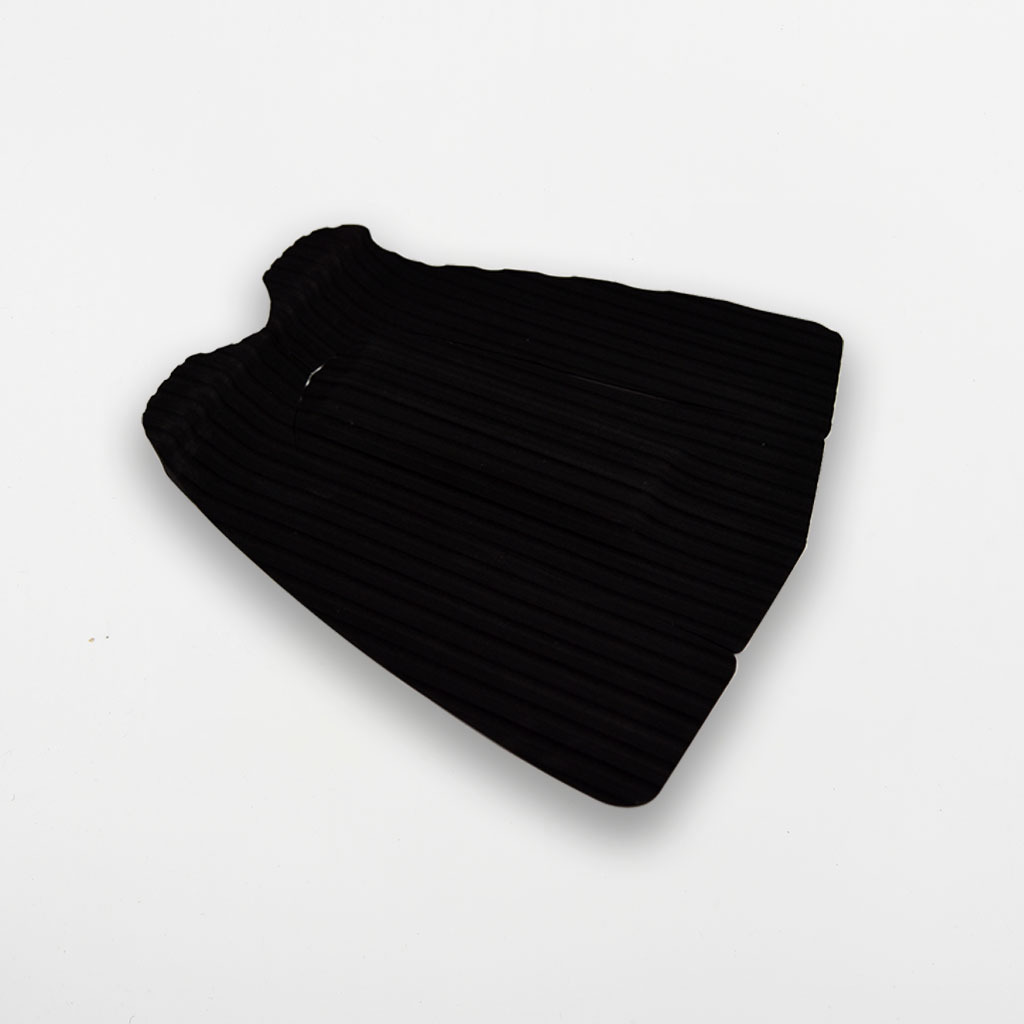
T00541: A Cushioned Tail Pad for the Back Foot
T00541 is a tail pad — a cushioned, raised-texture deck grip that sits on the last stretch of the board, under the back foot. The pattern gives heel and ball something to drive against through a turn, and the cushioned layer between deck and foot softens the landing when a board comes down hard. It goes on with a peel-and-stick backing, so a refit takes minutes at the bench instead of a session in the workshop.
We build these surf traction tail pads as one design inside a long traction line, and every design is held under its own code. That is the practical part for a wholesale buyer: T00541 can be ordered again by its code, and the pattern that goes back on the shelf is the pattern that was agreed.
- Top surface colourway, agreed against a sample or a colour reference you send. - Logo placement, and how the mark is applied to the grip. - Store presentation: backing card, hang tag or printed sleeve, whichever your stores work with. - The shape: as surf board manufacturers we start OEM work from a pattern already in the line, so the order is a variation on something proven rather than a first attempt. - Continuity: once a design is agreed it is held under T00541, and a private-label reorder comes back matching the first delivery.
Model, Fit and Finish
| Item | Detail |
|---|
| Model | T00541 |
| Product type | Surfboard tail pad |
| Position | Tail of the deck, under the back foot |
| Surface | Raised textured grip, cushioned underfoot |
| Fixing | Peel-and-stick adhesive with release liner |
| Boards | Shortboards, funboards and longboards |
| Line | One of a long run of tail pad designs |
| Branding | Colourway, logo and presentation agreed per order |
| Supply | Wholesale and brand programmes |
Fitting a Replacement Pad
- Take the old surfboard tail pad off in one piece where it will come; warm a stubborn corner gently rather than tearing at it.
- Lift the old adhesive with a suitable remover and wipe the deck until it is clean and dry.
- Set the new pad in place with the liner still on and check it sits square to the stringer and clear of the tail edge.
- Peel a short strip of liner and tack that edge down first, so the pad cannot land crooked.
- Press from the centre outwards with the flat of your hand, pushing air ahead of you, then run a thumb firmly around the outline.
- Keep the board out of the water until the adhesive has fully set in your conditions, and check the tail edge and rails once more before it goes back on the rack.
Where This Pad Goes to Work
Most of the pads that leave us are replacement work. A shop fits one at the bench when a customer's grip has gone smooth or lifted at a corner, and a rental fleet does the same job across a rack of boards before the season opens. Because the pad goes on cold — no resin, no clamping, no drying time — a board can come in and go back out the same day.
On the shelf, T00541 is one look within a range, chosen so the grip section reads as a range rather than one pad repeated. A surf traction pad is also the simplest change a rider can make to how a board feels underfoot, which is why it sells beside the boards themselves rather than in a corner of its own.
Looking After the Grip
Fresh water does most of the work. Rinse the deck after a session in the sea and let the board dry before it goes into a bag; salt and sunscreen left to settle into the pattern dull it over time. Melted wax lifts out with a soft brush and mild soapy water, while solvents and sharp scrapers are what usually start an edge lifting on a cushioned surface.
Worth a look every few months: a corner that has only just begun to lift can be pressed back down while the adhesive under it is still sound, but once sand is working underneath, the pad wants replacing rather than re-gluing. Store boards on a rack instead of leaning the tail against a wall, and keep them out of a hot car, since heat is hard on any adhesive-backed grip.
What Ships Beside It
- Surfboard leash: Hypalon cords from 6 ft to 9 ft, so a refitted board can leave with a leash matched to its length.
- Surfboard fins: honeycomb fins in single tab and double tab, resin transfer moulded and light underfoot.
- Covers and bags: basic bags, regular bags and stretch covers, so a freshly gripped board travels protected.
- Surfboard rack: travel, storage, display and bike versions, which is how shops and hire fleets keep boards off the floor.
- The rest of the traction line: other surf traction pad designs, centre pads, a waxless pad and the hex full-deck grip for boards that need coverage across the deck rather than a pad at the tail.
Scale & Supply Capability
CIMI is a factory-based supplier with 16 years in surf and watersports hardgoods, manufacturing at our own facility rather than sourcing through traders. Chain stores, supermarkets and surf-brand stores buy from us because one supplier covers a full accessory assortment, so a season's order and its reorders can be planned together. We take on OEM and private-label work, adapting designs, colourways and branding to your programme, and we schedule production against your agreed range plan. Send us your buy list and target dates, and we will confirm what we can make and when.
FAQ
What holds the pad down, and what does taking it off involve?
A peel-and-stick adhesive backing under a release liner, applied the same way as any surfboard tail pad — no resin, no clamping, no drying time at the bench. Removal runs in reverse: work a plastic scraper under a lifted edge, take the pad off in one piece where it will come, then lift the leftover adhesive with a suitable remover and wipe the deck back to clean, dry glass or foam before anything new goes on.
Which parts of the pad can carry our branding?
The top surface colourway, the logo and the way it is applied, and how the pad is presented in store — backing card, hang tag or printed sleeve. Because we work as surf board manufacturers, a branded pad starts from a shape already in the line and the artwork is built onto it, so send artwork or a reference pad and we will come back with what is possible on that pattern.
How does T00541 sit alongside the other designs in your traction line?
It is one pattern among a long run of tail pads, and the difference between designs is in the pattern and the outline rather than in how they fit or how they are applied. That is deliberate: a shop can stock three or four looks, fit them all the same way, and reorder any of them by its code. If you want to see how a particular surf traction pad compares with this one, ask for the design list and we will send the current range.
What does the surface feel like underfoot?
Cushioned rather than hard. The raised pattern gives the foot an edge, and the layer underneath has some give, which takes the sting out of a heavy landing and keeps the back foot comfortable through a long session. It is grip you feel through a turn, not a flat sheet you stand on top of.
Can the pad go straight onto a deck that still has wax on it?
No. Wax, salt and dust sit between the adhesive and the deck, and that is exactly where a pad starts to lift. Strip the old wax along with any old adhesive, wipe the deck down, and let it dry completely before the liner comes off — the pad will only stay put on a clean, dry surface.