Product Overview
A surf traction pad has one job on a board: to give the back foot something to push against when a turn is driven off the fins. This one is cut for the tail, shaped to sit between the back foot and the tail block, and it is the piece a board is usually missing once the deck has gone slick and the rider is sliding instead of driving. It arrives ready to fit, so nothing extra has to be ordered before it can go onto a board. Most of these pads leave us for resale — a peg on a shop wall, an accessory bay in a chain's watersports aisle, or a rental rack that needs a fresh pad every season.
Grip Surface & Build
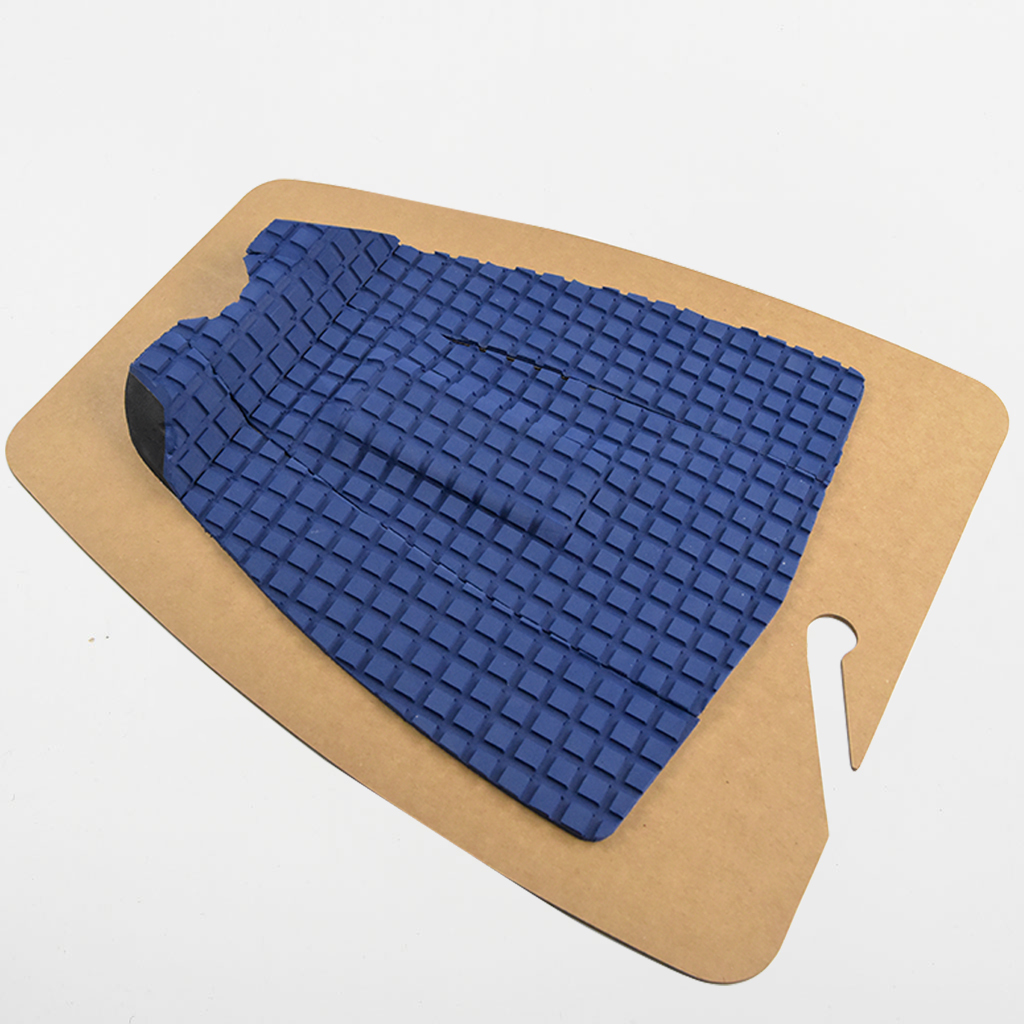
- Diamond blocks under the back foot. The deck is built up in small raised blocks rather than cut flat, so the foot has distinct edges to bite against and water drains away between them instead of pooling under the arch. - Matte, non-reflective face. A polished deck turns slick as soon as salt and sunscreen build up; the matte finish keeps the texture doing its work and photographs cleanly for a shop's own listing. - Cushion through the arch. There is real body to the pad, so a back foot that spends a session driving turns is supported instead of pressed against bare laminate. - Peel-and-stick fitting. The adhesive is already on the pad, which means a deck can be prepared and the grip laid down in one visit — this surfing traction pad needs no clamps, weights or glue-up. - Tail-shaped outline. The pad follows the curve of the tail instead of sitting square, so the rails stay clear and the finished deck reads as a fitted part of the board — the same approach across every surfboard tail pad we build.
Tail Placement & Riding Use
Placement is what separates a surfboard traction pad that helps from one that gets in the way. The pad sits over the tail, centred on the stringer, with the wide end toward the front of the tail block and the point following the board's outline — far enough back that the back foot lands on it when the rider drives off the bottom, far enough forward that the tail kick stays clear and the rail edges are left alone.
On a longboard the same logic applies over a bigger area, and a longboard traction pad is normally a longer panel so the rider can cross-step and still find grip as the back foot travels. Shortboards and hybrids take a compact pad. Rental fleets and surf schools tend to standardise on one or two designs so a whole rack looks and feels the same, and staff can swap a worn pad without checking which pattern belongs to which board.
Rider level changes the expectations, not the fitting. A first board gets the same cushioned deck as a competition board, because the pad takes the wear that would otherwise reach the laminate; a surfing traction pad still textured at the end of a season is cheaper than re-gripping a deck twice.
Fitting & Aftercare
- Dry-fit before anything is peeled. Lay the pad on the tail with the backing still on and check it against the board's outline and the rider's stance — a traction pad for surfboard tails is cut to a shape, and a couple of centimetres either way changes where the back foot lands.
- Clean and dry the deck. Scrape off wax, wash the salt away with fresh water and let the surface dry completely. A surf traction pad bonds to clean, dry, dust-free glass, not to wax or salt — residue under the adhesive is what makes a corner lift later.
- Mark the position. A strip of tape along the stringer and a light pencil mark at the tail block give a straight reference so the pad goes down square the first time.
- Peel and set. Start the backing at one end and work the pad down from the centre outward, pressing the edges flat as you go so no air is trapped under the block pattern.
- Press the whole outline. Run a thumb firmly around the edge and over the blocks, paying attention to the point where the pad follows the tail — that is where a pad lifts first if it lifts at all.
- Give it time before the board goes back in the water. Press the outline again, then keep the board out of the surf and away from wax until the adhesive has settled; a pad should not be ridden the same hour it was fitted.
- Wax works around the pad, not on it. A surfboard traction pad replaces wax only under the back foot; the rest of the deck still takes wax as normal. Keep the wax block forward of the pad and feather the edge so nothing creeps onto the blocks, because wax pressed into the texture fills the gaps between them and the pad stops gripping long before it wears out. If wax does spread across, lift it with fresh water and a soft brush rather than a scraper, and never soften it with heat. Rinse after every session. Salt, sand and sunscreen build a film that makes a surfing traction pad feel slick even when the blocks are untouched. Fresh water straight after the surf, a soft brush worked across the pattern to free grit, and a mild soap only when the deck looks greasy will keep the surface doing its job. Skip solvents, acetone and high-pressure washing — they attack the adhesive at the edges, which is where trouble starts. Look at the edges, not the blocks. The texture usually outlasts the bond. On a shop or rental board the first warning is a corner sitting slightly proud, or a dark line of trapped water under the trim; once that appears, the pad is on borrowed time and should be replaced before it peels mid-session. Blocks polished flat and shiny patches in the middle of the pattern mean the grip has gone even if the pad is still stuck down. Heat is the quiet killer. A board left in a hot car, under a black cover on a roof rack or stacked pad-to-pad in a van softens the adhesive and lets the outline creep. Store boards out of direct sun, let bags dry before the board goes back in, and never stack two decks face to face. What to tell a customer at the counter. No wax on the pad, rinse it after saltwater, brush out sand, keep the board out of a hot car, and check the edges at the start of each season. A longboard traction pad usually ages more evenly than a shortboard pad because feet cross it at different points, so a whole rental rack rarely needs replacing at once — keep one spare design on the shelf and swap pads board by board as the edges go.
Companion Accessories
- Leashes. Hypalon surfboard leash builds cover shortboard through longboard lengths, so a shop can match a leash to any board on the rack from one shelf and one reorder line — and the leash is the item most often bought at the same time as a replacement pad.
- Fins. Honeycomb construction in single tab and double tab, light and versatile across conditions; the surf fins sit in the same accessory range and can be planned on the same production schedule as the pads.
- Traction. Centre pads, waxless pads and skimboard pads extend the deck range beyond the tail, so a board can be gripped the way the rider wants it rather than one pattern across everything.
- Covers. Basic bags, regular bags, stretch covers and bodyboard bags protect a board on the roof and in storage, and they merchandise naturally beside traction on an accessory wall.
- Racks. Travel rax and tie-downs, storage racks, display racks and bike racks complete the board-care aisle, which matters to a chain that would rather not split one category across three suppliers.
Building a Traction Range
- Start with the designs, not the price list. As one of the surf board manufacturers producing traction in-house, we can put the whole tail pad family in front of you — plain blocks, diamond decks and the full-deck hex grip — before you commit to a mix.
- Choose two or three that read differently at arm's length. A surfboard tail pad sells on how it looks as much as how it feels, and two designs with similar patterns side by side split the sale instead of widening it.
- Match the mix to the boards you sell. Shortboard and hybrid decks take a compact pad, while a longboard traction pad needs the longer panel, so the split should follow the board sizes already on your floor.
- Keep one design stable across seasons. Repeat orders are easier when one pattern stays in the line year after year and the new designs are added around it, with the reference number printed on the backing card.
- Fill the shelf around the pads. A pad on its own is a small sale; the surf fins, a surfboard leash and the covers a rider picks up at the same moment turn it into a basket, so plan the pad wall to sit beside those categories rather than on its own.
Specifications
| Property | Detail |
|---|
| Product type | Tail-mounted deck traction pad |
| Range reference | No.00552 |
| Range | One design in a wider tail pad family |
| Deck pattern | Raised diamond block texture |
| Surface finish | Matte, textured |
| Edge trim | Black outline |
| Shown colourway | Blue with black trim |
| Fixing method | Self-adhesive backing, peel-and-stick |
| Packaging | Printed backing card with hang hole |
| Colour options | Other colourways agreed per order |
| Customisation | Private-label pattern and branding, agreed per order |
Ordering & Delivery
- Send the design list and quantities. Quote the range by reference and quantity per design; if your line includes a surfboard traction pad pattern of your own, send the artwork and colours with the list.
- Sign off the pattern on a physical sample. Deck texture and colour read differently on a screen, so approve the pad itself before a run starts — a traction pad for surfboard decks is judged by eye and by hand, not by photograph.
- Agree packaging and labelling before production. Backing card artwork, hang hole, barcodes and carton marks are settled up front, so the pads arrive shelf-ready for your stores instead of needing rework in the warehouse.
- Confirm commercial terms with your sales contact. Quantity, lead time, payment and shipping are quoted per programme and confirmed in writing before production begins; as surf board manufacturers we build each order to the designs and quantities agreed, so nothing is carried over from a previous run without being checked.
Scale & Supply Capability
CIMI is a factory-based supplier with 16 years in surf and watersports hardgoods, manufacturing at our own facility rather than sourcing through traders. Chain stores, supermarkets and surf-brand stores buy from us because one supplier covers a full accessory assortment, so a season's order and its reorders can be planned together. We take on OEM and private-label work, adapting designs, colourways and branding to your programme, and we schedule production against your agreed range plan. Send us your buy list and target dates, and we will confirm what we can make and when.
FAQ
Will this pad fit the boards we sell?
A surf traction pad is shaped for the tail rather than for one board model, so it covers the shortboards, hybrids and longboards most shops carry. Two things decide the fit: the width of the tail block and where the rider's back foot naturally lands. Set the pad dry on a sample board before fitting; if a tail is unusually wide or narrow, tell us the board and we will point you to the design in the range that suits it.
Can it go over an old pad or a fresh repair?
Over a repair, yes, as long as the repair is sanded flush and the surface is clean and dry. Over an old pad, no. A surfboard tail pad laid on top of another sits proud, traps water at the edges and lifts. Strip the old grip back to laminate, lift the adhesive residue with a scraper, and fit the new pad on bare glass.
Does the pad replace wax, or is wax used on top of it?
It replaces wax in the area it covers. A traction pad for surfboard tails is meant to be ridden bare — wax pressed into the blocks fills the texture and cancels the grip. Wax the rest of the deck as usual, keep it off the pad, and rinse away any that creeps across.
How does this design sit against the rest of the tail pad range?
It is one look inside a large family. Some designs use a plain block layout, this one uses a diamond deck, and the full-deck hex grip covers the whole deck rather than the tail alone. When you build an assortment, treat a surfboard traction pad line the way you would a fin range: choose patterns that read differently at arm's length, so the shelf offers a choice rather than a repeat.
How long will the grip last on a rental or school board?
The texture goes before the adhesive does. On a busy rack the pad takes the wear that would otherwise reach the laminate, and the first sign of trouble is usually the edge lifting rather than the blocks wearing smooth. A longboard traction pad wears more evenly than a shortboard pad because barefoot traffic crosses it at different points, so keep one reference per design and replacements will always match the board they go on.
What keeps the grip working through a season?
Three habits: rinse with fresh water after saltwater sessions, work sand out of the blocks with a soft brush rather than a scraper, and keep solvents, hot wax and heat-trapping board bags away from the deck. A surfing traction pad that gets that routine holds its edges; one left waxed and sandy goes smooth long before the backing gives up.
Is there a surfboard leash that fits this setup?
Yes — hypalon builds from 6 ft to 9 ft, in 6 mm, 7 mm and 8 mm cords, sized by board length and the size of the day: shorter leashes for shortboards and small surf, longer and thicker for longboards and bigger conditions. The leashes, surf fins and covers sit in the same accessory range, so a shop can put together a complete tail-end kit around the pad.