Product Overview
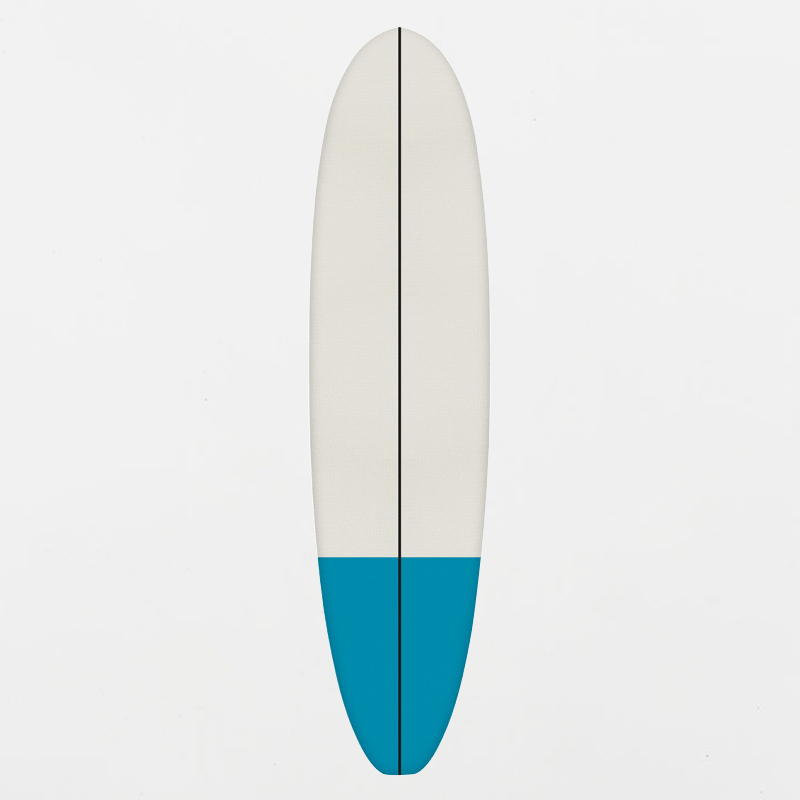
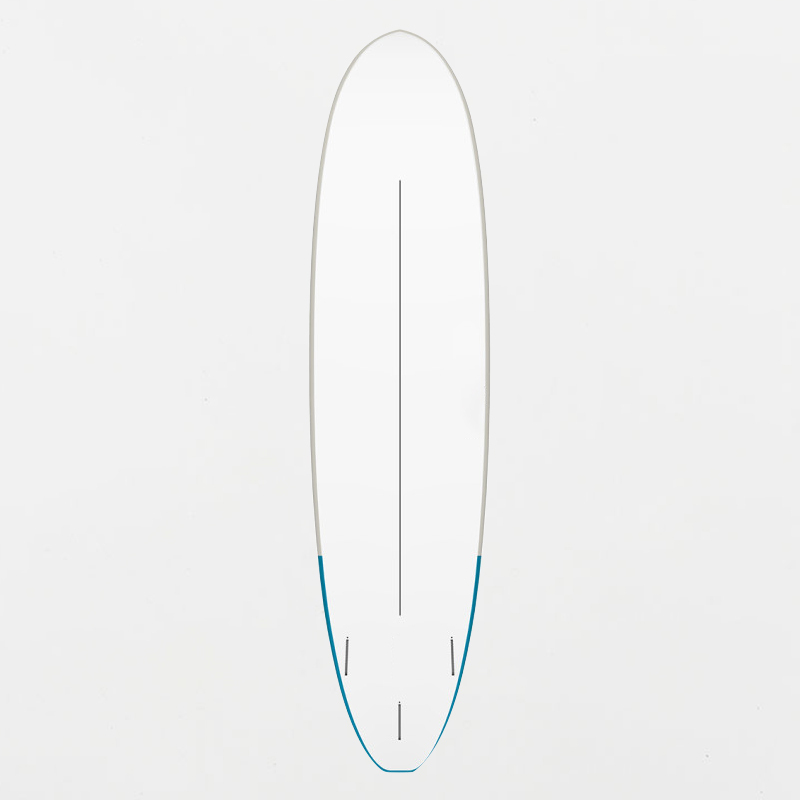
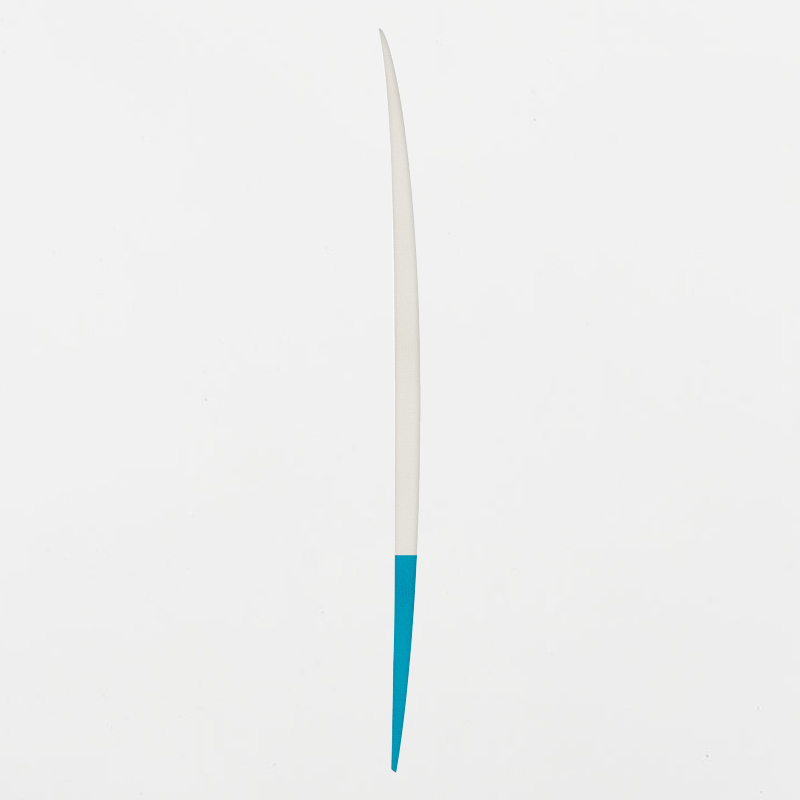
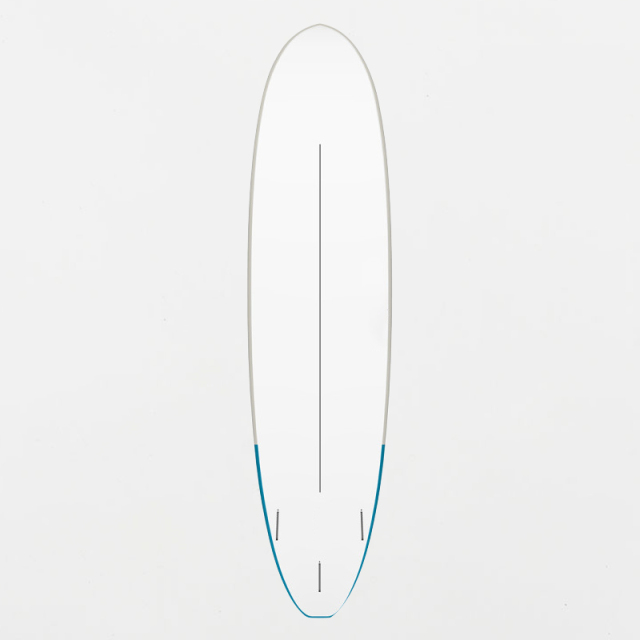
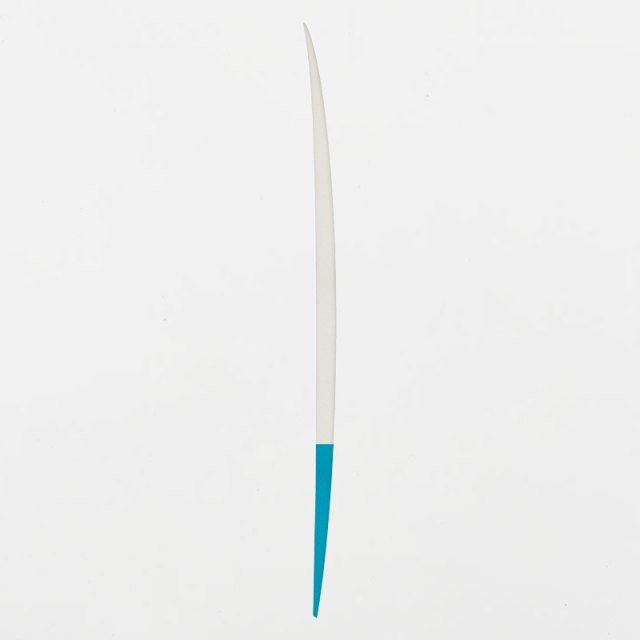
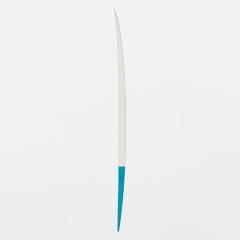
The 7ft4 CIMI soft top is the board a lesson programme reaches for first. Under the soft outer skin sits a real surfboard: a lightweight EPS core wrapped in fibreglass cloth and epoxy resin, then finished with a layer of extruded EVA foam that gives the deck and rails their grippy, forgiving feel. The result is a soft top epoxy surfboard that behaves like a learner board in the water and like a glassed board in the store room — soft enough for a first session, with a tough, durable structure underneath that stands up to being dragged through the shorebreak lesson after lesson. At 7ft4 there is enough volume to paddle easily and pick up small, soft waves, while the length stays manageable for an instructor turning the board around or pushing a student into a wave. The outline is a rounded all-round shape rather than a specialist fish or a full longboard, which is what makes it the default when one model has to serve a mixed-ability class. The board is finished with a white deck and a solid teal tail, a dark centre stringer line running nose to tail, and a curved rocker that shows clearly when it is stood on its edge. - Soft EVA deck and rails — the extruded foam layer cushions a knee, an elbow or another student's board, which is exactly why a soft top surfboard for beginners beats a hard glassed board in a lesson. - A real core under the foam — a lightweight EPS core is laminated with fibreglass and epoxy resin before the EVA goes on, so the board keeps its stiffness and buoyancy instead of going soft and waterlogged. - 7ft4 all-round outline — long enough to paddle and catch small waves, short enough to turn, and easy to stack, rack or slide into a van. - Made to be shared — the deck and rails are built to tolerate a board being leaned against a wall, stacked in a shed and carried by someone who has never picked one up before. - Board and fittings from one source — we make the leashes, fins, traction, covers and racks as well, and as an EVA soft top surfboard supplier we can match a lesson set rather than leave you to assemble one from three different catalogues.
Construction & Materials
Four layers make this board, and the order they go on is what makes it work.
The core is a lightweight EPS foam blank. EPS is closed-cell, so a knock that gets through the outer laminate does not turn the core into a sponge the way an open foam learner board does; the board stays light and keeps its buoyancy.
Around it, fibreglass cloth carries the load. The cloth spreads an impact across the panel instead of letting it concentrate in one spot, and it supplies the stiffness that lets a 7ft4 board take an adult learner without folding underfoot.
The cloth is bonded with epoxy resin. Epoxy cures harder and tolerates impact better than a traditional polyester layup, and it does it at a lower weight — which is why a board built this way feels light under the arm and still holds its shape after a season of lessons.
The last layer is a sheet of extruded EVA foam over the deck and rails. This is the part a student actually feels: soft under a knee and a hip, grippy without wax, and rounded at the edges that would otherwise be the first thing to catch a beginner's shin.
This is where a soft top surfboard manufacturer earns or loses a fleet order. Two boards can look identical in a photograph and behave very differently six weeks into the season — one still stiff through the middle with its deck bonded at the rail, the other spongy at the tail and lifting where the foam meets the laminate. Bond quality between the EVA, the laminate and the core is the thing worth asking about, and it is the thing we control in our own production.
Fins, Leash & Traction Setup
- Check the fin boxes. Look into the Futures boxes on a new soft top epoxy surfboard before fitting anything — sand or packing dust left in the slot will stop a fin seating flush.
- Fit the fins. Slide each fin home and check it sits level with the bottom of the board; a fin that is half-seated will work loose in the water.
- Tighten, then tug. Run the box screws down by hand and give every fin a firm pull. Re-check before each session — a lost fin is the most common avoidable cost in a lesson fleet.
- Attach the leash at the tail plug and look at the rail saver. It should sit clear of the rail rather than folded over it, or the cord will rub through the edge of the board.
- Add traction only if you want it. The EVA soft top surfboard deck already grips without wax, so a tail pad is a choice: it helps an instructor's back foot find the same spot every session, and a waxless pad stays cleaner on a shared board.
Riding Character & Typical Riders
In the water the board is stable and predictable. There is enough width and volume under the chest to make paddling unglamorous but easy, it picks a wave up early, and a wipeout leaves the rider wet rather than bruised. It is not a performance shape and does not pretend to be: the tail is rounded, the rocker is friendly, and the board is happiest where the wave gives the rider time to stand up.
That profile suits four kinds of buyer. A surf school running daily lessons gets a board a first-timer can stand on inside one session and that will still be in service at the end of the season. A rental centre gets a shape that covers the widest spread of customer sizes, so fewer boards sit unused on the rack. An independent shop gets a first-board purchase that comes back for the next size up, because the customer's introduction to surfing was not on something that felt like a bath toy. A chain or distributor gets a wholesale epoxy soft top surfboard that can anchor the entry-level end of a seasonal range without the returns that follow low-cost foam boards.
Individual beginners fit here too, particularly adults who would rather buy once than replace a foam board after two summers.
Lesson, Rental & Commercial Use
- First lessons on a mellow beach break — the 7ft4 paddles easily and picks up small, soft waves, so a beginner spends the hour standing up instead of fighting the board.
- Mixed-ability classes — one model covers a wide spread of student sizes, which keeps the trailer load simple and stops an instructor re-rigging boards all morning.
- Daily rental rotation — the board is issued, ridden, rinsed and handed out again the same afternoon; an epoxy soft top surfboard that keeps its stiffness through that cycle stays on the rack instead of going to the repair pile.
- Season building for a chain or distributor — a wholesale epoxy soft top surfboard gives a range an entry-level piece that sits underneath its mid-length and longboard lines.
- Camps and resort programmes — an EVA soft top surfboard that is stacked, hosed and reissued every week needs rails that tolerate handling as much as salt water.
- Progression out of the soft top — a student who has outgrown the board can move onto a hard epoxy shape from the same range without relearning how a different make behaves.
Care & Handling
An epoxy soft top surfboard asks for very little care, and the habits that matter are mostly about heat and abrasion. Rinse the deck and rails with fresh water after a salt-water session — salt left in the EVA texture dries to a crust that dulls the grip — and let the board dry before it goes into a bag.
Heat is the thing to watch. Extruded EVA softens when it is left in a hot car or flat in the sun for hours, so store the board on its rail or flat in the shade rather than baking on a sun-hit deck.
Check the fin boxes and the leash plug after every session. Rinse sand out of the boxes before it sets around a screw thread, and look at the plug for the first sign of movement.
For marks on the deck, warm water and a little mild soap on a cloth lift most of it. Skip solvents and abrasive pads — they take the texture off with the dirt, and the texture is the grip.
The rest is handling. Most of the damage a soft-top picks up does not come from the wave; it comes from a rail pressed against another board's fin in the back of a van, or a board dropped on its nose on the walk down. Carry it under the arm and keep boards apart in transit.
Specifications
| Model | B70111 |
|---|
| Length | 7 ft 4 in |
| Construction | EPS core, fibreglass, epoxy resin, EVA outer skin |
| Core | Lightweight EPS foam |
| Laminate | Fibreglass cloth bonded with epoxy resin |
| Outer skin | Extruded EVA foam over deck and rails |
| Fin system | Futures fin boxes |
| Outline | Rounded all-round |
| Rider level | Beginner to early intermediate |
| Typical buyers | Surf schools, rental centres, commercial and wholesale ranges |
Covers & Racks
- Covers — a basic bag or a regular bag keeps the deck out of the sun between sessions, and a stretch cover fits closer for boards that live on a display wall.
- Travel racks and tie-downs — for a van or trailer carrying several boards, a rack keeps them apart rail to rail instead of stacked, which is where most transport damage happens.
- Storage racks — a school shed or a back room needs boards off the floor and off each other. Wall and floor racks hold them on the rail so the deck stays clear, and in a mixed fleet a 7ft4 soft top surfboard needs its own cradle rather than sharing a slot with a 9 ft board.
- Display racks — the outline that sells the board from the water sells it from a display floor too; a display rack lifts it to eye height and lets the shape do the work.
- Sized together — buying covers and racks from the same EVA soft top surfboard supplier means the bag is cut for the board and the rack is rated for the same length, rather than being matched after the fact.
- A first board package — for a soft top surfboard for beginners offered through trade channels, a stretch cover and a display rack turn a bare board into a complete package on the display floor.
Ordering & Delivery
- Start with the mix. Tell us how many boards you need, in which colourways, and whether they are going into lessons, rentals or shop stock; the same wholesale epoxy soft top surfboard can be packed and matched differently for a school and for a shop wall.
- Confirm what ships with the board. Fins, leash and traction are separate items rather than part of the board, so say what should be in each box before the order is confirmed.
- Check the specification against your existing fleet. If your stock is a different epoxy soft top surfboard length or a different fin pattern, tell us; matching the new boards to what staff and students already know keeps a fleet simple.
- Ask about sample availability. If you need to handle the EVA skin and see the rail construction before committing, ask your sales contact about a sample and what it takes to arrange one.
- Settle quantity, lead time and shipping terms in writing with your sales contact — they move with the mix, the time of year and the destination, so it is preferable to agree them at the start of an order rather than at the end.
- Think about the reorder. A 7ft4 soft top surfboard that works in a lesson programme tends to be the line a school keeps coming back to, so it is worth agreeing one colourway across the first order and the next.
Scale & Supply Capability
CIMI is a factory-based supplier with 16 years in surf and watersports hardgoods, manufacturing at our own facility rather than sourcing through traders. Chain stores, supermarkets and surf-brand stores buy from us because one supplier covers a full accessory assortment, so a season's order and its reorders can be planned together. We take on OEM and private-label work, adapting designs, colourways and branding to your programme, and we schedule production against your agreed range plan. Send us your buy list and target dates, and we will confirm what we can make and when.
FAQ
Is this board suitable for absolute beginners?
Yes. The 7ft4 length carries enough volume to paddle easily and catch small, soft waves, and the EVA skin means a fall is soft on the rider and on anyone nearby. Most first-timers are up and riding inside their first session in small surf.
How is it different from a foam learner board?
A foam-only board is a block of soft foam with nothing structural inside, so it goes soft at the tail and heavy through the middle after a season of lessons. A soft top surfboard for beginners that is built this way is laminated first — EPS core, fibreglass, epoxy resin — and softened second with the EVA layer, so it keeps its stiffness and buoyancy while still feeling forgiving underfoot.
Which fins fit, and can staff swap them?
The tail carries Futures fin boxes, so any standard Futures fin seats in the same boxes, and staff can change a set with the box screws alone. That also means this board can share fins with the hard boards in the same range, which keeps spares down to one pattern across a fleet.
What leash suits a 7ft4 board?
A 7 ft leash matches the board's length. The range covers 7 ft in a 6 mm cord for small days and a 7 mm cord for punchier surf. On a shared soft top epoxy surfboard the heavier cord is usually the safer default, because it survives being pulled, stood on and handed between students.
What sits under the EVA skin?
A lightweight EPS core, wrapped in fibreglass cloth and bonded with epoxy resin. That layup is the part a soft top surfboard manufacturer is really selling — skip it and you have foam glued to foam, which goes soft in a season. Laminated first and softened second is the whole idea behind this board.
Will the EVA deck hold up to daily rental use?
The EVA layer is there to absorb the knocks that would otherwise chip a hard board, so it takes the wear a rental fleet hands out. Rinse it with fresh water after salt-water sessions, keep it out of a hot car, and the deck keeps its grip and its texture through a full season of lessons.
Can we order the board together with leashes, fins and pads?
Yes. Leashes, fins, traction pads, covers and racks are all part of the same catalogue, and as an EVA soft top surfboard supplier we match lengths and fin patterns so a lesson set arrives consistent rather than assembled from three different suppliers. Tell us what the set should contain and it can be specified with the boards.