Product Overview
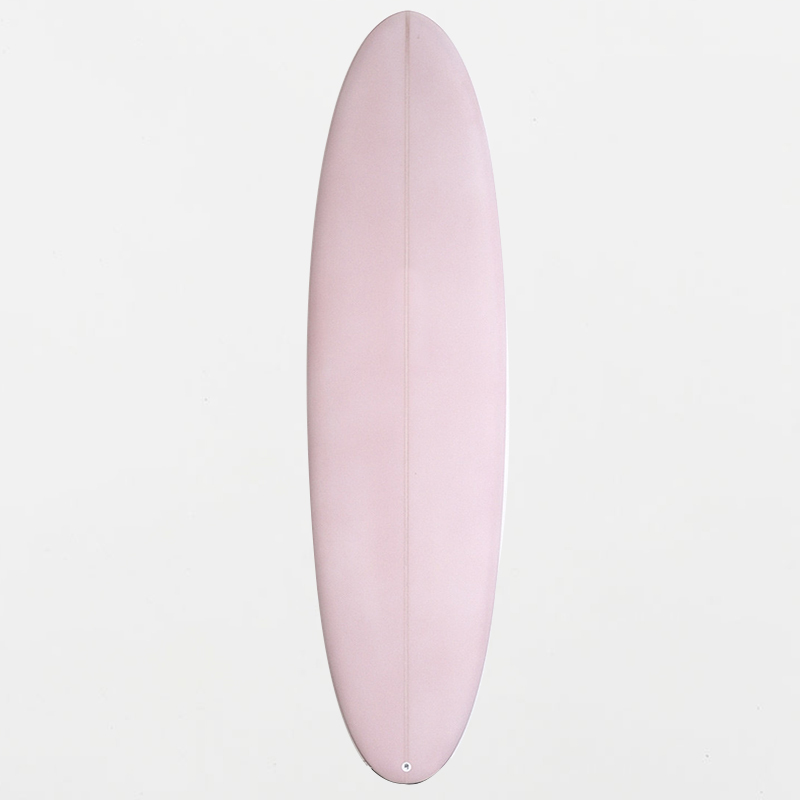
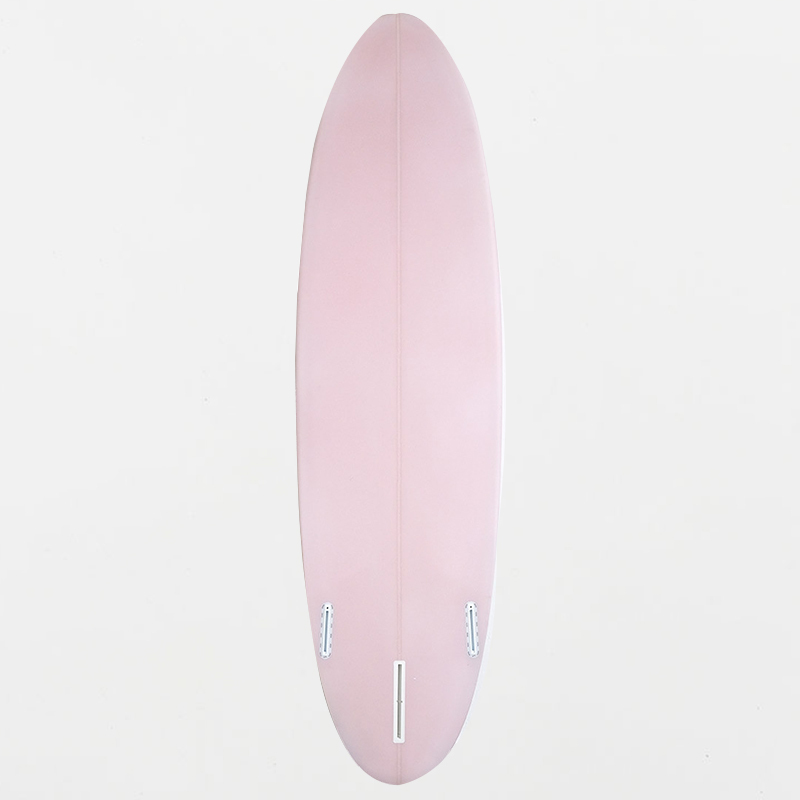
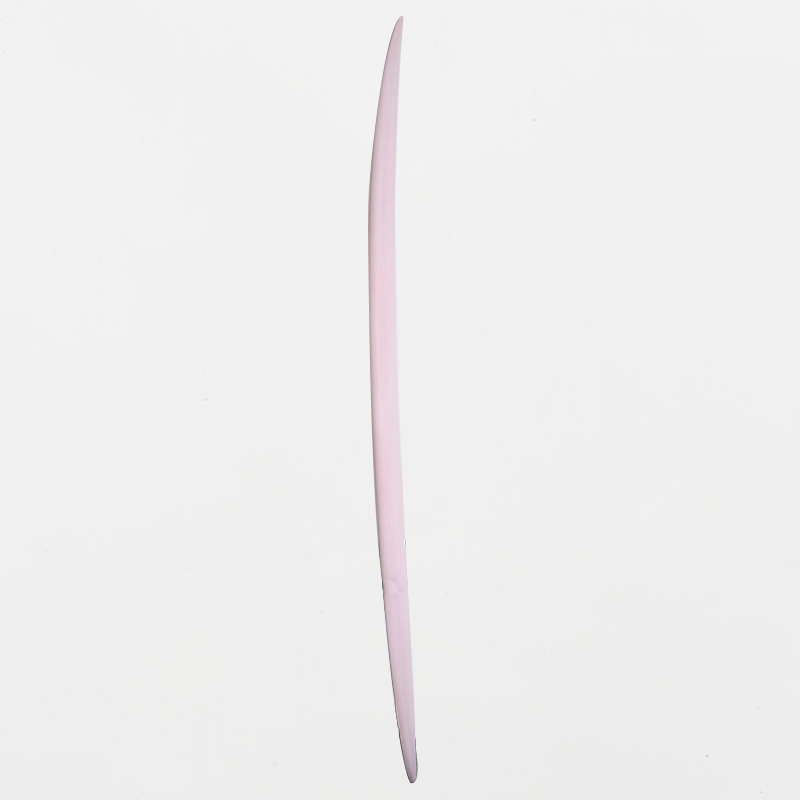
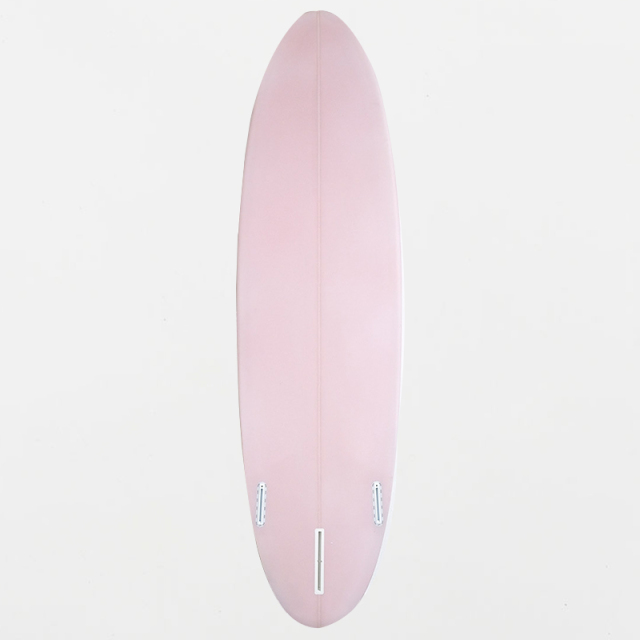
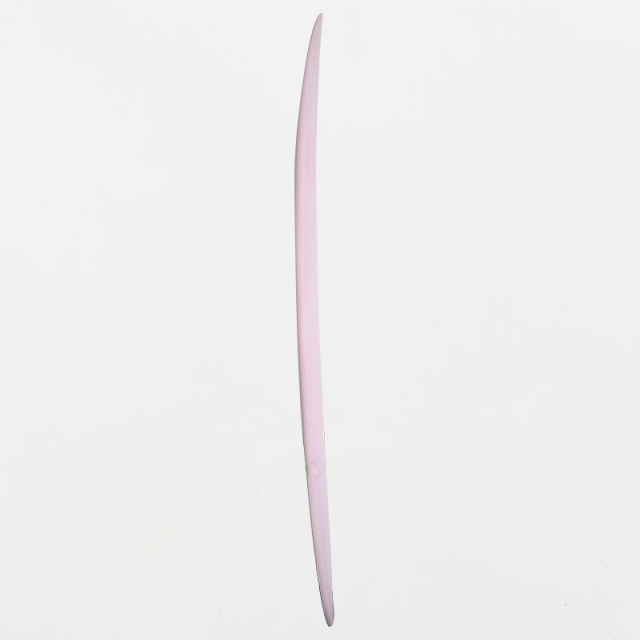
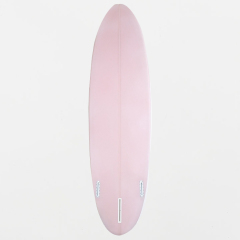
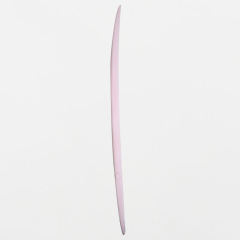
The B70144 is a pink epoxy surfboard at seven feet, with Futures fin boxes set into the tail and a smooth, glossy laminate over an EPS core. A central stringer line runs down the deck, the nose is pointed and the tail is rounded — an all-round outline that paddles easily and holds its line across a soft wave.
Seven feet is a deliberate middle ground. It gives a beginner the float and stability to stand up in a first session and still catch waves when the swell is small; it gives an improver enough length to paddle back out without exhausting themselves, while staying short enough to turn. Surf schools use it as the bridge between a soft learner board and a hard performance shape, and shops sell it as the one board a family can share.
Most of this model goes out as a wholesale epoxy surfboard order — a set for a rental rack, a new season's wall, a distributor's stock — rather than as single boards. Buyers at that scale are not really choosing a shape; they are choosing a line they can come back to, which is why we keep the 7ft0 as a standing model rather than a one-off build.
Manufacturing and Quality Control
- EPS core, glassed with fibreglass and epoxy resin. The blank is expanded polystyrene, laminated with fibreglass cloth wetted out in epoxy. The result is a board that stays light on the rack and holds its rocker instead of going soft under the deck the way a poly board can. - A laminate that takes knocks. Epoxy over EPS resists pressure dings and heel dents better than a traditional polyester build, which is the difference a rental operator notices when a board goes out three or four times a day. - Gloss finish, sealed all over. Deck, rails and bottom come out of the factory with a smooth, glossy surface, so sand rinses off and salt water does not sit in an open grain. - Materials checked before layup. Blanks, cloth and resin are inspected on arrival, because the earliest place an epoxy surfboard manufacturer can catch a problem is before it is laminated into a board. - Checked in-line, not just at the end. Boards are inspected during lamination and finishing, so a fin box set off-centre or a rail that needs another pass is caught on the board it happened to rather than in the carton. - A final pass before packing. Deck, rails, tail and fin boxes are all looked over, and the 7ft epoxy surfboard is matched against the size, colour and setup on the order.
Futures Fin System
- Futures boxes set into the tail. The board takes Futures fins, so a rider can change template, size and material without touching the board itself.
- Fins are ordered separately. This 7ft epoxy surfboard is supplied as a board unless you ask for a fin set to be added, which lets you match fins to the waves your customers actually ride.
- No second fin standard on the shelf. Shops already stocking Futures fins can put this board straight onto the wall without adding another box standard to their spare parts.
- Fin options from our own line. Ask about epoxy surfboard futures fins in honeycomb, timber or G10 glass: honeycomb for a light, versatile all-round set, timber and G10 glass for riders chasing a particular feel through the turn.
- One board, several setups. More fin area gives drive in soft, small surf; a looser, smaller set frees the tail when there is more push behind the wave. Because the boxes are the interface, the same board covers both.
- Bench work, not board repair. Swapping a fin is a couple of minutes with a screw key at the desk, which matters when a board comes back with a damaged fin at the start of a lesson block.
Colour and Commercial Appeal
A pink surfboard 7ft long is easy to pick out, and that is the point. On a beach with thirty learners in the water, an instructor can find this board without counting heads, and a rental desk can see at a glance which boards are still out and which are back on the rack.
The colour works indoors too. Among a wall of white and pale boards, a pink epoxy surfboard pulls the eye from across the aisle, and it photographs well for a rental operator's booking page or a shop's social feed.
In practice, most buyers use it to reach two groups: younger riders who want something that does not look like everyone else's board, and female customers who are often offered a narrower colour choice than the rest of the rack. It can sit at the front of the wall and still be sold as a serious board, because underneath the finish it is the same EPS and epoxy build as everything else in the range.
For a shop building a range rather than buying a single board, this is the model that gives a run of similar 7ft boards a focal point — the one a customer picks up first.
Specifications
| Board type | Epoxy all-round surfboard |
| Length | 7 ft 0 in |
| Construction | EPS core, fibreglass cloth, epoxy resin |
| Finish | Gloss laminate in pink |
| Outline | Pointed nose, rounded tail, central stringer line |
| Fin system | Futures fin boxes |
| Fittings | Leash plug at the tail |
| Rider level | Beginner to intermediate |
| Typical use | Surf schools, rental fleets, wholesale stock |
| Colourways | Pink as standard, other colours on request |
Custom and OEM Programmes
- Send the brief: length, colourway, fin system, quantity, and any branding you want on the deck. Buyers who need a custom surfboard supplier for a private-label line usually start here.
- We come back with what we can build. Because we quote as an epoxy surfboard manufacturer from our own production line, you hear early whether a colour, logo or fin change is straightforward or needs new tooling.
- Design and tooling. Our in-house team supports artwork and CAD-based design work where a shape or a graphic needs developing from a sketch.
- Sample sign-off. Where a programme calls for a pre-production sample, it is checked against the agreed colour and finish before the full run starts. Ask your sales contact how samples are handled for your market.
- Production. The run follows the same lamination, finishing and inspection stages as our stock boards, then packs for export.
- Repeat runs. Once a build is agreed, a reorder of the pink surfboard 7ft model should come off the line the same way the first run did — that is the point of setting a specification once.
Fleet Care and Spare Parts
- Set a check-in routine at the rental desk. Every board that comes back gets the same look: the deck under the front foot, the rails either side of the tail, the area around both fin boxes and the leash plug. Those are the four places hire wear shows first, and a check at the desk costs far less than finding a soft spot halfway through a lesson block.
- Rinse off salt water, then dry before the board goes back on the rack. Fresh water over deck, rails, bottom and boxes, followed by a wipe around the box and the plug. Salt left sitting in a fin box stiffens screws and dulls the gloss finish over a season.
- Treat the fin box as the service point. Clear sand out before a fin goes in, keep a screw key at the desk, and replace a cross-threaded screw rather than forcing it home; a fin sitting proud loads the box on every turn your customers make.
- Count leash strings and leash plugs as consumables. A string that has gone fuzzy gets replaced before it fails, and any crack radiating from the plug takes the board out of the hire pool until it is sealed. Put spare strings and a couple of leashes into the board order so a replacement never waits on a separate shipment.
- Keep a small repair kit at the desk. A ding sealed on the day it happens stays a five-minute job; water reaching an EPS core is what turns a hairline crack into a board that stays heavy and never dries out properly.
- Stock spares alongside the boards. Ordering them with the board run keeps the whole fleet on one specification.
- Rotate the fleet and move worn boards down the line. Spread sessions across the boards instead of sending the same one out every hour, and when a board starts holding water or feeling soft underfoot, give it backup duty rather than letting it fail in front of a class.
- Store off the ground and out of the heat. Racks rather than stacks, out of direct sun, and never overnight in a closed van or container. The gloss laminate and epoxy layup on the 7ft epoxy surfboard keep dents away from the core better than a poly build, but no construction replaces a check-in routine and a dry, shaded storage spot.
Board and Accessory Pairing
| Leash | 7ft or 8ft cord in 6 mm or 7 mm, with regular, non-slip or Hypalon cuff to suit a rental pool or resale channel |
| Fins | Futures-compatible sets; epoxy surfboard futures fins available in honeycomb, timber and G10 glass |
| Traction | Tail pads and centre pads from our own line, ordered with the boards |
| Cover | Basic bag, regular bag or stretch cover for storage and transport |
| Rack | Travel, storage and display racks for the shop floor, the van or the classroom |
| Wax and inserts | Wax and fin inserts ordered alongside the boards |
| Fin accessories | Spare screws and small parts to keep fin sets serviceable |
Ordering and Confirmation
- Send the size, colourway and quantity you need. For a pink epoxy surfboard run, say whether the colour is fixed or open to your own artwork.
- Tell us whether you want boards only or a mixed order with leashes, fins, pads, covers and racks. Many wholesale epoxy surfboard orders ship as a set so the shop floor or the rental rack is complete on arrival.
- Confirm the packing. We pack for export; tell your sales contact if boards need to be boxed singly, palletised, or protected with reusable packaging where the shipping method allows.
- Confirm the commercial terms. Pricing, lead time, payment terms and shipping terms are agreed with your sales contact before production is scheduled, because they depend on the mix and the season.
- Confirm the specification in writing. Length, colour, fin system and branding go onto the order confirmation — check it against your sample or drawing before the run is released.
- Agree the delivery point and paperwork. We coordinate logistics on export shipments, and your contact will confirm which documents your market needs.
Scale & Supply Capability
CIMI is a factory-based supplier with 16 years in surf and watersports hardgoods, manufacturing at our own facility rather than sourcing through traders. Chain stores, supermarkets and surf-brand stores buy from us because one supplier covers a full accessory assortment, so a season's order and its reorders can be planned together. We take on OEM and private-label work, adapting designs, colourways and branding to your programme, and we schedule production against your agreed range plan. Send us your buy list and target dates, and we will confirm what we can make and when.
FAQ
Who are you, and where is this board made?
Ningbo Cimi Sports Co., Ltd. has been making surfing hardware for over 16 years — leashes, fins, traction pads, covers, racks and boards — and we produce in our own factory rather than buying finished goods to resell. This model is laminated on our own surfboard line, so the build, the finish and the fin boxes stay under our own quality control from start to finish.
How do you keep quality consistent across an order?
Three checkpoints. Incoming materials are inspected before production starts, boards are checked in-line during lamination and finishing, and every finished board gets a final inspection before it is packed. Working as an epoxy surfboard manufacturer rather than a trader means a problem is caught on the line, not discovered in your warehouse.
What else can we buy alongside the board?
Yes — leashes from 5 ft to 8 ft, fins including nylon versions, traction pads, covers, racks and small spares all come from the same place as the boards, along with e-foils and apparel on the wider range. We also take on OEM and ODM work as a custom surfboard supplier, so a mixed order can carry your own branding. The traction pad line alone runs to 5,000 pieces a month, which helps when an accessory order has to scale with the boards.
Why buy from CIMI rather than another supplier?
Range depth is usually the first answer: boards and every part that goes with them come from one place, on one order. The second is that the boards are made here, so a wholesale epoxy surfboard order and the reorders after it follow the same line and the same specification. The third is flexibility — custom colours, branding and shapes are part of the service rather than an exception. More than 1,000 clients across North America, Europe and Oceania buy from us on that basis.
What services come with an order?
Design and development support, OEM and ODM manufacturing, quality control through production, and logistics coordination for export shipments. A custom surfboard supplier relationship usually starts with a brief and a sample and settles into repeat runs; we handle the design, tooling and production steps in between.
What waves and riders does this board suit?
Small to medium, softer waves are where it is most at home, and it works for riders from their first unbroken wave through to solid intermediate level. At 7ft0 this 7ft epoxy surfboard paddles early and stays stable underfoot, which is why it is often the board a school issues once a student has come off a soft-top but is not yet ready for a shortboard.
Are fins included, and what does the Futures system allow?
The board is built with Futures fin boxes and is supplied without a fin set unless you ask for one to be added to the order. Epoxy surfboard futures fins are available from our own fin line in honeycomb, timber and G10 glass, so a single order can arrive with the setup you want to stock. The boxes then let your customers change template or material later without changing boards.
Can we have a different colour or our own branding?
Yes — colourways and branding can be adapted for a programme, and the change is easiest to make at the brief stage. If the pink surfboard 7ft finish is exactly what you want, it stays as a stock option; a different colour or a deck logo is handled as a custom run.
How do we keep the boards in good shape between sessions?
Rinse with fresh water after salt water, dry the board before it goes back into a bag or onto a rack, and keep it out of a hot car or direct sun between sessions — heat is what turns a small ding into a bigger repair. Check fin screws and leash strings at the start of each hire block, and touch in any ding before water gets into the core.