Product Overview
The 7ft4 Green Fade is the mid-length of the CIMI epoxy line: a board with enough length to paddle onto a wave early and enough curve in the outline to turn once you are up. It sits between our shortboards and an epoxy longboard surfboard — less volume than a 9ft shape, more glide than a 6ft, and a rocker that works in small, average and slightly soft waves rather than needing a steep, hollow face.
We supply it as an epoxy surfboard supplier to chain stores, independent shops, surf schools and distributors, so it has to earn its place on a shop wall and on a rental rack at the same time. The plan shape is generous enough for a lesson programme, while the rails are kept thin so a rider who already turns does not feel held back.
Most riders arrive at this length from one of three directions: stepping down from a longboard or a soft-top, stepping up from a shortboard because they want more paddle, or adding an easy-day board to a quiver they already own. In each case it covers sessions that would otherwise need two boards — mellow beach breaks, a reef that is not firing, and long soft walls that reward early entry more than late snaps.
Being a lightweight epoxy surfboard helps out of the water too. It goes onto a roof rack, into a van or onto a display stand without the two-person lift a longboard often needs, which is the difference between a board that gets used on a busy day and one that stays in the shed.
Construction & Materials
- EPS core. The blank is expanded polystyrene: light, stiff, and the reason the finished board stays buoyant under a rider who is still working out where to put their weight.
- Fibreglass and epoxy resin laminate. Cloth is laid over the core and wet out with epoxy resin, bonding the layers into a shell that holds its shape under heel pressure far better than a traditional polyester build.
- A centre stringer line. It runs the length of the deck and shows through the finish, giving the shape its spine so the rocker keeps its curve through season after season of use.
- Built as a durable epoxy surfboard, not a disposable one. The whole point of this lay-up is the second and third year, when a poly board under the same workload would be showing heel dents and rail cracks.
- Made on our own production line. As an epoxy surfboard manufacturer we control the lay-up, the cure and the finishing in house rather than buying in finished boards. That discipline is what keeps one eps epoxy surfboard consistent with the next.
- Repairable rather than replaceable. Rail knocks and cracks can be filled with epoxy resin and cloth, so a board does not have to leave a fleet because of one bad session on a shallow reef.
Fin System Compatibility
- The 7ft4 is supplied with a multi-fin box layout rather than a fixed fin set, so the box standard is fixed when you sign off the order. Tell us whether your shop, school or rental fleet is set up for Futures, FCS or FCS2, and we will confirm the interface we can fit to the run.
- This matters if you already hold fin inventory. Futures, FCS and FCS2 are different interfaces, so a set bought for one standard should not be assumed to seat in another; matching the box to the fins you already stock avoids a shelf of unusable sets. Match the tab style to the box as well as the system name — a single-tab set and a double-tab set are not interchangeable.
- For rental and lesson fleets, standardise on one interface across the boards you order. Staff can then swap a fin between boards at the beach, hold one spare set per size, and avoid sorting fins by board model at the end of a busy day.
- FCS2 is the tool-less option in the range: fins seat and release without a key, which cuts turnaround time when a set is damaged or a rider wants a different template. Futures and FCS use their own fixing arrangements, so keep the matching screws or plates with each board.
- When you place a wholesale epoxy surfboards order, specify the fin box on the line list, not just the board length and colour. The box is set during production, and changing it after the run has started is not a swap you can make at packing.
- Before a large run, ask for a production sample and test one of your own fins in it. Check that the fin seats fully, the screw or tab engages, and the fin sits at the intended angle; that is quicker than discovering a mismatch when the carton lands.
- As an epoxy surfboard supplier we keep your agreed specification on file, so repeat orders can carry the same fin box standard. If you range several CIMI shapes, tell us which interface you want across the range and we will plan the boards as one fleet rather than a mixed bag.
Matching Accessories
| Item | What we supply |
|---|
| Leash | Hypalon, regular and non-slip cuffs, in 5ft to 9ft cords to match board length |
| Fins | Honeycomb, timber and G10 glass sets, single tab and double tab |
| Fin accessories | Plugs, screws and spare parts for the fin boxes |
| Traction | Tail pads, centre pads and waxless pads for grip behind the back foot |
| Covers | Basic bags, regular bags and stretch covers for transport and storage |
| Racks | Travel tie-down racks, storage racks, display racks and bike racks |
| Care extras | Wax and fin inserts for the workshop or the shop counter |
Ride Character & Conditions
Paddling is where this length pays for itself. The board planes early, so a rider can be on their feet before the wave has steepened, and the paddle back out after a missed set takes less out of them than it would on a shortboard.
Trim and glide come next. Once up, the 7ft4 carries speed across flat sections that would stall a 6ft board, which is what makes weak, soft days enjoyable instead of frustrating.
Turning is driven from the middle of the board. A rider who steps back towards the tail gets a tighter arc than the outline suggests, but this is not a pivot-turn longboard — it wants drawn-out turns and a bit of rail rather than a quick flick under the back foot.
A rider coming off an epoxy longboard surfboard will notice the reduced swing weight first: the board comes around faster under the feet and is easier to manage in a crowded line-up.
Where it gives up ground: steep, hollow waves and late take-offs, where a shortboard's rocker and a stronger surfer's role do the work. It is not a high performance epoxy surfboard in that sense. It trades snap for glide, and that trade is deliberate.
For a shop, that means one durable epoxy surfboard covering the sessions most customers actually surf — knee- to shoulder-high beach breaks, a soft reef, or a longboarding wave that is too fast for a log and too slow for a shortboard.
Board Setup & Care
- Check the board on arrival. Even a durable epoxy surfboard can pick up a knock in transit, so run a hand along both rails, the tail and the nose before it goes on the rack, and photograph anything that looks like a fresh mark before the board is used.
- Fit the fins. Confirm the box type before ordering sets in volume, then seat each fin fully and tighten it down; a fin that is only half seated is the most common cause of a cracked box.
- Add traction if the board will be hired out. Clean and dry the tail area first, then set the pad behind the point where the rider's back foot lands rather than centred on the stringer.
- Attach the leash through the plug with the rail saver in place. On a shared board, check the cuff and cord at hand-over; a worn cord is cheaper to replace than a board lost to the swell.
- Rinse with fresh water after every session. An eps epoxy surfboard is sealed by its laminate, but heat is what shortens its life — never leave it in a closed car or in direct sun for long.
- Store it off its tail. A wall rack, a floor rack or a bag keeps the tail from taking the board's weight; even the strongest laminate will flatten and dent if it leans tail-down against a wall for months.
Specifications
| Specification | Detail |
|---|
| Model | B70137 |
| Length | 7ft 4in |
| Construction | EPS core, fibreglass, epoxy resin |
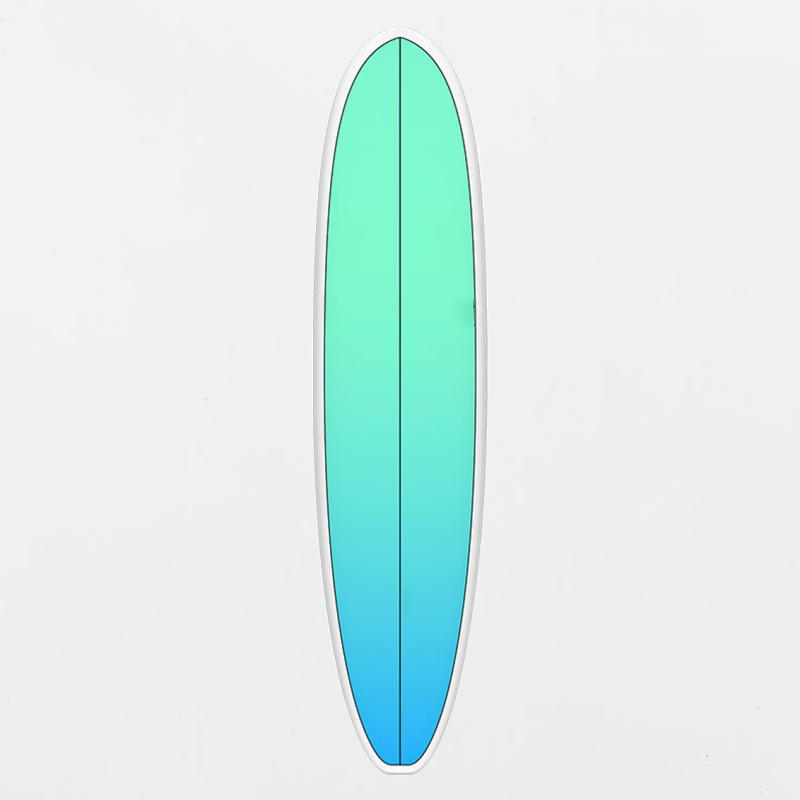
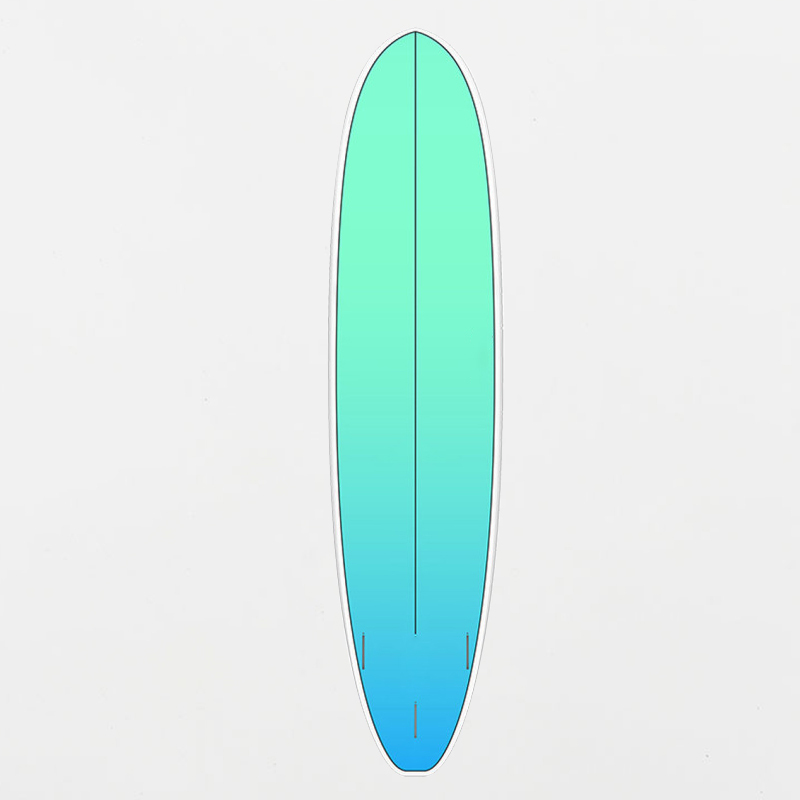
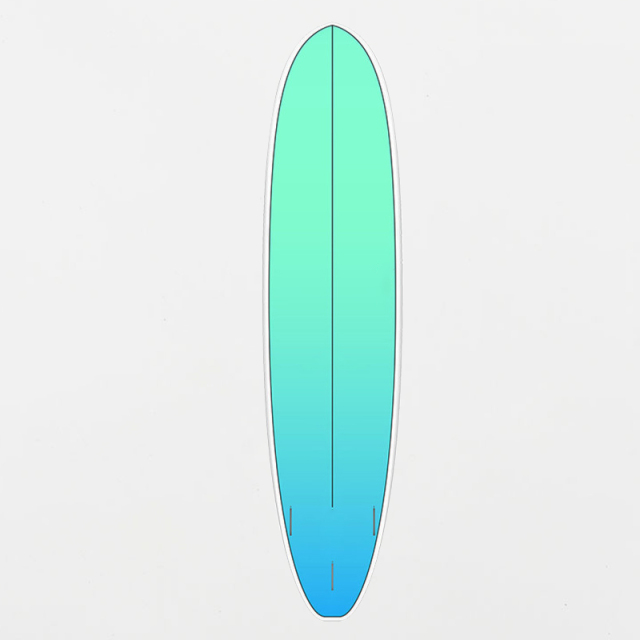
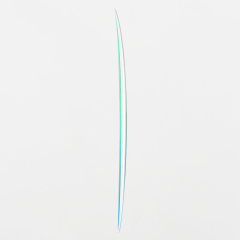
| Deck finish | Green-to-blue fade, gloss |
| Deck detail | Centre stringer line |
| Outline | Rounded nose and tail |
| Bottom | Multi-fin box layout |
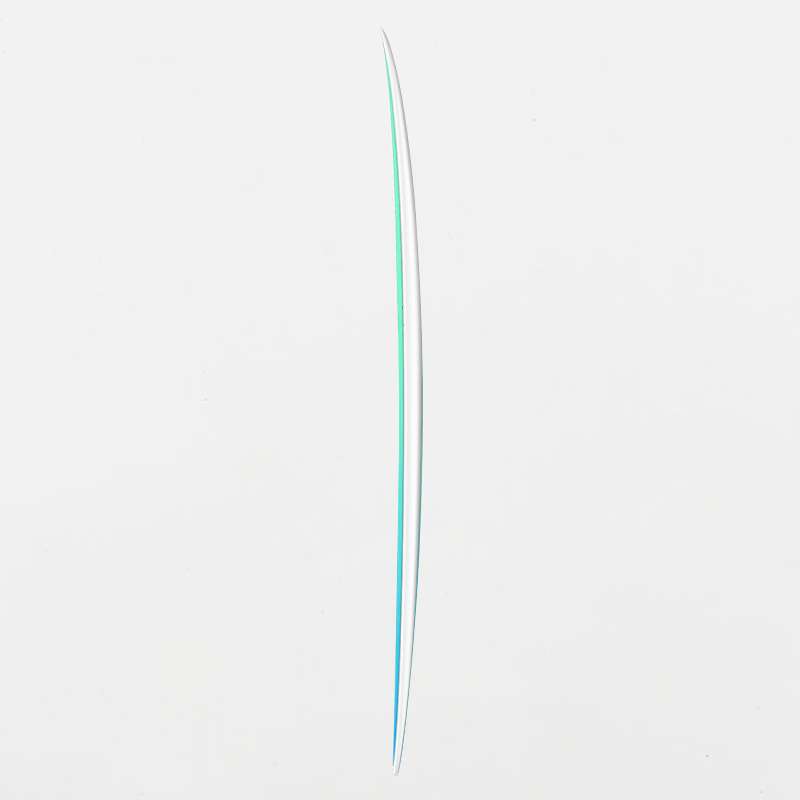
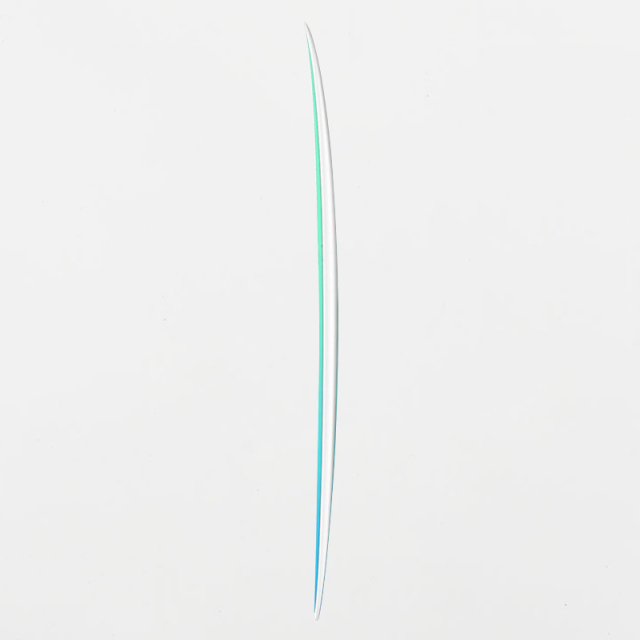
| Rail profile | Thin, continuously curved |
| Recommended wave range | Small to average beach and reef breaks |
| Rider level | Improvers through intermediate |
| Supplied as | Board only — fins, leash, traction, cover and rack are separate |
Green Fade Finish
- A fade rather than a flat colour. The deck moves from green into blue along the length of the board, with the centre stringer line reading through the finish.
- Easy to pick out on the water. The contrast between the two ends of the fade gives instructors and rental staff something to track when a lesson group spreads across a break.
- Shelf presence. On a wall of white boards, the fade is the one customers reach for first — useful when a shop is trying to sell a mid-length to someone who has only ever ridden a longboard.
- Repeatable across a run. Shops buying wholesale epoxy surfboards need the graphic to match from board to board, so ask for a production sample before a large run and judge the fade in daylight rather than on a screen.
- Weight-neutral. The graphic sits under the final coat, so a fade board carries like any other lightweight epoxy surfboard of this length.
- Sealed against water and wax. The gloss coat keeps the fade protected, so the colour does not lift or chalk where wax and salt water work at the deck.
Ordering & Supply
- Send your list. Tell us the lengths, quantities, colourways and the date you want stock on the water, and we will tell you what fits the production schedule.
- Confirm the specification in writing. Fin box type, graphic, finish and anything you want changed from the standard build all need to be agreed before the run starts; ask about sample availability if you need to judge the fade in hand.
- Agree the commercial terms with your sales contact. Order quantity, price, payment and shipping are quoted per programme rather than published, so confirm every figure in writing before production.
- Plan the run. As an epoxy surfboard manufacturer we build against your agreed dates, which is why the specification sign-off in step two matters more than anything else on this list.
- Agree inspection and packing. Boards are checked before they are packed, and the packing method and units per carton should be confirmed with your contact rather than assumed.
- Set up the reorder. As an epoxy surfboard supplier we keep your specification on file, so a repeat order arrives matching the last one; tell us early if you also range shortboards, high performance epoxy surfboard shapes or longboards, so they can be planned into the same schedule.
Scale & Supply Capability
CIMI is a factory-based supplier with 16 years in surf and watersports hardgoods, manufacturing at our own facility rather than sourcing through traders. Chain stores, supermarkets and surf-brand stores buy from us because one supplier covers a full accessory assortment, so a season's order and its reorders can be planned together. We take on OEM and private-label work, adapting designs, colourways and branding to your programme, and we schedule production against your agreed range plan. Send us your buy list and target dates, and we will confirm what we can make and when.
FAQ
Can this work as a rider's first hard board after a soft-top?
It is a very common step up. The 7ft4 length and volume mean a rider who has only used a soft-top will still catch waves while they learn to control a faster, harder board, and the eps epoxy surfboard build gives them a firm, predictable platform underfoot instead of the spongy feel they are used to. Expect a few sessions of adjustment as they learn to stand earlier and steer rather than slide. It is also a lightweight epoxy surfboard, so a nervous beginner is not managing a heavy board in the shore break.
How well will it stand up to daily hire and lesson use?
Better than a poly board of the same length. As an epoxy surfboard supplier we build this model for repeated use rather than for a shop window: the EPS core, fibreglass and epoxy resin are exactly what keep it going in a working fleet. Wear shows up first at the tail and the rails, so a tail pad and a leash with a proper rail saver do more for board life than anything else. Inspect rails and tail after each hire and repair small knocks early, and one board will cover several seasons instead of one.
How does it compare with a longboard for a mixed-ability fleet?
A longboard is still the easier board for a complete beginner and the better choice on the smallest, softest days. The 7ft4 comes into its own once a rider is standing and steering: it turns sooner, is easier to control in a crowd and gives a stronger surfer something to work with. If your fleet already runs an epoxy longboard surfboard, this is the board that sits directly below it, so customers can move down a size without jumping straight to a shortboard.
Which fins should we fit to it?
The bottom carries a multi-box layout, so the fin set you choose changes the character of the board more than anything else you bolt on. Confirm the box type with us before ordering fins in volume, so the set matches what is routed into the board. A neutral thruster set is the safe choice for a mixed rental fleet; a lighter honeycomb set gives a faster, looser feel that stronger riders will read as closer to a high performance epoxy surfboard.
Is the board supplied as a complete set?
The board is supplied on its own; fins, leash, traction pad, cover and rack are separate lines in the same range. Because we make all of them, a shop building a wholesale epoxy surfboards order can specify a complete set rather than matching parts from different suppliers. As an epoxy surfboard manufacturer we also build the board on its own where that suits your range better, so tell us how you want the set put together.